Lymphatic walking is ordinary walking done with taller posture, freer arm swings and deeper belly breaths, pitched as the easiest summer workout for fluid movement and less puffiness. Vogue published the case on July 21, 2026, quoting therapists who say the body needs no spa membership or special gear to act as its own pump.
The name is new. The physiology is not. Medical centers have long described how leg-muscle contractions and diaphragmatic pressure move lymph, a fluid system that lacks a heart of its own. The trend’s real product is permission to keep the walk simple and consistent.
What Experts Mean by the Label
Petra Gospic, a lymphatic massage therapist and founder of the Body Lab, frames it as regular walking with focus on deep breathing, good posture and natural movement. Rebecca Faria, founder of Detox by Rebecca, puts it more bluntly: stand tall, swing the arms, breathe deep, and you become your own pump.
Faria brings 15 years in lymphatic massage and integrative wellness plus a master’s degree. She built a Beverly Hills practice known for Brazilian lymphatic drainage and a celebrity client list. Gospic’s Body Lab lymphatic body sculpting approach targets women seeking less bloating and lasting shape change without aggressive protocols.
Both stress intention over intensity. Drop the phone so arms swing under the armpits. Let the torso rotate a little. Roll the shoulders. Breathe so the belly expands. Gospic says even 20 to 30 minutes helps. Consistency beats perfection.
The Body Already Runs These Pumps
The lymphatic system collects excess fluid, waste and immune cells and returns them toward the bloodstream through one-way valves. Without a central pump it depends on muscle squeezes and pressure shifts from breathing.
UT MD Anderson Cancer Center notes that deep belly breathing pumps largest pathways because the diaphragm creates rhythmic motion that helps lymph flow. A 2024 review in the journal Lymphatics linked mobility, the venous muscle pump, exercise and breathing to lymphatic health and noted walking’s role alongside compression for venous problems.
Noom’s July 2026 review of the trend summarized older tracer studies: muscle contractions cleared marker from leg tissue several times faster than rest. A more recent ultrasound study in healthy adults saw the body’s largest lymph vessel widen after exercise. Those findings support movement. They do not isolate “lymphatic walking” form cues as superior to any purposeful walk at the same effort.
| Mechanism | What research and clinics describe | What the trend adds |
|---|---|---|
| Calf and leg muscle pump | Contractions squeeze lymph vessels with each step | Comfortable pace, upright posture |
| Diaphragmatic breathing | Pressure changes in chest and abdomen assist flow | Slow belly breaths while walking |
| Arm and torso motion | Upper-body movement and armpit nodes benefit from swing | Free arm swing, occasional shoulder rolls |
| Consistency | Regular activity keeps fluid moving | 20-30 minutes most days, no special kit |
Mayo Clinic lists gentle muscle contraction exercises among treatments that help move fluid in lymphedema. The principle is the same for healthy people seeking less stiffness after sitting or travel.
How to Walk With the Cues
The method needs no class. Chances are high a normal fitness walk already contains most of it.
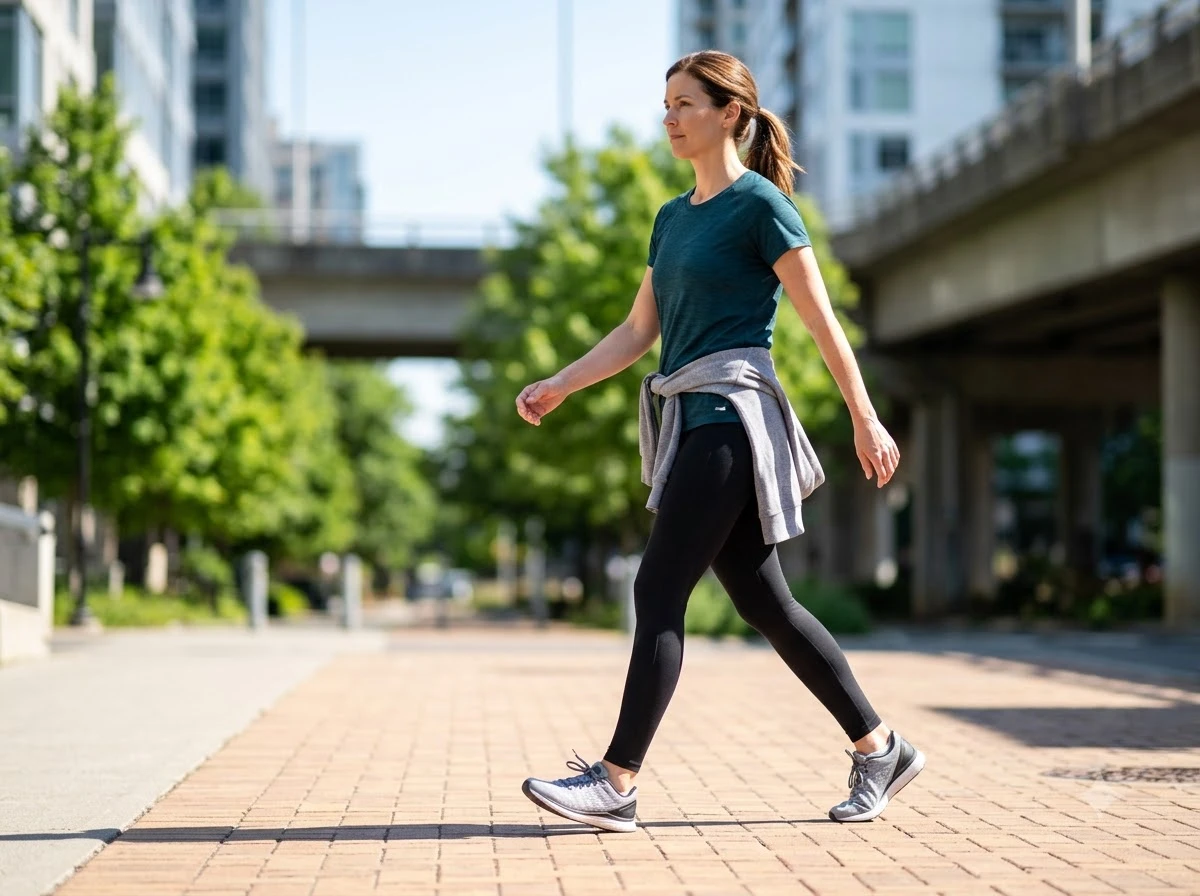
- Stand tall with shoulders dropped and gaze forward.
- Walk at a talkable pace that slightly raises breathing rate.
- Swing the arms freely without clutching a phone; let the underarm area move.
- Breathe into the belly so each inhale sinks low and each exhale empties.
- Add loose extras if wanted: gentle torso rotation, head or wrist circles, short stretches.
- Aim for 20-30 minutes most days; stack with water, food and sleep rather than treating one walk as a fix.
Gospic warns people with active infection, unexplained swelling, severe heart disease or other conditions to check with a doctor first. For everyone else the downside is mainly expectation: one walk is not a magic wand.
Lymphatic walking isn’t a detox. Your liver and kidneys are responsible for detoxification. I see it as supporting your body’s natural fluid movement and circulation, not ‘flushing toxins.’
Gospic said that in the Vogue piece. Faria agreed that the magic comes from consistency paired with ordinary supportive habits.
From Vodder’s Hands to Sidewalks
Manual lymph drainage has clinical roots far older than TikTok. Danish physiotherapist Emil Vodder and his wife Estrid developed the gentle pumping technique in France in the early 1930s after observing congested nodes. They presented Emil Vodder manual lymph drainage in 1932 and refined the light circular strokes that avoid forcing blood flow. The method later gained insurance recognition in Europe and use in lymphedema care worldwide.
- 1930s: Vodders create and present systematic MLD in Paris and Cannes.
- 1950s-70s: European lectures, training and scientific interest grow; German insurers later cover it.
- 1980s-2000s: MLD becomes standard adjunct for cancer-related lymphedema and other edema.
- 2010s-2020s: Brazilian aesthetic lymphatic massage rises in celebrity culture; Faria brings a version to Los Angeles in 2018.
- 2025-26: “Lymphatic walking,” jumping and face tools spread as free, no-appointment versions of the same fluid-movement idea.
Walking is the lowest-friction door. Rebounding on a mini-trampoline and structured PT sequences remain options for people who need or prefer them. The sidewalk version requires zero equipment and zero waiting list.
Who Notices a Difference and Who Should Temper Hopes
People who sit long hours, travel or feel puffy after salty meals often report feeling lighter and less stiff after intentional walks. Faria links better flow to immune support, digestion and lower stress once “the pipes get flowing.” Gospic lists the same lighter, less puffy sensation.
- Likely upsides: temporary fluid shift, easier movement, stress drop from outdoor time and rhythmic breath.
- Not a fat-loss engine: any scale change is usually water; lasting weight change still needs overall calorie balance and the walk volume you can sustain.
- Medical cases: diagnosed lymphedema belongs under clinician or certified therapist guidance; self-directed walking can help some but is not a substitute for complete decongestive therapy.
- Detox language: both quoted experts reject toxin-flush framing; liver and kidneys handle that work.
The crowd layer on X largely lands in the same place: daily movement beats perfect technique, and “just walking” already covers drainage, stress and digestion for many people. Intention may matter most because it keeps the shoes by the door.
Why Simple Walking Wins the Current Cycle
Extreme heated rooms and complicated machines still fill class schedules. They also create drop-off. Gospic’s observation that people want habits that fit everyday life tracks with the wider walking boom. Japanese interval walking viral workouts mix fast and slow blocks for blood pressure and fat metrics. High-volume plans such as 15,000 daily steps for weight and joints draw their own audiences, while research on fewer steps still delay Alzheimer’s decline lowers the barrier further.
Adults need at least 150 minutes of moderate activity a week, the familiar 30 minutes on five days. A lymphatic-framed 20- to 30-minute walk slots cleanly inside that target without requiring a new wardrobe or app challenge. The label may fade. The walk that survives is the one that feels sustainable after the hashtag cools.
Frequently Asked Questions
Is lymphatic walking different from a normal brisk walk?
Physiologically the difference is small. Both rely on leg-muscle pumps and breathing changes. The trend simply names posture, free arm swing and belly breathing so walkers pay attention; no published trial shows the branded cues outperform an equally long purposeful walk at the same intensity.
How long should a lymphatic walk last?
Therapists in the Vogue coverage cite 20 to 30 minutes as useful. That range also fits the lower end of CDC moderate-activity guidance when repeated most days, so the same bout serves both lymph-support intent and general health minutes.
Can lymphatic walking replace manual lymphatic drainage sessions?
No. Clinical MLD uses trained light strokes in specific sequences for diagnosed congestion or post-surgical care. Walking is maintenance and prevention for most healthy people; anyone with active lymphedema should follow a therapist’s plan rather than self-substitute.
Does it detox the body or melt fat?
Experts quoted in coverage reject the detox claim; the liver and kidneys handle detoxification. Any lighter feeling is usually temporary fluid redistribution, not fat loss. Fat change still tracks total energy balance and long-term activity volume.
Who should skip or modify lymphatic walking?
People with active infection, unexplained swelling, severe heart disease or other significant conditions should clear new routines with a physician. Those recovering from cancer treatment or living with lymphedema need specialist clearance before adding aggressive arm or leg work.
Disclaimer: This article is for general information only and is not medical advice. Consult a qualified clinician before changing activity if you have health conditions or concerns about swelling.