
Apple kicks off WWDC 2026 on June 8 with iOS 27 and a rebuilt Siri powered by a custom Google Gemini model at the center of a deal Bloomberg reported at roughly $1 billion a year. Five other platform updates arrive Monday alongside the new iOS, including macOS 27 and watchOS 27, as the company makes its most significant attempt yet to close the gap with rival AI assistants.
Two years ago at WWDC 2024, Apple showed off a Siri capable of reading emails, executing multi-step tasks, and holding a real conversation. Most of that went nowhere. Apple settled a class action over the delays for $250 million, with eligible iPhone 16 buyers set to receive up to $95 each. Monday is the follow-through.
Monday’s Six-Platform Software Preview
The keynote starts at 10 a.m. Pacific Time at Apple Park’s Steve Jobs Theater, with the stream available free on Apple.com, the Apple TV app, and YouTube. Apple’s WWDC 2026 developer site confirms the conference runs June 8 through 12, with hundreds of engineering sessions and one-on-one labs continuing online through Friday. More than 1,000 developers, designers, and students are attending in person for the opening day at Apple Park.
Six operating systems get previewed at once: iOS 27, iPadOS 27, macOS 27, watchOS 27, tvOS 27, and visionOS 27. Developer betas drop the same afternoon, public betas follow in July, and the full public release slots in September alongside Apple’s annual iPhone lineup, which this year is expected to include the iPhone 18 and the company’s first foldable phone.
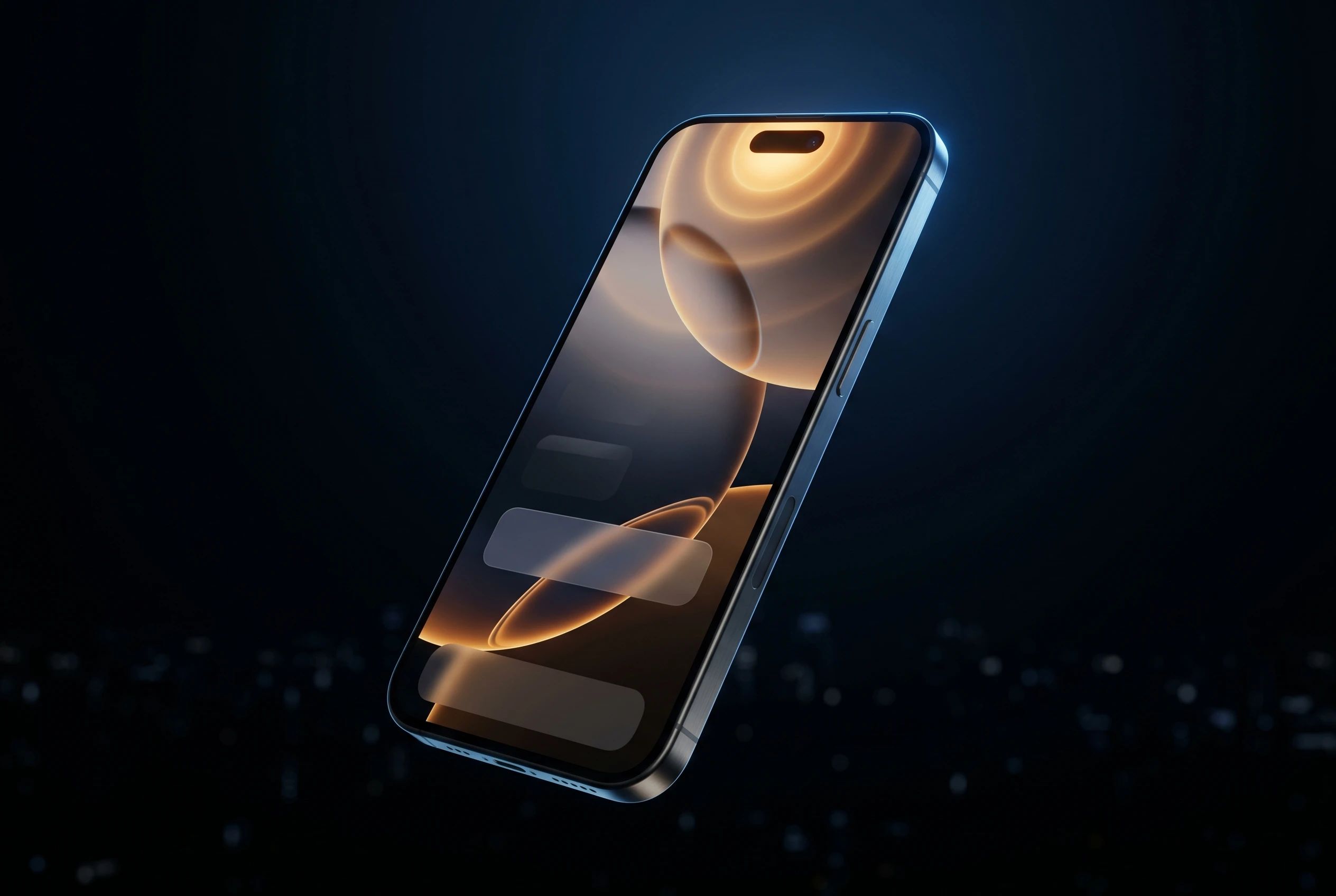
Apple’s “All systems glow” tagline, which replaced an earlier “Coming bright up” last week, points at the new Siri interface. When triggered in iOS 27, the Dynamic Island at the top of the screen expands and glows, displaying a “Search or Ask” prompt with a pulsing cursor. Both phrases have been illustrating the same hardware detail since Apple set the conference dates. Neither left much to interpret.
Hardware announcements aren’t expected. A next-generation Apple TV 4K and HomePod Mini have reportedly been ready to ship for months, per Bloomberg’s Mark Gurman, but Apple appears to be holding both until its AI features are fully ready to power them.
The $1 Billion Gemini Deal
Apple and Google struck a multi-year AI partnership on January 12 in the Apple-Google Gemini collaboration that CNBC was first to report. Bloomberg said Apple would pay roughly $1 billion annually for access to a custom model; both companies declined to disclose the financial terms publicly. Apple’s language was direct:
After careful evaluation, we determined that Google’s technology provides the most capable foundation for Apple Foundation Models and we’re excited about the innovative new experiences it will unlock for our users.
Both companies issued that statement jointly in January. The AI models Apple had been developing in-house never reached the capability level the company needed. “It’s going to take us longer than we thought to deliver on these features,” Apple said in a 2025 statement, “and we anticipate rolling them out in the coming year.” That admission came as the Siri capabilities Apple had promoted with its iPhone 16 launch slipped from iOS 26 into this year’s software cycle.
Queries route through Apple’s Private Cloud Compute (PCC) system, which uses hardware-isolated, stateless compute nodes. Apple states that no user data passes to Google and that the custom Gemini model runs on Apple’s own infrastructure, not Google’s servers. Google Cloud chief Thomas Kurian confirmed the arrangement publicly in April at Google Cloud Next in Las Vegas, calling Google Apple’s “preferred cloud provider.”
ChatGPT, which Apple partners with through OpenAI for complicated queries in the current Siri, remains as a separate opt-in layer. Apple told CNBC in January that the OpenAI integration wasn’t changing. But with Gemini at the base of Apple Foundation Models, the AI running everything on-device and in Apple’s private cloud is now Google’s. By letting third-party models power Siri through an Extensions framework in the new release, Apple is treating the AI layer as interchangeable infrastructure, with the App Store positioned as the distribution mechanism for competing models. Wedbush analyst Dan Ives called the January announcement “what the Street has been waiting for” in emailed commentary, describing what he called the “elephant in the room” around Apple’s AI strategy. Earlier signs of this direction appeared in Apple’s fall software updates, including hints of Gemini integration noted in coverage of the iOS 26.1 rollout last November.
Siri’s Design Overhaul
The rebuilt assistant arrives with two new entry points. When triggered, the Dynamic Island shows the “Search or Ask” prompt with a dark background and glowing cursor, pulling Siri into the top of the screen as a persistent presence rather than a full-screen takeover. A standalone Siri app ships alongside it, with persistent conversation history, support for both text and voice, and the ability to review past interactions days later.
Functionally, this is the version Apple previewed at WWDC 2024 and never delivered: multi-turn conversations holding context across exchanges, cross-app task execution, web search, content summarization, and image generation. The Camera app gains a dedicated Siri mode sitting alongside Photo, Video, and Portrait, with Visual Intelligence integration using Google Image Search to identify objects the camera sees. Apple registered the domain genai.apple.com on May 23, a week before the conference opened, signaling the company’s readiness to move publicly on its AI product.
The Extensions framework lets users set a third-party AI service as the underlying model for Apple Intelligence features like Writing Tools and Image Playground. That includes Claude from Anthropic, OpenAI’s ChatGPT, and a user-selectable Gemini chatbot. For a company that has historically kept every layer of its software stack internal, opening the AI model slot to third-party competition is a structural change.
Prior reporting on this site tracked Apple’s WWDC 2026 AI strategy from the moment the conference dates were announced. The Siri overhaul has been the anchor of that coverage since March.
iOS 27’s Stability Play
Bloomberg’s Mark Gurman described the update using a frame Apple has deployed before: engineering teams hunting bugs and reducing system bloat rather than adding visual layers, an approach that recalls Mac OS X Snow Leopard, Apple’s 2009 release, which shipped no headline consumer features and spent its cycle on performance. The Liquid Glass design language from iOS 26 is getting a readability pass, including a transparency-and-contrast slider that reportedly didn’t make the cut last year.
Beyond the AI work, several concrete features are shipping with the update:
- Wallet bill-splitting: Photograph a receipt and generate payment requests to multiple people directly from the Wallet app. A separate “Create a Pass” option converts physical tickets and membership cards into digital passes.
- Upgraded autocorrect: Suggests full sentence rewrites and alternative wording, going beyond the single-word correction model iOS has used for years.
- Improved Maps connectivity: Satellite coverage extends offline navigation in areas with limited cellular signal.
- macOS 27 readability changes: A slight redesign that pulls back some of Liquid Glass’s more aggressive transparency effects, improving legibility on the desktop.
- Genmoji suggestions: The update will propose Genmoji options based on words typed in the keyboard and photos stored in the user’s library, making the feature more discoverable by default.
iPadOS 27 continues the windowed multitasking work from last year’s release, which introduced resizable windows and task menus. This version puts bug fixes first and doesn’t add new features to that system.
The September Gap
Developer betas land Monday afternoon. Public betas follow in July, and the general release slots in September alongside the iPhone 18 lineup. For most iPhone owners, the features Apple announces this week are three months away from reaching their devices.
The device split is sharper than usual. The update is expected to run on the iPhone 12 and newer, dropping support for the iPhone 11. Apple Intelligence, which powers the rebuilt Siri capabilities, still requires chip headroom that only more recent hardware carries:
| Device Group | iOS Support | Apple Intelligence and New Siri |
|---|---|---|
| iPhone 11 and older | No | No |
| iPhone 12 to iPhone 15 (standard) | Yes | No |
| iPhone 15 Pro and 15 Pro Max | Yes | Yes (A17 Pro chip) |
| iPhone 16 series and newer | Yes | Yes |
The cutoff means a large portion of Apple’s active iPhone base gets the operating system but not the headline feature. Several Apple Intelligence capabilities that shipped in iOS 26 arrived as betas and required months of additional updates to work reliably. The same pattern is possible this cycle, particularly for advanced Siri tasks that depend heavily on cloud inference capacity.
Tim Cook’s Final Keynote
In April, Apple disclosed that Tim Cook would step into the role of executive chairman and John Ternus, its senior vice president of Hardware Engineering, would become chief executive effective September 1. Apple’s succession announcement said the board voted unanimously. Cook had led the company since succeeding Steve Jobs in 2011, presiding over the Apple Watch launch, AirPods, Apple Silicon, Vision Pro, and the company’s climb past $3 trillion in market value.
Monday is his last WWDC keynote in that role. Ternus, who unveiled the iPhone Air at last year’s hardware event and has run hardware engineering for the iPhone, iPad, Mac, and Apple Watch, inherits a specific problem: an AI strategy that missed its own public timelines twice and cost Apple $250 million in legal settlements. Whatever Siri demo Apple stages on Monday is the first concrete signal of whether the Gemini deal fixes the underlying problem or papers over it.
The public release arrives in September, in the same week Cook becomes executive chairman and Ternus takes the CEO title.


