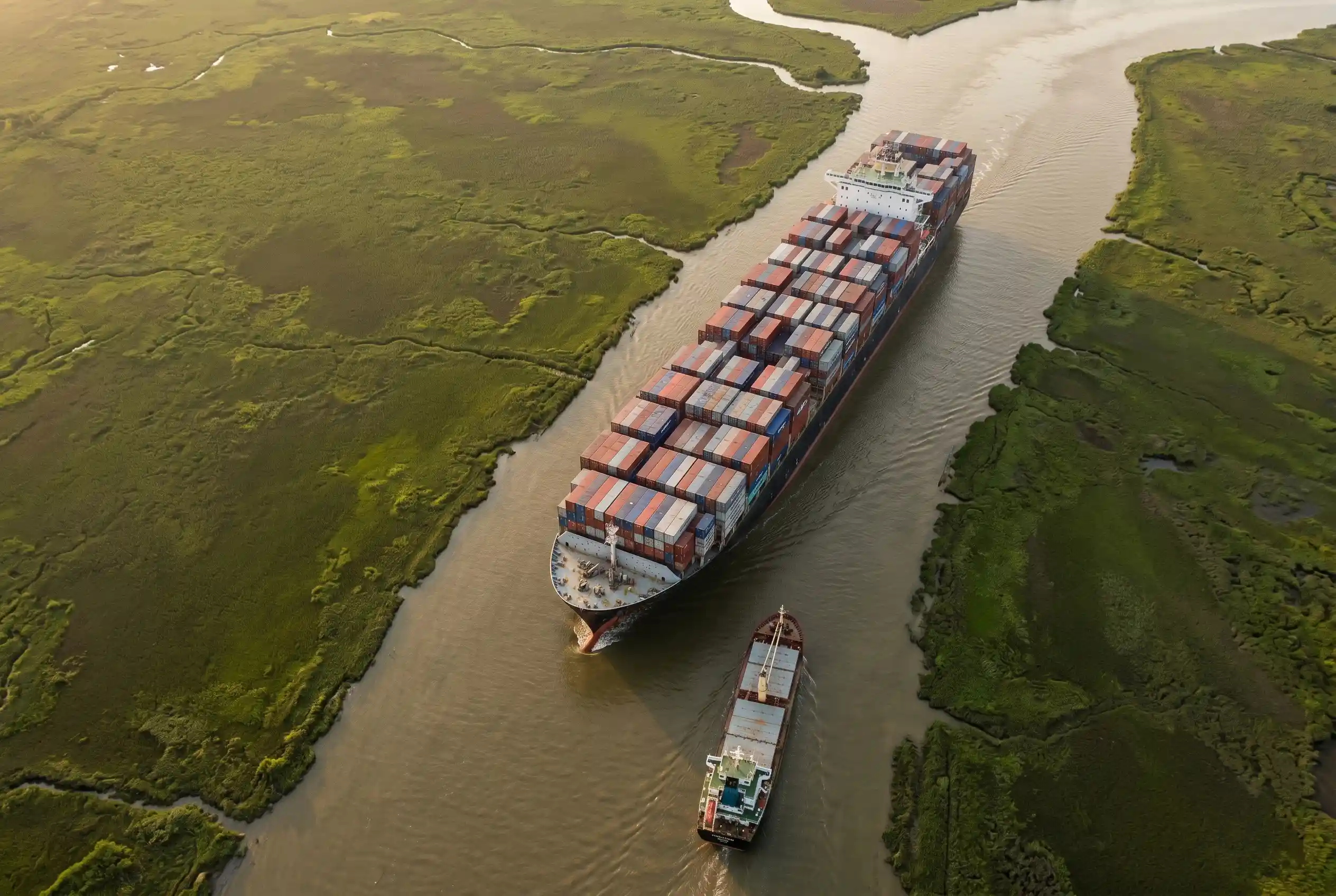
The Georgia Ports Authority (GPA, the state agency that runs the Port of Savannah) wants to deepen the Savannah River shipping channel again, barely four years after finishing a $973 million dredge that took it from 42 to 47 feet. The new Savannah Harbor deepening study, announced June 2, will examine cutting the channel deeper still and carving out passing lanes so two big ships can transit at once. The reason it cannot wait is sitting at the dock: vessels calling Savannah today carry more than twice what the channel was designed to handle.
Read as a local upgrade, this is routine port housekeeping. Read against the East Coast, it is the latest move in a depth race that has already pushed Virginia to 55 feet and Charleston to 52, and left Savannah, the busiest single container terminal in North America, sitting at the bottom of the big three.
Georgia Ports Files to Deepen a Channel It Just Deepened
GPA sent a letter of intent to Adam Telle, Assistant Secretary of the Army for Civil Works, formally opening the Savannah Harbor modification study. The study itself runs on a small budget by port standards. Congress authorized it under the Water Resources Development Act of 2024 (WRDA, the biennial bill that greenlights Army Corps water projects), and the fiscal 2026 federal budget put up an initial $500,000. Total cost of the three-year study is expected to reach about $3 million.
The work itself has three pieces:
- Deeper water to handle the largest ships now serving Savannah and the bigger ones coming.
- A wider channel in places, to give those ships more room.
- Passing lanes so arriving and departing vessels can move through the channel at the same time instead of waiting their turn.
The US Army Corps of Engineers will run the analysis, provide technical assistance, and keep final review and approval authority over the environmental and economic findings. Only after the Corps signs off can the project go to Congress for construction authorization and money. Griff Lynch, Georgia Ports president and chief executive, put the case plainly.
The shipping channel needs to be deepened and widened to better accommodate the largest ships currently serving Savannah, and to prepare for even larger, more efficient vessels expected to serve the U.S. East Coast.
Ships Twice the Size the Channel Was Built For
Here is the number that drives everything. The Port of Savannah is now handling vessels capable of carrying 16,000-plus twenty-foot equivalent units (TEU, the standard container-counting measure), roughly double the size the current channel was engineered around. Ocean carriers keep ordering bigger boxships to cut cost per container, and the 47-foot channel was already behind the curve when the dredge finished.
The volume backs up the urgency. GPA moved 5.7 million TEU in fiscal 2025, up 8.6 percent, or about 450,000 boxes, over the prior year, its second-busiest year on record. Garden City Terminal, the single facility anchoring all that traffic, is the largest container terminal in North America. The port has also kept posting double-digit monthly jumps, including a 22.5 percent surge in its busiest March ever.
That growth is broad. Savannah has become the country’s main exit door for refrigerated freight, with frozen-poultry shipments alone leading the cold-chain export figures out of the port. When the dock keeps filling and the ships keep growing, channel depth becomes the ceiling.
Savannah Is the Shallowest of the Big Three East Coast Ports
Depth is competitive infrastructure on the East Coast, and Savannah’s rivals have not stood still. The Port of Virginia completed dredging to a 55-foot channel in February 2026, the deepest commercial harbor on the coast. Charleston reached 52 feet in late 2022. Savannah, despite moving more boxes than either, transits megaships through 47 feet of water with tidal timing windows the deeper ports do not need.
| Port | Channel depth | Deepening completed | Status |
|---|---|---|---|
| Virginia | 55 feet | February 2026 | Deepest on the East Coast |
| Charleston | 52 feet | Late 2022 | Pursuing further depth |
| Savannah | 47 feet | 2022 | New study just opened |
The stakes in that table are real money. A port that cannot fully load the newest ships loses direct-call services and the freight, jobs, and rail business that follow them. Analysts watching the coast expect Savannah to target around 52 feet to match Charleston, though GPA has not named a depth; the study is supposed to settle that. You can see the full trade picture in the Georgia Ports Authority’s published volume statistics.
A $973 Million Dredge, Then the Goalposts Moved
The Savannah River channel has been expanded three times to keep up. The most recent was the Savannah Harbor Expansion Project (SHEP), which deepened the channel by five feet and ran $973 million, with Georgia covering 25 percent and the federal government the rest. It started in 2015 and wrapped in 2022. The Corps’ analysis pegged the payoff at roughly $7.70 in national economic benefit for every dollar spent, the kind of ratio that gets a project funded.
And yet the ink was barely dry before the ships outgrew it. That is the part worth sitting with. SHEP took seven years to build and was obsolete on the day it opened, because vessel sizes moved faster than the dredges. A channel deepening is not a one-time fix anymore; it is a recurring capital line every coastal port now carries, with engineering, permitting, and dredging costs that climb each cycle.
You can read the Army Corps’ summary of the last Savannah deepening for the engineering detail. The pattern it describes, dig deeper, then dig again, is the one Savannah just signed up to repeat.
Why Passing Lanes Matter as Much as Depth
Depth gets the headlines, but the widening piece may do more for day-to-day throughput. Right now the channel is largely a one-way street for the biggest vessels. An arriving megaship and a departing one cannot safely pass, so one waits, and that wait ripples into berth scheduling, pilot availability, and how many ships a day the port can clear.
Passing lanes change the math. If two large vessels can transit at once, the channel handles more calls without a single new crane or berth, squeezing capacity out of the same water. For a port adding five new container berths and pushing toward a multibillion-dollar expansion, the river is the chokepoint that the terminals upstream cannot fix on their own.
That is the quieter return on this study. The deeper number sells the project; the two-way traffic is what keeps Savannah’s volume climbing once the depth catches up.
The Army Corps Holds the Final Sign-Off
Nothing gets dug on GPA’s say-so. The Army Corps runs the modification study, weighs the environmental and economic findings, and decides whether to recommend the project to Congress. Lawmakers then have to authorize construction and, separately, appropriate the money, two steps that have stretched timelines on past port projects well beyond the engineering.
The current Savannah trade and logistics momentum is documented in GPA’s fiscal 2025 container-trade release, and it is the strongest argument the agency can bring to that table. Whether the math survives the Corps’ review, and whether Congress funds the dredge after it does, will determine if Savannah closes the depth gap or keeps shipping megaships through a channel built for smaller ones.
The three-year study clock started this month. The earliest a recommendation reaches Congress is 2029, and on past form, the dredges would not start for years after that.