The latest US-brokered Lebanon ceasefire push has stalled, and the reason sits far from the front line. Secretary of State Marco Rubio spent the past 48 hours on the phone with leaders in Israel and Lebanon trying to revive a truce. He came away with nothing as Israel widened its ground offensive and asked Washington to approve large-scale strikes on Hezbollah targets in Beirut.
The overlooked party in that failure is not in Beirut or Tel Aviv. It is in Tehran. Iran listed an end to the Israel-Hezbollah war among the conditions in its proposed deal with Washington, and its Revolutionary Guard has been urging Hezbollah to keep fighting to build leverage. That makes the Lebanon truce hostage to a negotiating table it does not even sit at.
Rubio’s Two Days of Phone Calls Came Back Empty
Marco Rubio, the US secretary of state, spoke with Israeli Prime Minister Benjamin Netanyahu and Lebanese President Joseph Aoun over the weekend, according to a US official cited by Axios, which first reported the stalled initiative. The pitch was simple on paper: Hezbollah, the Iran-backed Shia movement and militia, would halt its missile and drone fire into Israel, and Israel would hold off on escalating inside Beirut.
Aoun was receptive. The Lebanese president asked Nabih Berri, the parliament speaker who runs a major Shia party with longstanding ties to Hezbollah, to press the group to stop firing. Berri’s answer, the US official said, was “evasive and disappointing,” and amounted to a counter-demand that Israel cease fire first.
Washington’s own posture had been the quiet brake on the worst-case scenario. For several weeks, the US discouraged Israel from hitting Beirut as part of a wider effort to lower the temperature. That restraint now looks shaky.
One US official signaled the line could move, telling Axios that “the US does not expect Israel to absorb ongoing attacks on its civilians by a terrorist organization.” In diplomatic shorthand, that is permission inching toward the door.
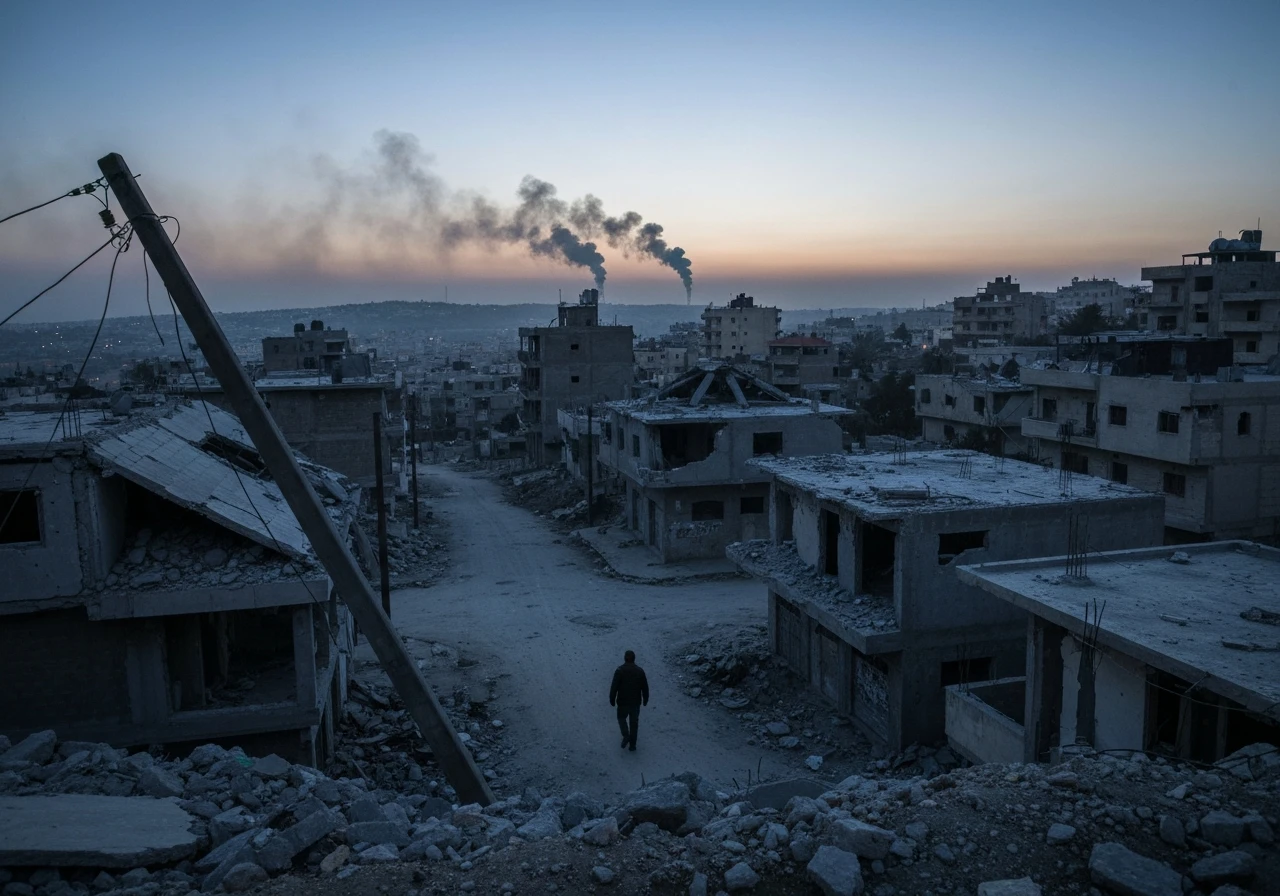
Why Tehran Wants the Lebanon War to Keep Burning
The single fact that explains the stall is one most coverage treats as background. The Trump administration’s de-escalation drive in Lebanon has been driven in part by its desire to land a separate agreement with Iran, and Tehran has tied the two together on purpose.
The Deal on the Table in the US-Iran Talks
Iran wrote an end to the Israel-Hezbollah war into a proposed memorandum of understanding (MOU, a draft framework agreement) with Washington, according to the Axios report. That single clause turns Lebanon from a regional flashpoint into a chip in the nuclear and sanctions file. Every week the war continues, Tehran holds something Washington wants to take off the board.
The timing is not incidental. The fighting reignited only days after the war Israel and the United States opened against Iran on Feb. 28, the campaign that killed Iranian Supreme Leader Ali Khamenei. Hezbollah resumed its rocket and drone strikes on March 2, casting them as a response. The Lebanese front and the Iranian file have been one conflict since.
The Revolutionary Guard’s Bargaining Chip
Iran’s Islamic Revolutionary Guard Corps (IRGC, Tehran’s elite military and ideological force) has been pushing Hezbollah to escalate rather than stand down, a Lebanese official told Axios, precisely to strengthen Tehran’s hand in the talks. That guidance runs directly counter to what Rubio asked Aoun to deliver. It also lines up with Hezbollah’s vow to keep up its resistance after an earlier truce, a posture that has not softened. When the patron benefits from the proxy fighting, a phone call from Beirut’s president is not going to end the shooting.
Neither Combatant Has a Reason to Stop
Strip away the diplomacy and the math is brutal. By the read of a Lebanese official, neither Hezbollah nor Israel actually wants a ceasefire, and Washington has not used hard leverage to force Netanyahu to halt his ground push. Each player has a stated line for the cameras and a different incentive underneath it.
| Party | Public position | Underlying incentive |
|---|---|---|
| Israel | Will stop when Hezbollah is disarmed and pushed north of the Litani | A widening offensive lets it degrade the group while it is weakest |
| Hezbollah | Israel must cease fire first | Fighting on serves Tehran and preserves the group’s standing |
| Iran | Backs a regional calm tied to its own deal | An active war is leverage in the US-Iran negotiation |
| Lebanese government | Wants the war ended and sovereignty restored | Lacks the power to compel Hezbollah to disarm |
| United States | Brokering a truce and an Israeli withdrawal | Needs calm in Lebanon to unlock the Iran track |
The framework everyone keeps invoking is decades old. The terms of UN Security Council Resolution 1701 already call for Hezbollah to disarm and pull north of the Litani River and for Israeli forces to leave Lebanon. The current talks are, in effect, an attempt to enforce a 2006 text that was never fully implemented.
Four Rounds of Talks Since April, All Overtaken
The diplomacy has not been idle. It has simply been outrun by the fighting at every turn. The sequence over the past two months shows how quickly each understanding decayed.
- April 14: The first in-person meeting convened in Washington, hosted by Rubio, with Israeli and Lebanese ambassadors at the table.
- April 16: President Trump announced the two sides had agreed to a 10-day cessation of hostilities to create room for negotiations.
- April 23: A second Washington round, with Trump chairing, saw Lebanon request an extension as the truce frayed.
- May 14-15: A third round produced more discussion of disarmament and withdrawal, and no halt on the ground.
Each truce held mostly on paper. Both Israel and Hezbollah violated the announced halts, and by late May the brittle understanding had collapsed entirely under a fresh wave of strikes and rocket fire. Last week, Israeli and Lebanese military officers met at the Pentagon to talk through a ceasefire, an Israeli withdrawal, the disarming of Hezbollah, and a deployment of the Lebanese army in the south. The guns kept firing through the meetings.
A Ground Push 25 Years Deep and Its Toll
While diplomats talked, Israel ordered its broadest advance into Lebanon in a generation. Netanyahu directed the army to expand its ground maneuver, and Israeli forces seized the historic Beaufort Castle and the ridge around it, a move the prime minister called a dramatic shift in policy.
The Numbers Behind the Offensive
The fighting has been intense and sustained since it reignited in early spring. Over the weekend alone, Hezbollah fired over 300 projectiles at Israeli soldiers in Lebanon and at northern Israel, by the Israeli military’s count reported by Bloomberg.
- March 2: the date major fighting resumed, days after the Iran campaign.
- Five divisions: the scale of the Israeli ground force committed since operations began on March 16.
- Up to 2,000 rockets: Hezbollah’s tally fired into Israel across the wider war.
- More than 1.2 million people: displaced inside Lebanon, over a fifth of the population.
Beirut’s Historic Districts in the Line of Fire
Lebanese Prime Minister Nawaf Salam has accused Israel of pursuing devastation rather than precision, framing the strikes on Tyre and Nabatieh as collective punishment that erases heritage along with infrastructure.
Israel is not targeting specific sites; it is pursuing a policy of total devastation.
That assessment came from Salam, Lebanon’s prime minister, in remarks reported by the NNA news agency on May 30. The economic shock has spread beyond the border too, with oil prices climbing as Israel pushed deeper into Lebanon and traders priced in supply risk across the region.
The State Department Talks Coming This Week
The next test arrives within days. Diplomats from Israel and Lebanon are expected to meet at the State Department later this week for another round, picking up the disarmament and withdrawal questions that the Pentagon session left open.
The backdrop is not encouraging. The peacekeeping force meant to police the south is itself winding down, with the UNIFIL mandate set for a final extension through December before an orderly withdrawal, a drawdown Washington supported in its explanation of vote at the Security Council. UNIFIL is the UN Interim Force in Lebanon, the buffer mission deployed in the south since 1978.
If the State Department round produces even a quiet pause and Tehran reads progress in its own file, the Lebanese ceasefire finally gets a constituency that wants it to hold. If the Iran track stays frozen and the IRGC keeps pushing for leverage, this week’s diplomats will leave Washington the way Rubio left his phone calls, with an agreement on paper and a war on the ground.