A UK-led systematic review of global research has found that screen exposure during the first 1001 days of life is associated with a wide range of developmental risks for under-twos, including limited language development, sleep difficulties and childhood obesity. The interdisciplinary research group is calling for an end to any intentional, regular screen time for babies, and for a new “baby screen-time risk assessment” to help health services flag families at risk earlier.
The Action on Digital Device Immersive Conditions Team (iADDICT), drawn from the universities of Leeds, Leeds Trinity, Loughborough and Aston, published the review on Friday 26 June. The team found that screen use is now reported in over 70% of UK babies and under-twos, that one in ten babies regularly falls asleep with a screen on, and that 85% of parents say they received no information or guidance on screen time from health professionals. The review was commissioned by the 1001 Critical Days Foundation and is described by its authors as the most comprehensive global synthesis yet published on the topic.
What the iADDICT Review Found
The headline finding of the systematic review is unambiguous: no under-twos should receive regular intentional screen time. Passive exposure, the authors concede, is “societally unavoidable,” but adding deliberate use, they argue, “compounds risk without any meaningful benefit.” The conclusion sits inside a study commissioned by the 1001 Critical Days Foundation, the charity founded by former Conservative minister Dame Andrea Leadsom, and built from thousands of peer-reviewed studies plus an online survey and focus group work with 174 UK parents. Researchers describe the period from pregnancy to age two as a developmental window in which a baby’s brain makes one million new connections every second.
The iADDICT team is the interdisciplinary Action on Digital Device Immersive Conditions Team, formed by Principal Investigators Professor Carmen Clayton of Leeds Trinity University, Rafe Clayton of the University of Leeds, Dr Richard James of Loughborough University and Aston University’s Dr Amy Sheppard and Professor James Wolffsohn. The team brings together family and cultural dynamics, media and communications, psychology and optometry. The full systematic review, “Impacts of Screen Time, Media and Technology Use on Under 2s during the first 1001 Critical Days,” is published as an open-access monograph through the University of Leeds and is available on the WhiteRose research repository.
The review draws on global peer-reviewed evidence and stops short of establishing causal links between screen time and any specific developmental condition. It nevertheless urges the UK government to reconsider its recently published guidance for under-fives, which currently recommends avoiding screen time for under-twos but allows an exception for “shared activities that encourage bonding, interaction and conversation.” Rafe Clayton, Senior Lecturer in Media and Communication at Leeds, said: “We have learned that screen use among the under-twos is a global concern that in 2026 is not being adequately addressed. This has implications for a whole generation and their future quality of life.”
The Numbers Behind the Alarm
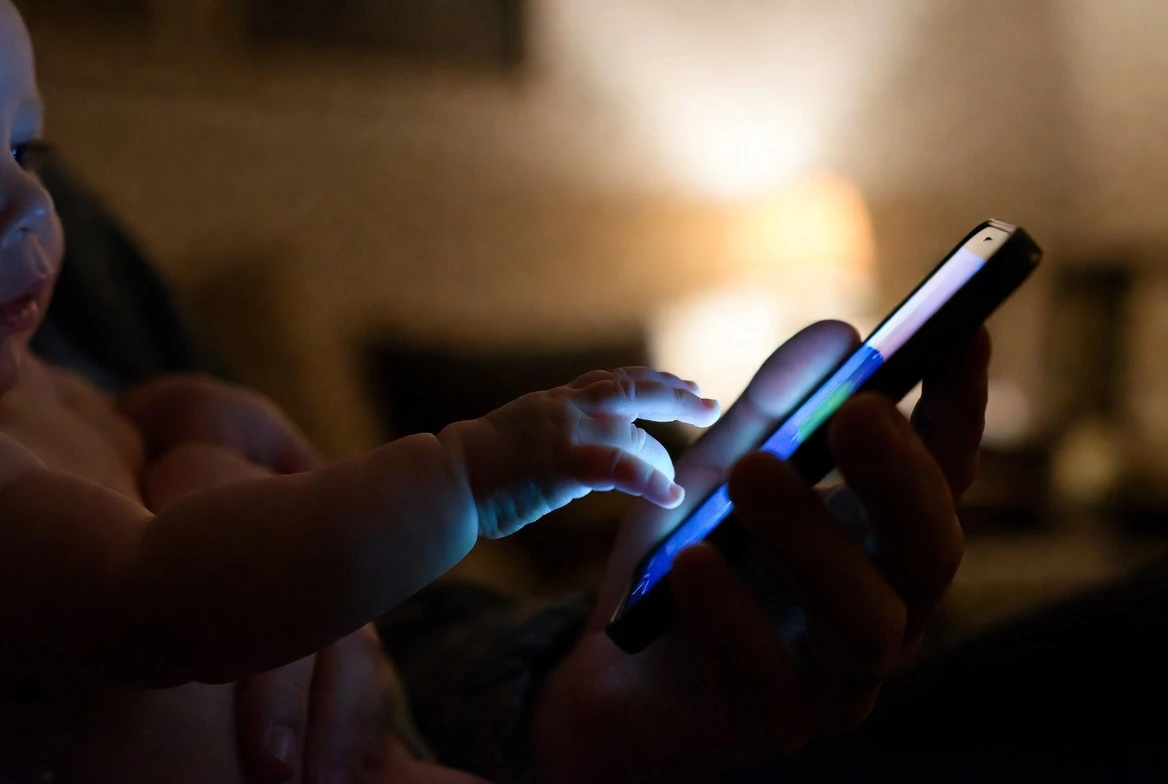
The headline figures come from the parent survey rather than the academic literature, and they sketch a daily reality in which screens are already embedded in the lives of very young children. Screen use was reported in over 70% of babies and under-twos, with some using screens for several hours a day. A meaningful minority of babies were exposed to up to eight hours of screen time per day. One in ten UK babies now regularly falls asleep with a screen on.
- Over 70% of UK babies and under-twos use screens
- 85% of parents received no screen-time guidance from health professionals
- 1 in 10 UK babies regularly falls asleep with a screen on
- Up to 8 hours of daily screen exposure reported in a minority of babies
Eighty-five percent of parents in the survey said they had received no information or guidance about screen time from midwives, health visitors, GPs or educators. Parents who took part described offering screens to help manage the realities of daily life, from completing domestic tasks to coping with exhaustion and limited support. One participant described their baby’s screen time as “a survival skill in my house.” The figures underline a gap between existing public-health guidance and what reaches families in practice: the World Health Organization advised against screen time for under-twos in 2019, and the American Academy of Paediatrics reiterated its recommendation in 2024, yet both thresholds are being exceeded at scale.
The Risks the Review Lists
The review does not single out one harm; instead it lays out a cluster of associations that touch nearly every system of early development. Several of the items will be familiar to anyone who has tracked debates about adolescent screen use, but the review’s authors argue the under-two population has been largely missed in UK policy.
- Reduced opportunities to bond with caregivers
- Reduced play with peers
- Limited language development
- Increased risk of overstimulation
- Difficulty sleeping
- Eye health implications, including short-sightedness (myopia)
- Increased risk of childhood obesity
- Reliance on devices for emotional regulation
- Behavioural difficulties
- Later challenges with friendships
Eye health is one of the more concrete links in the list, and it sits alongside the rising global tide of childhood myopia. India’s childhood myopia crisis tied to early screen exposure is a parallel data point, with one recent estimate projecting a national myopia rate of 53% by 2050. The review also catalogues what it calls “passive soothing,” a pattern in which infants turn to digital devices for comfort rather than to a parent, raising separate questions about attachment and emotional regulation in the earliest years.
The lead authors are careful to note what the data does and does not show. “However, the review does not establish causal links between screen use and specific developmental conditions,” the report states, a caveat repeated by the team in interviews. The framing matters: a list of associations is a different kind of evidence from a causal claim, and the authors frame the work as a call for early intervention and more research rather than as proof of harm.
The Adult Guidance Gap
Underneath the headline findings sits a quieter observation that the iADDICT team treats as the report’s deeper alarm. Adult screen use is itself unguided in the UK, and the parents who set the household digital tempo are modelling the very behaviour the under-two guidance asks them to limit. Researchers describe a feedback loop: children born into households with high adult screen use encounter screens earlier, and parents in those households report fewer mechanisms for setting limits because they have no benchmarks of their own.
Screen time guidelines exist for children but are not being followed, in part because the adults who are setting the precedents for societal use are themselves without guidance. As role models, unguided adults are inadvertently teaching children and babies to develop unhealthy habits and relationships with screen devices and this has to change.
Rafe Clayton, Senior Lecturer in Media and Communication at the University of Leeds, made the point in a statement released 26 June 2026. The framing reflects a wider policy gap the authors identify. The British government provides screen-time guidance for children, including the recent under-fives recommendations, but has not issued adult screen-time guidance, despite survey evidence cited by the team that the public both expects and wants it. The full iADDICT systematic review argues that an adult threshold is a missing upstream control: change the default at home and the household pattern for babies shifts with it.
Carmen Clayton, Professor of Family and Cultural Dynamics at Leeds Trinity University and the report’s other co-lead, pointed to the social texture of the problem. “Screen time is heavily interwoven into the lives of many families throughout the day,” she said. “Caregivers are calling for more guidance, but professional support is limited. The Government must consider how to engage with families better about problematic screen use, whilst being sensitive to the fear of judgement that many parents face when opening up about such issues.” Her remarks echo the authors’ repeated insistence that parents should not be the focus of blame.
The team has built that position into its recommendations. The WhiteRose repository copy of the systematic review is paired with a call for a new “baby screen time risk assessment” run jointly with policymakers, healthcare workers and early years practitioners. The proposed tool would sit alongside the existing health-visitor network and would, in the team’s words, “intervene where developmental vulnerabilities may be emerging” rather than waiting for a diagnosis further down the line.
How the Government Has Responded
The Department for Education has defended the existing guidance as the first of its kind for the under-fives age group. A spokesperson said: “We’re proud of our first-of-its-kind screen time guidance for parents of under-fives, which provides clear, trusted support on an issue we know can be challenging for families.” The department framed the guidance as supportive of parental judgment rather than prescriptive.
The children’s commissioner for England, Rachel de Souza, who helped draw up the guidance, said it was intended to support, not replace, parental judgment. “For children under two, the recommendation to avoid screen time is clear, but acknowledges the realities of our world today and that some shared screen use in a limited number of circumstances, such as video-calling relatives or supported learning, is perfectly normal,” she said. The shared-screen caveat is precisely the language the iADDICT review is asking ministers to revisit.
Andrea Leadsom, whose 1001 Critical Days Foundation commissioned the study, called the work “a wake-up call” and pushed responsibility outwards, away from parents and toward industry and the state. “Parents must not be blamed for a problem they did not create,” she said. “Technology companies must play their part too. Parents should not be presented with content that is labelled or promoted as suitable for babies when the evidence points to the contrary.” The foundation has campaigned for Best Start Family Hubs where new parents could access trusted advice and practical help in the baby’s earliest years.
What Parents Can Try Now
The iADDICT review is explicit that more research is needed on which strategies actually work, and it does not claim the items below are exhaustive. They are, however, the strategies the team flagged as having evidenced benefits.
- Take young children outdoors to spend time in nature, which prevents screen time and supports physical development and eye health.
- Avoid using screens at mealtimes, which may correlate with healthier eating habits.
- Provide access to non-digital toys, which can reduce screen time and support development.
- Spend time in the physical presence of others, meeting, interacting and playing with other people, which supports social development.
The team is at pains to say the list should not feel like a checklist for individual parents to fail. Screens are embedded in daily routines, from paid work and grocery shopping to healthcare access and family communication, and passive exposure is what the review itself calls “societally unavoidable.” The University of Leeds announcement of the review includes a longer write-up of the parent survey and the qualitative comments behind the recommendations. The recommendations sit alongside a wider call, also from the 1001 Critical Days Foundation, for clear labelling rules that stop baby-targeted content being marketed as suitable when the underlying evidence points the other way.
Frequently Asked Questions
What did the iADDICT review actually find?
The systematic review found that screen exposure during the first 1001 days of life is associated with a range of developmental risks for under-twos, including limited language development, sleep difficulties, eye-health implications including short-sightedness, and increased risk of childhood obesity. The review does not establish causal links between screen time and any specific developmental condition.
Does the review say no screens at all for babies?
The review recommends that under-twos should not receive any intentional, regular screen time. It accepts that passive exposure is societally unavoidable, but argues that adding deliberate use compounds risk without any meaningful benefit.
How common is screen use in babies?
Screen use was reported in over 70% of UK babies and under-twos surveyed, with some using screens for several hours a day. A meaningful minority were exposed to up to eight hours per day, and one in ten babies now regularly falls asleep with a screen on.
Is the UK government responding?
The Department for Education has defended its existing under-fives guidance as a first-of-its-kind support for parents. The iADDICT team is asking ministers to reconsider the guidance’s shared screen time exception for under-twos and to create a baby screen-time risk assessment run through health services.
Why focus on adult screen habits?
Because the review finds parent and caregiver screen time correlates with babies’ screen time, and because the UK currently has no adult screen-time guidance. The authors argue that an adult threshold is the missing upstream control: change the household default and the pattern for babies shifts with it.