The number that separates the new zoom leader from last year’s champion is small. 15 centimeters versus 52. That is the close-focus gap between the OPPO Find X9 Ultra’s 3x telephoto and the Samsung Galaxy S26 Ultra’s redesigned 5x camera, and it is the cleanest measure of how far Samsung has slipped on smartphone optics in 18 months.
For three generations Samsung set the zoom benchmark with a 10x periscope, then defended it with computational photography after switching to a 5x lens. OPPO’s new flagship ends that defense by bringing a true 10x optical camera back to the Ultra tier and pairing it with a 200-megapixel (MP, image sensor resolution) 3x module that doubles as a telemacro lens. The pressure now sits on the Galaxy S27 Ultra to answer a question Samsung has not had to face since the Note 20: can software still win the zoom race on its own?
Samsung’s Zoom Moat Just Cracked
Samsung built a real moat between 2020 and 2024. The Galaxy S20 Ultra introduced 100x Space Zoom, the S21 Ultra refined dual-tele hardware, and the S22 through S24 Ultras held the perception lead with multi-frame fusion and AI sharpening that made cropped images look closer to native captures than the underlying hardware justified.
That advantage held because no rival shipped a credible 10x optical system at flagship scale outside China. Vivo’s X100 Ultra and Huawei’s Pura 80 Ultra came close on paper, but neither reached Samsung’s distribution channels in Western Europe, the United States, or India. OPPO’s previous Find X8 Ultra ran a 6x telephoto that kept the company’s perceived lead at 30x and 50x intact for one more cycle.
OPPO has now closed that distribution gap. As confirmed in OPPO’s global debut announcement, the new Ultra is the first Find-series Ultra sold outside China, reaching the UK, Europe, India, and most global markets from May. Samsung’s current flagship answers with the same main-camera resolution and a redesigned 5x at f/2.9, but no 10x optical system and no large-format 3x. The hardware ledger no longer favors Samsung.
OPPO’s 200MP Telephoto Changes the Optical Math
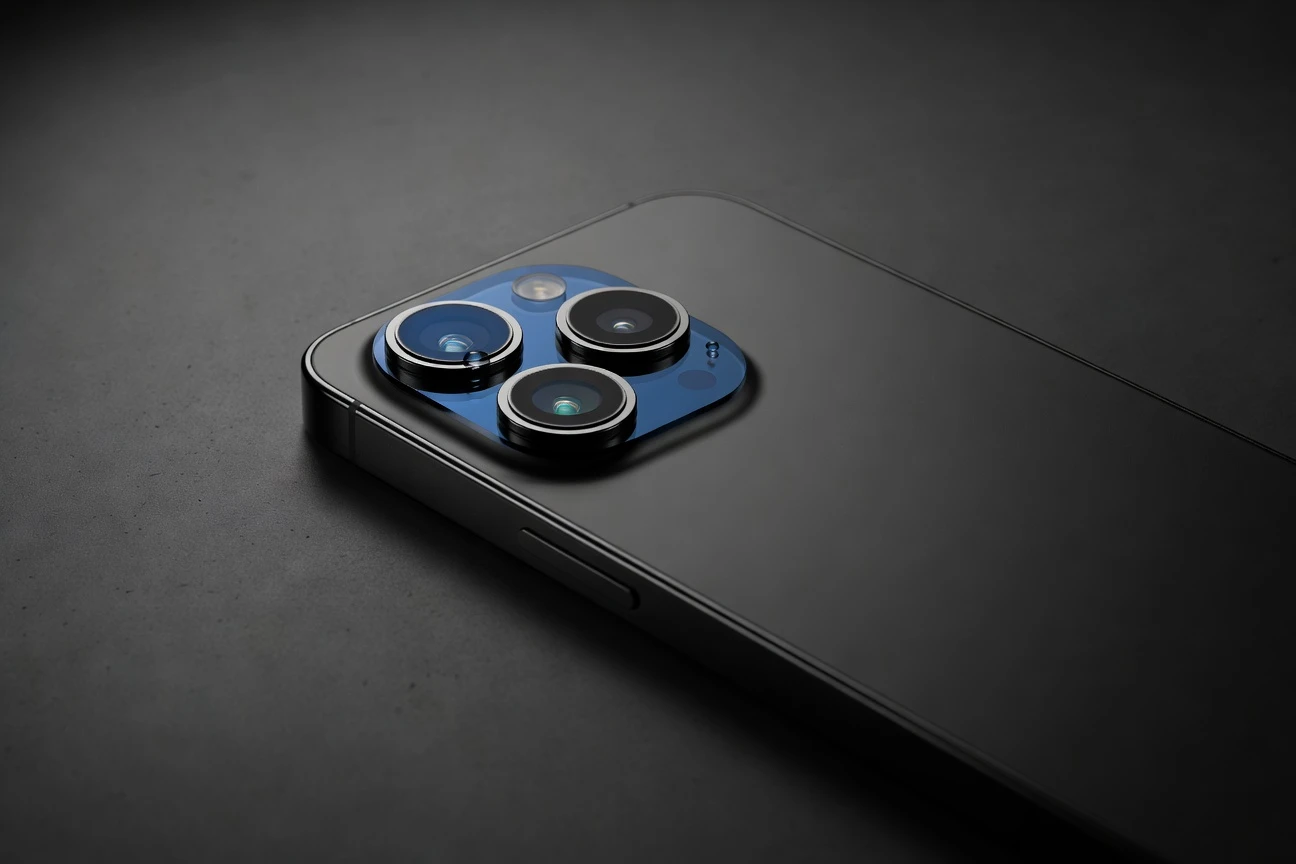
The new 3x telephoto runs on a 1/1.28-inch sensor, the largest in its class for a smartphone telephoto, paired with f/2.2 optics and optical image stabilization (OIS, the in-lens system that counteracts hand shake). OPPO specifies the module as a Hasselblad-tuned Ultra-Sensing Telephoto on the official Find X9 Ultra specifications page.
Two design choices flow from that sensor size. First, a high-resolution source crop holds detail at 10x and 20x because the image starts from a far larger optical pixel count than a 50MP sensor cropped to the same field of view. Second, the optical design supports a close-focus distance short enough to turn the 3x lens into a working macro tool at 70mm equivalent focal length. That is the combination Samsung does not have anywhere in its current line.
Samsung’s existing 3x lens runs a 1/3.52-inch sensor at 10MP, the same module since the Galaxy S23 Ultra. The 5x periscope sits at 50MP on a 1/2.52-inch sensor. Neither has been upgraded with the optical headroom OPPO’s new 3x telephoto carries, and the data gap shows up first in close-range work and last in distant detail recovery. Riverdale Standard covered the earlier camera leak that previewed this hardware ahead of the April launch event.
Why 15cm Beats 52cm in Telemacro
Telemacro is the most underrated camera feature of the year. The concept is simple: a telephoto lens that can focus close enough to capture small subjects without the wide-angle distortion that makes traditional smartphone macro shots look like fish-eye photos of insects. The big sensor on a long lens produces real optical separation between subject and background, the way a dedicated camera with a macro prime would.
A short close-focus distance on a 70mm equivalent lens delivers a working magnification close to half life size, in the same range as an APS-C macro prime. Background blur happens because the sensor is physically large, not because a depth model is cutting around the subject in software. That difference is visible immediately in skin, jewellery, fabric, and food work, where computational bokeh tends to crumble at the edges of complex shapes.
Samsung is moving the other way. The Galaxy S25 Ultra’s 5x camera could focus at 26 centimeters, which gave it a usable close-up envelope. The newer Ultra’s All Lens on Prism (ALoP, a stacked optical design that places the lens elements above the prism rather than after it) module widened the aperture to f/2.9 but pushed minimum focus to roughly double the prior range. The close-up window the previous generation still partially offered has collapsed.
Here is how the close-range envelope compares across the three relevant flagships.
| Phone | Telephoto Used for Macro | Sensor Size | Minimum Focus Distance |
|---|---|---|---|
| OPPO Find X9 Ultra | 200MP 3x at 70mm | 1/1.28-inch | 15cm |
| Galaxy S25 Ultra | 50MP 5x at 111mm | 1/2.52-inch | 26cm |
| Galaxy S26 Ultra | 50MP 5x ALoP at 111mm | 1/2.52-inch | 52cm |
For anyone who shoots flowers, food, watches, or any subject smaller than a coffee cup, that table is the entire conversation. Ultrawide macro can substitute in a pinch, but the perspective looks unnatural and the lens has to be almost touching the subject.
Past 10x, Optics Reclaim Control
The long-range half of the story repeats the same physics lesson at a different focal length. OPPO’s flagship runs a 50MP 10x periscope alongside the 3x, reaching 230mm equivalent without any digital cropping. Samsung’s current Ultra reaches that same field of view by cropping its 5x sensor by roughly four times, then running the result through AI reconstruction.
Samsung’s processing pipeline is genuinely strong. Multi-frame fusion, the company’s deep-learned sharpening models, and Horizon Lock stabilization at long zoom keep the camera usable at 30x and even 50x in good light. The company hides the optical gap better than its hardware should allow on a still-life image of a building facade.
But every doubling of digital zoom beyond optical pulls signal out of a smaller patch of sensor. At 20x and 30x, OPPO retains finer architectural lines and cleaner text legibility because the image is being cropped from a true 10x capture rather than upscaled from a 5x crop. Reviewers comparing the two phones side by side have flagged the same pattern in repeated tests of urban skylines and distant signage. The OPPO global press release describes the periscope as a Quintuple Prism Reflection design, a five-bend light path that fits a long focal length into a thin body.
Software can narrow that gap, but it cannot fully close it. The lesson Samsung taught the industry between 2022 and 2024 now points back at the company: optics define the ceiling, and processing decides how close to it the user actually gets.
Samsung’s ALoP Lens Solved One Problem and Created Another
The ALoP redesign was a real engineering achievement. By stacking the lens group above the prism instead of behind it, Samsung freed roughly a third of the internal volume the old periscope occupied. That space went into a bigger battery and a slimmer body, and the wider aperture improved low-light reach versus the prior periscope design. Samsung quantified the gain in its Galaxy S26 series launch announcement: 47% more light on the main camera and 37% more on the 5x telephoto compared to the Galaxy S25 Ultra.
The trade-off was the close-focus envelope. ALoP designs require longer travel between the front element and the sensor to focus on near subjects, and Samsung chose not to add a dedicated macro focusing group to compensate. The result is a phone that gathers more light at long range and gives up almost all close-range flexibility on the same lens.
The math on the telephoto trade-off:
- 37% more light on the 5x telephoto versus the prior generation, per Samsung’s own measurements
- 52cm vs 26cm: minimum focus distance roughly doubled compared to the S25 Ultra’s 5x
- Roughly a third less module volume, freeing internal space for battery and a thinner overall body
Samsung’s bet was that ultrawide macro could fill the close-up gap. Real-world feedback so far has not borne that out. Users complain that the ultrawide’s perspective distortion and weak subject separation are exactly the problems telemacro was supposed to solve, and that they keep reaching for the 5x lens out of habit only to back away from the subject when it refuses to lock focus.
Samsung’s S27 Ultra Decision Tree
The next-generation rumor cycle has been unusually active for May. Leaker Ice Universe, the most-cited Samsung tipster of the past decade, reported in late April that Samsung plans to remove the 3x lens entirely on the 2027 flagship and rely on cropping from the high-resolution main sensor for the 3x focal length, freeing the camera bump for a bigger battery and a thinner stack. Multiple independent supply-chain checks have since echoed that direction.
That move works only if one of two things happens. Either the 5x camera gets a meaningful sensor upgrade and a much shorter minimum focus distance, effectively becoming a hybrid mid-range and telemacro lens, or the main sensor’s 3x crop performs close enough to optical that users do not notice the missing module. Neither path has appeared in any credible component leak yet.
The risk if Samsung gets the call wrong:
- No 3x lens and no telemacro upgrade on the 5x means ultrawide macro becomes the only close-up option, the same regression S26 Ultra owners are already complaining about on the current generation.
- An unchanged 5x sensor against OPPO’s new 3x and 10x optical stack widens the optics gap rather than closing it, leaving software to do all of the work for a second cycle in a row.
- A main-sensor crop at 3x can match optical resolution in good light, but loses ground in low light where pixel binning on a full-sensor capture helps more than the cropped slice does.
The Find X9 Pro already ships a Hasselblad-tuned 200MP telephoto in a smaller body, suggesting OPPO can push the same large-sensor strategy down a tier. If Samsung enters fiscal 2027 with a thinner Ultra and a worse close-range camera, the comparison reviews will write themselves before the box is even opened.
The decision is not academic. Pre-orders for Samsung’s next flagship typically open in late January, which means the bill of materials is locked by late summer. If a meaningful 5x sensor upgrade or a serious main-camera macro mode lands in that window, the new Ultra closes most of the OPPO gap on paper; if neither does, the current camera envelope becomes the 2027 baseline, and the optics deficit hardens into a two-cycle story Samsung will spend the rest of the decade explaining away.