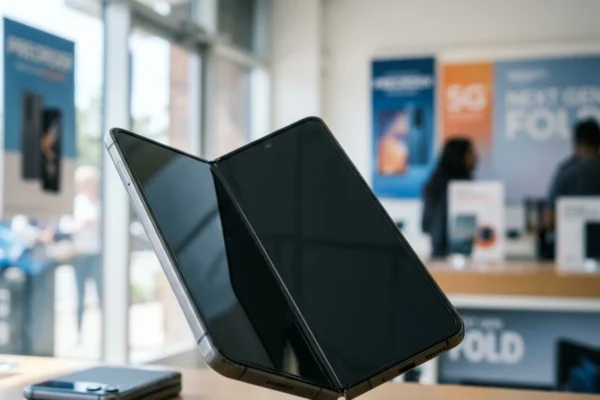
Samsung showed off two new smartwatches this week at Galaxy Unpacked, the Galaxy Watch 9 and the Galaxy Watch Ultra 2, and both share something neither of their predecessors had: a Qualcomm chip. For the first time since Samsung began building its own wearable silicon, every new Galaxy Watch runs on someone else’s processor.
The chip in question is Qualcomm’s new Snapdragon Wear Elite, and its arrival quietly closes out Samsung’s experiment in owning its own wearable hardware stack. That is good news for anyone buying one of these watches. It is a harder story for Samsung’s long-term chip ambitions.
Two Watches, One New Chip Inside
The Galaxy Watch 9 comes in 40mm and 44mm aluminum cases, priced at $379 and $409 for Wi-Fi models, or $429 and $459 with LTE. The Galaxy Watch Ultra 2 ships in a single 47mm titanium grade 4 case for $699. Both watches climbed in price from their predecessors, the Watch 9 by $30 and the Ultra 2 by $50, putting the new Ultra 2 well above the original Watch Ultra’s $649 starting point.
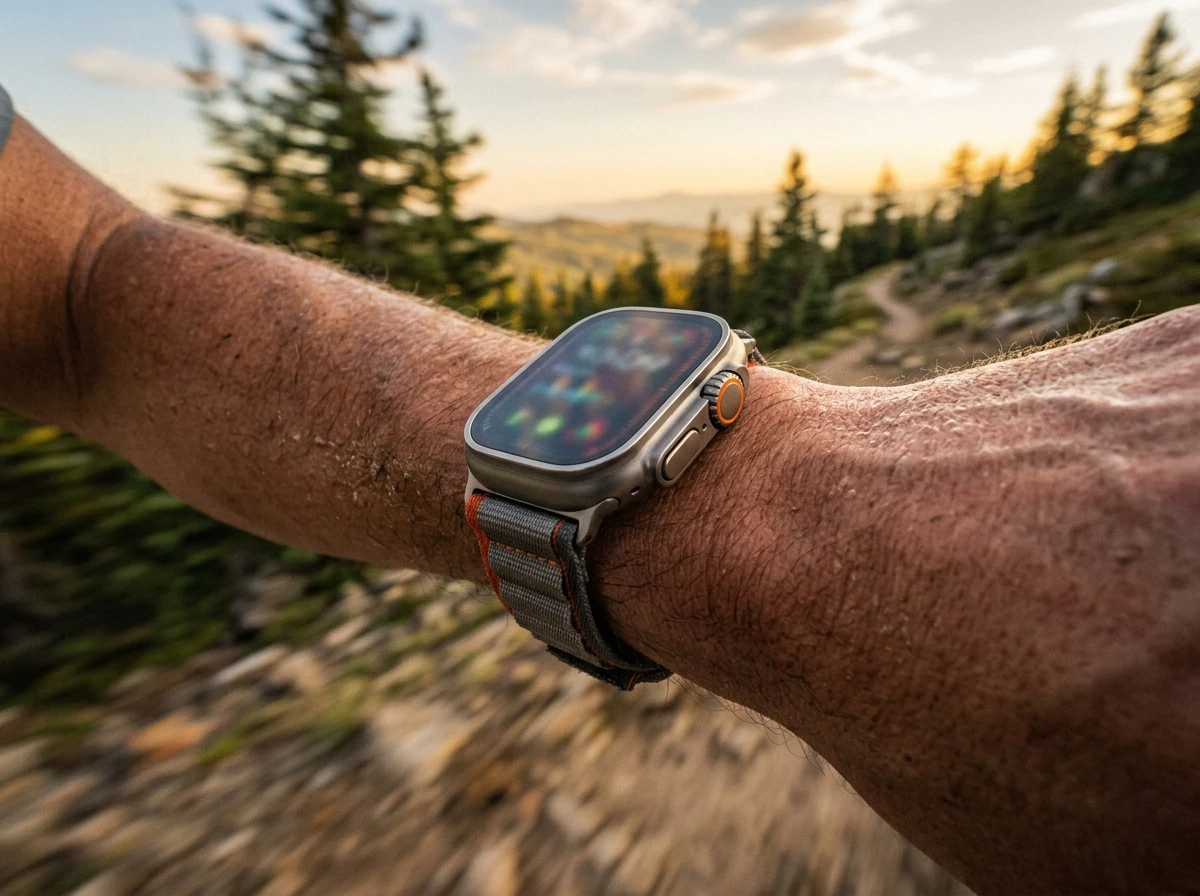
Samsung’s own announcement frames both devices as a health companion worn on the wrist, and the design language backs that up. The Watch 9 looks nearly identical to last year’s Watch 8, a round display set into a slightly squared aluminum base. The Ultra 2 keeps its rugged squircle shape but trims down: it is 12% thinner and 25% lighter than the original Watch Ultra, now measuring 10.7mm thick and weighing 61.5 grams.
Most of that matches what had already circulated in leaks that surfaced before Samsung’s London Unpacked event. The one detail that hadn’t fully landed until launch day was just how completely Samsung had walked away from its own processor.
Samsung’s In-House Chip Era Quietly Ends
Every Galaxy Watch through the Watch 8 ran on Samsung’s own Exynos silicon, most recently the Exynos W1000 that debuted with the Watch 7 in 2024. Samsung had built its own wearable chips since shifting away from Qualcomm around the Watch4 in 2021, a move that let it fine-tune performance and battery life without depending on an outside supplier.
That run ends with the Watch 9 and Ultra 2. Both now use Qualcomm’s Snapdragon Wear Elite, and the reasoning comes down to one gap Samsung’s own chip never closed: the Exynos W1000 had no dedicated neural processing unit for on-device AI. As Gemini-powered features became the centerpiece of Samsung’s pitch for these watches, that gap turned into a real handicap.
The switch wasn’t a surprise to anyone paying attention to chip announcements. Samsung executive InKang Song appeared on stage at Qualcomm’s press conference at MWC in March to confirm the next Galaxy Watch would run on the new platform, months before Unpacked made it official. Samsung had already previewed pieces of this shift with an AI health companion teased weeks earlier, well before either watch had a name attached.
What the Snapdragon Wear Elite Adds
Qualcomm built the Wear Elite on a 3nm process with a mixed core design: one high-performance Cortex-A78 core paired with four efficiency-focused Cortex-A55 cores, an Adreno GPU, and a Hexagon NPU capable of running on-device models with up to 2 billion parameters. A separate low-power always-on unit, which Qualcomm calls a sensing hub, handles background tasks without waking the full chip.
- 5x faster single-core CPU performance compared with Qualcomm’s previous wearable platform, according to the company
- 7x more powerful graphics performance for the same comparison
- 12 TOPS of dedicated AI processing through the Hexagon NPU
- 30% longer daily battery life claimed for the chip itself, with up to 50% charge in ten minutes
Rounding out the platform is Bluetooth 6.0, 5G RedCap support, ultra-wideband, GNSS positioning and a new low-power Wi-Fi mode for constant cloud syncing. Android Headlines had previously pointed to a rumored 50% overall performance jump specifically for the Galaxy Watch 9, a figure Samsung hasn’t confirmed on the record but which lines up with Qualcomm’s own architecture claims.
Where the Watch 9 and Ultra 2 Split
Past the shared chip, the two watches are built for different people. The Watch 9 stays an everyday health tracker; the Ultra 2 is pitched at people who run trails and dive.
| Spec | Galaxy Watch 9 | Galaxy Watch Ultra 2 |
|---|---|---|
| Starting price | $379 (40mm), $409 (44mm) | $699 |
| Case material | Aluminum | Titanium grade 4 |
| Display | 1.3in or 1.5in Super AMOLED, 3,000 nits | 1.52in Super AMOLED, 5,000 nits |
| Thickness / weight | 8.6mm; 31.5g to 34g | 10.7mm; 61.5g |
| Battery capacity | 390mAh or 445mAh | 800mAh |
| Rated battery life | Up to 30 hours (always-on display) | Up to 60 hours (regular use), 100 hours (power saving) |
| Water resistance | 50m (5ATM), IP68 dust | 100m (10ATM), IP69K dust |
| Storage | 32GB | 64GB |
| Processor | Snapdragon Wear Elite | Snapdragon Wear Elite |
The health sensor suite is identical on paper: bioelectrical impedance, electrical heart sensor, gyro, geomagnetic, infrared temperature, optical heart rate and light sensors on both. The Watch 9 keeps the antioxidant index feature added to the Watch 8, which reads skin carotenoid levels through colored LEDs. Both watches also run Google Gemini as their voice assistant and support Samsung Wallet and Google Wallet for payments.
The Ultra 2’s Adventure Toolkit
Where the Ultra 2 pulls ahead is in the extras built for people who leave pavement behind.
- Hydration guidance that compares heart rate, pace and skin temperature against a wearer’s body composition data to estimate sweat loss and prompt water breaks in real time
- A dedicated trail run mode with downloadable maps, elevation tracking and terrain impact monitoring
- A diving app that tracks depth and temperature, though it isn’t preloaded at launch
- An emergency siren layered on top of the fall detection and SOS features both watches share
Early hands-on coverage has been favorable about how that translates in practice. A BigGo Finance review of the Ultra 2 described its battery life as finally rivaling the Apple Watch Ultra 3, a notable claim given how far behind Samsung’s wearables have trailed Apple’s on endurance in past years. Real-world testing, though, found the jump more modest than the 35% larger battery cell alone would suggest, a gap other reviewers are still measuring against Samsung’s 60-hour rating.
Who Wins This Trade
Buyers come out ahead here. A faster chip, a real AI accelerator and meaningfully better battery life are upgrades nobody will complain about, and Samsung is using the moment to compete on more than hardware. Tech Times reported the Watch 9 will get five years of Wear OS updates, compared with three years for Google’s own Pixel Watch, a software commitment Samsung can now make partly because it no longer has to maintain its own chip roadmap alongside it.
What Samsung gives up is quieter but real. Building the Exynos W1000 in house was supposed to be a differentiator, proof Samsung could control its own wearable performance the way Apple controls its. That argument is harder to make once the same Qualcomm silicon that powers Samsung’s watches also ships inside Google’s, OnePlus’s and most other Android wearables on shelves. The hardware edge Samsung spent years building now runs through a supplier every rival can buy from too.
Frequently Asked Questions
Will the Galaxy Watch 8 get the new Snapdragon chip?
No. The switch to Qualcomm’s Snapdragon Wear Elite applies only to the Watch 9 and Watch Ultra 2. The Watch 8 and earlier models keep running Samsung’s Exynos W1000, and Samsung hasn’t announced a chip upgrade path for those devices.
How many years of software updates does the Galaxy Watch 9 get?
Samsung is committing to five years of Wear OS updates for the Watch 9, two years longer than the three years Google currently promises for its Pixel Watch line, according to Tech Times.
How does the Watch Ultra 2’s hydration guidance actually work?
It cross-references heart rate, pace and skin temperature against a wearer’s stored body composition data to estimate how much fluid they’re losing through sweat, then prompts them to drink water before dehydration sets in, a feature reviewers have called a first for a smartwatch.
Did the Ultra 2’s bigger battery deliver a proportionally longer battery life?
Not quite. The battery cell grew 35% over the original Watch Ultra, but early hands-on testing found real-world endurance gains fell short of that jump, even with Samsung rating the watch for up to 60 hours of regular use.
Is the Galaxy Watch Ultra 2’s diving app ready to use out of the box?
No. The dive app that tracks depth and temperature is built into the Ultra 2’s software but isn’t preloaded at launch, so its real-world usefulness is still unproven.