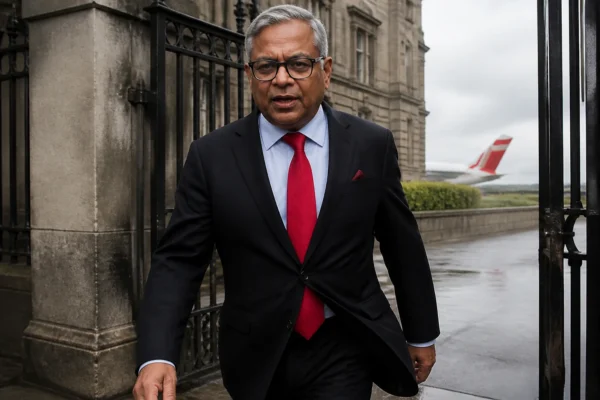
The French bakery chain PAUL opened its first Georgian outlet in 2016 and now runs nine across the country, with four more planned by 2029. Chairman Zaza Mikadze frames the expansion as more than a commercial story: he says the chain has reshaped what breakfast looks like in Georgia.
That cultural claim sits at the center of how Mikadze talks about the brand. The same nine-outlet footprint that fills a row in the company’s development plan also doubles, in his telling, as the infrastructure for a new morning eating habit. That habit, he argues, is one the Georgian market did not have before PAUL arrived.
Nine Outlets and a Plan for Thirteen
PAUL’s Georgian network has grown to nine locations since the first outlet opened in 2016. Today the footprint covers Tbilisi and the regions, with continued growth planned on both fronts. The company has set a clear target of 13 chains by 2029. Four more locations are scheduled to open within the next three years.
Mikadze, who chairs the local franchise, describes the expansion as plan-driven. “We always work according to a plan,” he said.
Western Georgia is the next area of focus, a geographic shift from the Tbilisi-centric early years that defined the brand’s first decade. Cities like Batumi and Kutaisi sit on the radar as the next layer of the footprint. The network continues to expand both within Georgia and internationally, though the bulk of the near-term growth sits inside Georgian borders.

How a Paris Café Became a Georgian Chain
Mikadze first encountered the PAUL concept during visits to Paris in the 1990s. He liked it immediately and kept going back, visiting PAUL cafés across Europe as both a tourist and a would-be entrepreneur.
Frequent visits to PAUL locations, combined with his own experience as a customer, eventually pushed him to explore bringing a similar concept to Georgia. The franchising process itself, Mikadze says, was not difficult. “A very good, friendly relationship was established with the leadership,” he said, pointing to trust as the key factor. The personal rapport with PAUL’s parent leadership, rather than a formal competitive bid, was what opened the door.
Still, completing all the procedural stages took about two years. “It took about two years until the first opening. It was 2016,” he said.
PAUL itself dates to 1889, when Charlemagne Mayot established a bakery in Croix in northern France. The chain has since grown into a network of more than 750 bakery-cafés across 47 countries. Georgia is listed among its 2016 market entries alongside Portugal and Vietnam, and the Tbilisi launch in April of that year made it the country’s second international bakery-café chain.
- 1990s: Mikadze first encounters the PAUL concept in Paris
- Around 2014: Franchising negotiations with PAUL’s leadership begin
- 2016: First PAUL outlet opens in Tbilisi
- Present: Nine outlets operating across the country
- 2029 (target): Network reaches 13 chains
Mikadze’s Track Record in the F&B Sector
PAUL was not Mikadze’s first venture in food and beverage. Before bringing the French brand to Georgia, he had already built operational experience through two earlier projects: Khachapuri Hut and the Moka & More café chain.
That prior experience, Mikadze says, made it easier to manage the introduction of an international franchise to the Georgian market. The Moka & More chain gave him direct exposure to café operations, customer service, and the daily rhythms of running a branded food business before the PAUL launch. Khachapuri Hut, a Georgian food concept, added a different layer of F&B experience, rooted in local cuisine and traditional dining habits rather than imported standards. Together, the two ventures created a foundation for handling the operational demands of a premium international brand, from supply chain management to staff training to quality control across multiple locations. PAUL, he notes, was his third F&B project.
The French Supply Chain Behind the Counter
Quality control is central to PAUL’s model in Georgia, and a large share of the menu runs through French supply chains. “The majority of our products are imported from France,” Mikadze said, noting that the flour used in Tbilisi is the same as the flour used in Paris. “It’s the same flour here as that used in Paris, for example.”
The company does not compromise on inputs. “We cannot purchase low-quality products: everything must be of the highest standard,” he said.
That commitment to imported ingredients carries cost implications, but Mikadze says the brand’s pricing remains competitive. In some cases, PAUL’s prices are more affordable than those of its competitors, according to him. The facilities themselves are built to international standards, with Mikadze noting that “all facilities are equipped at the highest level.” For customers, the result is a product that aims to match what they would find in a PAUL bakery in Paris, from the bread on the shelf to the espresso in the cup to the pastry in the display case.
A Model Built on Universal Appeal
The brand’s broad customer base is by design, not accident. PAUL does not target a specific demographic in Georgia. Schoolchildren, students, and elderly people all come through the doors, Mikadze said, and the company has no restricted target segment. The approach fits the franchise model: PAUL’s global identity is built on being a neighborhood bakery, not a destination for a specific crowd.
That universal reach, in his view, has been one of the main drivers of the brand’s success. Growing competition in the Georgian F&B market has not eroded PAUL’s position, according to Mikadze. Customers associate the name with consistent quality, and pricing remains competitive against rival cafés and bakeries. A café that tries to appeal to a narrow slice of the market limits its growth potential, Mikadze argues, while a brand that welcomes everyone builds a deeper moat against competitors.
A Breakfast Culture Built One Croissant at a Time
Beyond the commercial numbers, Mikadze frames PAUL’s impact in cultural terms. He argues the chain has reshaped everyday eating habits in Georgia, particularly around breakfast and morning café visits. Light breakfasts and coffee stops, he says, have become a more regular part of daily life since the brand arrived in 2016.
PAUL has created its own niche: the breakfast culture, the croissant culture.
Zaza Mikadze, Chairman of PAUL Georgia
The claim is not just about PAUL’s own sales. Mikadze points to a broader shift in when and how Georgians eat in the morning, a change he attributes to the brand’s presence on the high street. The morning café visit, once a weekend habit for a small segment of the population, has become a routine option for a wider range of customers, including students, office workers, and families. The morning-focused model has parallels in other markets: in Atlanta, a viral brunch spot is now expanding to a second location after building a loyal following among morning diners.
The dynamic, a food brand creating or capturing a breakfast habit and then expanding on the back of it, is one that PAUL has played out on a longer timeline in Georgia. Mikadze sees the cultural shift as the brand’s most lasting contribution, beyond the commercial metrics of outlets opened and revenue earned. The breakfast niche, he argues, is PAUL’s own. It is a position the chain has held since its 2016 debut, and one that competitors have struggled to dislodge even as the broader café scene in Tbilisi has grown more crowded.
Where the Network Goes Next
The next phase of growth points west. Mikadze says future development will focus on western Georgia, a geographic shift from the Tbilisi-centric footprint that has defined the brand’s first decade in the country. Four new locations are planned within the next three years, with a specific pipeline already taking shape. The 13-chain target sits as a clear milestone for 2029.
The expansion comes as the broader PAUL brand continues to add markets globally. The chain operates in 47 countries, with newer entries following Italy and Mongolia in recent years. More detail on the chairman’s plans sits in the full interview with Zaza Mikadze on PAUL’s Georgian expansion.
The brand’s broader trajectory is mapped across PAUL’s official company site listing its global market presence.
Meanwhile, a separate interview with PAUL president Maxime Holder on the chain’s global direction offers a top-level view of where the company is heading next.
Frequently Asked Questions
When did PAUL bakery first open in Georgia?
PAUL opened its first Georgian outlet in 2016, after roughly two years of franchising negotiations. The Tbilisi launch came in April of that year, according to a Georgia Today report from the time.
How many PAUL outlets are in Georgia?
The network includes nine outlets, all in Tbilisi, as of the most recent company statement. The company’s LinkedIn page lists nine branch locations across the capital.
What is PAUL’s expansion plan in Georgia?
The company plans to open four more locations within three years and reach 13 chains by 2029. Future development will focus on western Georgia, according to Chairman Zaza Mikadze.
Who brought PAUL to Georgia?
Zaza (Gela) Mikadze, Chairman of PAUL Georgia, led the effort to bring the French brand to the country. He had previously founded the Khachapuri Hut and Moka & More café chain. Mikadze first encountered PAUL during visits to Paris in the 1990s.
Are PAUL’s products in Georgia imported from France?
The majority of PAUL’s products in Georgia are imported from France, according to Mikadze. That includes the flour used in the chain’s bread and pastries, which Mikadze says is the same product used in PAUL’s Paris locations.