NASA launched a robotic spacecraft from a plane at 40,000 feet over the South Pacific early Friday, beginning a months-long chase to save the Swift space telescope from burning up in Earth’s atmosphere. The $30 million mission, run by Arizona startup Katalyst Space, marks the first time a commercial spacecraft has been sent to capture an uncrewed NASA observatory that was never designed to be serviced in orbit. If the effort works, it could reshape how the world’s aging satellites are kept alive.
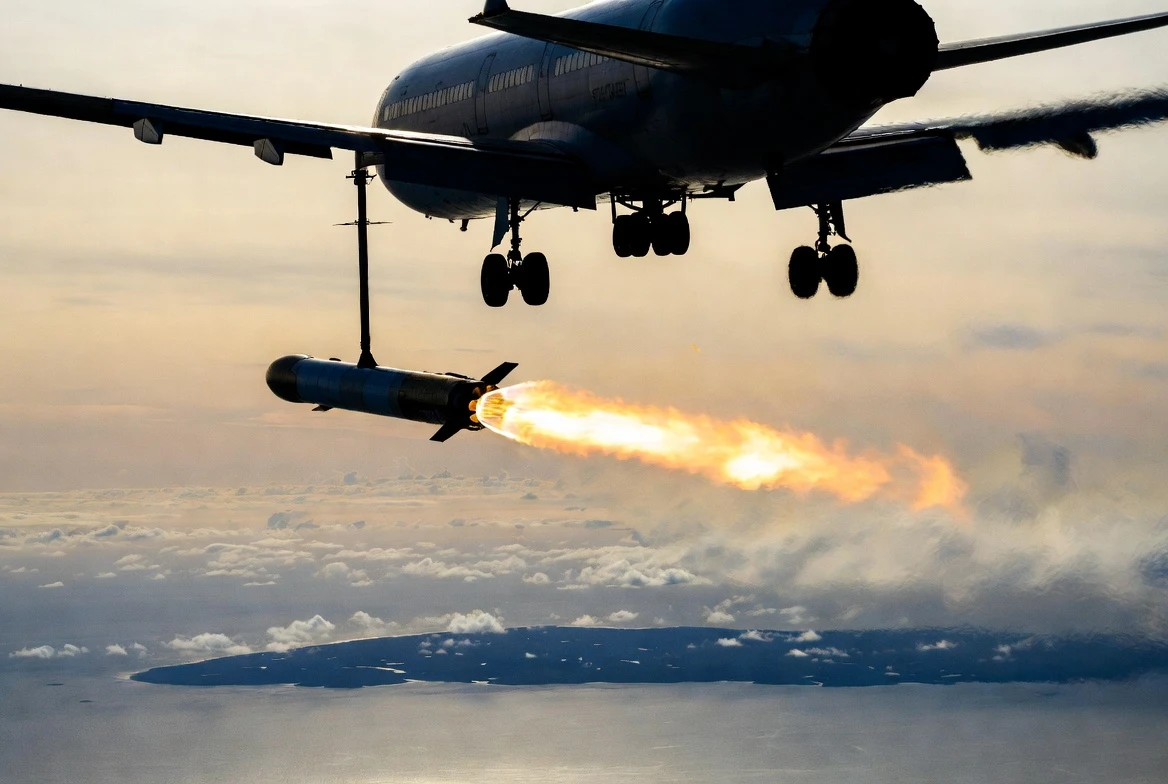
The Link spacecraft, about a third the size of Swift, lifted off at 4:36 a.m. EDT Friday from the Marshall Islands aboard a Northrop Grumman Pegasus XL rocket, dropped from an L-1011 carrier aircraft called Stargazer. Katalyst went from contract to launch in nine months. Swift’s value to astronomy is hard to overstate: since its 2004 launch, the observatory has detected more than 2,000 gamma-ray bursts and helped confirm that gold and platinum are forged in those explosions. NASA’s astrophysics director summed up the gamble in a Tuesday news conference. “No one thought it was going to be possible,” Shawn Domagal-Goldman told reporters.
The Launch From 40,000 Feet
Stargazer, the modified L-1011 carrier plane, took off from Kwajalein Atoll in the Marshall Islands and climbed to about 40,000 feet before releasing the Pegasus XL rocket. The rocket’s three solid motors fired in sequence, propelling Link into an orbit close to Swift’s. Communications with the spacecraft were confirmed shortly after launch, according to NASA’s Swift Boost Mission page. The mission had slipped from an initial June 27 target, first for weather and then for a software issue that aborted a Thursday attempt.
The rocket’s air-drop is the last flight ever planned for Pegasus XL, the air-launched booster Northrop Grumman has flown since the 1990s. Once the rocket fell away, the Stargazer aircraft banked off and headed back to base. Dropping the rocket over open ocean gives Pegasus XL a clear path to fire immediately, putting Link on a near-direct route to Swift’s altitude.
Over the next several weeks, Link will spend its time commissioning, running its navigation sensors and three robotic arms through their paces. Once those tests close out, Katalyst will begin maneuvering Link toward Swift. The capture attempt itself will not happen for several weeks after launch.
The Telescope Worth Saving
Swift was launched in 2004 on a $250 million mission to chase gamma-ray bursts, the briefest and most violent explosions in the cosmos. It carries instruments for visible, ultraviolet, X-ray, and gamma-ray light, a combination NASA calls its “astrophysics multitool.” Over more than two decades, the observatory has detected more than 2,000 gamma-ray bursts and helped confirm that gold and platinum are forged in those explosions. Swift’s principal investigator at NASA Goddard, Brad Cenko, calls it the agency’s first responder in space.
Unlike Hubble, which can take a day or two to pivot to a new target, Swift can swing to a fresh source in minutes. That speed has let it catch comets, gravitational waves, and black holes in the act. Swift has no thrusters and no propulsion system at all, which is now its undoing. Solar storms have swollen Earth’s upper atmosphere, dragging the observatory from its original 375-mile (600-kilometer) orbit. NASA expected the mission to last about two years. It has now gone more than 20.
No one thought it was going to be possible. No one thought we would get as far as we’ve already gotten today.
That is Shawn Domagal-Goldman, NASA’s astrophysics division director, speaking at a Tuesday news conference at Wallops Flight Facility in Virginia.
Why Swift Is Falling
Every spacecraft in low Earth orbit feels a faint tug from the planet’s atmosphere, slow enough to ignore for years, but relentless enough to drag an unpropelled satellite down. Swift had been steadily losing altitude for most of its life. The drop accelerated sharply over the past two years as the sun reached the peak of its 11-year cycle.
Solar maximum arrived in 2024, NASA scientists say, and the intense flares and coronal mass ejections that came with it heated and puffed up Earth’s atmosphere. The denser air bit deeper into Swift’s orbital path. By early 2026, forecasts showed Swift falling faster than expected, with the rate of descent pointing to a fall below a 185-mile (300-kilometer) threshold by October.
The operations team at Penn State’s Eberly College of Science, which runs Swift day to day, has trimmed the telescope’s power usage and steered it into a more streamlined orientation to slow the slide. Swift has been in low-power mode since February to preserve what orbit it can. The team has kept the observatory above 185 miles for the catch window. Below that altitude, Link would not have enough margin to reach Swift.
NASA could have let Swift reenter and burn up on its own. It chose not to, because no ready replacement exists for the observatory’s particular instrument mix. The decision to attempt a rescue also doubles as a test for the future. “It was okay for a generic spacecraft to come out of orbit,” Domagal-Goldman said at the briefing. “But this was not just any spacecraft. This is an observatory with unique capabilities for astrophysics.” NASA’s Swift Boost Mission page frames the $30 million cost as cheaper than rebuilding the observatory’s capabilities from scratch.
The Robotic Tug Built for the Job
Link is built by Katalyst Space Technologies, a Flagstaff, Arizona startup founded to make satellite servicing a commercial business. The 880-pound (399-kilogram) spacecraft stands about 5 feet (1.5 meters) tall and carries roughly 20 feet (6 meters) of deployed solar panels. Three robotic arms, three Hall-effect thrusters, and 16 smaller reaction control thrusters handle the rendezvous and orbit-raising work.
Swift, by contrast, weighs 3,200 pounds (1,452 kilograms) and was never built to be grabbed. The teams have pre-identified grappling points based on Swift’s design, but no one knows what more than two decades in orbit will have done to the multilayer insulation blankets covering the spacecraft. During servicing missions for the Hubble Space Telescope, astronauts found similar blankets had become brittle, glass-like material that would shatter at a touch, Link’s principal investigator Kieran Wilson said. Katalyst engineers tested Link’s capture system in NASA’s Space Environment Simulator at Goddard before shipping it to the launch site.
This is the kind of in-space servicing NASA wants to make routine as more satellites age out of useful orbit, and the same logic is now driving planning for the agency’s Mars infrastructure, where a new communications orbiter blueprint is set to replace the aging relay network.
| Attribute | Swift | Link |
|---|---|---|
| Operator | NASA / Penn State | Katalyst Space Technologies |
| Weight | 3,200 lb (1,452 kg) | 880 lb (399 kg) |
| Original altitude | 375 mi (600 km) | Chasing Swift’s orbit |
| Post-mission plan | Boost back toward 600 km | Detach and deorbit |
| Designed to be serviced | No | Yes |
What Comes Next
The first weeks after launch are commissioning, with Link running through its systems and letting Katalyst’s team tune its navigation software. Once commissioning closes, Link begins maneuvering toward Swift. The chase itself is expected to take several weeks, with Katalyst carefully matching orbits before any approach.
The delicate work starts when Link gets close enough to survey Swift, scanning its surface to find safe grappling points. Katalyst has identified candidate locations based on Swift’s blueprints, but the on-orbit survey is required to confirm them. The decades-old insulation may have shifted or deteriorated, complicating the picture. Wilson, Katalyst’s Link principal investigator, said Link’s three robotic arms will then secure Swift in place.
With Swift locked in, Link will fire its three ion thrusters to slowly raise the observatory back toward its original 370-mile (about 600-kilometer) altitude. NASA expects this to take two to three months of careful, incremental thrust. If the boost succeeds and Swift’s instruments are still healthy, the observatory could resume full science operations by fall, according to Cenko.
Once the boost is done, Link is designed to detach from Swift and fire its own thrusters toward a controlled reentry. The plan calls for Link, not Swift, to be the next thing to burn up in Earth’s atmosphere. Katalyst will use what it learns from this first mission to design its next spacecraft, named Nexus, with a target launch in 2027. Nexus is meant to service satellites in much higher orbits, including a U.S. Space Force satellite called Rooster 22,236 miles up.
- Commissioning: Link checks systems and calibrates navigation
- Approach: Link maneuvers into Swift’s vicinity over several weeks
- Survey: Link scans Swift for safe grappling points
- Capture: Three robotic arms secure Swift in place
- Boost: Ion engines slowly raise Swift’s orbit over two to three months
- Release and deorbit: Link detaches and burns up in atmosphere
A Different Industry’s First Page
NASA’s $30 million gamble is also the launch of a new commercial market. Katalyst Space raised $12 million in fresh funding the same week Link launched, money earmarked for its next-generation Nexus servicer. The company’s pitch is direct: in-orbit service, not replacement, is the future of operating satellites. Katalyst’s vice president for strategic partnerships, Robert Lamontagne, framed the moment in plain terms this week.
“Swift wasn’t designed to be serviced,” Katalyst’s CEO Ghonhee Lee said in a statement on the mission. “By demonstrating we can quickly and cost-effectively extend its lifetime, we’re creating a blueprint for servicing spacecraft that were never designed for on-orbit maintenance.” Lee added: “If we’re going to build an enduring presence beyond Earth, we need the capability to manipulate our environment in space. That means deploying robotic spacecraft that can reposition, repair, refuel, and refit satellites after launch.”
The capability is also drawing Pentagon interest. Katalyst earlier this year won a $1.9 million U.S. Space Command contract for its rendezvous and docking work. Gen. Stephen Whiting, commander of U.S. Space Command, has called “sustained space maneuver” crucial to resilience in orbit, remarks he made at the Space and Missile Defense Symposium in August. The 2022 Chinese tow of a dead satellite with the SJ-21 space tug showed what satellite maneuvering looks like, Katalyst’s announcement notes. Link’s task adds precision capture of an operational, unprepared spacecraft, a capability no other nation has demonstrated publicly.
- $30 million: NASA’s contract value with Katalyst
- $250 million: Original cost of the Swift telescope
- $12 million: Katalyst’s new funding round for the next servicer
- 9 months: Katalyst’s design-to-launch timeline
- Since 2004: Swift’s launch year
- 2,000+: Gamma-ray bursts Swift has detected
The Risks
Wilson, Link’s principal investigator, laid out the hazard list at the briefing: simple systems failure on a spacecraft that has never flown before; brittle insulation that shatters under the robotic arms; a fresh solar storm that drags Swift below the catch window. “All of this is challenging and risky,” Wilson said. “There’s a lot of spacecraft that have had far longer development cycles with far more funding behind them that have failed for mundane reasons.”
The biggest wild card is the sun itself. Swift is one big solar storm away from losing the race if the sun fires a major storm before Link arrives. A surprise storm could pull Swift below the 185-mile threshold and out of reach. Even without that, every day Link spends in commissioning is a day Swift is sinking toward the cutoff. Domagal-Goldman said he is “as optimistic as I can be” but warned “there are still risks ahead of us.”
Tuesday’s planned launch slipped on weather, and a software glitch stopped a Thursday attempt before Friday’s go. The compounding delays underline how much of the mission’s margin Katalyst is now spending on the front end. Each week spent waiting is a week Swift does not have.
If Link fails, Swift will follow the standard fate of satellites at the end of life, burning up on reentry, and Katalyst’s Nexus roadmap will inherit the engineering lessons rather than the trophy.
Frequently Asked Questions
What is the Swift space telescope?
Swift is the Neil Gehrels Swift Observatory, a NASA medium-class Explorer mission launched in 2004 to study gamma-ray bursts. Operated by Penn State University, it can observe in visible, ultraviolet, X-ray, and gamma-ray light, and it has detected more than 2,000 gamma-ray bursts since launch.
Why is Swift falling out of orbit?
Swift has no thrusters, so it cannot counteract the small drag from Earth’s upper atmosphere. Solar storms around the 2024 solar maximum heated and expanded that atmosphere, accelerating the drop. Without intervention, Swift would reenter the atmosphere later this year.
Who is Katalyst Space?
Katalyst Space Technologies is a startup based in Flagstaff, Arizona. NASA selected the company in September 2025 to build the Link servicer under a $30 million contract. Katalyst says its goal is to make in-orbit satellite servicing a routine commercial business.
When will we know if the rescue worked?
Several months of work remain. Link must complete commissioning, locate Swift, survey for safe grappling points, and execute a capture before the multi-month ion thrust boost begins. Cenko has said Swift could be back to full science operations by fall if the boost succeeds.