Kunal Shah, the founder of Indian fintech Cred, has been named the new head of WhatsApp, replacing Will Cathcart after a seven-year run. The appointment was announced Monday alongside Meta’s $900 million investment in Cred’s Series H round, which values the Indian fintech at about $4.5 billion post-money. Meta becomes a minority investor on Cred’s cap table, with no access to the company’s customer data.
Meta’s $900M Bet Comes With Its New CEO
The announcement, made on Monday, paired the leadership change at WhatsApp with a Series H investment that puts $900 million into Cred. Under the terms, Meta is a minority investor and receives no access to Cred customer information, a structure that ties a new WhatsApp chief to Meta’s broader India strategy without buying the company outright. The round is funded through a combination of primary and secondary share purchases.
Cred’s post-money valuation in the Series H stands at about $4.5 billion (₹43,239 crore), with a pre-money valuation of roughly $4.03 billion (₹38,819 crore), per the Series H release. Shah steps away from the operating CEO role but retains his personal shareholding in Cred. Miten Sampat, who has run strategy and finance at Cred since 2020, takes over as interim CEO with immediate effect. The Cred board is “constituting the right leadership structure towards eventual IPO,” according to the release.
The Series H release frames the round as the start of a longer arc toward a public listing. For Meta, the same document installs a payments-native operator at the top of WhatsApp without an outright fintech acquisition. the Cred Series H release on the Meta investment lists both events as part of the same transaction.
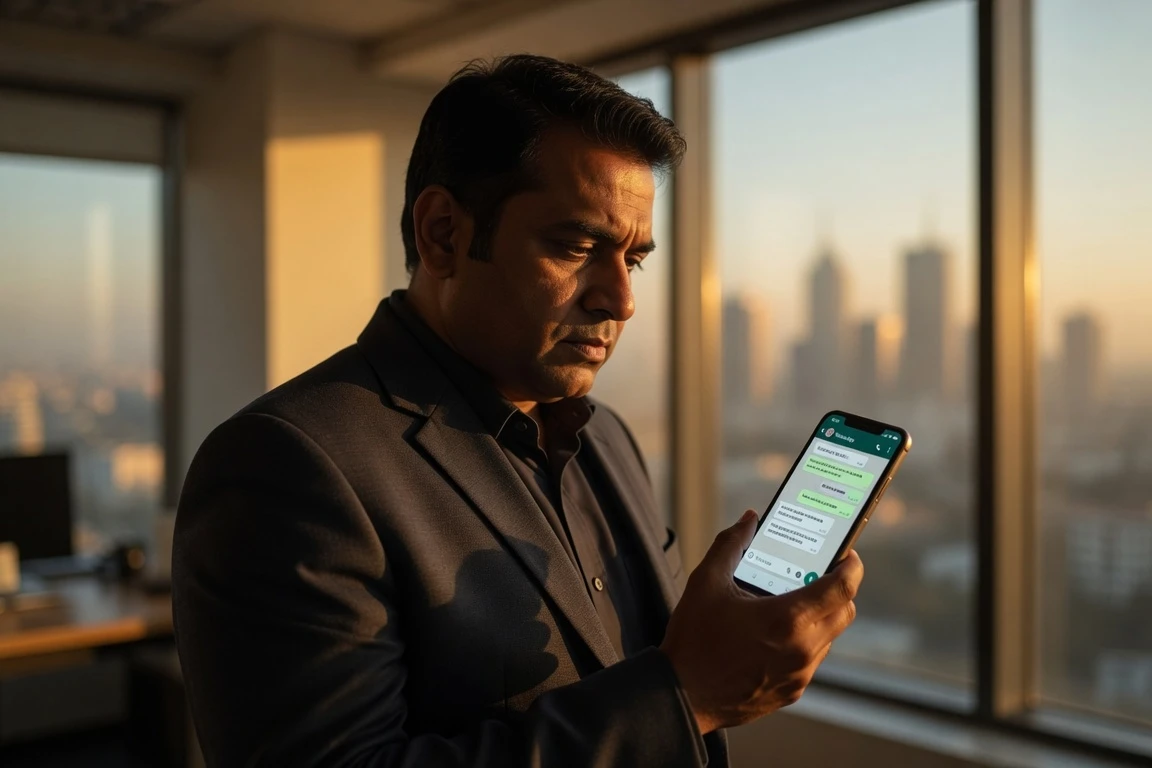
The Founder Walking Into Zuckerberg’s Office
Shah was raised in Mumbai and studied philosophy in college, and he did not follow the elite engineering or management route taken by many of India’s best-known technology founders.
His first major business came from co-founding FreeCharge, a mobile recharge platform, in 2010, as India’s internet economy was taking shape. FreeCharge grew rapidly and was acquired by e-commerce firm Snapdeal in 2015 in what was then one of the country’s largest startup acquisitions. After leaving, Shah spent years investing in young technology firms and advising founders. He also served as an adviser with startup accelerator Y Combinator and Sequoia Capital. In 2018, he founded Cred as a credit-card bill-payment platform built around rewarding users for paying on time.
In public appearances over the years, Shah has linked Cred’s origins to questions of trust and incentives. The company later expanded into lending, insurance, commerce and wealth management products. An anecdote circulated by Indian entrepreneur Sanjeev Bikhchandani recalls Shah saying he chose philosophy largely because its morning class schedule let him keep working after his family’s business ran into financial trouble.
Outside India, Shah had built a following that extended past his companies, with podcast appearances on topics from trust to wealth creation. His social media posts ranged from artificial intelligence to philosophy. He had become a recognisable figure in India’s startup and investor circles. With the Meta appointment, Shah’s profile now sits inside the company whose products he had been discussing from the outside.
What CRED Looks Like in 2026
Cred today sits inside the daily financial routines of creditworthy Indians, and the company says 1.7 crore (17 million) members engage with the platform every month. Its products span payments, lending, insurance, wealth, and lifestyle. Its lending business manages more than ₹24,000 crore (about $2.5 billion) in AUM for top Indian financial institutions.
| Metric | Value |
|---|---|
| Post-money valuation | ~$4.5 billion (₹43,239 crore) |
| Revenue | ~$325 million (₹3,200 crore) |
| Monthly active members | 1.7 crore (17 million) |
| Share of India credit card bill payments | Over 40% |
| Lending AUM | ~$2.5 billion+ (₹24,000 crore) |
Cred’s central idea was to pay users back, in cashback and curated perks, for paying their credit card bills on time. The Series H release is where Shah stated Cred has reached profitability, with specific revenue and licence figures alongside the claim. The company said the new capital will be used to “accelerate growth, build institutional muscle, and extend its leadership across categories.” Peak XV Partners, which led Cred’s seed round in 2018, framed the round as the start of a longer arc toward a public listing. The Series H release lists Shah’s move to Meta alongside the appointment of an interim CEO as part of the same transaction.
Why India Sits at the Centre of This Story
India is WhatsApp’s largest market, and Shah is set to become the first Indian to lead WhatsApp, according to the BBC. Shah built his career in that same market, starting with mobile recharges in 2010 and moving to credit card bill payments in 2018. Meta is now placing him at the head of the platform with the largest user base in his home market.
India is also where Shah built his career, first through mobile recharges, then through credit card bill payments, and now through Meta’s largest messaging platform. WhatsApp has spent years trying to convert that Indian user base into commerce and payments, and the regulatory environment around payments has shaped every step. Shah has navigated that environment for close to a decade. With the appointment, Meta is putting an Indian operator at the top of the chat app used most heavily in his home market.
The user base Shah now runs is global, with WhatsApp reporting more than three billion monthly active users worldwide. Cred’s footprint is wholly Indian.
The Payments Lens Is Too Narrow
Some observers caution against reading Shah’s appointment as a fintech or payments hire. Nikhil Pahwa, the founder and editor of Indian tech news site MediaNama, pushed back on that framing in comments to the BBC.
There’s a tendency to assume Shah was chosen for this role because of his background in fintech and payments. I think that’s too narrow a view. He’s someone who has spent years thinking about products, consumer behaviour, incentives and growth. And in his businesses, payments have been a mechanism for consumer acquisition, so that products can be marketed to them. This looks less like a payments appointment and more like Meta choosing a founder with experience in scaling the business side of a consumer business.
Shah’s actual career at Cred tracks Pahwa’s framing. Payments were the entry point, and once users were inside the app, Cred layered on lending, insurance, commerce, and wealth products. Shah’s investor-and-adviser years at Y Combinator and Sequoia Capital added a scaling vocabulary to that template. In Pahwa’s reading, Meta is paying for that broader playbook, with payments as one part of a larger set of consumer-business skills. The re-framing fits Meta’s stated ambition of pushing WhatsApp into commerce, business tools, and AI-powered products.
Meta has been laying the groundwork for that pivot under Cathcart. The company began rolling out subscription plans for WhatsApp, Facebook, and Instagram last month, alongside new AI subscription tests. WhatsApp’s AI Writing Help feature rollout is part of that broader push, with on-device Private Processing. Zuckerberg, in announcing Shah’s appointment, praised his “builder mentality and global perspective” as the right fit for running the world’s biggest messaging app.
The appointment puts a payments operator at the top of a three-billion-user chat platform. Meta has not publicly detailed why it chose Shah, beyond Zuckerberg’s public praise for his qualities. Shah’s own framing of the move pointed to “the delta between WhatsApp today and its full potential” being “massive,” in a post on X.
Cathcart’s Seven Years and the App He Leaves
Cathcart became head of WhatsApp in 2019 and led it for seven years. His tenure saw the introduction of encrypted chat backups in 2021, followed by the iPad rollout, the launch of ads inside chats, and the integration of private conversations with Meta’s AI chatbot.
Zuckerberg said Cathcart will transition to another role at Meta where he will “build new products from the ground up.” Cathcart wrote on X that WhatsApp “is in the strongest position it’s ever been” and that this felt like the right moment to step back. A Meta spokesperson declined to comment on the specifics of Cathcart’s new role. Shah inherits a service with three billion users and a monetisation stack that Cathcart helped build.
The Profitability Question That Travels With Shah
Shah’s reputation carries both the glow of India’s startup boom and the criticism that has long followed it. For years, Cred was admired for its brand and growth but frequently questioned over its path to profitability. Critics argued that investor enthusiasm and lofty valuations were outrunning financial performance.
Supporters answered that many successful technology companies endured long loss-making periods while building scale. Shah himself has publicly pushed back, arguing that entrepreneurship should be encouraged because it creates jobs and involves taking risks, while profitable businesses also deserve recognition.
The Series H release is where Shah set out what Cred has built since 2018, with specific numbers alongside the profitability claim.
I started CRED in 2018 with a belief that creditworthiness deserves to be rewarded. In under eight years, that belief has turned into a new category: millions of members, ~₹3,200 crore (~US $325M) in revenue, profitability, a full stack of licences and a strong brand.
Whether that claim holds under public-company scrutiny is the question Shah is now passing to his successor. Peak XV Partners, which led Cred’s seed round in 2018, endorsed the transition, with managing director Shailendra Singh saying Cred “will go from strength to strength in the years ahead.” The round, in its telling, sets up a longer arc toward an eventual IPO, and Meta’s antitrust trial over Instagram and WhatsApp shows how that kind of scrutiny can unfold. The Series H release names Miten Sampat as the operator on the Cred side of that transition.
Two Transitions Start on the Same Day
Shah’s departure from Cred and his arrival at WhatsApp are not a clean swap. The Cred board is still constituting its longer-term leadership team under interim CEO Miten Sampat. The Series H release frames the next phase of Cred as a march toward a public listing.
Shah takes over a service with more than three billion users worldwide, in the middle of a Meta push into subscription plans and AI features. The brief spans payments, commerce, business tools, and AI-powered products on top of messaging. Meta began testing new subscriptions for its artificial intelligence services across WhatsApp, Facebook, and Instagram last month. Cathcart’s outgoing tenure included the iPad rollout, ads, and AI chatbot integration inside WhatsApp. Shah inherits the result of all four.
- 3 billion+: WhatsApp monthly active users worldwide
- $900 million: Meta’s Series H investment in Cred
- $4.5 billion: Cred’s post-money valuation in the new round
- 40%+: Share of India’s credit card bill payments processed by Cred
- 17 million: Cred’s monthly active members in India
Both halves of the deal, the Series H investment and the WhatsApp appointment, are formally part of a single transaction, per the Series H release. The combined release lets Meta frame the appointment and the investment as one event, packaged together for the announcement. How that structure plays out will show up first in Cred’s filings and WhatsApp’s product roadmap.
Peak XV’s Shailendra Singh said Cred “will go from strength to strength in the years ahead.” Cathcart, for his part, described WhatsApp as being in “the strongest position it’s ever been.” Both announcements landed on the same day. The public evidence starts with Cred’s IPO filings and WhatsApp’s next set of product launches in India.