Gov. Brian Kemp signed a wildfire timber order on June 12 that raises truck weight limits in 17 South Georgia counties, giving timber operators more flexibility to haul fire-damaged wood before it loses market value.
The order raises truck weight limits in 17 South Georgia counties, giving timber operators more flexibility to haul fire-damaged wood before it loses market value. The order, formally Kemp’s June 12 wildfire order, “Declaring a State of Emergency for Wildfire Recovery,” arrives weeks after the Pineland Road Fire in Clinch County and the Highway 82 Fire in Brantley County, which together burned more than 54,000 acres and finally reached 100% containment, per USA TODAY Fire Data.
The 17 Counties in the New Order
The truck weight provision in Executive Order 06.12.26.01 covers 17 South Georgia counties the state has classified as wildfire-impacted. All sit in the southeast of the state. The order gives logging and trucking operators room to run heavier loads in each jurisdiction, which state officials say is critical to recovery before fire-damaged wood loses its market value in a limited harvest window.
- Appling
- Atkinson
- Bacon
- Berrien
- Brantley
- Camden
- Charlton
- Clinch
- Coffee
- Echols
- Glynn
- Jeff Davis
- Lanier
- Lowndes
- Pierce
- Ware
- Wayne
Both major incidents are now 100% contained, per USA TODAY Fire Data. The Highway 82 Fire forced more than 5,000 people from their homes, per state damage surveys. The Highway 82 fire caused an estimated $20 million in property damages and destroyed more than 130 structures, including 90 business and residential buildings and 55 smaller buildings, per state damage surveys. The order gives logging operators more room to move salvageable wood out of the fire footprint and into the market.
The Two Wildfires Behind the Order
The Pineland Road Fire was first reported on April 18, 2026, in Clinch County, in a region already under South Georgia’s severe drought conditions from late 2025. It grew to 32,031 acres and generated an estimated $14.7 million in firefighting costs, making it one of the largest single-incident wildfires Georgia battled this spring. The fire is now 100% contained.
The Highway 82 Fire ignited two days later, on April 20, in Brantley County. It scorched 22,419 acres and required more than $19.3 million in suppression spending, with over 600 personnel working the fire at its peak and more than 350 homes saved by structure protection efforts, per state officials. The fire’s active period ran from April 20 to May 20, 2026, and it reached 100% containment in June 2026, per USA TODAY Fire Data. Dry gusty winds drove rapid growth into Atkinson, Wayne, and Glynn counties, with flame lengths recorded at over 150 feet at points during the run.
By April 27, 2026, the two blazes were jointly described as the most destructive in Georgia history during an outbreak of wildfires that also burned into Florida. The Highway 82 fire started at about 5 p.m. on April 20, 2026, when a Mylar balloon made contact with a power line, the Georgia Forestry Commission said, igniting vegetation during a period of severe drought across southern Georgia. A state burn ban was in effect at the time.
Both fires are now fully contained. The state of emergency Kemp declared on April 22 for 91 counties, plus a Georgia Forestry Commission burn ban covering those same 91 counties, shaped the early response that ran through the mop-up.
A Spring Fire Season’s Price Tag
The Pineland Road Fire’s suppression cost was estimated at $14.7 million as of June 15, 2026. The Highway 82 Fire’s costs were estimated at more than $19.3 million, the higher of the two totals, per the same USA TODAY data. Federal fire suppression costs are separate from property damages, which run into the tens of millions of their own. The Highway 82 Fire alone caused an estimated $20 million in property damages and destroyed more than 130 structures, including 90 business and residential buildings and 55 smaller buildings, per state damage surveys.
USA TODAY’s May 6 estimate had put the Pineland Road Fire’s cost at “nearing $7 million” and the Highway 82 Fire’s at “more than $13.6 million,” for a combined total of more than $20 million at the time. The June 15 figures ran higher as mop-up and patrol costs accumulated through the rest of May and into June. Both fires are now fully contained, but the response kept running long after the flames stopped spreading.
By June 15, the Highway 82 Fire’s suppression costs alone had reached more than $19.3 million, a figure higher than the May 6 estimate for both fires combined. The Pineland Road Fire’s $14.7 million suppression cost is the lower of the two totals. Federal disaster declarations, homeowner aid, and small business loans run on a separate track from suppression spending. The June 12 order sits firmly in the suppression-and-recovery lane, not the homeowner-aid lane. It is a state-level response, not a federal one.
| Fire | Discovery | Primary county | Acres burned | Suppression cost |
|---|---|---|---|---|
| Pineland Road | April 18, 2026 | Clinch | 32,031 | $14.7 million (est.) |
| Highway 82 | April 20, 2026 | Brantley | 22,419 | $19.3 million+ (est.) |
The Timeline of the Spring Fires
The spring fire season ran from the Pineland Road Fire’s first report on April 18 through Gov. Kemp’s June 12 executive order. Here is the timeline.
- April 18, 2026: Pineland Road Fire reported in Clinch County.
- April 20, 2026: Highway 82 Fire reported in Brantley County.
- April 22, 2026: Kemp declares a state of emergency for 91 Georgia counties; the Georgia Forestry Commission issues a burn ban covering the same 91 counties.
- April 23, 2026: Federal funding approved to help cover the firefighting campaigns.
- May 6, 2026: USA TODAY estimates combined suppression costs at more than $20 million.
- May 20, 2026: Highway 82 Fire’s active period ends; mop-up continues.
- June 12, 2026: Kemp signs Executive Order 06.12.26.01, “Declaring a State of Emergency for Wildfire Recovery.”
The Highway 82 Fire reached 100% containment in June 2026, per USA TODAY Fire Data. The Pineland Road Fire was declared fully contained by June 12, 2026, the same day Gov. Kemp signed the recovery order. Both fires are now in the recovery phase.
Why the Order Targets Truck Weight
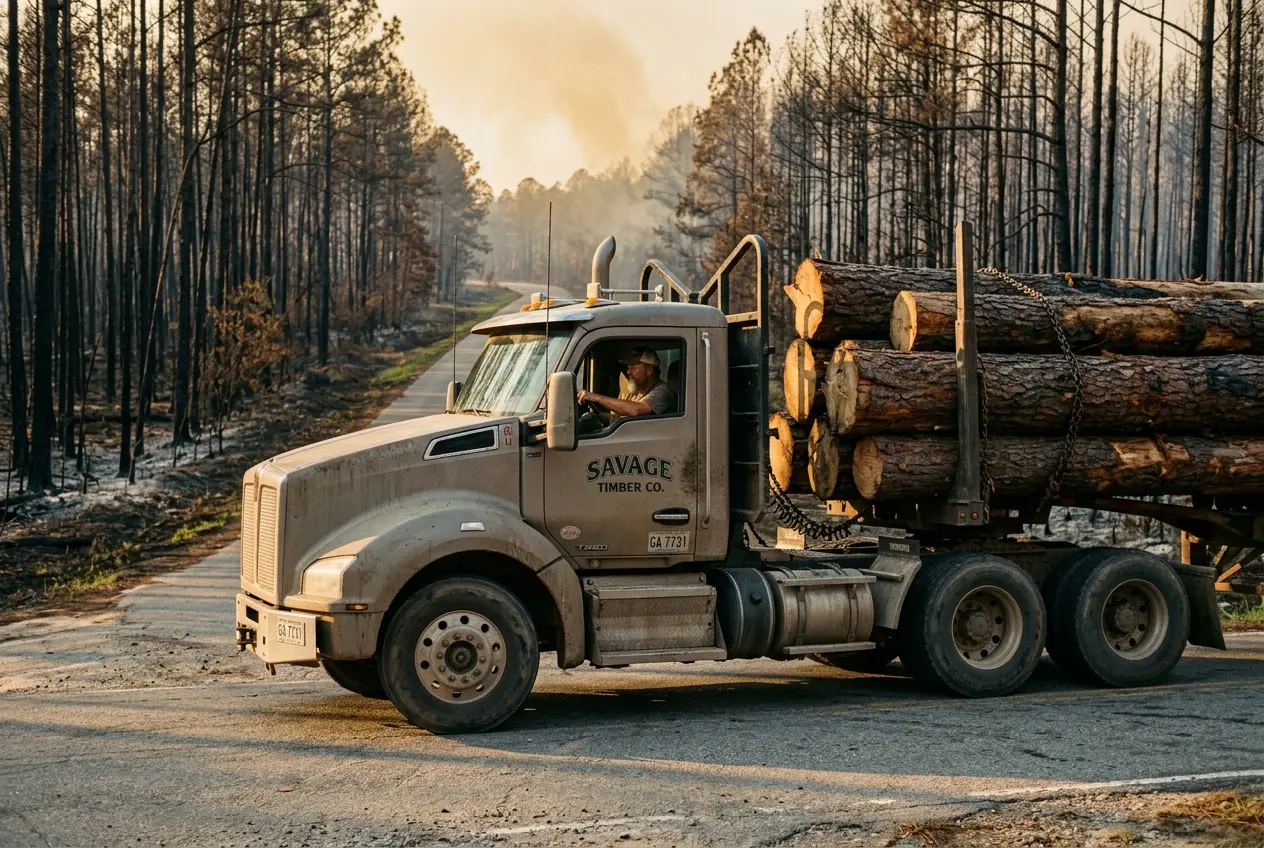
State officials said timber damaged by wildfire has a limited window in which it can be harvested and utilized, which makes transportation a critical part of recovery efforts. The order gives loggers, landowners, and haulers room to run heavier loads before fire-damaged wood loses its value. That flexibility is the order’s main lever for reducing economic loss across the 17 affected counties. Georgia has done this before.
This additional transportation flexibility will help support recovery efforts while reducing economic losses for affected landowners.
The Georgia Forestry Commission, in its announcement of the order, said the higher weight ceiling will reduce the cost of moving salvageable wood out of the fire footprint. The new cap is not specified.
Where Recovery Stands on the Ground
The fires are out, but recovery is not. The Highway 82 Fire alone destroyed more than 130 structures, including 90 business and residential buildings and 55 smaller buildings, per state damage surveys. Nearly 200 homes and businesses across Brantley County have been counted as losses.
Federal aid has not yet reached survivors. A full damage assessment must finish before the Federal Emergency Management Agency and the U.S. Small Business Administration can begin processing loans for affected residents. That assessment is tied to the fires being fully extinguished, which only just happened in May and June. The official state wildfire response page tracks the ongoing operations.
As of mid-May, Brantley County survivors were still waiting on a timeline for federal help, with some families living in cars or with relatives. The June 12 order is a state-level stopgap that gives the timber side of the recovery a faster path. Federal disaster declarations, homeowner aid, and small business loans remain on a slower track than the timber order, leaving fire survivors in a holding pattern as assessments continue.
Frequently Asked Questions
What is the official executive order number?
Gov. Brian Kemp’s June 12 wildfire recovery order carries the designation 06.12.26.01, “Declaring a State of Emergency for Wildfire Recovery.” The document is published on the governor’s executive orders page for public download at gov.georgia.gov.
What started the Highway 82 fire?
The Georgia Forestry Commission traced the Highway 82 fire to a Mylar balloon striking a power line at about 5 p.m. on April 20, 2026. The ignition came during a period of exceptional drought across southern Georgia, with a state burn ban already in effect.
What state of emergency did Kemp declare earlier in the fire season?
On April 22, 2026, Kemp declared a state of emergency for 91 Georgia counties in response to the ongoing wildfires, directing the Georgia Forestry Commission to mobilize all necessary response resources. The Georgia Forestry Commission also issued a burn ban covering those counties.
Who can use the new truck weight allowance?
Trucks moving salvageable timber from fire-affected land in the 17 listed South Georgia counties qualify for the higher weight limit. State agencies did not specify whether the new ceiling matches the 95,000-pound cap used in earlier Georgia wildfire emergency orders.
What aid can Brantley County fire survivors apply for?
Once the damage assessment is complete and Gov. Kemp signs a formal disaster declaration, Brantley County residents may be eligible for U.S. Small Business Administration loans of up to $2 million for small businesses, $500,000 for homeowners, and $100,000 for renters. The 30-year low-interest loans are available even for those without insurance or who were underinsured, per the SBA’s disaster assistance program.