Apple’s iPhone 18 Pro Max is being sold to readers as the phone with the biggest battery Cupertino has ever shipped, a 5,500mAh figure credited to tipster Ice Universe and pinned, in most early coverage, to the Chinese version of the phone. Regulatory filings tell a different story. The largest cell goes to the American model, not the Chinese one, continuing a pattern that already separated iPhone 17 Pro Max buyers by country a year ago.
That detail matters more than another leaked colour name. It decides which iPhone 18 Pro Max buyers actually get the headline battery life this September, and which ones, including thephone’s largest markets outside the US, get a smaller cell in an identically priced box.
The Battery Headline Everyone Read Backward
The original tip came from Ice Universe, a Chinese leaker with a long track record on Apple and Samsung hardware. The claim: a roughly 5,500mAh cell, a 9mm-thick body and a weight near 240 grams for the iPhone 18 Pro Max. LiveMint and other outlets read that figure as describing the Chinese unit specifically.
Certification filings reported since then complicate that reading. Apple secured more than half of TSMC’s 2nm output for this generation, and separate regulatory disclosures examined by MacRumors put the US iPhone 18 Pro Max at 5,567mAh against 5,391mAh for the Chinese variant. IBTimes UK summed up the gap bluntly in its own headline: US buyers get more than China does. RDS News flagged an earlier version of that split, an estimate of 5,425mAh carrying its own US-specific catch, weeks before the filings settled on firmer numbers.
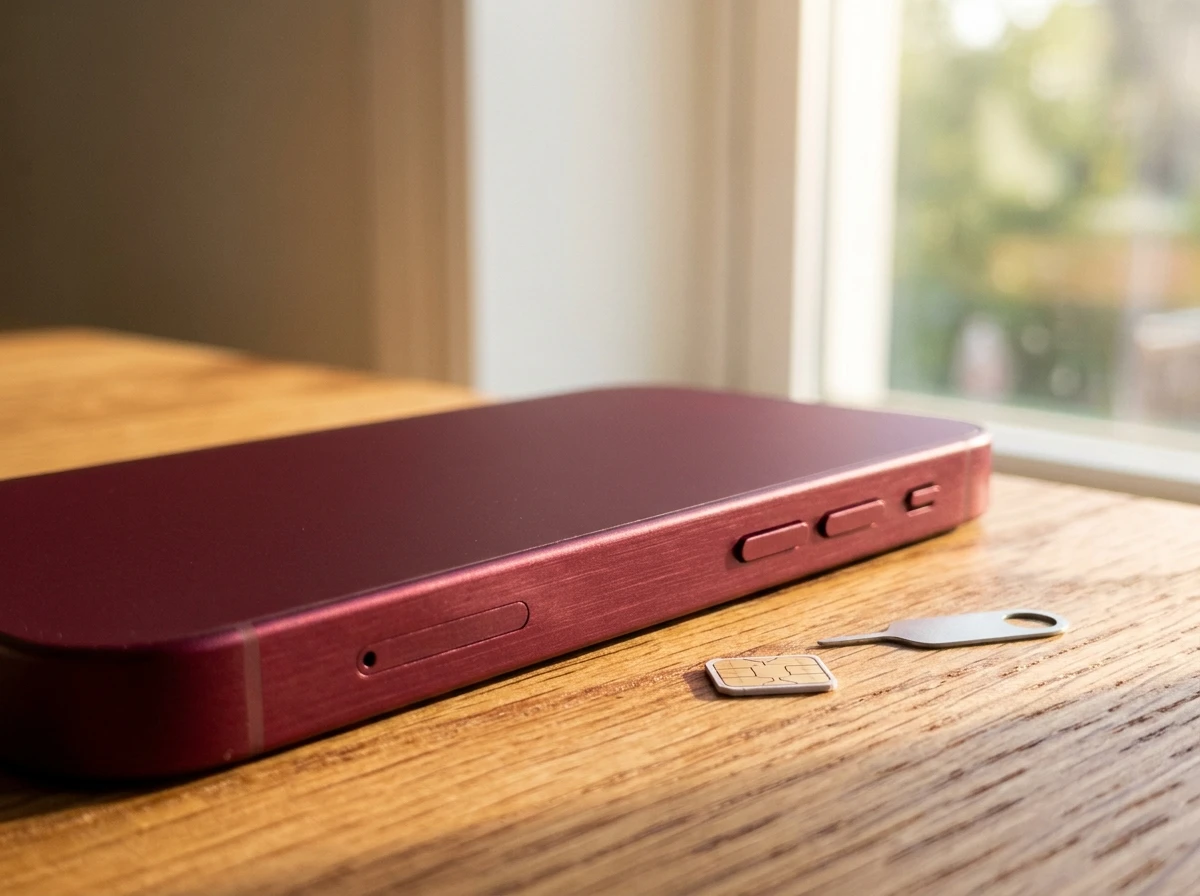
Why Does the Same iPhone Get Different Batteries?
Apple’s US iPhones have shipped without a physical SIM tray since the iPhone 14 in 2022, using eSIM only. Phones sold in China, India and most other markets still carry a physical nano-SIM slot, and that slot eats space a bigger battery would otherwise use. The result is the same phone, the same chip, the same screen, with a different amount of usable interior volume depending on where it is sold.
That is not a new wrinkle. The iPhone 17 Pro Max shipped with a 5,088mAh cell in the US and 4,823mAh in China, a 265mAh gap. This year’s leaked figures put the gap at 176mAh, narrower than last year even as both regions gain capacity.
| Model | US Battery | China Battery | Regional Gap |
|---|---|---|---|
| iPhone 17 Pro Max | 5,088 mAh | 4,823 mAh | 265 mAh |
| iPhone 18 Pro Max (leaked) | 5,567 mAh | 5,391 mAh | 176 mAh |
The US cell also marks a 9.4 percent jump over last year’s American model, the kind of single-generation gain Apple rarely posts on the Pro Max battery line.
The Chip Behind the Extra Room
Some of that extra capacity is arriving alongside Apple’s first 2-nanometer chip, the A20 Pro, built on TSMC’s N2 process. TSMC (Taiwan Semiconductor Manufacturing Company) moved N2 into volume production in the fourth quarter of 2025 with trial yields reported between 60 and 70 percent, and Apple is using Wafer-Level Multi-Chip Module packaging to place RAM closer to the processor on the same wafer.
- Process node: TSMC’s N2, Apple’s first iPhone chip built at 2 nanometers
- Packaging: Wafer-Level Multi-Chip Module, integrating CPU, GPU and RAM closer together
- Performance claim: up to 15 percent faster than the outgoing chip, per leaked specifications
- Efficiency claim: up to 30 percent better power efficiency, which stretches the new battery further
Independent industry tracking of TSMC’s node roughly backs those figures, pointing to 10 to 18 percent performance gains and 30 to 36 percent lower power draw versus the outgoing 3-nanometer chips. The tighter RAM-to-SoC layout is also expected to help Apple Intelligence features run with less lag, since on-device model calculations lean heavily on memory bandwidth.
Apple’s First Moving Aperture
The camera change carries less controversy but more novelty. Every iPhone from the 14 Pro through the 17 Pro used a fixed f/1.78 main aperture. Analyst Ming-Chi Kuo, who tracks Apple’s supply chain for TF International Securities, first flagged a variable aperture system in December 2024, and component suppliers have since moved into production. Chinese supplier Sunny Optical is producing the actuators that physically open and close the lens opening, while Apple’s version revives a mechanism Samsung tried and dropped on earlier Galaxy flagships. LG Innotek is preparing its own production lines in South Korea for mid-2026.
A wider aperture lets more light hit the sensor in dim scenes; a narrower one sharpens focus and adds background blur without software tricks. The upgrade is not free. Forbes reported analyst estimates pegging the new camera module’s manufacturing cost around 50 percent higher than the outgoing one, a cost Apple will likely pass on somewhere in its pricing.
Where Chinese Rivals Still Lead
Even a 5,567mAh battery does not close the gap with China’s domestic phone makers. Chinese flagships increasingly ship with silicon-carbon anode batteries, a chemistry that packs 20 to 30 percent more capacity into the same physical space, and industry trackers put Chinese flagship battery capacity 30 to 50 percent above comparably priced Apple phones. Apple has not adopted the chemistry yet; analysts expect it no earlier than the iPhone 18 or 19 cycle, meaning this year’s gain comes from freed-up space and packaging, not a new cell chemistry. RDS News previously detailed how a separate leaked figure of 5,567mAh would close Apple’s battery gap on Samsung, a comparison that still leaves China’s silicon-carbon leaders ahead of both.
What we know:
- Battery capacities: filed with regulators in both regions, 5,567mAh in the US and 5,391mAh in China
- Chip: A20 Pro built on TSMC’s 2nm N2 process with Wafer-Level Multi-Chip Module packaging
- Camera supply chain: Sunny Optical and LG Innotek already producing variable-aperture components
What’s unconfirmed:
- Final colour names and availability by market and storage tier
- Exact launch date, based on Apple’s past September pattern rather than an official announcement
- Pricing, especially how much of the camera’s higher build cost reaches the shelf price
Cherry Replaces Orange as the Island Shrinks
Apple is expected to drop last year’s Cosmic Orange finish. In its place, leaks point to a maroon-leaning shade called Dark Cherry as the standout option across the Pro lineup.
- Dark Cherry – a maroonish finish replacing Cosmic Orange as this year’s signature colour
- Light Blue – a paler tone carried over in concept from prior Pro colourways
- Dark Gray – a near-black neutral option
- Silver – the standard reflective finish
Screen sizes are expected to hold at 6.3 inches and 6.9 inches, unchanged from the iPhone 17 Pro line. The more visible change sits at the front camera cutout: the Dynamic Island could shrink by up to 35 percent. Apple is also tipped to use LTPO+ display technology, a backplane upgrade meant to squeeze more efficiency, and therefore more real-world battery life, out of the same screen size.
A September Date With a Foldable Co-Star
Apple’s usual pattern points to a first-half-of-September launch, likely the event’s second week. The bigger surprise is what shares the stage: Apple’s first foldable iPhone is expected to debut at the same event, alongside a Pro Max that, depending on which country’s version a buyer picks up, may or may not carry the battery number splashed across this week’s headlines. The wait already outlasts one long-delayed release; Rockstar’s Grand Theft Auto VI still has no confirmed date, and Apple’s next iPhone cycle looks set to arrive first.