Apple’s iPhone 18 Pro and iPhone 18 Pro Max are both getting an LTPO+ display this September, according to The Elec, a South Korean supply chain publication. The shift from standard LTPO panels to the more advanced LTPO+ variant improves battery efficiency, reduces flickering in low light, and lowers burn-in risk, with screen sizes unchanged at 6.3 and 6.9 inches.
The battery numbers set the context. Leaked capacity figures from Weibo-based leaker Digital Chat Station put the iPhone 18 Pro Max at 5,000 to 5,200 mAh, barely above the iPhone 17 Pro Max’s 5,088 mAh. The Pro model is expected in the 4,056 to 4,288 mAh range, up from the current model’s 3,988 to 4,252 mAh. The display is the largest single power drain in any modern smartphone, and LTPO+ is designed to reduce what it draws.
From Switching Transistors to Driving Transistors
LTPO technology, which allows OLED displays to vary refresh rates between 1 Hz and 120 Hz for adaptive power savings, has powered iPhone Pro screens since the iPhone 13 Pro in 2021. It enables ProMotion’s dynamic refresh rate: the screen drops from 120 Hz during active use to 1 Hz for static content, a floor low enough that the always-on display on the iPhone 14 Pro costs less battery life than most users expect.
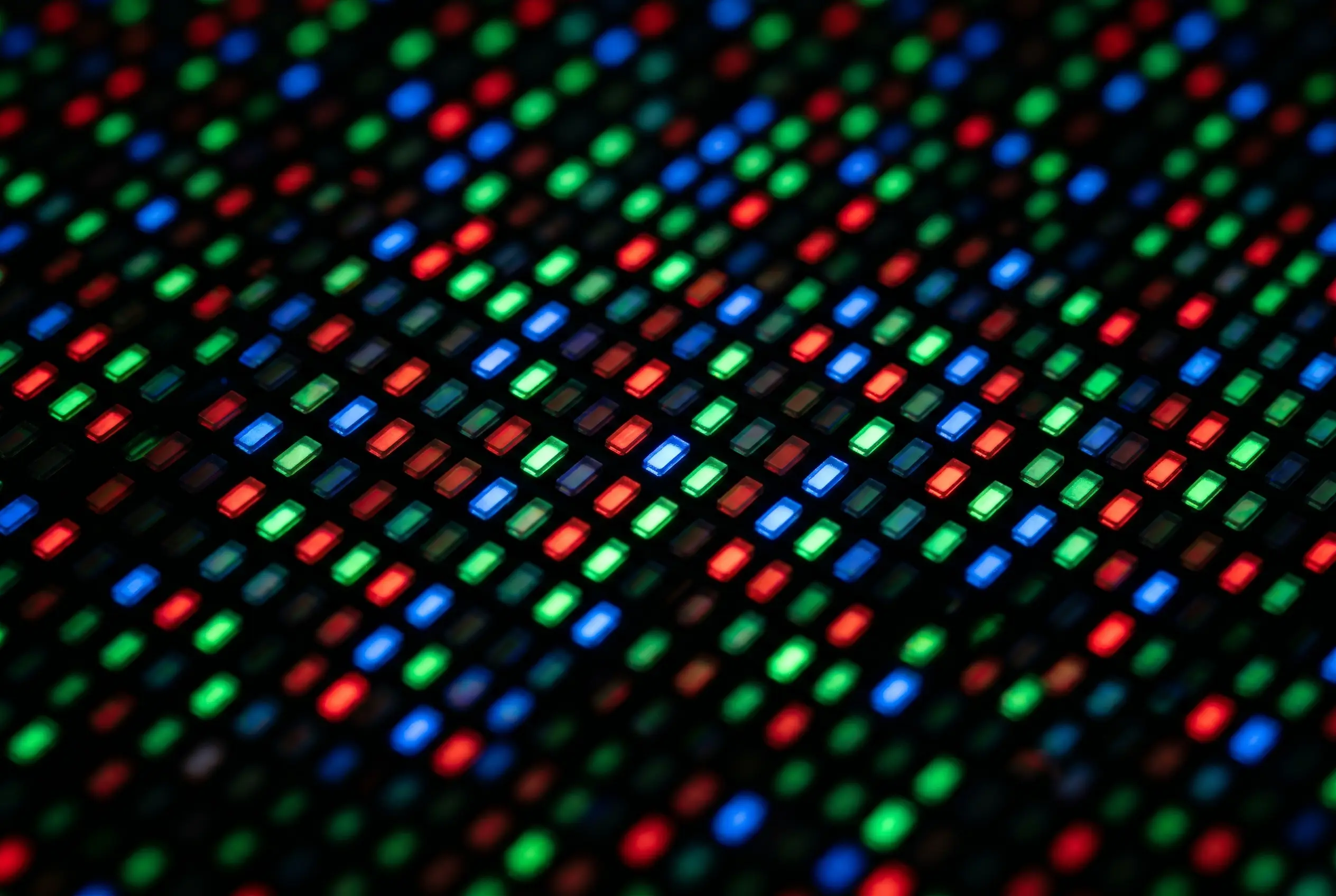
Every OLED panel’s backplane contains two distinct types of thin-film transistors. Switching TFTs act as the on/off gate for each pixel. Driving TFTs control how much current flows through each pixel’s organic LED to determine brightness. Conventional LTPO applies oxide semiconductor materials only to the switching transistors.
LTPO+ extends oxide usage to driving TFTs as well, enabling finer current control for OLED light emission and allowing displays to optimize operation based on surrounding conditions and user environments, improving battery efficiency.
That is The Elec’s description from its supply chain report. Finer control at the driving TFT level means each pixel’s brightness is managed with greater precision across all operating states, not only at the low-power floor. Power previously wasted holding pixels at a dim but active threshold gets trimmed. The technology already ships in premium Android flagships from Samsung and Huawei, giving the LTPO+ manufacturing ecosystem time to mature before Apple’s adoption. OLED-Info, a display industry research site, documents that LTPO backplanes can cut energy consumption 5 to 15% compared to older LTPS technology. LTPO+ builds on that efficiency base by extending the oxide advantage to the driving layer.
| Feature | LTPO (iPhone 17 Pro) | LTPO+ (iPhone 18 Pro) |
|---|---|---|
| Oxide TFT coverage | Switching transistors only | Switching and driving transistors |
| Current control | Standard per-pixel | Fine-grained per-pixel |
| Low-light performance | Standard | Reduced flicker and grain |
| Burn-in resistance | Standard | Improved |
| ProMotion (1 to 120 Hz) | Yes | Yes |
BOE’s Exit and the Premium Tier
Samsung Display and LG Display are set to supply essentially all LTPO+ OLED panels for the iPhone 18 Pro and Pro Max, according to The Elec. China’s BOE, which supplied some panels for the iPhone 17 Pro, did not clear Apple’s approval for the 18 Pro generation.
BOE’s problem is yield on LTPO+ manufacturing. Applying oxide to driving TFTs demands tighter process control than standard LTPO’s switching TFT layer requires. Per supply chain sources, BOE’s LTPO+ panel quality and manufacturing yield lag behind its South Korean counterparts. Apple’s panel approval process requires production-ready samples at commercially viable yield rates; BOE’s samples didn’t pass that threshold.
For BOE, the exclusion is a real setback. The company spent years qualifying for Apple’s supply chain and moved from standard models into the Pro tier with the iPhone 17 Pro. The LTPO+ specification raises the manufacturing bar at exactly the moment that premium position mattered most. Recovering it means proving LTPO+ yield to Apple’s tolerance standards, presumably in a future product cycle.
Samsung Display and LG Display, both long-standing iPhone Pro panel suppliers, had already been producing LTPO+ for Android flagship customers. Their production experience with the technology is the advantage BOE hasn’t yet closed, and Apple’s adoption of LTPO+ at the Pro tier keeps that manufacturing gap in place for this generation.
Display Power and the Modest Battery Increase
Battery capacity numbers tell a simple story: bigger is better. The iPhone 18 Pro’s leaked figures, part of a growing body of rumored iPhone 18 Pro and Pro Max specifications covering battery, chip, and pricing, are more incremental than transformative. The Pro Max lands at 5,000 to 5,200 mAh against the current 5,088 mAh. The Pro grows from 3,988 to 4,252 mAh to a projected 4,056 to 4,288 mAh.
Apple’s approach in this cycle is display-level efficiency. The screen runs at 120 Hz during active use, processes every touch input, maintains ambient brightness for hours, and holds the always-on screen at 1 Hz through overnight hours. That draw accumulates into a substantial portion of daily consumption. LTPO+’s per-pixel current control cuts into each of those operating states, with no visible change in how the display looks or behaves at any brightness level.
Apple already validated this logic with the original LTPO transition. When the iPhone 14 Pro launched the always-on display in 2022, reviewers expected a battery hit. Most found the feature cost less than expected, because 1 Hz genuinely draws near nothing. LTPO+ extends the same precision logic to every brightness level above that floor.
Adding a substantially larger physical cell comes with trade-offs Apple has historically been reluctant to accept: more weight, more heat during charging, and thicker chassis dimensions. Display efficiency improvement produces comparable real-world usage hours without those engineering costs.
An Efficiency Stack Built for September
The LTPO+ display arrives alongside two other component changes pointing in the same efficiency direction.
The Modem’s Efficiency Case
Apple is expected to bring the iPhone 18 Pro fully off Qualcomm modems this fall, replacing them with its own C2 chip. The cellular modem is one of the three largest power draws in a modern smartphone. Apple’s first in-house 5G modem, the C1, launched with the iPhone 16e in early 2025. Apple described the C1 as the most power-efficient iPhone modem it had built, pointing to the iPhone 16e’s class-leading battery life as evidence of the claim.
The C2 adds mmWave 5G support, enabling faster data speeds in dense urban areas that the C1’s sub-6 GHz ceiling couldn’t reach. Bloomberg’s Mark Gurman reported Apple was testing the chip alongside an already-planned C3 for 2027. Because Apple’s modems integrate tightly with iOS, the device’s processor can signal the modem about which data traffic is time-sensitive, reducing power the chip wastes on lower-priority transfers during intermittent connectivity.
The iPhone 17 Pro was among the last Apple flagship phones running Qualcomm silicon. Moving to in-house in the iPhone 18 Pro removes the one remaining third-party efficiency variable Apple hadn’t yet controlled in its flagship lineup.
A20 Pro and the 2nm Advantage
The third change is the A20 Pro processor. Built on TSMC’s 2-nanometer manufacturing node, supply chain estimates put it at roughly 30% better power efficiency than the A19 Pro in the iPhone 17 Pro. A finer fabrication process packs more transistors per square millimeter with lower leakage current, meaning less electricity wasted per computation. Taiwan’s Economic Daily News, citing supply-chain checks, put the A20 wafer cost at approximately $280 per unit, an 80% jump from the A19.
Together, the three components address the three largest power draws in a modern flagship:
- LTPO+ cuts current at the display level across all refresh rates and brightness states
- C2 modem replaces Qualcomm’s silicon with an Apple-tuned in-house design
- A20 Pro (2nm) reduces the power cost of every computation versus its 3nm predecessor
Display Gains in Daily Use
The always-on display benefits most directly. At 1 Hz, the screen refreshes once per second to show the clock, notifications, or widgets while the phone sits locked. LTPO already makes this mode efficient by holding the backplane at its minimum refresh floor. LTPO+’s oxide driving transistors then apply finer current control within each refresh cycle, trimming the residual draw from pixels held at a dim but active level for hours at a stretch.
Low-light flicker is the improvement users may actually notice day to day. Current iPhone Pro OLED panels achieve very low brightness through pulse-width modulation (PWM): the display rapidly cycles its output on and off at high frequency to simulate a dim level. Some users find this cycling visible as a subtle strobing or grainy quality in dark rooms. LTPO+’s finer driving-TFT control enables the panel to hold a genuinely low, steady current output, which reduces or eliminates that cycling effect.
Burn-in risk also falls. More uniform current distribution across the display surface means pixels age more evenly over time, reducing the ghost images that form when static elements sit in one position for months. It’s already not a widespread concern on current iPhone Pro panels, but lower risk over a four-to-five-year ownership period is a practical durability gain that compounds quietly.
Apple has not confirmed any specifications for the iPhone 18 Pro. The supply chain report rests on sources involved in a panel approval process that, per the publication, was expected to conclude before the end of May, ahead of mass production at Samsung Display and LG Display.
The panel approval deadline has now passed. The iPhone 18 Pro’s fall launch is when the supply chain’s efficiency claims meet real-world battery benchmarks.