Starting July 22, 2026, Android users in the US will be able to install a rival app store from directly inside Google Play, no sideloading required. A federal court forced the change after Google lost an antitrust case to Epic Games, the maker of Fortnite, then spent about a year and a half trying to soften the order.
The same week that gate swings open, a different one is tightening around the rest of Android. A separate identity verification system Google designed on its own, not ordered by any judge, starts requiring every app installed on a certified device to trace back to a verified developer, with enforcement beginning in four countries this September, ten weeks after the Play Store change takes effect.
Two Mechanics Go Live Inside Google Play
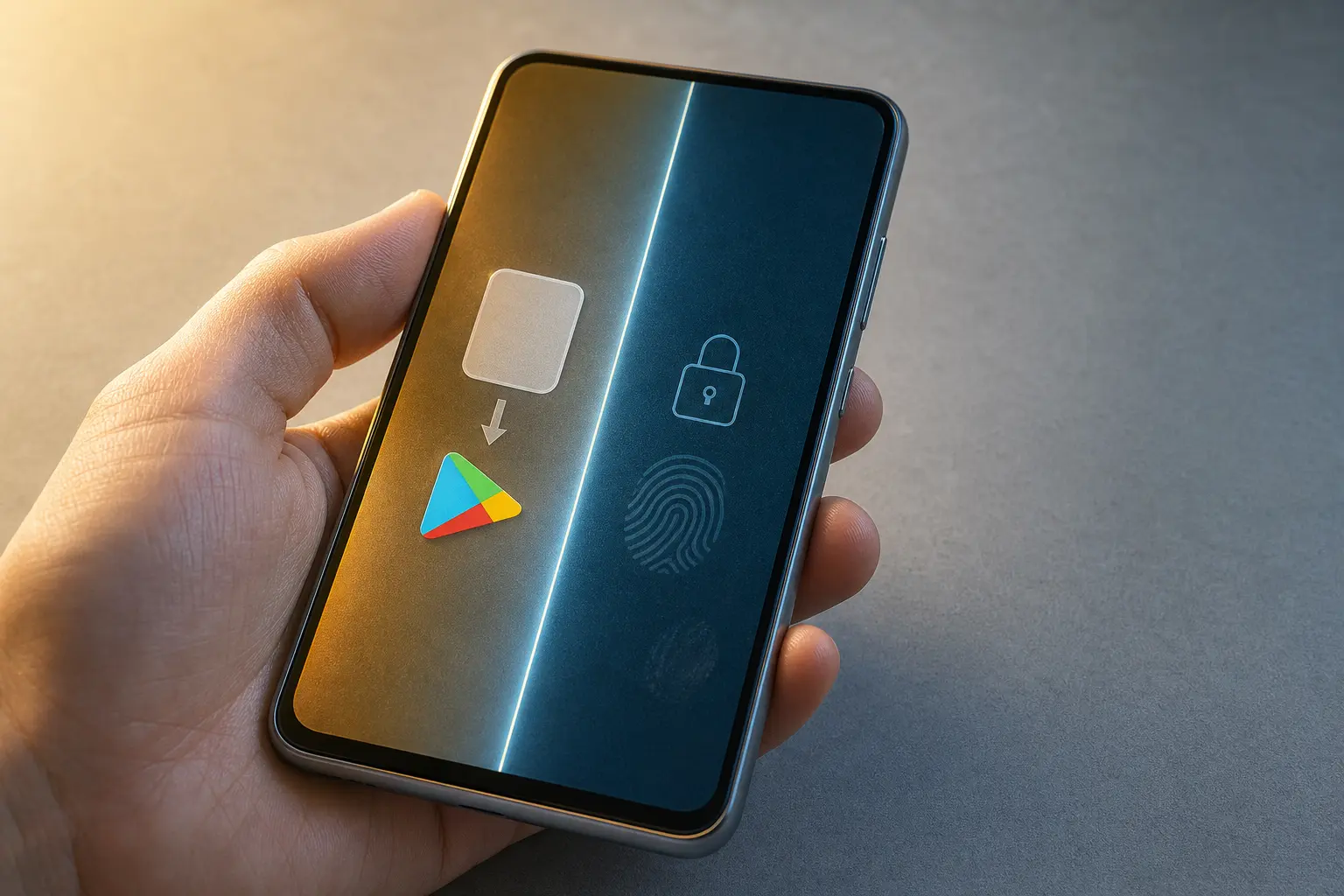
Two distinct changes take effect on July 22, and it is easy to blur them together. The first lets someone download a competing app store the way they download any other app: search for it in Play, tap install, done. No installer file, no security warnings, no detour through settings.
The second is newer and stranger. It is called the Play Catalog Access Program, and it lets enrolled US app stores plug into Google’s own catalog, meaning the app and game listings, icons, descriptions, screenshots and videos Google Play already has on file. A shopper can install one of those Play-catalog apps through a rival store on the same terms as a normal Play download, with Google’s standard Play service fee still attached to the sale.
Per Google’s own Play Console Help documentation, developers’ US app listings are enrolled automatically unless the developer opts out by July 22, 2026, and Google began notifying developers of that deadline on June 22, 2026. The choice belongs to the app maker, not to the phone owner browsing a rival store.
The Injunction Google Fought for Eighteen Months
This did not start as a Google idea. In December 2023, a California jury ruled unanimously for Epic Games, finding Google ran an illegal app store monopoly and charged developers excessive fees. In October 2024, Judge James Donato, a US District Court judge in the Northern District of California, issued a permanent injunction ordering Google to open Play to competition.
Google spent the next stretch trying to narrow that order in court. On July 15, 2026, Google and Epic jointly withdrew Google’s motion to modify it, Google’s way of conceding the fight and complying with the original ruling. Google spokesperson Dan Jackson told Android Authority why the company gave up the fight.
We’ve agreed with Epic to withdraw our motion to modify the US Court’s injunction rather than prolonging this process which creates uncertainty for the ecosystem.
Jackson added that the move lets Google focus on what it calls a broader business model shift toward more app store choice, lower prices and more opportunity for developers and users. That framing sits awkwardly next to the calendar: a jury verdict in 2023, an injunction in 2024, roughly eighteen months of resistance, and a surrender on July 15, 2026, a week before compliance began. Brussels, notably, had opened its own a non-compliance investigation into Alphabet’s steering rules in Google Play back in March 2024, so European regulators were already pressing the same company on similar ground years before this US injunction took effect.
- December 2023: A California jury rules unanimously that Google ran an illegal app store monopoly and overcharged developers.
- October 2024: Judge Donato issues a permanent injunction ordering Google to open Play to competition.
- June 22, 2026: Google starts telling developers their US listings will be shared with rival stores unless they opt out.
- July 15, 2026: Google and Epic jointly withdraw Google’s motion to soften the injunction, leaving the 2024 order standing.
- July 22, 2026: Rival app stores become installable from inside Google Play, and the Play Catalog Access Program goes live.
- September 30, 2026: A separate Android identity verification rule starts applying to app installs, sideloaded ones included, in Brazil, Indonesia, Singapore and Thailand.
Five Thousand Dollars Buys a Seat at the Table
Opening the door is not free for the challengers. A yearly fee in the low thousands is nothing to the Epic Games Store, Samsung’s Galaxy Store or Amazon’s Appstore. It is a real barrier to a small or indie alternative.
- $5,000 a year to enroll in the Play Catalog Access Program and pull listings from Google’s catalog.
- A separate one-time $5,000 security review fee at onboarding, reported by Engadget but not yet confirmed by other outlets.
- Google’s standard Play service fee still applies to every install made through a rival store’s catalog access.
- Enrolled stores must keep malware under 1% of install attempts and hold clear, non-discriminatory policies open to all eligible developers.
That is not free money for Google either. The company has already cut its Play service fee from 30% to 10% on many transactions and opened Play to non-Google payment methods as earlier steps in the same case, so real store-versus-store competition is the kind of pressure that can push commissions down further over time, with lower prices for buyers as the eventual result.
Google Is Building a Second Gate
A much bigger Google project is moving on almost the same clock, and the July 22 changes do not touch it. Android developer verification is a policy Google designed itself, not something any court ordered, and it reaches far past the Play Store into every way an app can land on a phone.
Starting September 30, 2026, apps installed on certified Android devices, sideloaded ones included, must register apps under a verified developer identity before Android will install them without a warning. The rule starts in Brazil, Indonesia, Singapore and Thailand, four markets Google has linked to higher rates of scam apps, before expanding to certified devices worldwide in 2027.
Millions of Apps, Registered Already
Google has said most Play developers have already completed verification and more than 99% of Play apps have now been registered under the new system. The company’s stated reasoning is blunt: apps pulled from sideloaded, unverified sources carry malware at far higher rates than anything downloaded through Play, according to Google’s own research cited by security outlets covering the rollout.
Who Feels the Squeeze First
The people most exposed are exactly the developers the “more choice” story is supposed to help. Stores like F-Droid exist because software could be published freely and often pseudonymously. Mandatory identity checks sit poorly with volunteer, open-source contributors who never had to attach a legal name to their work before.
Google has built exceptions. Students and hobbyists can register a free limited account and share an app to a small circle without a full identity check, and power users get an advanced flow to keep installing from unverified developers after a one-time risk acknowledgment. Neither erases the larger shift: anonymity, once the default on Android, is becoming the exception that requires paperwork.
Europe Already Ran a Version of This
This is not the first time a government forced an app store open. The EU designated Google and Apple as gatekeepers under the Digital Markets Act in September 2023, with compliance required from March 2024, about two years before Google’s US compliance date.
Apple’s version of opening up was grudging. The company allowed alternative marketplaces onto iOS but required operators to post a stand-by letter of credit from an A-rated bank, and it kept rival store apps out of its own App Store entirely, forcing users to fetch them from a developer’s website instead. PC Gamer reported the install process ran to roughly fifteen steps, and Epic’s Tim Sweeney called it malicious compliance at the time. Brussels separately fined Apple more than 1.8 billion euros (about $2 billion) in March 2024 over its music subscription steering rules.
Epic’s own mobile storefront tested that opening in real time. When the Epic Games Store launched its mobile storefront across the EU and worldwide on Android in August 2024, it carried exactly three titles: Fortnite, Fall Guys and Rocket League Sideswipe. Sweeney called the moment overdue but real, saying in Epic’s own announcement that “the tide is turning and the mobile ecosystem is finally opening up to competition.”
Google’s US mechanic goes further than what Brussels got out of Apple. A rival store installs from inside Play itself rather than a developer’s website, and it can resell Google’s own catalog rather than building one from scratch. The table below lines up the moving pieces.
| Program | Region | Key Date | Core Mechanic |
|---|---|---|---|
| Play Catalog Access Program | United States | July 22, 2026 | Rival stores install from inside Google Play; catalog sharing; $5,000 a year |
| EU alternative marketplaces (Apple) | European Union | March 2024 | Alternative stores allowed, but installed from a developer’s own website, not Apple’s App Store |
| Android Developer Verification | Brazil, Indonesia, Singapore, Thailand first | September 30, 2026 | Every installed app, sideloaded included, needs a verified developer ID |
| Registered App Stores | Worldwide, outside the US | Later in 2026, unconfirmed | Google’s planned global equivalent of the US catalog access model |
Is This Coming to India, the UK or Anywhere Else?
Not yet, and there is no date. This rollout is US-only. Users in India, the UK and everywhere else outside the US see no change to how they install apps on July 22.
Google actually wanted one global program rather than two. Court filings reported by MacRumors show Google asked to fold the US into its planned worldwide Registered App Stores program, the same one it has said will arrive elsewhere “later this year.” The court said no, so the US keeps its own distinct mechanism while the rest of the world waits on a program with no confirmed launch date and nothing India-specific attached to it. Google’s own Brussels compliance reports for app store gatekeepers show roughly what a legislated version of this rollout can look like once it lands outside the US.
Apple, meanwhile, is fighting a related but separate battle. MacRumors reported Apple has appealed its own Epic-related order to the Supreme Court, with arguments expected in late 2026 or early 2027. Nothing about that appeal changes what happens to Android phones on July 22.
Frequently Asked Questions
Does Android’s new developer verification rule mean every sideloaded app now needs a government ID?
No. Google is building a free limited-distribution account for students and hobbyists that lets someone distribute apps to twenty devices without a government ID, and an advanced flow lets power users keep installing from unverified developers after a one-time setup acknowledging the risk.
Can a small indie app store operate on Android without paying Google’s $5,000 catalog fee?
Yes, but only outside Google’s own catalog. The fee buys access specifically to Google Play’s existing app and game listings. A store that only distributes apps submitted to it directly, the way F-Droid or Aurora Store already work, does not need to enroll or pay it.
Why did alternative app stores arrive in the EU almost two years before the United States?
Europe used a law with a fixed deadline. The Digital Markets Act named Google and Apple as gatekeepers in September 2023 and required compliance from every designated company by March 2024. The US route ran through a jury trial, an appeal, and years of litigation before an injunction actually took effect.
Does the July 22 change affect iPhone or Apple’s App Store?
No. The injunction binds only Google. Apple’s own fight over alternative iOS marketplaces is a separate case, and Apple has appealed to the Supreme Court, with arguments expected in late 2026 or early 2027.