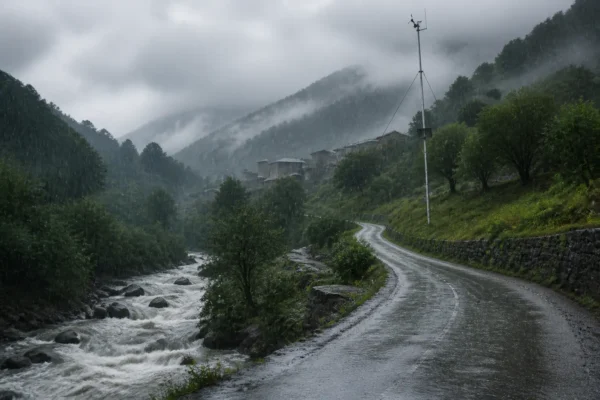
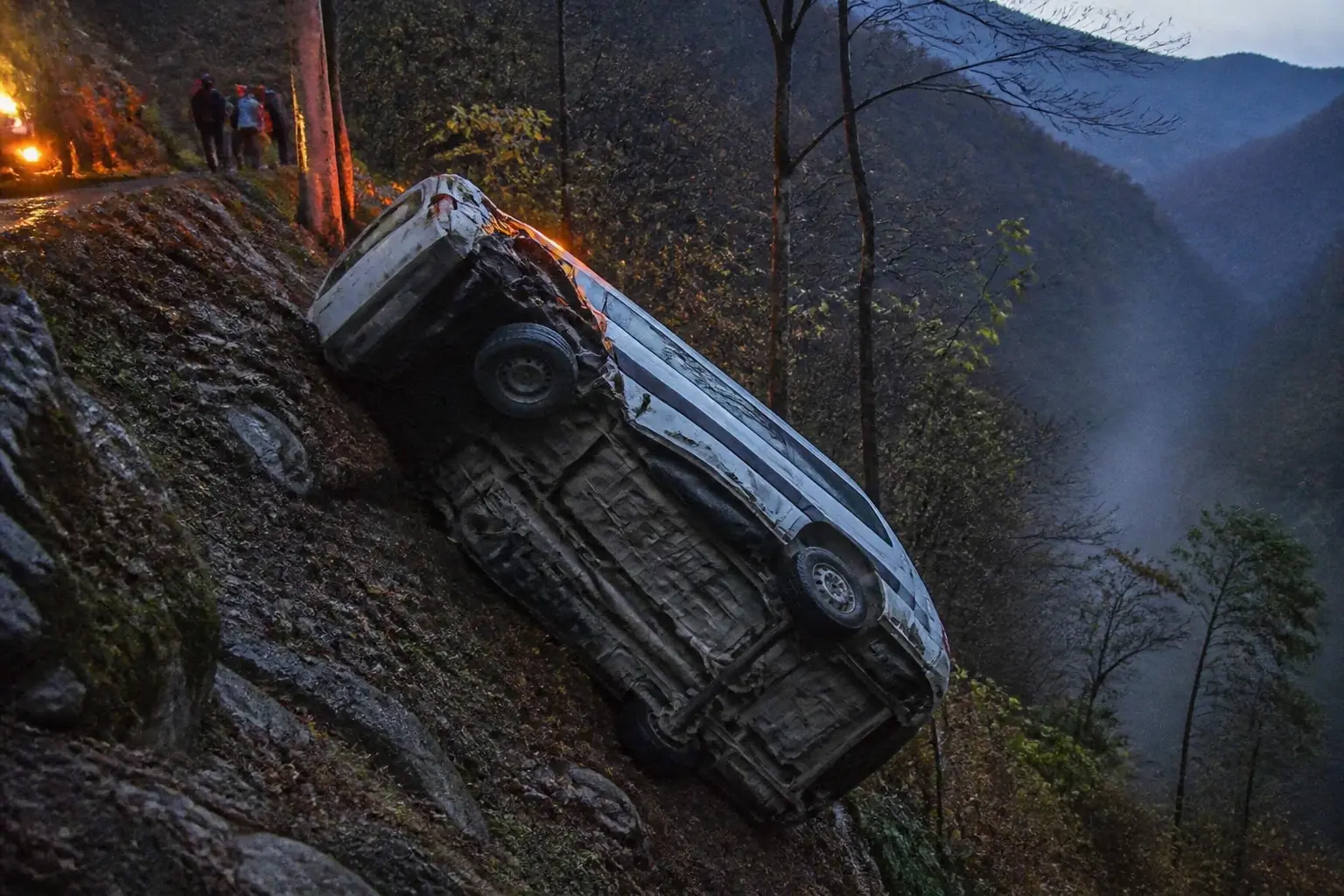
A minibus carrying 19 Belarusian tourists veered off the Gomis Mta road and plunged into a ravine in Georgia’s Guria region late on August 12, killing four passengers at the scene and injuring 15 others, six of them children. The Georgian driver jumped free, suffered lesser injuries, and now sits under escort guard at a Kobuleti clinic while an investigation proceeds under Article 276 of the Criminal Code.
Local outlets put the injured tally as high as 17, but the Belarusian Foreign Ministry settled on the lower figure after direct contact with Georgian authorities. The crash adds one more black mark to mountain roads that already kill Georgians and visitors at rates far above European norms.
The split between early local counts and the ministry figure is typical of night mountain wrecks, when first responders tally everyone pulled from the gorge before hospitals finish sorting who was on the passenger list. Once consular staff and Georgian officials compared notes, the confirmed total held at four dead and fifteen injured.
The Night the Minibus Left the Road
The vehicle was heading from the high-altitude Gomismta resort toward Ozurgeti when the driver lost control. It left the pavement and dropped into the gorge. Rescue teams reached the wreckage after nightfall.
- August 12, late evening: Minibus carrying 19 Belarusians departs Gomis Mta for Ozurgeti.
- Moments later: Vehicle veers off road and falls into ravine; four die at the scene.
- Overnight into August 13: Survivors ferried to hospitals in Batumi, Ozurgeti and Chokhatauri; Georgian Interior Ministry opens criminal probe.
- August 13 morning: Belarusian consul reaches the area; Health Minister visits patients.
Georgia’s Interior Ministry told local media the driver failed to maintain safe control. No weather or mechanical failure details have been released.
Night descents from Gomismta compress several risks at once. The road drops quickly, return schedules push groups to leave after dark, and a single loss of control leaves little room to recover before the pavement ends. Rescue work after nightfall slows the first medical sort, which is why patients were spread across three towns rather than concentrated in one trauma center.
Interior Ministry officers stayed on the slope through the night to secure the wreckage and the road surface before traffic or weather could erase marks. That early scene work will feed the Article 276 file once the driver can be questioned in full.
Driver Under Guard in Kobuleti
The driver, a Georgian national, escaped serious harm by jumping from the vehicle before it went over. He is receiving medical care at a clinic in Kobuleti under the escort service. Authorities say he is formally detained but cannot yet move to a pre-trial isolator until doctors clear him.
- Status: detained under medical supervision
- Location: Kobuleti clinic
- Next step: transfer to detention facility after discharge
- Charge framework: Article 276 (traffic safety violation causing death)
Interior Ministry officers remain at the crash site and are collecting evidence from the wreckage and road surface.
Medical detention keeps the suspect under guard without interrupting treatment. Escort officers stay with him at the clinic so that discharge and transfer into the formal pre-trial system can happen in one step. Until doctors sign off, investigators can still gather physical evidence and take preliminary statements from survivors, but a full interview with the driver waits on his condition.
Jumping clear before the drop explains why his injuries were lesser than those of the passengers who stayed inside. That fact does not settle the legal questions. Prosecutors still have to show whether speed, position on the road, or another breach of traffic rules led to the loss of control.
Belarus Consular Response and Hospital Counts
Belarus’s Foreign Ministry confirmed four Belarusians dead and fifteen injured, including six minors. Eleven patients reached Batumi Republican Clinical Hospital; four more went to facilities in Ozurgeti and Chokhatauri. Two adults remain in intensive care, though the head physician said their conditions are not life-threatening. Some lighter cases have already been discharged.
| Hospital | Patients | Notes |
|---|---|---|
| Batumi Republican Clinical Hospital | 11 | Includes two in intensive care |
| Ozurgeti and Chokhatauri clinics | 4 | Moderate and minor injuries |
| Discharged early | Several | Lighter cases released within hours |
The Belarusian embassy is supplying consular help. The consul traveled to the scene the same day. The ministry also said it would facilitate return of Belarusian citizens once medical staff approve travel. Georgia’s Health Minister personally checked on the injured at Batumi and Chokhatauri.
Spreading patients across Batumi, Ozurgeti and Chokhatauri reflects both distance from the gorge and the mix of injury severity. Batumi took the larger share, including the two adults still in intensive care. The smaller clinics handled moderate and minor cases, and some of those lighter injuries cleared for discharge within hours.
Six of the fifteen injured are children, which shapes consular work as much as the hospital map. Parents or guardians need updates in their own language, and any return flight has to match each child’s medical clearance. The embassy’s promise to facilitate return once doctors approve travel covers both adults and minors, but the paperwork moves only as fast as the slowest clinical timeline.
The Health Minister’s visits to Batumi and Chokhatauri signal that Georgian authorities treat the group as a single incident rather than scattered local admissions. That coordination matters for families trying to track who is where and when discharge becomes realistic.
Georgia’s Mountain Roads Carry a Steep Toll
Guria’s steep routes to resorts like Gomismta draw growing numbers of foreign visitors, yet the national safety picture remains grim. Georgia’s own figures show 8,191 road accidents in 2025 that produced 5,969 injuries. Road deaths per 100,000 residents stood at 11.8 in 2024, roughly 2.7 times the EU average of 4.5.
- 2025 accidents: 8,191 recorded nationwide
- Injuries that year: 5,969
- Death rate: 11.8 per 100,000 (2024)
- EU comparison: 4.5 per 100,000
The most frequent causes listed in official data include improper turning, entering the oncoming lane, and speeding. Pedestrians still account for about a third of road deaths. The National Road Safety Strategy for 2026-2030 acknowledges the gap and sets targets for infrastructure, enforcement and public awareness, yet mountain tourist corridors continue to claim lives each season.
| Metric | Georgia | EU average |
|---|---|---|
| Road deaths per 100,000 (recent) | 11.8 | 4.5 |
| 2025 accidents | 8,191 | – |
| Common causes | Turning, overtaking, speeding | – |
Earlier mountain crashes, including a 2020 incident that killed 17, show the pattern is not new. Tour operators still pack minibuses onto narrow, winding climbs because the views sell tickets.
The 2025 accident and injury totals sit against a death rate that remains far above the EU benchmark. Improper turning, oncoming-lane entries and speeding dominate the official cause list, and those errors grow costlier on steep tourist roads where barriers are sparse and drop-offs are immediate. Pedestrian deaths near a third of the national toll point to a wider enforcement and design problem, not only a mountain one.
The National Road Safety Strategy for 2026-2030 names infrastructure, enforcement and public awareness as the levers meant to close the gap. Until those targets show up as visible barrier work and tighter control on resort corridors, operators will keep selling the same climbs that produced the 2020 mass-casualty crash and now this August wreck.
What Article 276 Investigation Covers
Prosecutors opened the case under Article 276 of the Criminal Code, which addresses violations of traffic safety or vehicle operation rules that result in death. When two or more people die, the penalty range is four to seven years in prison plus a ban on holding certain positions or activities for up to three years. Investigators will examine speed, road conditions, vehicle condition and driver fitness. No statement has yet named alcohol, fatigue or mechanical failure as a factor.
The driver’s detention status remains medical for now. Once released from the clinic he moves into the formal pre-trial system. Families of the dead and injured will be able to join the process as victims under Georgian procedure.
Because four people died, the case falls in the higher penalty band under Article 276. The four-to-seven-year range and the possible activity ban give prosecutors a clear charging frame once evidence is complete. Speed, road surface marks, the state of the minibus and any finding on driver fitness form the core checklist; alcohol, fatigue and mechanical failure remain open questions only because no official statement has named them.
Victim status for families matters for access to the file and for later civil claims. That procedural door opens under Georgian rules even while the driver is still in medical detention, so relatives do not have to wait for the clinic transfer before they can seek standing in the case.
Tourists Keep Coming to Guria Peaks
Gomismta and nearby high country sit on the Black Sea side of Georgia and attract Belarusian, Russian and European visitors seeking cool air and hiking. Minibuses remain the cheapest group transport. Operators face pressure to run full loads late into the evening when return schedules tighten. Local chatter on social platforms after the crash focused less on shock and more on how often these roads claim outsiders and how little visible barrier work appears on the steepest sections.
Belarusian officials have not issued travel warnings. Georgian authorities have not announced immediate road closures or temporary speed limits on the Gomis Mta stretch. The injured who can fly will likely leave within days; the dead will require formal repatriation paperwork handled by the embassy and Georgian courts.
Full loads and late returns are commercial habits, not one-off choices. Cheap group transport fills seats, and resort schedules push departures into darkness when the same narrow climbs are harder to read. After the crash, local comment online treated the gorge drop as familiar rather than shocking, and pointed again at missing barrier work on the steepest segments.
With no travel warning from the Belarusian side and no fresh closure or speed limit on the Gomis Mta stretch, the corridor stays open for the next groups. That leaves a simple split in the days ahead: lighter injuries clear for flights, while the dead move through embassy and court channels for repatriation.
Repatriation Paperwork Follows Medical Clearance
Return plans for the living and the dead run on different clocks. Injured passengers leave only when medical staff approve travel, a threshold the Belarusian ministry has already tied to its facilitation offer. Some lighter cases cleared within hours of admission; the two adults in intensive care, even if not in life-threatening condition, will take longer before any flight is realistic.
- Lighter injuries: early discharge, sooner travel window
- Moderate cases in Ozurgeti and Chokhatauri: depend on local clinical sign-off
- Intensive-care adults in Batumi: longer hold before movement
- Four dead: embassy and Georgian court paperwork for repatriation
Children among the injured add a further layer. Each minor’s clearance must align with a guardian’s ability to travel, and consular staff have to keep family groups coordinated across three hospital towns. The same-day arrival of the consul and the Health Minister’s rounds help that coordination, but they do not shorten clinical recovery.
For the four who died at the scene, repatriation is a legal process rather than a medical one. The embassy works with Georgian courts on the required documents while families decide on transport home. Nothing in the public statements suggests that path will wait on the driver’s clinic discharge; the two tracks can move in parallel.
Open Roads Leave the Same Risks in Place
No closure and no temporary speed limit on the Gomis Mta stretch mean the physical setting of the crash remains available to the next full minibus. Operators still have the same incentive to pack seats and hit evening return slots. Visitors from Belarus, Russia and wider Europe still have the same cheap group option for cool air and hiking on the Black Sea side of the range.
| Factor | Status after the crash |
|---|---|
| Gomis Mta road access | Open, no new limits announced |
| Belarus travel warning | None issued |
| Barrier work on steep sections | Still described as little visible progress |
| Minibus group transport | Still the cheapest option for resorts |
National numbers already show why that status quo is costly. Thousands of accidents and injuries in 2025, a death rate well above the EU average, and a short list of recurring causes leave little mystery about what happens when control is lost on a mountain grade. The 2020 crash that killed 17 sits in the same pattern; this August wreck extends it.
The 2026-2030 strategy may eventually change infrastructure and enforcement on tourist corridors. Until those changes reach the climbs above Guria, the commercial pressure that fills evening minibuses will keep meeting the same narrow pavement and the same drop beyond the edge.
Four lives ended on a familiar mountain road. Fifteen more people, six of them children, now face recovery far from home while the same corridors stay open for the next busload of tourists.