Georgia President Mikheil Kavelashvili stood firm in a recent interview, defending the legitimacy of the 2024 parliamentary elections despite widespread protests and growing strains with the European Union. The former soccer star turned politician urged the EU to adjust its approach while stressing that Georgians view themselves as part of Europe, even as membership talks remain frozen.
Election Controversy Sparks Nationwide Protests
The parliamentary elections took place on October 26, 2024, with the ruling Georgian Dream party claiming victory and securing a fourth term. Critics, including opposition groups and international observers, quickly raised alarms over alleged fraud and irregularities.
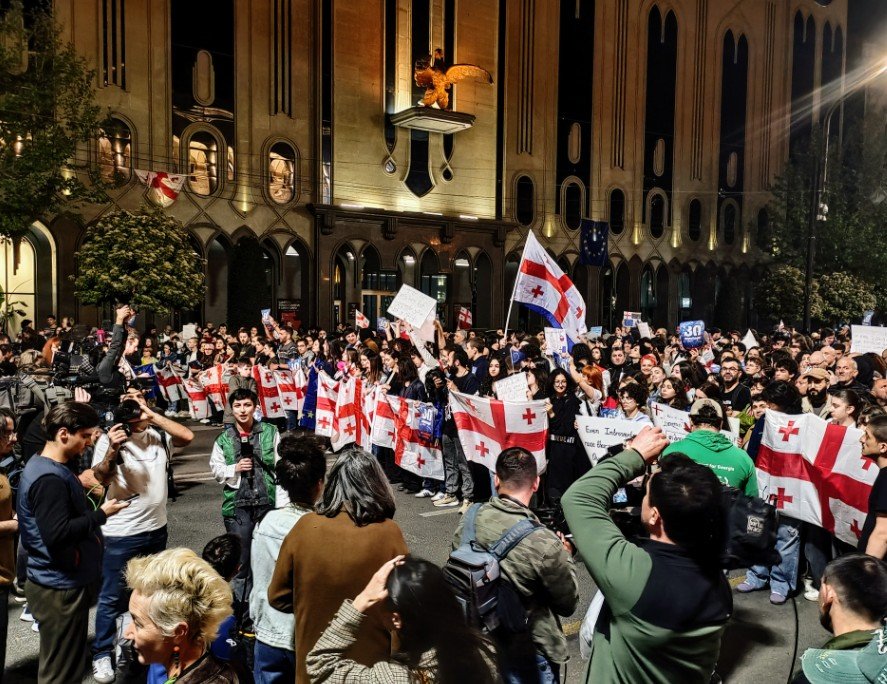
Protests erupted soon after, with thousands taking to the streets in Tbilisi and other cities. Demonstrators demanded new elections and a renewed push toward EU integration. The unrest has continued into 2025, highlighting deep divisions in Georgian society.
Government officials, including Kavelashvili, have dismissed these claims. In his interview, he described the vote as the cleanest in recent history, free from major violations. This stance contrasts with reports from bodies like the European Parliament, which highlighted issues such as voter intimidation and ballot stuffing.
The political crisis has also led to a constitutional standoff. Outgoing President Salome Zourabichvili refused to step down initially, calling the new government illegitimate. Her actions fueled further protests before Kavelashvili’s inauguration on December 29, 2024.
Strains in Georgia’s EU Membership Aspirations
Georgia has long aimed to join the European Union, with polls showing strong public support. About 75 percent of Georgians favor integration, according to recent surveys. However, tensions escalated when Prime Minister Irakli Kobakhidze announced a halt to EU accession talks until 2028.
This decision came after the EU froze discussions in June 2024, citing concerns over democratic backsliding. The move followed the passage of controversial laws, including one restricting foreign influence, which critics compared to Russian-style legislation.
Kavelashvili emphasized Georgia’s European identity in his remarks. He argued that the government never abandoned EU goals and pointed to public backing for both the ruling party and integration. Despite this, the timeline remains unclear, with the president suggesting readiness by 2030 at the earliest.
International reactions have been mixed. The EU Parliament called for new elections within a year, refusing to recognize the 2024 results. This has deepened the rift, with some Georgian officials accusing the West of interference.
Here is a timeline of key events in Georgia’s recent political turmoil:
- October 26, 2024: Parliamentary elections held; Georgian Dream declares victory amid fraud allegations.
- November 2024: Mass protests begin; EU condemns the vote and halts membership talks.
- December 14, 2024: Lawmakers elect Kavelashvili as president in a vote boycotted by opposition.
- December 29, 2024: Kavelashvili inaugurated amid ongoing demonstrations.
- Early 2025: Protests continue, with calls for renewed EU dialogue.
Kavelashvili’s Background and Political Rise
Mikheil Kavelashvili, a former professional footballer who played for teams like Manchester City, entered politics about a decade ago. Known for his far-right views and socially conservative stance, he co-founded a party wing that pushed anti-LGBTQ policies.
His nomination by Georgian Dream drew criticism for signaling a shift away from liberal reforms needed for EU entry. Supporters praise his straightforward style and focus on national sovereignty.
As president, Kavelashvili has defended the government’s pragmatic approach to Russia, especially amid the ongoing war in Ukraine. He argues this safeguards peace, a key campaign message during the elections.
Opposition leaders portray him as a puppet of influential oligarch Bidzina Ivanishvili, the Georgian Dream founder. They claim his leadership complicates Georgia’s path to Western alliances.
Impact on Georgian Society and Economy
The political deadlock has ripple effects beyond politics. Protests have disrupted daily life, with reports of clashes between demonstrators and police. Authorities have tightened rules on assemblies, leading to arrests and accusations of excessive force.
Economically, the uncertainty has shaken investor confidence. Georgia’s economy grew by about 5 percent in 2024, driven by tourism and trade, but experts warn of slowdowns if EU ties weaken further.
Public sentiment remains divided. While many urban residents support pro-EU protests, rural areas often back the government’s stability-focused policies.
The following table outlines public opinion on key issues based on recent polls:
| Issue | Support for EU Integration | Support for Georgian Dream | Concern Over Election Fraud |
|---|---|---|---|
| Urban Population | 85% | 45% | 70% |
| Rural Population | 65% | 75% | 40% |
| Overall | 75% | 60% | 55% |
These figures illustrate the split, with urban dwellers more skeptical of the vote’s integrity.
International Reactions and Future Outlook
Global leaders have weighed in on the crisis. The United States expressed concern over democratic erosion, while Russia has welcomed Georgia’s cautious stance. Neighboring countries like Ukraine have shown solidarity with protesters, drawing parallels to their own struggles.
Analysts predict that without reforms, Georgia risks isolation from the West. A potential resolution could involve dialogue between the government and opposition, possibly mediated by international bodies.
For now, Kavelashvili calls for the EU to change its attitude, insisting Georgians are inherently European. Yet, with protests persisting into 2025, the path forward remains uncertain.
Share your thoughts on Georgia’s political future in the comments below, and spread this article to keep the conversation going.