Georgia’s medical cannabis regulators are preparing rules that would let licensed dispensaries ship products by U.S. mail or private courier straight to registered patients, a step unlocked by the federal government’s April reclassification of state-licensed medical marijuana as a Schedule III substance. The Georgia Access to Medical Cannabis Commission plans public feedback on September 16 and a vote on September 30.
More than 45,000 patients are already on the registry after a sharp jump since July 1 expansions took effect. Delivery would turn the state’s limited retail footprint into a logistics network that reaches rural areas and long-term care facilities without requiring patients to travel. The shift would not add producers or rewrite the product list. It would change how far the existing network can stretch.
What the Delivery Proposal Would Allow
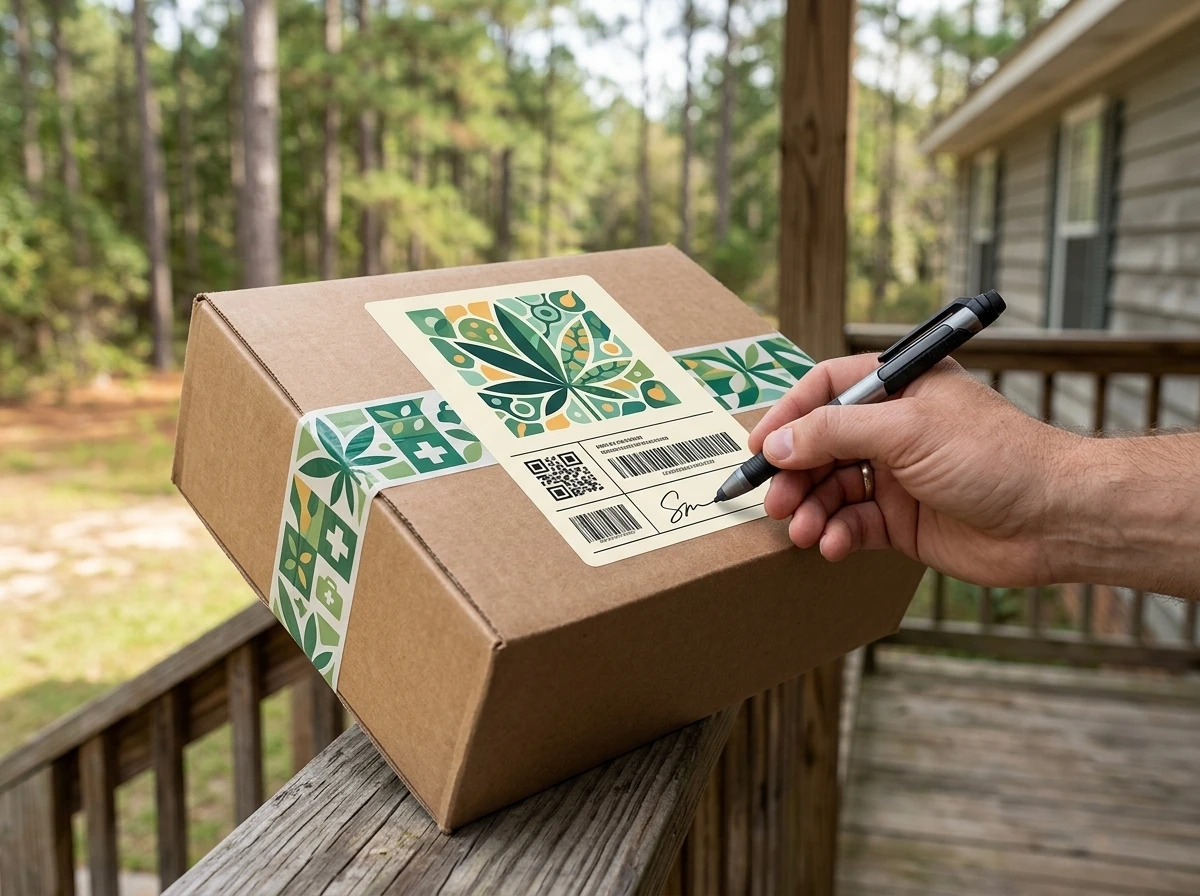
Commissioners intend to authorize dispensing licensees to use the U.S. Postal Service or common carriers such as UPS and FedEx. Shipments must go only to the address listed on the patient’s registry card. Executive director Andrew Turnage told the commission the change maintains existing tracking standards while using the authority created by the federal order.
“That dispensing will occur through either the United States Postal Service or through a private carrier, and it can only go directly to the registered patient at the patient’s address that’s on their card,” Turnage said.
The draft language requires certified mail or equivalent tracked service with proof of delivery, signature restricted to the patient, caregiver, or a listed healthcare institution employee. Licensees must log the tracking data into the state system immediately after delivery. No one else may accept the package.
Those conditions turn each shipment into a closed loop from licensee to named recipient. The same data trail that already follows products from producer to counter would simply continue to the doorstep.
- Certified mail or equivalent tracked service with proof of delivery
- Signature limited to the patient, caregiver, or listed healthcare institution employee
- Immediate logging of tracking data into the state system after delivery
- Shipment only to the address printed on the registry card
- No acceptance by anyone outside the authorized list
The Federal Order That Opened the Door
In April, Acting Attorney General Todd Blanche issued a Justice Department Schedule III order that immediately placed FDA-approved marijuana products and those regulated under qualifying state medical licenses into Schedule III of the Controlled Substances Act. The move followed a December 2025 executive order from President Trump directing faster action on medical marijuana research and access.
Blanche said the Department was expanding Americans’ access to medical treatment options and enabling better research. A separate process began for broader rescheduling of marijuana, with an administrative hearing that started in late June. Legal challenges to the April order remain active in the D.C. Circuit, and final post-hearing briefs were due around mid-August.
The state commission is proceeding on the view that private carriers already move other Schedule III pharmaceuticals and that the postal service will follow federal and state rules once the legal picture settles. That reading treats medical cannabis under a qualifying state license as cargo carriers already know how to handle, rather than as a novel category that needs new federal machinery.
Enrollment Jumped After the July Expansion
Georgia’s program was long among the nation’s least used. Registry figures sat near 34,500 patients in the spring, an adoption rate under 0.3 percent of the state population. The Putting Georgia’s Patients First Act took effect July 1, adding conditions, removing “severe or end-stage” barriers for several diseases, allowing vaporization of flower and concentrates for adults 21 and older, and replacing the old 5 percent THC cap with a 12,000-milligram possession limit.
Enrollment climbed from roughly 34,000 on July 1 to 45,356 by August 5. That crossing of the 45,000 threshold lets the six production licensees each open another dispensary. The state currently has 18 licensed dispensaries.
- Spring 2026: about 34,500 registered patients
- July 1: law expansion effective; ~34,000-36,700 patients
- Early August: 44,800-45,356 patients
- Current retail: 18 dispensaries under six producers
Operators reported strong early sales of the newly legal flower and vape formats. Industry forecasts have pointed to possible tripling of the patient base by mid-2027 if growth holds. Delivery would expand the practical market without waiting for new stores to open in underserved counties.
| Milestone | Patients or licenses | Effect |
|---|---|---|
| Pre-expansion baseline | ~34,500 | Lowest national adoption rate |
| July 1 law change | New conditions, flower/vape, 12,000 mg limit | Immediate enrollment surge |
| 45,000 patients crossed | Additional dispensary rights unlocked | Six producers can expand retail |
| Proposed delivery rules | USPS + common carriers | Statewide reach from existing sites |
Crowds watching the numbers note that delivery multiplies the reach of a supply system still capped at six producers and a handful of retail licenses. Specific product formats may face intermittent shortages as cultivation catches up, yet the structural path for higher volume is clear.
The enrollment surge and the retail unlock arrived within weeks of each other. Delivery would ride the same wave without depending on construction timelines or local siting fights for each new storefront.
Patients in Deserts and Care Facilities Stand to Gain Most
Turnage has repeatedly described “cannabis deserts” across Georgia. Patients in some regions travel two hours or more one way, navigating mountains, rivers, lakes, and metro congestion just to reach a dispensary. The commission has no dispensary in every part of the state, yet patients live in all of them.
Corey Lowe, director of Peachtree NORML and mother of a daughter with constant seizures, described the burden of packing a wheelchair, supplies, and a medically fragile child for a trip that can feel like preparing for a baby. Medical cannabis has been among the few things that help, she said, but mobility and logistics remain hard for cancer patients, those with seizures, and people on hospice.
We don’t have a dispensary in all areas of the state, but we do have patients in all areas of the state. This, obviously, is going to provide a great option for patients who are having to currently travel hours one-way just to get to a dispensary.
Turnage made the point in commission discussion. For residents of nursing homes, elder care, long-term care, or medical facilities, delivery may be one of the few reliable ways to maintain consistent access. Facilities can obtain cards through the Department of Public Health and arrange purchases that ship securely, reducing diversion, theft, and parking-lot risks that come with staff or family members making repeated trips.
A tracked package with a restricted signature replaces a car trip that many patients cannot make alone. For hospice and seizure patients, that difference is not convenience. It is whether medicine arrives on a predictable schedule.
How the Program Works Today
Patients qualify under commission’s patient eligibility rules by physician certification for one of 18 conditions. Those include cancer (except non-metastatic skin cancer), epilepsy and seizure disorders, multiple sclerosis, Parkinson’s, ALS, autism (with age and severity notes), HIV Stage III, intractable pain, PTSD from trauma for adults, lupus, and several others. The state medical cannabis patient registry is run by the Georgia Department of Public Health.
Products sold at licensed dispensaries or participating independent pharmacies include oils, tinctures, capsules, topicals, patches, ingestibles, and, since July, flower and concentrates for vaporization. Smoking remains illegal. Food products such as candies and cookies are prohibited. Every package carries lab testing data and manufacturer license information. Possession is capped at 12,000 milligrams of THC for cardholders. Recreational adult-use remains illegal.
Independent pharmacies have long been authorized to carry commission-approved products for registered patients. Delivery rules would let those pharmacies ship as well, extending another existing channel. The product rules and possession cap would travel with the package. Nothing in the draft rewrites what a patient may hold, only how it can arrive.
Carriers, Pharmacies and the September Timeline
Private couriers already transport Schedule III pharmaceuticals from distribution centers to pharmacies. Turnage expects them to treat medical cannabis the same way once rules are final. USPS has said it will follow all federal and state regulations; officials appear to be watching the court challenges before rewriting internal policies. FedEx, UPS and others have not publicly committed in recent coverage.
Georgia has tested federal boundaries before. In 2023 the DEA warned pharmacies that dispensing THC products under state law could risk their federal registrations. The current Schedule III placement for state-licensed medical products is intended to remove that friction for the medical channel only. Broader marijuana remains under active administrative and legal review.
The Georgia Access to Medical Cannabis Commission site will host the public hearing materials. Under the HOPE Act framework that created the program, the commission can adopt these operational rules without a new vote of the legislature. If adopted at the end of September, licensees could begin offering tracked home delivery under the signature and logging requirements already drafted.
- April: Justice Department Schedule III order for qualifying state medical products
- Late June: broader rescheduling administrative hearing begins
- July 1: Putting Georgia’s Patients First Act takes effect
- Early August: registry crosses 45,000 patients
- Mid-August: final post-hearing briefs due in the D.C. Circuit challenges
- September 16: public feedback on delivery rules
- September 30: commission vote on the draft
Delivery Multiplies Reach From Eighteen Stores
Eighteen dispensaries under six producers cannot sit in every county. Delivery does not change that ceiling. It changes whether a patient in a desert county must cross mountains or metro traffic to use a card already in hand.
Each producer that unlocks another storefront still needs a site, staff, and local clearance. A courier route from an existing counter needs none of those steps. The same 18 doors, plus participating pharmacies, become pickup points for a statewide map of registry addresses.
Volume can rise before cultivation fully catches the new flower and vape demand. Shortages of specific formats may still appear. The logistics path, however, no longer waits on retail brick and mortar to match the enrollment curve that followed the July law.
Facilities Gain a Controlled Channel for Residents
Nursing homes, elder care, long-term care, and medical facilities already sit inside the patient map even when no dispensary is nearby. Cards obtained through the Department of Public Health let a facility arrange purchases that ship to the listed address with a signature from a listed healthcare institution employee.
That design cuts the repeated staff or family trips that create parking-lot exposure and diversion risk. The package log enters the state system the same way a counter sale does. Consistency of supply matters for residents who cannot travel, and the draft rules treat the facility employee as an authorized handoff rather than an informal workaround.
For hospice and high-mobility-burden households, the same channel removes a trip that Lowe and others have described as packing for a medical expedition. The medicine still moves under lab labels, license data, and the 12,000-milligram possession cap. Only the last mile changes.
What Changes for Georgia Patients This Fall
The practical result of Schedule III status is already visible in enrollment and product menus. Mail and courier delivery would remove the last major physical barrier for thousands of patients who cannot easily leave home or who live far from the 18 current dispensaries. Facilities would gain a controlled channel that reduces security exposure. Operators would gain volume without waiting for every new retail license to be sited and built.
September’s two meetings will test public reaction and carrier readiness. The legal challenges to the federal order continue on a parallel track. For now the commission is writing the guardrails so that when the logistics open, the state tracking system, patient cards, and signature rules are already in place.
Patients in rural counties and long-term care beds are the ones who will feel the difference first if the rules pass.