Emory’s isolation unit at Emory University Hospital is Georgia’s front door for the rare patient who may need care for Ebola, hantavirus or another high-risk infection. The 11-bed Serious Communicable Diseases Unit can isolate, test and treat patients while protecting hospital staff and the public.
The timing matters because two alerts arrived almost back to back: a travel-linked hantavirus scare that sent two people to Atlanta for monitoring and a Bundibugyo Ebola outbreak in the Democratic Republic of the Congo and Uganda that the World Health Organization (WHO, the United Nations health agency) declared a Public Health Emergency of International Concern (PHEIC, an international alert for unusual cross-border health risks) on May 17, 2026.
Georgia’s Rare-Disease Bed Is a National Asset
For most Georgians, the unit is invisible by design. It is not where a feverish traveler should simply show up, and it is not a replacement for county health departments, emergency rooms or the Centers for Disease Control and Prevention (CDC, the U.S. public health agency). Its job starts when ordinary hospital isolation is not enough.
The current Ebola alert helps explain why that distinction matters. WHO’s Bundibugyo outbreak notice says the outbreak was confirmed in Ituri Province and Uganda in mid-May, with no licensed vaccine or specific therapeutic for Bundibugyo virus disease. CDC says no U.S. Ebola cases tied to the outbreak had been reported as of its current situation update, and that risk to the general public remains low.
Low risk does not mean no preparation. Atlanta has a rare mix of assets: a major academic medical center, CDC nearby, trained transport partners and a unit that has already cared for patients in moments when fear traveled faster than the pathogen.
The Ward Is Small by Design
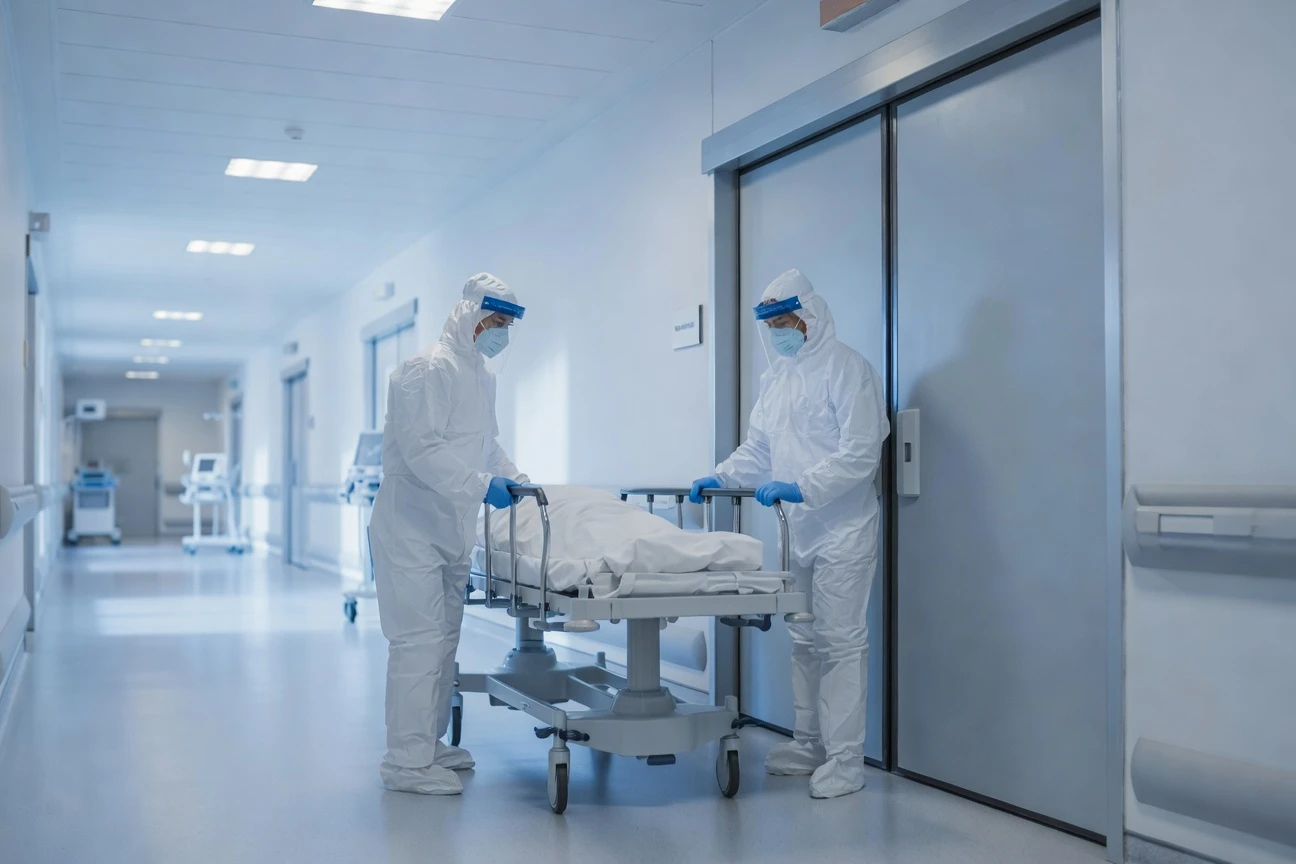
The Serious Communicable Diseases Unit (SCDU, a specialized hospital ward for rare high-risk infections) is built around controlled movement. Patients, air, waste, specimens and protective gear all have their own paths. That sounds mundane until a disease can spread through body fluids, aerosols or contaminated surfaces.
Emory’s public materials describe a unit that opened after the 2001 anthrax attacks and later became central to U.S. Ebola care. During a national infectious-disease exercise, the university said the Atlanta unit includes 11 beds and three intensive care rooms, with unidirectional airflow and a lab near the unit for specimen handling.
Those numbers are small on purpose. A ward like this is not designed for mass care. It is built for the first patient, the exposed worker, the traveler with symptoms, the clinician who needs a safe place to take off personal protective equipment (PPE, clothing and gear used to reduce exposure to infection) without contaminating the next room.
Hantavirus Put the System on Display
The recent hantavirus transfers were the clearest public test of that quieter mission. Emory’s account of the MV Hondius transfers said two passengers linked to the cruise ship outbreak were sent to the hospital: one symptomatic person for care in the biocontainment unit and one asymptomatic close contact for evaluation and monitoring.
Hantavirus is not one disease with one playbook. In the United States, many infections are tied to rodent urine, droppings or saliva. The Andes virus, involved in the cruise ship concern, is unusual because it can spread between people through close contact. That is why public health officials treated the travel cluster differently from routine rodent exposure.
- 890 U.S. cases of hantavirus disease were reported from 1993 through 2023, according to CDC surveillance.
- 35 percent of reported U.S. hantavirus infections resulted in death in that CDC data table.
- 94 percent of reported U.S. cases occurred west of the Mississippi River.
Those figures make the Atlanta transfer easier to read. The event was not proof that Georgia faced a broad outbreak. It showed how a national system moves people with a rare exposure to a place where the staff has practiced the boring parts: airlocks, waste handling, lab routing, staff observation and clean exits.
Bundibugyo Makes Speed More Important Than Size
Ebola planning carries a different kind of urgency because early symptoms can look like many other illnesses. Fever, malaise, vomiting and bleeding risks do not announce a diagnosis on arrival. Travel history, exposure history and fast communication with public health officials matter before a patient reaches a specialized room.
The strain at the center of the current international alert is Bundibugyo virus disease (BVD, a form of Ebola disease caused by Bundibugyo virus). WHO said past Bundibugyo outbreaks had case fatality rates from 30 percent to 50 percent, and the current Democratic Republic of the Congo event is the country’s 17th Ebola outbreak since the virus was first identified in 1976.
That does not make Atlanta a likely outbreak site. It makes Atlanta part of the insurance policy. If a traveler, aid worker or clinician needs evaluation after exposure, the hard part is not only the bed. The hard part is recognizing the risk early, moving the person without exposing others and keeping the care team safe long enough to treat the patient well.
A Federal Network Sits Behind the Doors
The Atlanta ward is part of the National Special Pathogen System (NSPS, a tiered U.S. care network for dangerous infectious diseases). NETEC’s National Special Pathogen System overview describes four levels, from highly specialized regional centers to ordinary health facilities expected to identify, isolate, inform public health and begin stabilization.
| Care Level | Main Job | Care Window | Why It Matters in Georgia |
|---|---|---|---|
| Level 1 Regional Center | Highly specialized care for confirmed or suspected special pathogens | Duration of illness | Atlanta can receive rare high-risk patients when directed through the network |
| Level 2 Treatment Center | Specialized care for clusters and regional support | Duration of illness | Helps prevent one unit from carrying every patient during a larger event |
| Level 3 Assessment Center | Basic testing, isolation and transfer coordination | 12 to 36 hours | Gives community hospitals a safe bridge while public health decides next steps |
| Level 4 Health Facility | Identify, isolate, inform and stabilize | Initial response | Every emergency department needs a first-contact plan |
The network grew after Ebola exposed how few U.S. hospitals were ready for sustained care of patients with highly infectious diseases. The Administration for Strategic Preparedness and Response said a funding notice was meant to sustain 10 existing regional centers and add three new sites, expanding the total to 13 regional centers.
NETEC also states an aspirational two-hour mobilization goal after a suspected special pathogen infection. That goal is more than a clock. It is a reminder that the first phone calls, the first mask, the first closed door and the first travel-history question often shape the rest of the response.
The Practical Risk for Georgia
For the public, the lesson is calmer than the disease names suggest. Ebola spreads through direct contact with blood or body fluids of a person who is sick with or has died from the disease. Most hantaviruses in North America are tied to rodent exposure, not casual contact at work, school or the grocery store.
That leaves three practical rules for people in Georgia:
- Call before arrival if you have symptoms after recent travel to an Ebola outbreak area or after a known high-risk exposure. Public health officials can route care safely.
- Do not sweep or vacuum dry rodent droppings. CDC advises wetting urine and droppings with disinfectant before cleanup, as outlined in its rodent cleanup guidance.
- Use travel history as a medical fact, not an afterthought. Tell clinicians where you went, when you returned and whether you had contact with sick people, animals, healthcare settings or body fluids.
The existence of the Atlanta unit should lower panic, not raise it. If a dangerous infection appears at Georgia’s edge, the state already has a place built for the first hard hours.
Frequently Asked Questions
Where Does Georgia Treat Ebola or Hantavirus Patients?
Georgia uses the Serious Communicable Diseases Unit at Emory University Hospital for the rare patients who need specialized isolation, evaluation or care for diseases such as Ebola or hantavirus. The unit is part of a national system built for high-risk infections, not a walk-in clinic for routine care.
Has the Atlanta Unit Treated Ebola Patients Before?
Yes. The Atlanta unit cared for four people with Ebola virus disease in 2014, including the first Ebola patient treated in the United States. That experience helped shape protocols now used for staff safety, waste handling, laboratory work and patient care during special pathogen events.
Is Ebola Spreading in the United States?
No U.S. cases tied to the current Bundibugyo outbreak had been reported in CDC’s latest situation update. Federal officials still monitor travelers and exposures because imported cases can occur, but health agencies continue to describe the risk to the U.S. general public as low.
Why Were Hantavirus Patients Sent to Atlanta?
The patients were sent to Atlanta because one had symptoms and one was a close contact after a travel-linked Andes virus exposure. A specialized biocontainment unit can monitor symptoms, isolate safely if needed and protect healthcare workers while testing and public health evaluation continue.
What Should I Do After Travel to an Ebola Outbreak Area?
Contact your local or state health department if you develop fever, vomiting, weakness, diarrhea, bleeding or other concerning symptoms after travel to an Ebola outbreak area. Call ahead before seeking care so officials can choose the safest facility and prevent avoidable exposures.
How Can I Lower Hantavirus Risk at Home?
Reduce contact with wild rodents by sealing holes, storing food securely and cleaning rodent-contaminated areas with a wet disinfecting method. Avoid sweeping or vacuuming dry droppings, because that can stir particles into the air and raise exposure risk.
Disclaimer: This article is for informational purposes only and is not medical advice. Ebola, hantavirus and other serious infections require professional evaluation and public health coordination. If you believe you may have been exposed or have symptoms after travel, contact a qualified clinician or health department. Figures and guidance are accurate as of publication.