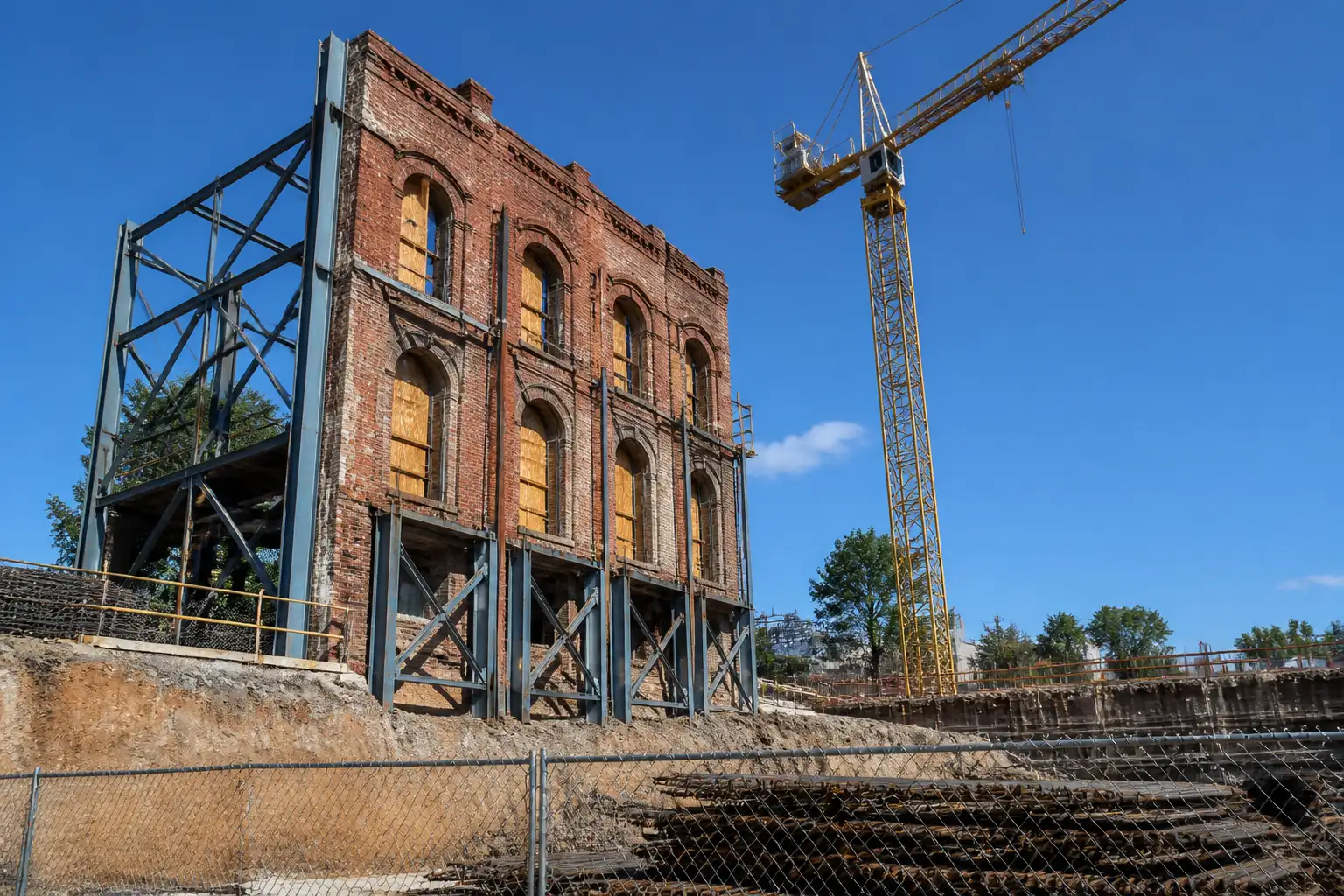
Core Spaces broke ground this month on Hub Athens Dougherty, a 536-unit, 1,656-bed student housing tower rising two blocks from the University of Georgia. The Chicago-based developer expects the $150 million-plus project to open in 2028. It replaces a shuttered hotel and a brick relic of Athens’ music history at 295 E. Dougherty St.
Getting there took thirteen months of commission votes, a land swap for two city parking lots and a fight over who downtown Athens is being rebuilt for. Athens-Clarke County signed off only after securing a public parking deck, water and sewer upgrades and historic preservation work. It added nearly $8 million for affordable housing to the price, and four commissioners still voted no.
The Deal Behind the Groundbreaking
Affinius Capital provided the financing, arranged by TSB Capital Partners, for a project the Atlanta Business Chronicle pegs at more than $150 million. The site sits on the former Hotel Abacus property and the historic Foundry building, an 1850s brick structure that once operated as a music venue and bar, plus two city-owned surface parking lots off Jackson Street that Athens-Clarke County folded into the deal through a land swap.
Units range from studios to five-bedroom floor plans. Residents get more than 47,000 square feet of indoor and outdoor amenity space, including study lounges, group study rooms, fitness and wellness areas and a rooftop pool. The ground floor carries 16,000 square feet of retail, with 5,000 square feet set aside for community-facing tenants at below-market rents.
Core Spaces is developing the project with Mallory & Evans Development, alongside JNS Realty, Northworks Architects, Studio BNA and Harken Interiors. Construction runs through a joint venture with Juneau Construction Co., the 12th project the two companies have built together.
What Athens-Clarke County Gets in Return
The land swap triggered the county’s inclusionary zoning law, which trades density and parking relief for public benefits. Core Spaces agreed to a list of concessions that goes well beyond a typical zoning variance.
| Public Benefit | What Core Spaces Provides |
|---|---|
| Affordable housing trust fund | $7.9 million payment under the county’s inclusionary zoning law |
| Downtown parking deck | Funds nearly half of a 425-stall deck; the downtown development authority manages it and covers the rest |
| Water and sewer lines | Pays for infrastructure upgrades tied to the new development |
| The Foundry | Preserves and revitalizes the 1850s brick facade |
| Hoyt House | Relocates and reconstructs one of the county’s oldest homes |
| Public realm | Builds a new plaza and streetscape for the Jackson Street Art Walk |
The parking deck alone is projected to net the county about $225,000 a year in parking revenue above operating costs. The Athens Downtown Development Authority (ADDA) will own and run it once it opens, on top of the upfront construction savings from splitting the bill with Core Spaces.
Four Commissioners Voted No
The path to groundbreaking ran through five separate hearings.
- May 2025: The Athens-Clarke County Commission first considers a deal putting student housing on a downtown parking lot.
- June 2025: An initial agreement wins narrow approval after commissioners question the tradeoffs.
- October 2025: Commissioners remain skeptical even after staff lay out the public benefits attached to the project.
- November 2025: Word that the deal would save the historic Foundry building surfaces as the commission delays a final vote on the land swap.
- January 2026: The commission approves the land swap after months of debate, clearing the way for Core Spaces to close on the site.
Four commissioners, Tiffany Taylor, Dexter Fisher, Stephanie Johnson and Carol Myers, voted against the January approval. Athens alt-weekly Flagpole reported their objections centered on gentrification in East Athens, the risk that downtown keeps turning into an extension of campus, and concern that the project would push Black families out of the area around Lay Park.
The no votes didn’t change the outcome. Athens-Clarke County closed the land swap in January, and Core Spaces broke ground six months later.
Why Is Athens Building So Much Student Housing Right Now?
UGA’s enrollment keeps setting records, and every new bed at Hub Athens Dougherty is chasing that growth. The University of Georgia enrolled a record 43,888 students this past fall, up 1.7% from the year before, with Georgia residents making up 83% of undergraduates.
That single campus now enrolls a number equal to roughly a third of Athens-Clarke County’s entire population. Core Spaces has built its national strategy around exactly this kind of market: large public flagship universities where enrollment keeps outpacing the beds available within walking distance of campus. Athens checks that box, and so, increasingly, does the rest of the company’s pipeline.
Georgia Is One Piece of a Bigger Playbook
Hub Athens Dougherty is Core Spaces’ second ground-up project in the city and its fourth Athens holding overall.
- Whistlebury portfolio: 626 beds across three properties, acquired from Whistlebury Properties in July 2021, all within half a mile of campus.
- Hub Athens: 162 units and 460 beds at 155 Mitchell St., delivered in July 2025 with a 7,000-square-foot rooftop deck and 11,000 square feet of retail.
- Hub Atlanta: A 792-bed, 19-story tower in Midtown Atlanta, delivered in September 2023, serving Georgia Tech and Georgia State students.
- Hub College Station: 570 units and 2,201 beds, groundbreaking held this month in Texas, Core Spaces’ first ground-up project in the state, aimed at Texas A&M’s 2028 to 2029 academic year.
The capital behind all of it traces to one place. Core Spaces closed its $1.64 billion flagship fund in May, one of the largest capital raises the student housing sector has seen. The company now owns or manages 74,440 beds nationally and has roughly 53,860 more in its development pipeline, concentrated in what it calls Tier 1 university markets and urban infill sites.
Frequently Asked Questions
Is Hub Athens Dougherty Affordable Housing?
No. It is market-rate student housing with rents set by Core Spaces, not income-restricted units. The $7.9 million the developer is paying goes into Athens-Clarke County’s separate affordable housing trust fund, which finances income-restricted housing projects elsewhere in the county under its inclusionary zoning law.
What Was on the Site Before Construction Began?
The block held the shuttered Hotel Abacus, the historic Foundry building, a former music venue and bar dating to the 1850s, and two city-owned surface parking lots off Jackson Street that Athens-Clarke County folded into the deal through a land swap.
Why Did the Foundry Building Get Saved?
Preserving the Foundry’s brick facade became part of the public-benefit package Core Spaces negotiated with the county. Flagpole reported the preservation commitment in November 2025, while commissioners were still weighing the broader land swap.
Where Else Is Core Spaces Building Right Now?
The company broke ground the same month on Hub College Station, a 2,201-bed project in Texas serving Texas A&M University. Six days before the Athens groundbreaking, it also closed a $300 million four-property acquisition for its permanent-capital vehicle, Core University Living Real Estate Income Trust.