Azerbaijan will resume direct flights to Russia, Foreign Minister Jeyhun Bayramov said Friday in Moscow, though he gave no timeline. The suspension began after a Russian missile downed an Azerbaijan Airlines jet in December 2024, killing 38 of the 67 people aboard.
Russia’s own Investigative Committee closed the criminal case into that crash last December without naming anyone responsible. Kazakhstan, where the plane actually went down, says its investigators are still working through the wreckage.
Bayramov and Lavrov Declare the Rupture Over
Bayramov made the announcement after talks with Russian Foreign Minister Sergei Lavrov in Moscow on July 17. Neither minister gave a start date for the resumption.
“Direct flights on a number of routes… are also expected to be restored in the near future,” Bayramov said, according to Russia’s state news agency TASS. Lavrov, for his part, said the two governments had now “resolved all issues” connected to the disaster.
Azerbaijan’s foreign ministry framed the reopening as a regional good, saying restored transport links would help “strengthen the economic resilience not only of the participating states but of the region as a whole.” The two sides also touted a fast growing trade relationship, noting bilateral trade between Russia and Azerbaijan reached $4.9 billion in 2025.
Bayramov added that a preliminary agreement is in place for Azerbaijan’s deputy prime minister, Shahin Mustafayev, to meet Russia’s deputy prime minister, Alexey Overchuk, in September to work through trade and investment projects.
Ten Cities Went Dark After Flight 8243
The flight that started it all was Azerbaijan Airlines J2-8243, an Embraer 190 flying from Baku to Grozny with 67 people aboard on December 25, 2024. Russian air defenses were firing at Ukrainian drones near Grozny that morning. A missile struck the jet as it approached the airport.
The crew, flying a plane with a torn fuselage and a failing hydraulic system, continued across the Caspian Sea rather than land in Russia. The aircraft crashed near Aktau, Kazakhstan. Thirty eight people died. Twenty nine survived, including two crew members. Rescue teams who reached the burning wreckage within minutes later had their work documented in bodycam footage of the crash site’s aftermath.
Russia’s aviation watchdog first blamed a bird strike. Within days, Azerbaijan’s president, Ilham Aliyev, rejected that account on state television, saying the plane had been shot at from Russian soil and that Moscow had offered nothing but disjointed, contradictory explanations for three days.
Aliyev set conditions for reconciliation within days of the crash.
First of all, the Russian side must apologise to Azerbaijan.
Aliyev said in comments carried by Euronews, laying out three more conditions: that Russia acknowledge guilt, punish those responsible, and pay compensation to victims’ families.
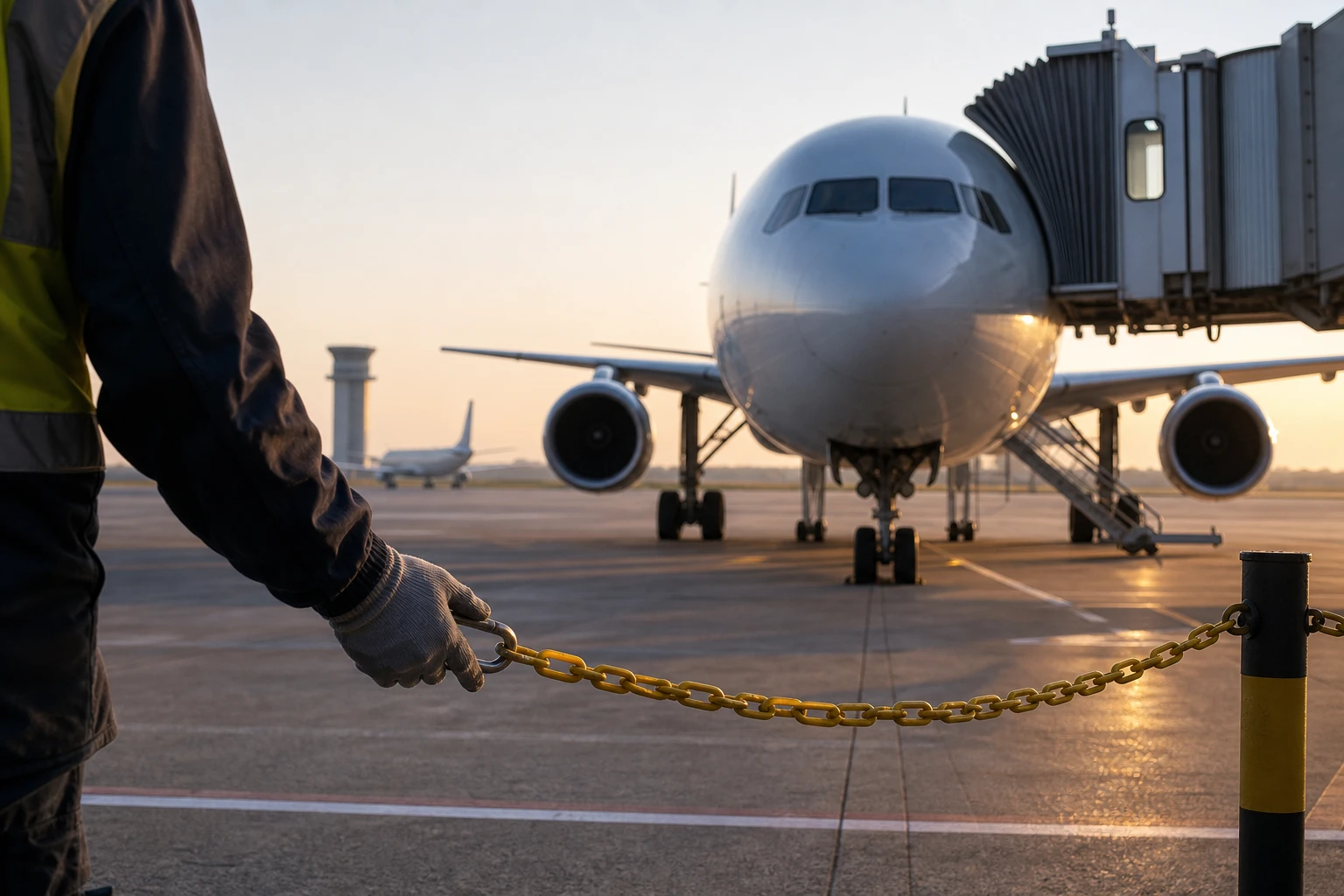
Azerbaijan Airlines answered by suspending service to ten Russian cities:
- Grozny
- Makhachkala
- Vladikavkaz
- Mineralnye Vody
- Sochi
- Volgograd
- Nizhny Novgorod
- Samara
- Saratov
- Ufa
The airline kept flying to six other Russian cities throughout the dispute: Moscow, St. Petersburg, Yekaterinburg, Astrakhan, Kazan and Novosibirsk, according to Russian outlet BFM.ru, as cited by the investigative site Caucasian Knot.
Money Moved. Nobody Was Punished.
Russia’s insurer AlfaStrakhovanie, one of the country’s largest and under Western sanctions over the war in Ukraine, began paying claims in February 2025. By the end of that year it had paid Azerbaijan Airlines the full insured value of the aircraft: 1.003 billion rubles, about $12.3 million.
Claims for the injured and the dead were settled too, covering 46 of the 62 passengers on board. Seven of 15 Russian citizens received payouts, along with 35 of 38 Azerbaijanis, all three Kyrgyz nationals and one of six Kazakhs. Combined payments to survivors and families reached 358.4 million rubles, roughly $4.4 million.
Azerbaijan’s government rejected the idea that any of this closed the matter. When Russia’s foreign ministry pointed to the payouts as compensation, spokesperson Aykhan Hajizada called the framing “not only surprising, but also misleading,” since the money came from an insurance contract, not a state admission of fault, according to OC Media.
The politics moved on a separate track. Aliyev and Russian President Vladimir Putin met in Dushanbe, Tajikistan, on October 9, 2025. Putin told Aliyev that two missiles fired by Russian air defenses had not struck the plane directly but detonated a few meters away, and said the crash would receive a full legal assessment, according to Azerbaijani reporting picked up by Caucasian Knot.
Baku treated that as a promise. Then, at a year end press conference on December 26, 2025, Bayramov revealed that Alexander Bastrykin, chairman of Russia’s Investigative Committee, had sent Azerbaijan’s prosecutor general a letter closing the criminal case. Bastrykin’s account blamed poor weather and failed landing attempts in Grozny. It made no mention of drones, missiles or air defenses, according to reporting by the Jamestown Foundation.
Bayramov said the letter caused “serious surprise” in Baku. Azerbaijani NGOs went further: the National Forum of Non-Governmental Organizations called the closure “incomprehensible and unacceptable” in an open letter to Russia’s ambassador, arguing it violated the Chicago Convention on international civil aviation.
Azerbaijani outlet Minval separately published names of Russian military personnel it said were involved in the strike, reporting that the commander who gave the order was promoted after the crash, according to details relayed by Caucasian Knot. Russian officials have not addressed that claim publicly. Aliyev, meanwhile, said Azerbaijan was preparing documents to sue Russia in international courts, since Moscow had not admitted guilt or punished anyone. It remains unclear whether that filing ever happened.
Aliyev’s Conditions, Checked Against Reality
Baku’s demands from December 2024 map unevenly onto what has actually happened nineteen months later.
| Aliyev’s Condition | Status | What Happened |
|---|---|---|
| Apology | Delivered | Putin apologized by phone on December 28, 2024, for the tragic incident |
| Acknowledgment of guilt | Partial | April 2026 joint statement cited an unintended operation of air defenses; the Investigative Committee’s December 2025 letter blamed weather instead |
| Punishment of those responsible | Not delivered | Russia’s criminal case was closed in December 2025; the officer accused of ordering the strike was reportedly promoted |
| Compensation | Disputed | Insurer paid $12.3 million for the aircraft and $4.4 million to victims and families; Baku says that is insurance money, not state compensation |
Only the apology came close to matching what Aliyev asked for in the days after the crash.
Kazakhstan Keeps Finding Metal in the Wreckage
The plane went down on Kazakh soil, and Kazakhstan’s Ministry of Transport has run its own investigation since December 26, 2024, separate from both Moscow’s criminal probe and the Russia-Azerbaijan diplomatic track.
Its interim report, published on the crash’s first anniversary, December 25, 2025, found no explosives on the aircraft’s oxygen cylinders. But a hydraulic system pipe showed what investigators called metal tearing from contact with fragments made of iron based alloys. The damage was presumably caused by striking elements of a warhead, the report said, though investigators could not establish where the fragments came from.
Two working groups remain active: one studying how flight risk was assessed near the conflict zone, the other reconstructing the aircraft’s hydraulic system to map the sequence of failures. Accredited representatives from Azerbaijan, Russia and Brazil, plus an observer from the International Civil Aviation Organization, are taking part.
By March 20, 2026, Kazakhstan’s deputy prime minister, Kanat Bozumbayev, said all expert assessments had been received and the commission was consolidating its findings. Weeks after Moscow and Baku signed their political settlement in April, Kazakhstan’s ministry confirmed the investigation was still open, saying only its final report would state the accident’s established causes.
The Business Case for Moving On
Diplomats on both sides tied the flight resumption to a broader reset with little to do with aviation safety. Bayramov pointed to a new Azerbaijan-Russia Business Council formed earlier this year, alongside the planned September meeting between the two deputy prime ministers.
Lavrov tied the urgency to the wider region, saying the International North-South Transport Corridor, which routes trade through Azerbaijan and Iran toward the Persian Gulf, matters more now that the crisis in the Strait of Hormuz is disrupting global shipping, according to News.Az.
The reset follows a year in which the relationship nearly broke apart. In June 2025, Russian security forces killed two ethnic Azerbaijani brothers, Huseyn and Ziyaddin Safarov, during a raid in Yekaterinburg. Baku said the cause of death was blunt force trauma; Russian officials said heart attack. Azerbaijan detained Russian citizens in response and raided the Baku office of Sputnik Azerbaijan. Aliyev skipped a Putin hosted regional summit soon after.
By October, with detainees quietly released on both sides just before the Dushanbe summit, Aliyev was telling a forum in Shusha that relations were fully normalized, a description Lavrov echoed on July 17.
What Happens to the Case Now?
Flights are coming back, but the paperwork behind them is not. Bayramov and Lavrov declared the relationship fully normalized on July 17, without resolving who, if anyone, will answer for 38 deaths, and while Kazakhstan’s own investigation remains formally open.
What We Know:
- Flights will resume on some of the ten suspended routes, though no date has been set.
- Russia’s Investigative Committee closed its criminal case in December 2025 without charging anyone.
- Kazakhstan’s Ministry of Transport says its investigation remains open and separate from the political settlement.
What’s Unconfirmed:
- Which routes restart first, and on what date.
- Whether Azerbaijan will follow through on Aliyev’s threat to sue Russia in international courts.
- When Kazakhstan will publish a final report identifying the source of the metal fragments in the wreckage.
Both foreign ministries say the routes will fly again soon. Neither has said when. Kazakhstan’s file on Flight 8243 stays open on its own timeline, nineteen months after the wreckage came down outside Aktau.