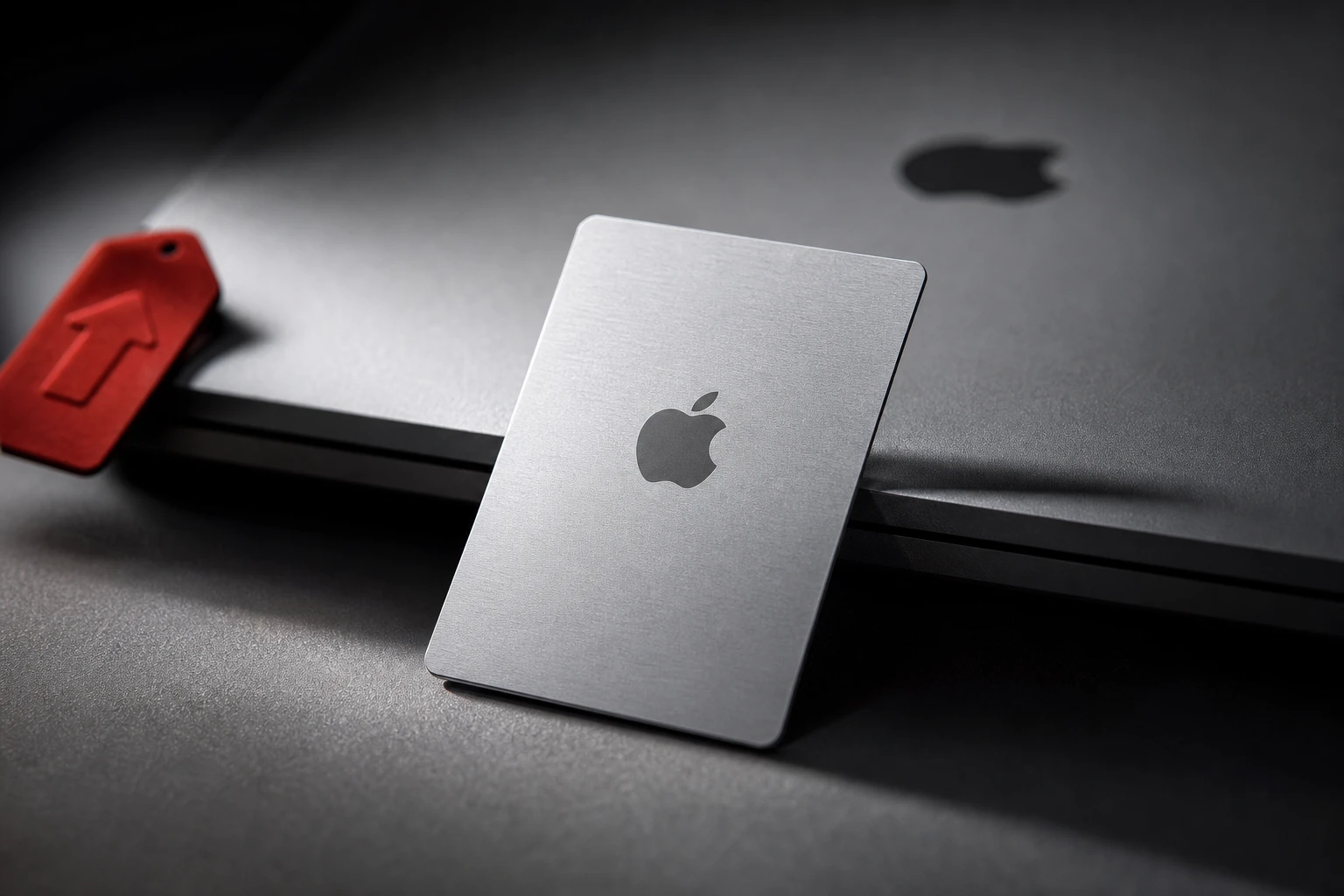
Apple is dangling a gift card worth up to $150 in front of any student who buys a new MacBook or iPad. Three weeks earlier, it raised the price of those same machines by as much as $300.
The 2026 Back to School promotion went live this week in the United States, Canada and a run of Asian markets, and it stays open through August 27. It stacks a one time gift card on top of Apple’s standing education pricing, but only on four products, and only for six weeks, roughly half the window students got a year ago.
What the $150 Gift Card Actually Covers
Apple calls it the College Student Offer, though most shoppers still know it as Back to School. Students who buy a MacBook Pro receive a $150 Apple Gift Card. A MacBook Air, iPad Pro or iPad Air earns $100. Buyers are capped at one gift card per Mac and one per iPad during the promotional window, and the balance can be spent on anything from accessories to an iCloud+ subscription.
The MacBook Neo, Apple’s newest budget laptop, does not qualify. It launched in March at $599 and now costs $699 after the June price increase. Desktop Macs, the iPad mini and the entry level iPad are excluded too, along with the iPhone, Apple Watch and AirPods.
The reward also changes by country. Here is how the four eligible products compare across markets running the gift card version of the offer:
| Country | MacBook Pro | MacBook Air | iPad Pro | iPad Air |
|---|---|---|---|---|
| United States | $150 | $100 | $100 | $100 |
| Canada | CAD 210 | CAD 140 | CAD 140 | CAD 140 |
| Malaysia | MYR 600 | MYR 400 | MYR 400 | MYR 400 |
| Philippines | PHP 9,000 | PHP 6,000 | PHP 6,000 | PHP 6,000 |
| Thailand | THB 5,100 | THB 3,400 | THB 3,400 | THB 3,400 |
| Taiwan | NTD 4,800 | NTD 3,200 | NTD 3,200 | NTD 3,200 |
China, India, Mexico, Singapore and Vietnam are running a different version of the same promotion, handing out a four pack of AirTags or a discount on select AirPods instead of a card.
The values themselves have shrunk since 2024, the last time Apple ran a cash version of this offer. The MacBook Pro’s $150 card matches that year exactly. The MacBook Air’s card is $50 lower than it was in 2024, and the iMac and Mac mini, both eligible back then, do not qualify at all this year. Last year, Apple skipped cash altogether and gave away a bundle of accessories, AirPods 4, an Apple Pencil Pro or a Magic Keyboard, worth up to $199.
A Price Hike Landed First
Apple raised prices across its Mac and iPad lines on June 25, its first formal move to pass rising memory and storage costs on to customers. Increases ranged from $30 on the HomePod mini to $1,300 on the top end Mac Studio.
The four products in this year’s Back to School promotion were not spared. MacBook Pro climbed $300, to $1,999. MacBook Air rose $200, to $1,299. iPad Pro added $200, reaching $1,199, and iPad Air went up $150, to $749.
Apple’s shares closed more than 6% lower the day the increases hit, the worst single day drop the stock had seen since April 2025. The company’s online store briefly went offline that morning before reopening with the new prices attached. The iPhone, notably, was left untouched, and the next model in line, the iPhone 18 Pro Max holding its price steady, has so far avoided the same treatment.
Apple said in a statement that it had “never seen a component price increase this much, this quickly,” blaming the AI data center boom for draining the global memory chip supply. Chief executive Tim Cook had already told the Wall Street Journal a week earlier that the situation had become unsustainable. “I’ve never seen anything like it in any area in over 40 years,” he said.
Does the Gift Card Cancel Out the Hike?
Not evenly. Add Apple’s standing education discount to the new gift card, and the answer splits by product. On the iPad Air, iPad Pro and MacBook Air, the two discounts together land buyers right back at the price those machines carried before June 25. On the MacBook Pro, students still pay $50 more than they would have in May.
| Product | Price Before June 25 | Education Price Now | Back to School Gift Card | Net Price After Gift Card |
|---|---|---|---|---|
| MacBook Pro (14 inch) | $1,699 | $1,899 | $150 | $1,749 |
| MacBook Air | $1,099 | $1,199 | $100 | $1,099 |
| iPad Pro (11 inch) | $999 | $1,099 | $100 | $999 |
| iPad Air | $599 | $699 | $100 | $599 |
That gap shows up most clearly on the flagship laptop, the item carrying the promotion’s single biggest gift card. Macworld’s Michael Simon reached a blunter verdict on the whole promotion, writing that it “doesn’t take any of the recent price hikes into consideration.” His point holds for anyone comparing the card against the sticker price alone, rather than against the stacked education discount.
The card itself is not optional once claimed. Apple’s gift card terms bar any refund once one is issued, and if the laptop or tablet it came with gets returned, the card’s value is simply deducted from that refund.
Verification Now Stands Between Shoppers and the Offer
Getting either discount now takes more than clicking into the education store. Apple tightened its verification rules earlier this year, retiring the system that let U.S. shoppers self certify with nothing more than a .edu email address.
Shoppers now confirm their status through UNiDAYS, a third party verification service, entering their name, date of birth and school email, then searching for their institution. Most checks clear instantly. Some get flagged for manual review that can take up to 24 hours, so it pays to verify before checkout rather than during it. Apple’s education store terms also note that the company can audit purchases after the fact to confirm eligibility.
Apple lists four categories of qualified buyer this year:
- Current students – enrolled at or newly accepted to a college or university.
- Parents – purchasing on behalf of an eligible higher education student.
- Faculty and staff – employed at a higher education institution.
- K-12 employees – including homeschool teachers, school board members and certain PTA or PTO officers.
Notably absent from that list: K-12 students themselves. A parent cannot use the discount to buy a laptop for a child still in grade school or high school unless that parent also works in education.
The Reward Changes Once You Leave North America
Apple’s Back to School push actually started before the U.S. did. The offer went live a day earlier across China, India, Malaysia, the Philippines, Singapore, Taiwan, Thailand and Vietnam, and the reward looks nothing like a gift card in most of those places.
In China, Singapore and Vietnam, eligible buyers get four AirTags with a qualifying Mac or iPad instead of cash value. India offers a choice of AirTags or AirPods 4 with a Mac, or an Apple Pencil Pro with an iPad. Free AirPods have historically carried a value around $129, putting that accessory reward roughly in line with the $100 to $150 gift cards on offer elsewhere.
Australia, New Zealand, Brazil and South Korea already ran their version of the sale between January 7 and March 11, matched to their own academic calendar, offering free mice, trackpads, keyboards, Apple Pencils or AirPods 4 with a qualifying purchase. The U.K. and the rest of Europe are expected to launch a similar gift card offer in mid-July, running into mid-October, a considerably longer window than North America is getting this year.
Six Weeks, Not Three Months
That compressed calendar is its own story. Apple’s Back to School sale has historically run more than three months, matching the 2025 U.S. window that opened June 17 and closed September 30. This year’s version opened about a month later than that and will close more than a month earlier, on August 27.
Orders still count if they are placed before that cutoff, even if the Mac or iPad itself ships afterward. Some configurations currently carry delivery windows of five to six weeks.
These savings are good, but they are substantially poorer than those from other resellers who do not limit the deals to education buyers.
AppleInsider reached that conclusion in its review of the 2026 launch. Third party retailers have already shown they will cut prices outright, like the AirPods Max 2 dropping to $399 on Amazon during Prime Day, rather than making shoppers juggle store credit against a verified education account.
Whether Apple sweetens or shortens this offer again next year may depend on how the chip shortage plays out. Nabila Popal, senior director of data and analytics at International Data Corporation (IDC, a market research firm), said the price increases already underway are not finished. “The storm isn’t over yet; this is just the beginning,” she said, adding that an iPhone price increase is likely next.
Europe’s version of the sale is expected within the next two weeks. Everywhere else, the clock on this one runs out August 27.
Frequently Asked Questions
How Long Does Apple’s 2026 Back to School Offer Last?
In the U.S., Canada and Mexico, the promotion runs from July 16 through August 27, 2026. It actually launched a day earlier across several Asian markets, including China, India, Malaysia, the Philippines, Singapore, Taiwan, Thailand and Vietnam, before reaching North America.
Can I Spend the Gift Card on Anything Besides a Mac or iPad?
Yes. The card can go toward Apple products and accessories, App Store purchases, or subscriptions such as Apple Music and iCloud+, giving buyers more flexibility than a bundled accessory would have offered.
Does the Offer Apply to Refurbished or Open Box Devices?
No. Apple’s terms exclude refurbished units, open box returns and end of life products, along with any purchase made outside its own education store, retail stores or phone ordering line.
What Happens to the Gift Card if I Return My Purchase?
It has to be returned along with the product. If the card has already been redeemed or is not returned, Apple deducts its full value from the refund issued on the Mac or iPad.
Is the Back to School Discount Available for High School Students?
No. Apple’s education pricing, and the promotion layered on top of it, is reserved for higher education, meaning college and university students, plus staff. K-12 students do not qualify, though employees of K-12 schools, including homeschool teachers, do.