Georgia Farm Bureau is accepting dry Bermudagrass hay samples through Oct. 30 for its 35th annual Quality Hay Contest, with every entrant receiving a full Relative Forage Quality lab report and a free listing in the group’s online sales directory.
Winners are ranked solely by RFQ scores from the University of Georgia lab. The top producer gets free one-year use of a Vermeer wheel rake plus a discounted purchase option at year-end.
How the Contest Works
Only Georgia Farm Bureau members may enter, and the hay must have been grown in the state. Samples come from fields with at least 25 days of maturity or regrowth and must be field-dried, never barn-forced.
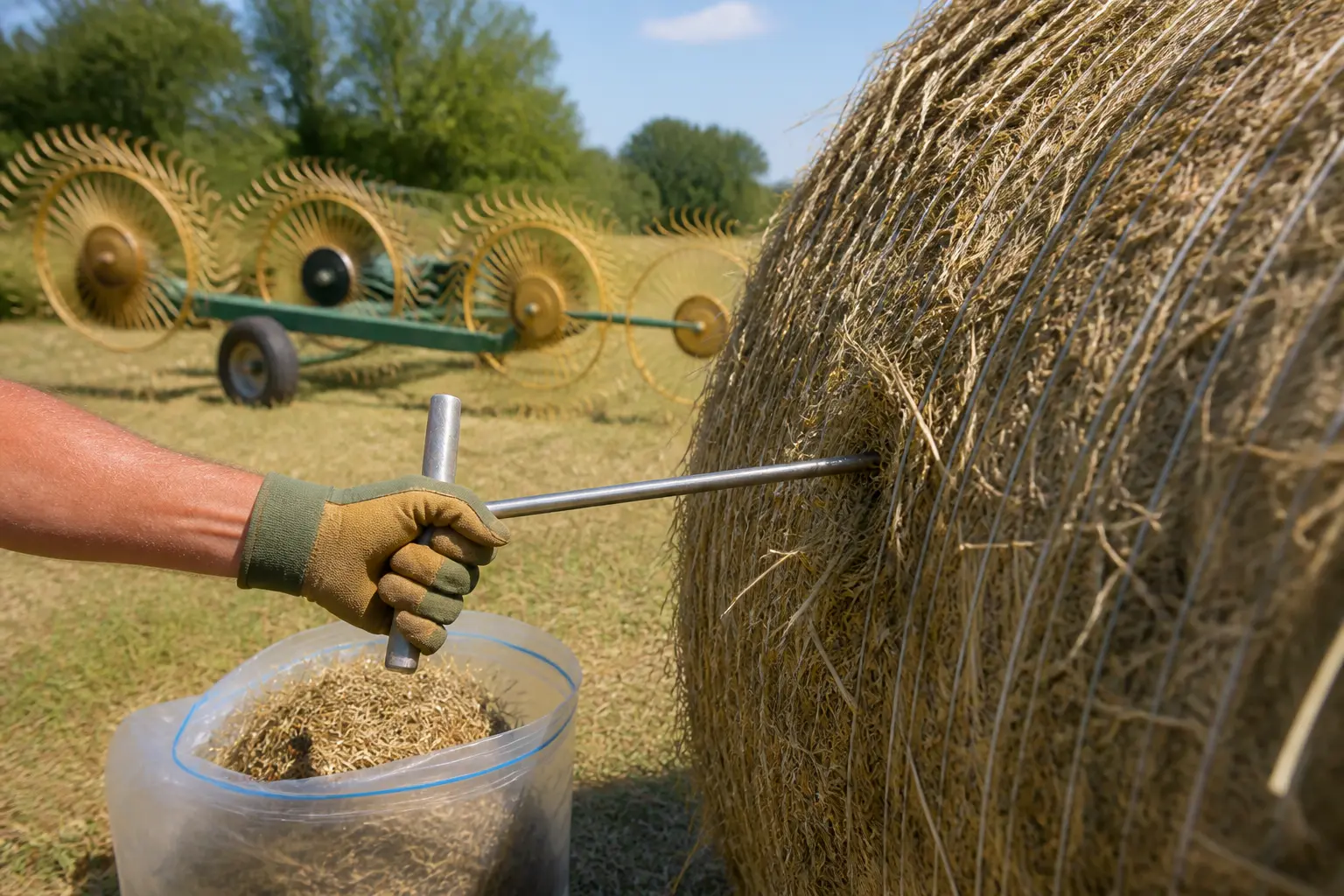
Contestants fill a one-gallon zip-lock bag with core samples taken by hay probe from the center of at least five different bales cut under the same conditions. County Extension offices loan probes and help with technique.
- Cut and dry in the field after at least 25 days of maturity or regrowth.
- Probe five or more bales from the same cutting conditions and fill a one-gallon zip-lock bag from the centers.
- Submit the bag, form and $25 fee to the GFB Public Policy Department or any county Farm Bureau office by Oct. 30.
- Wait for the UGA lab report that returns RFQ along with moisture and nitrate checks.
- Claim the free directory listing and, if the score ranks high enough, await December prizes.
- Moisture above 18 percent disqualifies the sample.
- Nitrates above 4,500 parts per million also disqualify it.
- Entry fee is $25 per sample, payable to Georgia Farm Bureau, covering the lab work.
- Multiple samples are allowed; only the highest RFQ can place in the top five.
- Previous first-place winners may test hay but cannot win prizes for five years.
Forms, fees and samples go to the GFB Public Policy Department at 1620 Bass Road, Macon, or to any county Farm Bureau office. The full contest rules and entry form are posted online and available in county offices.
The probe rule matters because a single bale can mislead. Cores from five bales under matching conditions give the lab a fairer average of that cutting. Extension offices that loan the tools also reduce the chance of shallow or edge samples that skew the report.
RFQ Turns a Number into a Price Tag
The University of Georgia Feed and Environmental Water Lab runs the Relative Forage Quality test that ranks every entry. RFQ combines protein, fiber and digestibility into one number that predicts livestock intake and performance.
Fully mature alfalfa sits at a base of 100. Georgia Bermudagrass commonly lands between 75 and 120 or higher when managed well. Producers who sell on RFQ can ask more for higher scores because buyers need less purchased feed.
| RFQ Range | Typical Use | Quality Label |
|---|---|---|
| Above 140 | Early-lactation dairy | Premium |
| 125-150 | Stocker cattle, growing heifers | Good to premium |
| 100-124 | Maintaining beef cows | Fair to good |
| Below 90 | Limited or emergency only | Utility |
UGA notes that hay above 100 usually maintains beef cows economically. Scores of 140-160 suit high-producing dairy animals. Outside Georgia, forage has sold for roughly $1.25 to $1.50 per RFQ point above a base-100 price. Direct UGA lab forage analysis options and fees run $15-20 for NIR packages that include RFQ, so the contest fee essentially buys the test plus ranking and marketing.
That pricing logic is simple arithmetic for a seller. A lot that clears 120 rather than 100 carries a clearer premium story when the buyer already thinks in RFQ points. The same sheet that ranks the contest entry becomes the handout at the barn gate.
For the buyer, the number cuts guesswork. Color and leafiness still matter on sight, yet RFQ ties those impressions to expected intake. A stocker operator chasing the 125-150 band can skip utility lots without waiting for a trial feeding period.
The Vermeer Rake Is the Visible Prize
First place receives free use of a Vermeer wheel rake for one year. The winner may then buy it at a reduced price. Vermeer has supplied the top prize for 28 years, since 1999.
Georgia Farm Bureau is pleased to offer its annual Quality Bermudagrass Hay Contest for the thirty-fifth year. This contest is an example of how our organization is led by our members’ input, from the grassroots up. Georgia Farm Bureau first offered this contest in 1992 at the recommendation of the GFB Hay Advisory Committee.
GFB President Tom McCall made that statement when the 2026 window opened. Second through fifth place also receive prizes announced at the December convention. The equipment itself is no small item; current high-capacity wheel rake models span wide working widths designed for commercial hay acres.
A year of free use lets the winner test the rake across full cutting cycles before any purchase decision. The discounted buy option at year-end keeps the prize from becoming a short loan with no lasting gear on the farm. Continuity since 1999 also signals that the sponsor and the bureau treat the top slot as a durable partnership, not a one-off giveaway.
The five-year prize ban on prior first-place winners spreads that hardware chance across more members. Those producers may still enter, still receive lab reports, and still list hay. They simply step aside from the rake so newer high scores can surface.
The Directory Quietly Moves Hay Year-Round
Every contest entrant may claim a free listing in the GFB Quality Hay Directory. Non-entrants pay $10 per listing for hay, custom harvesting or sprigging. Listings can be added or removed any time.
The live page already shows farms across Barrow, Bartow, Burke, Franklin, Grady, Jasper, Jenkins, Newton, Pierce, Telfair, Turner and Walton counties offering round and square bales of Alicia, Tifton 85, Coastal, Russell and mixed grasses. Many note that the hay has been tested for nutrient value. Some list transportation help or custom services.
Round bales commonly run 750-1,200 lb. Square bales appear at 45-50 lb. Spot prices in current listings include $8 per square bale. Buyers scanning the live online GFB hay directory listings can match RFQ class to livestock needs instead of guessing from color or feel.
| Bale Type | Common Weight | Directory Signal |
|---|---|---|
| Round | 750-1,200 lb | Volume lots for cattle |
| Square | 45-50 lb | Handy units; some at $8 |
- Tested hay appears repeatedly in county entries.
- Custom harvesting and sprigging sit alongside forage for sale.
- Transportation notes lower the friction for distant buyers.
In a year when many Georgia operators are already Georgia farmers chasing hard financial data, a free analysis plus a no-cost sales page becomes more than a contest perk.
The directory stays useful after the Oct. 30 sample window closes. Listings can change whenever a cutting sells out or a new lot is ready. That flexibility turns a once-a-year contest entry into a sales channel that runs through winter feeding demand.
Who Benefits Most from Entering Now
Producers who cut multiple fields or varieties gain the most. They can submit several samples, receive a report on each, and still compete with only their best score. The multi-year trail of RFQ numbers shows whether earlier nitrogen rates, cutting intervals or variety choices actually moved digestibility.
Livestock owners who buy rather than grow hay also win. A directory stocked with tested lots lets them target the exact RFQ band their herd needs and avoid underperforming bales that force expensive supplements. Wet or stemmy hay that was baled too late or too damp often goes unsold or risks spontaneous heating; the probe-and-lab step catches those problems before the truck leaves the farm.
Non-members can join Georgia Farm Bureau online today or at a county office and then enter. Troup County Farm Bureau President Joel Keith noted that every participant learns management adjustments that raise future quality.
- Multi-field growers bank several lab reports while risking only one score in the top-five ranking.
- Hay buyers shop by RFQ band instead of by appearance alone.
- New members unlock entry, the free listing path, and the same lab sheet veterans already use.
The $25 fee stays modest next to the cost of feeding a weak cutting or losing a repeat buyer. When the report flags moisture or nitrates, the seller can hold that lot out of the market. When the score is strong, the directory line and the contest rank both advertise it.
Moisture and Nitrate Checks Guard Every Lot
Two hard limits sit in front of every RFQ ranking. Moisture above 18 percent ends the entry. Nitrates above 4,500 parts per million end it as well. Those rules protect more than contest fairness.
High moisture raises the risk of heating in storage and spoilage on the stack. A disqualified sample tells the producer to change drying time or handling before the next cutting leaves the field. The same warning helps a buyer who might otherwise take home bales that waste feed dollars.
Nitrate flags matter for animal safety. The lab result arrives before the hay is promoted in the directory or hauled to a neighbor. Contest ranking never overrides those gates; a pretty RFQ cannot rescue an unsafe lot.
Because the $25 entry already covers the lab work, the moisture and nitrate screens arrive as part of the same sheet as the score that fills the awards list. Producers who enter multiple samples multiply those safety checks across fields and varieties without a separate testing trip.
Hybrid Yield Goals Meet Common Bermudagrass Acres
Hybrid bermudagrasses under good fertility routinely yield 4 to 6 tons or more per acre with multiple cuttings. Common bermudagrass covers hundreds of thousands of acres but delivers lower yield and quality. The contest does not bar either class when the hay is Georgia-grown and field-dried under the maturity rule.
What the RFQ sheet does is make the quality gap visible. A hybrid managed for leaf and digestibility can climb into the bands buyers reserve for stockers or dairy. Common stands that still clear the 100 line remain useful for maintaining beef cows, and the directory can say so without guesswork.
County listings already mix Alicia, Tifton 85, Coastal, Russell and mixed grasses. That variety spread gives buyers options inside one statewide page. It also gives growers a side-by-side view of how their chosen grass and cutting schedule compare once the lab number is public.
Over repeated seasons, those comparisons feed the management trail Joel Keith described. Nitrogen timing, regrowth days, and species choice stop being lore and start showing up as higher or lower RFQ on the same farm.
Thirty-Five Years of Quiet Pressure for Better Hay
The contest began in 1992 on the Hay Advisory Committee’s recommendation. Its stated purpose has stayed constant: promote quality Georgia-grown Bermudagrass and push producers to improve production. Hybrid bermudagrasses under good fertility routinely yield 4 to 6 tons or more per acre with multiple cuttings. Common bermudagrass covers hundreds of thousands of acres but delivers lower yield and quality.
Each year’s top scores and the free directory create a feedback loop. Sellers who can prove RFQ 130-plus move product faster and at better prices. Neighbors notice. County Extension agents who loan the probes also walk fields and talk cutting schedules. Over three decades the baseline for “good enough” hay has risen even if individual winners rotate under the five-year prize ban.
Adverse weather years make the lab data especially useful. Moisture and nitrate flags prevent feeding or selling unsafe lots. Digestibility numbers guide how much concentrate a buyer must add. The $25 entry fee is small relative to the cost of a bad cutting or a lost customer.
Samples keep arriving until the end of October. December’s convention will name five names and hand over the rake keys. The real output is already in the mail: a sheet of RFQ numbers and a public listing that turns private management into marketable quality for the next cutting season.