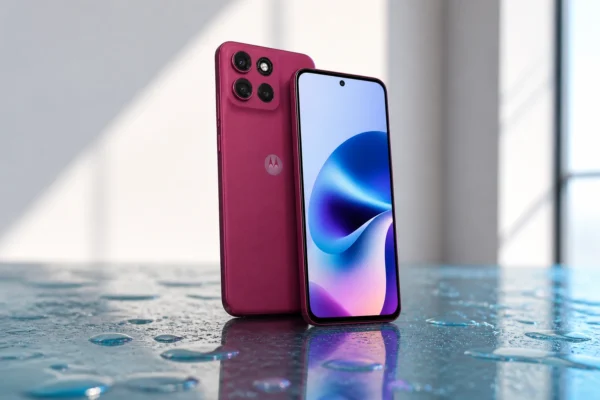
Pegatron told investors this week that its customer will ship iPhone 18 Pro, Pro Max and Ultra models on the usual September schedule while the standard iPhone 18 slips to the first quarter of 2027. The Taiwanese assembler linked the change to memory and chip shortages that force higher-margin devices first.
The confirmation lands after months of supply-chain whispers and matches earlier notes from Ming-Chi Kuo and others. Budget shoppers hoping for a fresh base model this fall will wait longer, and prices look set to rise across the board.
The split calendar is now the clearest public signal yet that component scarcity, not demand, is dictating Apple’s release order. What once looked like rumor has become a supplier-stated plan with dates attached.
Pegatron Puts the Split on the Record
On its Q2 2026 earnings call, Pegatron said customers are altering smartphone shipment schedules because of ongoing shortages of memory and other chips. Taiwan’s Economic Daily News reported the company now expects the iPhone 18 Pro and Pro Max in September, with the standard model arriving in early 2027.
The same call noted smartphone shipments at Pegatron could ease slightly this year even as consumer demand holds. The firm sees the imbalance lasting; supply and demand may not rebalance until 2028.
That 2028 horizon matters. It means the industry is planning around constrained memory for more than a single product cycle, not a brief factory hiccup.
Earlier indirect signals had come from Largan Precision and multiple analyst notes. Pegatron’s remarks carry extra weight because the company builds a large share of Apple’s phones and rarely comments so directly on timing.
When an assembler of that scale speaks in public about shipment windows, buyers and rivals treat the language as operational fact. The earlier analyst notes now read as advance warning rather than speculation.
Memory Costs Rewrite the Calendar
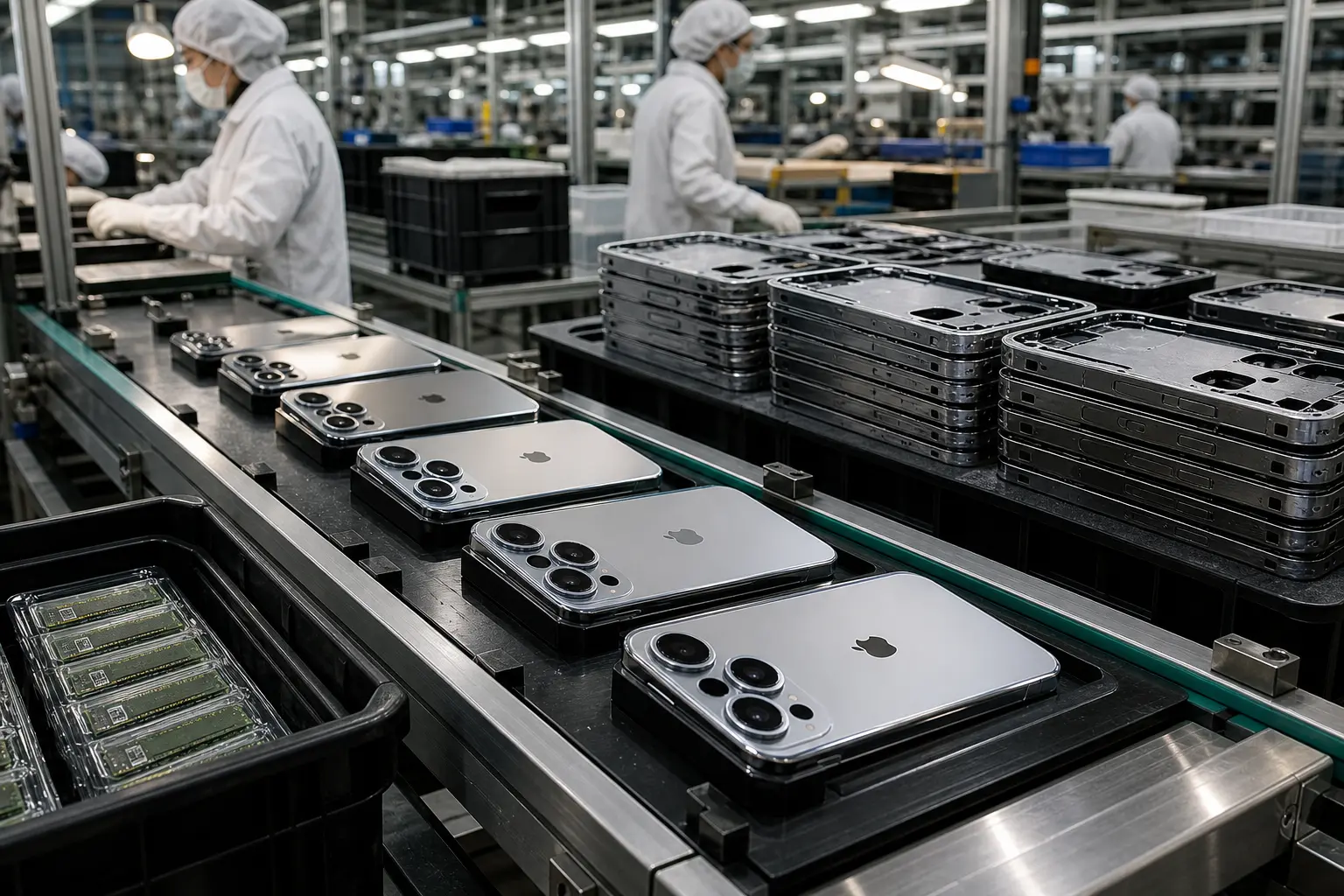
Two bottlenecks sit behind the decision. Advanced packaging at TSMC has been waiting on memory before it can finish system-on-chip units, leaving roughly $1 billion in chips queued. At the same time, AI data-center demand has pulled high-bandwidth memory and advanced wafer capacity away from phones.
Apple must allocate scarce parts strategically. Higher-margin Pro models and the new foldable get first claim so the September event stays intact. Standard models wait.
- Memory share of BOM: climbed from about 10% a year ago to roughly 34% in the third quarter of 2026
- Projected further rise: expected to exceed 40% in the first half of 2027
- iPhone 18 Pro 256 GB: bill of materials cost up approximately 38% year over year
- Balance recovery: Pegatron does not expect relief before 2028
TrendForce’s research shows the 38% higher BOM cost for the 256 GB model makes retail increases hard to avoid. Memory has overtaken the processor and display as the single largest cost bucket.
That shift in the bill of materials changes how every pricing meeting works. When memory alone can swing total cost by double-digit percentages, the old habit of holding entry prices steady becomes harder to defend.
The queued chips at TSMC illustrate the bind. Packaging lines cannot finish units without the missing memory, so finished inventory builds only as fast as memory suppliers free capacity from data-center orders.
Six Models Across Two Seasons
If the schedule holds, Apple will launch three premium devices this fall and three more accessible ones next spring. That breaks the long pattern of releasing the full lineup together every September.
| Model | Expected Window | Notes |
|---|---|---|
| iPhone 18 Pro | September 2026 | Traditional high-end slot |
| iPhone 18 Pro Max | September 2026 | Traditional high-end slot |
| iPhone Ultra | September 2026 | First foldable; foldable iPhone Ultra path for September now clearer |
| iPhone 18 | Q1 2027 (around March) | Standard model delayed |
| iPhone 18e | Q1 2027 | Lower-cost option |
| iPhone Air 2 | Q1 2027 | Thinner successor |
iOS 27 beta references have already pointed to the three spring models. The base iPhone 17 will therefore remain Apple’s newest non-Pro phone for roughly 18 months, an unusually long gap.
Splitting six SKUs across two seasons also changes factory ramp math. Pegatron and peer assemblers can stage tooling, labor, and test capacity in two waves instead of one compressed surge.
For retail floors, the fall assortment will look premium-heavy. Shoppers who walk in asking for a new standard iPhone 18 will hear a spring date, not a shelf location.
The $100 Question for Every Shelf
Tim Cook told the Wall Street Journal in June that price increases are “unavoidable” and called the memory situation “unsustainable.” He did not specify which products or the size of the lifts.
We’re willing to use our balance sheet to help be a part of the solution.
Cook made that remark while discussing how Apple might help expand memory capacity. Analysts at IDC and BofA have floated $100 jumps on Pro models as one path; others expect older devices to rise too so Apple can protect margins without shocking new-phone buyers.
Some shoppers are already moving. iPhone 17 deals before the rumored hike have drawn attention in markets where promotions still hold. Once new pricing lands, the window closes.
The balance-sheet comment signals Apple may fund capacity expansions with suppliers rather than simply accept allocation leftovers. That approach can secure future wafers, yet it does not refill shelves for the current cycle.
Older devices rising in price would keep the relative gap between last year’s phones and new Pros from collapsing. Margin protection then spreads across the full catalog, not only the fresh SKUs.
Budget Buyers Sit Out the Fall Window
The strategy is rational for Apple’s books. Pro and Ultra units carry the fattest margins and the buyers least sensitive to a few hundred extra dollars. Standard and e-series customers are more price-elastic and can wait or choose last year’s phone.
Forum reaction tracks that split. Enthusiasts who already plan to buy Pro hardware see little change. Others note that a $1,000-plus entry point simply leaves mid-tier buyers on the sidelines for another season. Logistics improve when Apple no longer has to ramp six SKUs on the same day, yet the public may assume “iPhone 18” already exists once the Pros appear.
Android makers face steeper pressure. TrendForce expects them to pass through more of the cost increase because their margins start thinner. Average smartphone prices could climb sharply, giving Apple a chance to gain share if it keeps its own hikes smaller.
That share opportunity depends on discipline. If Apple’s own lifts stay closer to the $100 range discussed by IDC and BofA while rivals move further, some mid-tier Android shoppers could cross over even without a new base iPhone on the shelf.
Scarce Parts Move Through the Line First
The allocation order follows margin and event timing. September needs a full stage of products that justify a keynote, so Pro, Pro Max, and the Ultra foldable receive the memory and packaged chips that exist today.
Standard, e-series, and Air hardware draw from later lots once data-center pull on high-bandwidth memory eases enough for phone volumes to rise. Pegatron’s view that balance may wait until 2028 frames that wait as structural, not seasonal.
- Now through September 2026: premium and foldable units take priority memory and advanced packaging slots
- Early 2027: standard iPhone 18, iPhone 18e, and iPhone Air 2 ship once supply allows
- Into 2028: Pegatron expects supply and demand to rebalance more broadly
The $1 billion in chips waiting on memory at TSMC shows how far upstream the choke point sits. Assembly cannot invent finished phones from incomplete silicon.
AI data-center demand keeps pulling the same advanced wafers and high-bandwidth stacks phones need. Until new capacity comes online, every phone brand is ranking its own SKUs by return on each scarce module.
Rivals Face Thinner Margins Under the Same Squeeze
TrendForce’s read on Android makers is blunt: thinner starting margins leave less room to absorb the memory spike. Passing cost through to retail becomes the default path more often than it does for Apple.
Average smartphone prices climbing sharply would reshape the mid-range shelf first. Buyers who once refreshed on a predictable budget cadence may stretch another year or drop to refurbished units.
Apple’s relative position improves only if its own increases stay measured. Cook’s public framing of increases as unavoidable already sets expectation; the open question is how much of the 38% BOM jump on the 256 GB Pro configuration reaches the sticker versus the balance sheet.
In that setting, a delayed base iPhone is less damaging to Apple than a full lineup priced beyond elastic demand. Rivals without a comparable high-margin tier have fewer places to hide the same component inflation.
A Year and a Half Between Standard Refreshes
The longest stretch without a new base iPhone in the modern era will test upgrade cycles. Owners of iPhone 15 or 16 models who skip Pro hardware may stretch devices further or look harder at refurbished stock. Carriers that rely on annual trade-in waves will adjust promotions around the spring slot instead.
Custom and luxury variants are already lining up around the Pro drop. Limited limited Caviar iPhone 18 Pro editions trade standard features for exotic materials and will ship on the September cadence, underscoring where Apple’s near-term volume sits.
Eighteen months between standard refreshes also lengthens software support conversations on the sales floor. A buyer choosing an iPhone 17 in late 2026 is still taking home the newest non-Pro hardware Apple sells that day.
Carrier catalogs will likely keep last year’s base models visible longer, with trade-in bonuses retimed so the spring 2027 wave still produces a clean upgrade spike. The fall window becomes a Pro-and-Ultra event in practice.
Apple has not confirmed the schedule. Supplier comments and consistent analyst reports have aligned for months, however, and Pegatron’s language leaves little ambiguity about the near-term plan. September will bring the expensive half of the family. The rest arrives after the holidays, once memory supply allows.