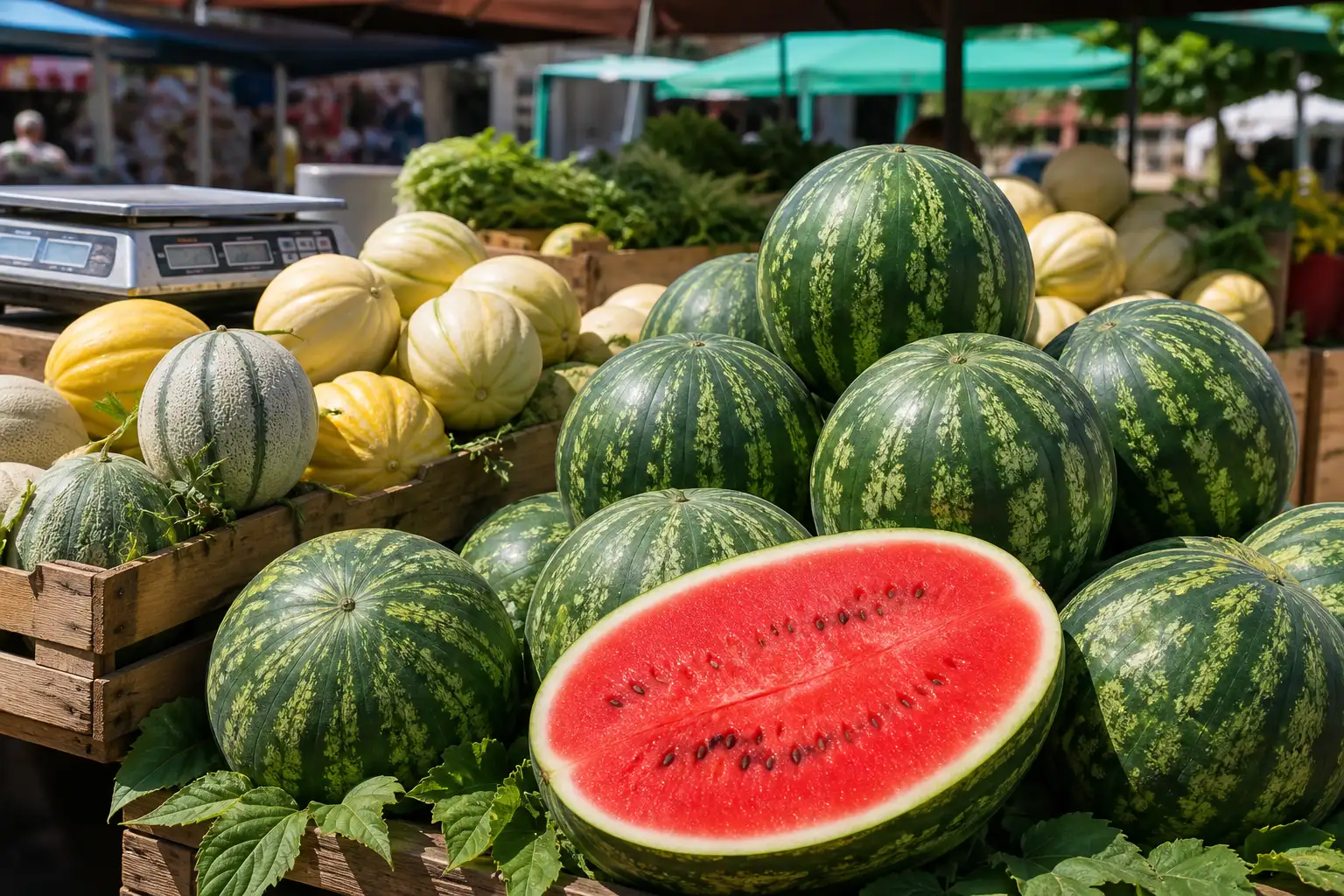
Georgia’s National Food Agency has found no nitrate violations in 50 watermelon and melon samples collected from retail outlets nationwide. Levels stayed under the legal caps of 60 mg/kg for watermelon and 90 mg/kg for melon.
The August 4, 2026 announcement fits a now-familiar summer pattern. Officials test the season’s fruit, clear it, and keep sampling as harvest peaks.
Fifty Samples Cleared Under State Monitoring
Within the state monitoring control program, inspectors took the samples from various sales points across the country. An accredited laboratory ran the checks.
The agency stated that no violations of nitrate levels detected in the tested watermelon and melon samples. It will continue regular testing of melon crops on the market through the season.
- 50 samples examined so far this round
- Watermelon limit: 60 mg/kg
- Melon limit: 90 mg/kg
- Source: retail outlets nationwide
Similar clearances appeared in prior summers. In 2022 the agency checked 51 local watermelon and melon samples in July-August and reported none exceeded limits. A 2025 round covering watermelon, melon, apples, peaches and tomatoes also found compliance.
Why These Checks Return Every Summer
Melon season brings heavy fertilizer use in some growing areas. Nitrates help plants grow fast but can accumulate in high-water fruits if overapplied.
Public memory of earlier alarms keeps demand for lab results high. Consumers want proof before filling baskets. Farmers want sales protected from rumor.
The National Food Agency runs the monitoring as routine state control rather than one-off crisis response. Inspectors pull fruit from both large chains and smaller markets. Results go public when the batch clears or flags a problem.
Georgia sets specific numerical caps for these two crops. That approach differs from the European Union focus, which places maximum levels mainly on leafy greens such as spinach and lettuce.
The 2018 Scare That Still Shapes Trust
Eight years ago a consumer-rights group claimed several Georgian watermelon and melon samples held nitrates three to four times the permitted level. The group warned of food-poisoning risk, irritability, sleeplessness and breathing trouble.
- July 2018: Consumer Rights Protection Association presents high-nitrate findings; UN expert and ecologist Khatuna Akhalaia highlights the excess.
- Immediate fallout: Some markets refuse to sell the fruit. Hypermarket Agrohub posts that it will not stock watermelon because of nitrate levels.
- Farmer pushback: Kakheti growers, the main production region, demand Agriculture Ministry checks and insist their harvest is clean. Sales drop as shoppers hesitate.
- NFA response: Agency inspectors sample about 30 fruit and vegetable lots from supermarkets and agrarian markets. Lab results show nitrates within limits. Only one violation had appeared in the entire 2017 monitoring year. Officials declare the fruit safe.
That episode left a mark. Each new season the agency’s early clearance statements serve as both technical update and public-confidence tool. The 2026 results continue the same cycle of sampling, lab work and reassurance.
How Nitrates Behave in Fruit and What the Numbers Mean
Nitrate itself is relatively low-toxicity. The body can convert it to nitrite and other compounds. High acute intake has been linked to methemoglobinemia in infants and, in some studies, longer-term concerns around certain cancers. Most exposure comes from vegetables, preserved meats and water.
Leafy greens accumulate far more nitrate than melons. Fruit vegetables such as watermelon and melon typically sit in the low range when grown under normal conditions.
| Item | Limit or Value | Notes |
|---|---|---|
| Georgia watermelon | 60 mg/kg | Legal maximum |
| Georgia melon | 90 mg/kg | Legal maximum |
| EFSA ADI nitrate | 3.7 mg/kg body weight/day | Acceptable daily intake |
| EU spinach (summer) | 2 500 mg/kg | Example leafy maximum |
| EU lettuce (open air summer) | 2 500-4 000 mg/kg range | Varies by type and season |
The European Food Safety Authority concluded that the beneficial effects of eating vegetables and fruit outweigh potential risks from nitrate for average consumers eating about 400 g of mixed produce daily. A small share of high leafy-green consumers may exceed the ADI on occasion. The agency’s full scientific opinion on nitrate in vegetables underpins that balance.
Processing steps such as washing, peeling and cooking can further reduce nitrate levels, adding a practical safety margin.
Farmers, Shoppers and the Retail Chain
Kakheti and other growing regions depend on timely melon sales. A viral claim of contamination can empty stalls overnight, as 2018 showed. Clear lab results from the National Food Agency give retailers cover to keep stocking and give households reason to buy.
Shoppers gain a simple public number: these 50 samples passed. The agency’s promise of continued testing through the season means later batches will face the same scrutiny.
Retailers face their own pressure. Large chains often run internal quality checks. When a national lab result lands clean, it lowers the chance of a sudden ban or customer boycott.
- Growers avoid the sales collapse that followed the 2018 group claims.
- Consumers receive verified numbers instead of social-media warnings.
- Markets keep inventory moving during peak summer demand.
- Regulators demonstrate ongoing oversight rather than reactive firefighting.
Suspicious handheld devices sometimes circulate in markets with claims they can spot high nitrate on the spot. Past agency statements have called those readings unreliable and urged reliance on accredited laboratory results.
Seasonal Monitoring Keeps Pace With the Harvest
The National Food Agency frames the work as standard seasonal practice. Inspectors will keep pulling samples of horticultural crops as they appear on shelves. Exact totals for the full 2026 season are not yet public, but earlier years ran to dozens and sometimes over a hundred checks.
No violations in the first 50 does not freeze the program. Fresh deliveries arrive daily. Weather, fertilizer batches and storage conditions can shift results from one lot to the next.
For now the message is straightforward. The watermelons and melons tested meet Georgia’s legal nitrate limits. Shoppers can treat the current market supply as compliant on the checked batches. The lab work continues.
Frequently Asked Questions
What are Georgia’s legal nitrate limits for watermelon and melon?
Legislation sets a maximum of 60 mg/kg for watermelon and 90 mg/kg for melon. The 50 samples examined in early August 2026 stayed below both figures according to the accredited laboratory results released by the National Food Agency.
Why does the National Food Agency test melons for nitrates every year?
The checks form part of the regular state monitoring control program for horticultural crops on the consumer market. High fertilizer use in melon production and past public scares make seasonal laboratory verification a standing practice rather than an emergency step.
Did earlier Georgian tests ever find nitrate violations in these fruits?
In the 2017 monitoring year the agency recorded only one violation across fruit samples. The large 2018 sampling round after a consumer-group alarm found levels within limits, as did the 2022 check of 51 watermelon and melon samples and the 2025 multi-fruit round.
Are nitrates in watermelon a serious health risk at normal levels?
The European Food Safety Authority found that average consumers eating roughly 400 g of mixed fruit and vegetables daily stay within the acceptable daily intake of 3.7 mg nitrate per kg body weight. Benefits of produce consumption outweigh the nitrate concern for most people; leafy greens contribute far more nitrate than melons.
How many samples does the agency usually examine in a season?
Numbers vary. The current 2026 update covers the first 50 watermelon and melon samples. In 2022 the July-August window alone produced 51 samples of those two crops, with more planned later that year. Full-season totals have run higher when additional fruits and vegetables enter the program.