The Georgia Forestry Foundation presented an $85,000 grant to Brantley County Family Connection on August 4 to help more than 30 families repair or replace private wells and septic systems wrecked by the Highway 82 Fire.
That blaze burned 22,419 acres earlier this year, destroyed 110 homes and damaged 27 more, the worst residential property loss from a single wildfire in Georgia history.
Grant Targets the Infrastructure That Lets Families Return
Brantley County Family Connection will run the money through its local network straight to households with the greatest documented need. Board Chairman Fairiby Frye said the funds are vital so families and individuals can return to safe and appropriate housing quickly.
The grant comes from the foundation’s Forest Wildfire Recovery Fund, its first dedicated wildfire relief effort. The foundation seeded the account with $10,000 in April. Forestry companies, landowners and partner groups then pushed the total near $150,000.
- $85,000 directed to Brantley wells, septic and related infrastructure
- More than 30 families slated for direct help
- ~$150,000 raised overall for landowners, families, firefighters and rural communities
- First-ever wildfire-specific fund from the Georgia Forestry Foundation
Tim Lowrimore, president and CEO of the Georgia Forestry Association, framed the gift in community terms: “What happened in Brantley County reminds us that forestry is more than an industry, it’s a community. The overwhelming generosity shown through the Georgia Forestry Foundation’s first-ever wildfire relief fund reflects a spirit of altruism that has always been at the heart of Georgia forestry.”
The Fire That Rewrote Georgia’s Residential Record
The Highway 82 Fire started near U.S. Route 82 in mid-April under extreme drought. It produced 150-foot flame lengths and plume-dominated runs on multiple days. Firefighters simultaneously fought the nearby Pineland Road Fire, which burned roughly 10,000 more acres.
Georgia Forestry Commission Director Johnny Sabo later told lawmakers the response cost just under $20 million, with National Guard expenses estimated at another $3 million to $4 million. More than 600 personnel worked the fire. They saved 350 homes inside the footprint and recorded only one minor injury.
Air support included one Type 1 helicopter, one Type 3 helicopter, 10 large air tankers and three air-attack aircraft. Federal teams staged resources from across the country without waiting for a formal Georgia request.
| Event | Acres | Homes Destroyed | Notes |
|---|---|---|---|
| Highway 82 Fire (2026) | 22,419 | 110 | Worst single-fire residential loss in state history; 27 more damaged |
| Pineland Road Fire (2026) | ~32,000 peak | Part of combined 120+ | Fought at same time; stretched South Georgia crews |
| 2007 South Georgia complex | ~564,000 (GA+FL) | 18 | Largest acreage event; far fewer structures lost |
Containment reached 100 percent by June. Evacuations had peaked above 5,000 people.
Local Hands Already Knew the Hardest Cases
Brantley County Family Connection had been the ground hub since April. Executive Director Dawn Deen reported in July that the group was still processing 71 applications. Identification cards issued by the county unlocked laundry, the donation center and other aid.
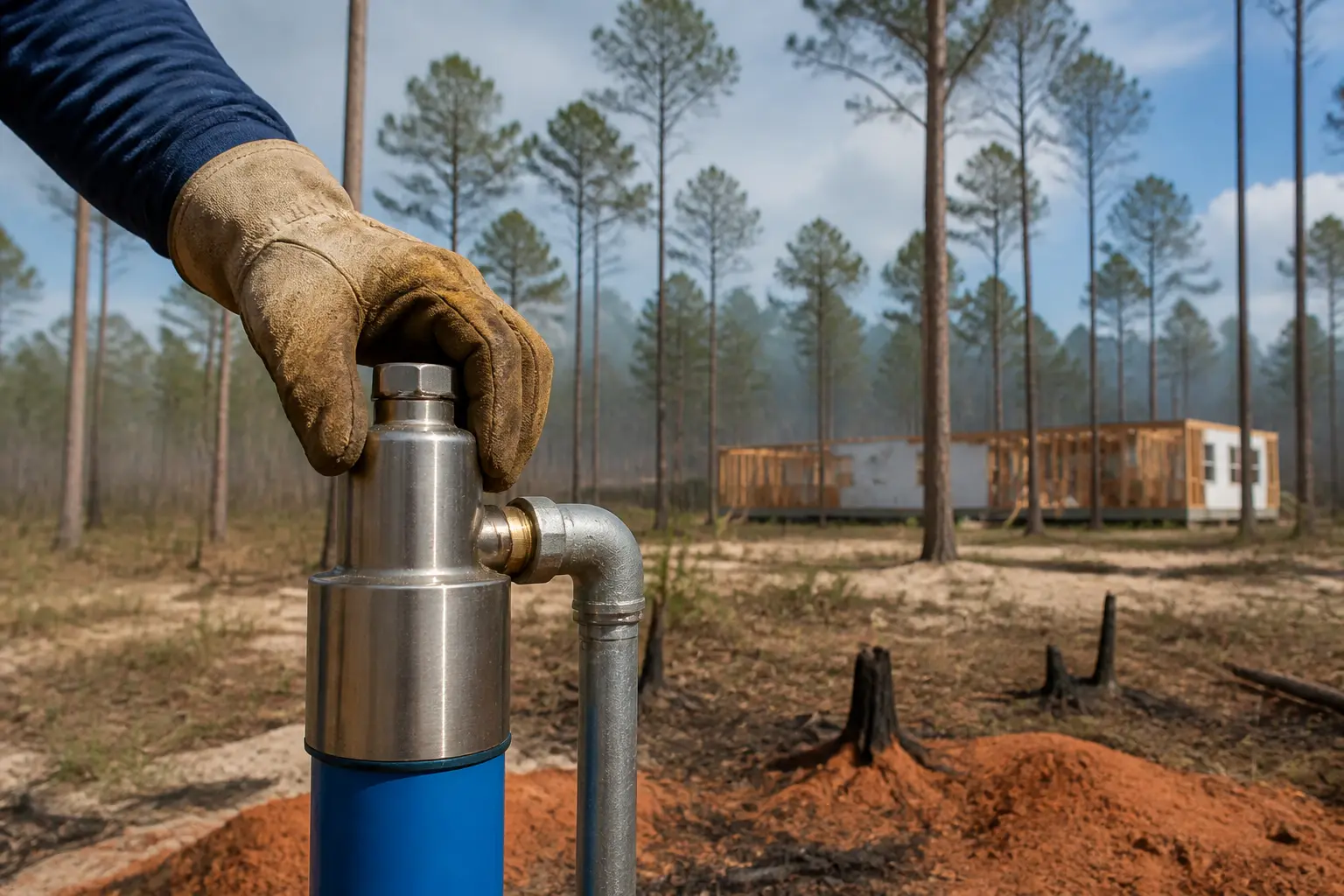
Short-term needs (food, clothes, toiletries, temporary campers for people living in vehicles or tents) had largely been met by community donations. Longer-term pressure shifted to septic repairs, well replacements, general home fixes and mobile-home moves. Those are exactly the items the new $85,000 targets.
- Private well repair or replacement so homes regain safe water
- Septic system restoration required for occupancy permits
- Support for families still doubled up with relatives while permanent housing is rebuilt
- Coordination with the emerging Brantley County Long-Term Recovery Group and Georgia VOAD
Deen noted that every donation and volunteer hour had already shown the community’s resilience. The forestry grant now adds cash for the infrastructure pieces insurance and early aid often leave unfinished.
Why the Timber Sector Wrote the Check
Brantley County holds roughly 19,000 residents, a median owner-occupied home value near $100,000, and an economy still tied to working forests, agriculture and related trades. Losing 110 houses plus timber stands hits both the people who work the woods and the land base that feeds mills.
The foundation’s own language on the Forest Wildfire Recovery Fund priorities puts forest landowners, rural families and documented structure loss at the front of the line. Direct grants, cleanup, reforestation support and immediate hardship aid are all eligible. Distribution runs through local leaders who already know the cases.
That structure keeps the money inside the same communities that grow Georgia’s timber. It also builds goodwill and stability for an industry that needs reliable rural labor and healthy private forestland. Separate state action such as the Kemp executive order on fire-damaged timber aimed at the commercial side; the foundation grant aims at the households.
These funds are vital in ensuring families and individuals can return to safe and appropriate housing quickly. As recovery efforts continue and the needs of our community grow, this support will make a meaningful difference to help citizens rebuild and move forward.
Fairiby Frye, Brantley County Family Connection Board Chairman, said that in the foundation’s announcement.
Federal Dollars Covered Suppression, Not Every Household Bill
Governor Brian Kemp declared a Kemp state of emergency for 91 counties on April 22, activated the National Guard, and paired it with a burn ban. FEMA approved Fire Management Assistance Grants early so federal dollars could flow to firefighting. A later disaster declaration opened FEMA public assistance categories for Brantley covering certain emergency work and facility repairs.
What We Know
- FMAG declarations covered suppression costs for both major fires
- Public Assistance categories opened for Brantley County government and eligible nonprofits
- Local and private groups filled most household cash, clothing and temporary-housing gaps in the first months
What’s Unconfirmed or Limited
- Broad Individual Assistance for every household was not listed under the primary disaster page reviewed
- Exact insurance shortfalls per family remain case-by-case
- Full long-term rebuilding costs still being tallied by the county recovery group
Early on, some local operators reported water trucks turned away by the incident management team even as the fire advanced. Centralized command can save lives and aircraft, yet it sometimes left nearby assets idle. That friction made later private and foundation money more valuable for the rebuild phase.
Recovery Moves From Emergency to Permanent Fixes
The Georgia Forestry Commission suppression resources and mutual-aid partners contained the fires. Now the work is slower and more local: permits, contractors, wells and septic lines.
- April 20-22, 2026, Highway 82 Fire ignites and explodes under drought; evacuations begin; state of emergency declared.
- Late April 2026, Foundation launches Forest Wildfire Recovery Fund with $10,000 seed; community donations surge.
- May-June 2026, Fires reach full containment; Sabo briefs legislators on $20 million cost and 110 homes lost.
- July 2026, Family Connection still processing dozens of applications; focus shifts to septic, wells and permanent housing.
- August 4, 2026, $85,000 grant presented for direct family infrastructure aid.
Students have returned to Brantley schools, a visible marker that daily life is restarting. Yet several families remain with relatives while contractors catch up. Similar rural hits, whether from earlier South Georgia storm damage to homes or delayed farm relief after Helene, show how long the last mile can stretch.
Parallel efforts such as new forest plantings tied to carbon markets aim at longer-term landscape resilience. The $85,000 grant is smaller and more immediate: it puts water and wastewater back online so people can sleep in their own houses again.
Frequently Asked Questions
How many homes did the Highway 82 Fire destroy in Brantley County?
State officials recorded 110 homes destroyed and 27 damaged, the highest residential toll from any single wildfire in Georgia history; 350 additional homes inside the footprint were saved.
What exactly will the $85,000 Georgia Forestry Foundation grant pay for?
Brantley County Family Connection will use it for private well and septic repairs or replacements plus related infrastructure that lets more than 30 families regain safe, code-compliant housing.
How much did the Forest Wildfire Recovery Fund raise in total?
The foundation started the fund with $10,000 of its own money in April 2026; forestry firms, landowners and partners brought the pool to approximately $150,000.
Was the 2026 South Georgia wildfire complex larger in acres or homes than the 2007 fires?
The 2007 complex burned far more acres (nearly 564,000 across Georgia and Florida) but destroyed only 18 homes; the 2026 Highway 82 Fire set the residential destruction record while burning 22,419 acres.
Who distributes the Brantley grant money to families?
Brantley County Family Connection, using its existing application process, county-issued recovery ID cards, and on-the-ground knowledge of which households still lack functional wells or septic systems.
The $85,000 will not rebuild every house. It will put running water and working septic systems back under dozens of roofs so the people who live and work in Georgia’s timber country can stay.