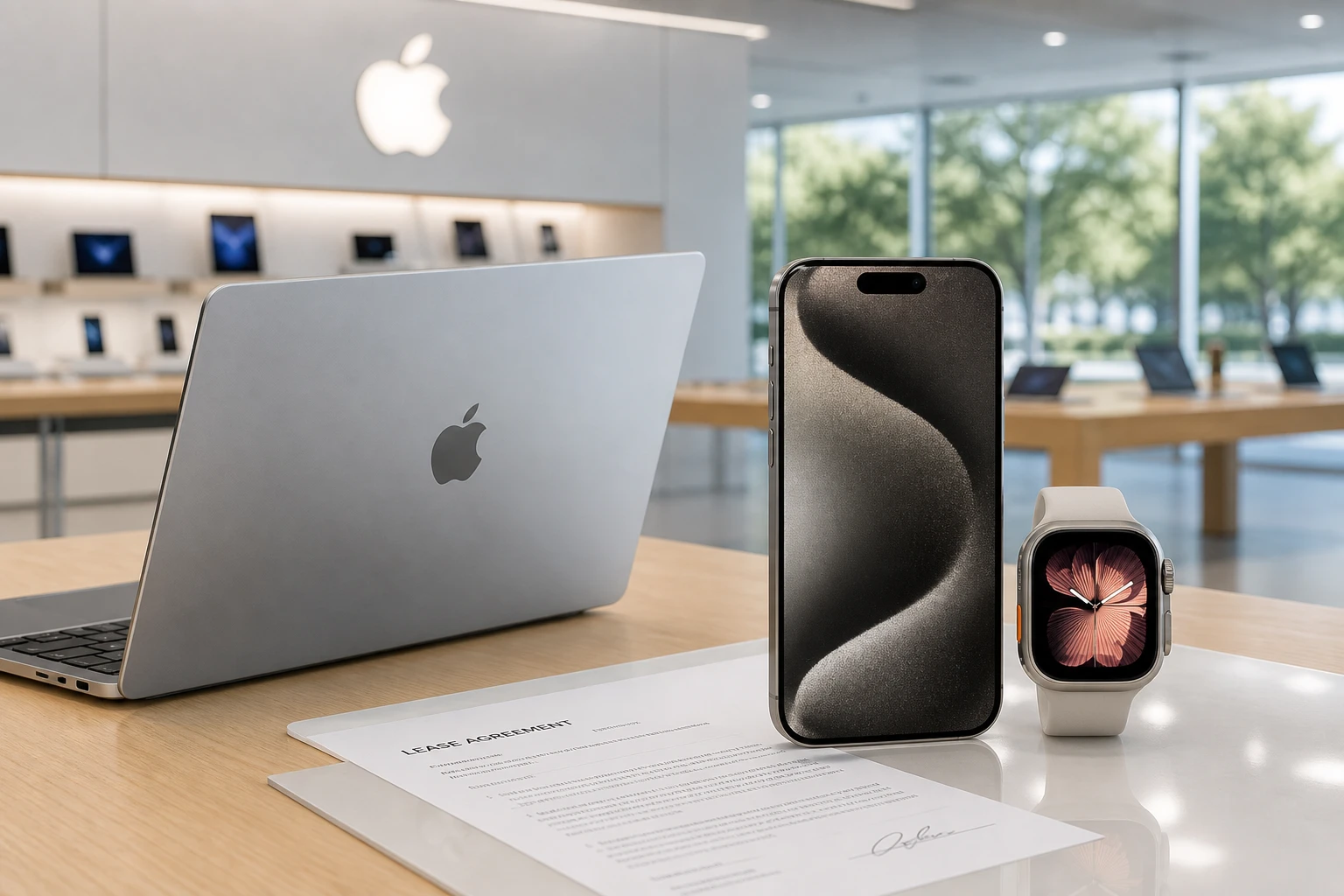
Apple Upgrade is live across the United States. The Klarna-backed leasing plan lets buyers take home current iPhones from $17.99 a month, Apple Watches from $11.99, iPads from $11.99 and Macs from $24.99, with the option to upgrade, buy out or return at term’s end.
The program replaces the long-running iPhone Upgrade Program and standard iPhone Payments for new enrollments. It expands coverage far beyond phones while turning the transaction into a true lease rather than an installment path to ownership.
That shift matters for anyone who once treated the old program as a quiet route to owning the handset after two years. Under Apple Upgrade the device stays on Klarna’s books unless the customer writes a separate check at the finish line. The change is deliberate: lower entry payments, a wider catalog, and a cleaner off-ramp for people who prefer to refresh rather than keep.
Monthly Prices Across the Current Lineup
Apple published starting lease rates that undercut the old program’s typical iPhone payments. Trade-in credit applied monthly can drop those figures further. Apple Card users earn 3 percent Daily Cash on the lease payments.
| Device | Starting Monthly | Term Options |
|---|---|---|
| iPhone 17e | $17.99 | 12 or 24 months |
| iPhone 17 | $22.99 | 12 or 24 months |
| iPhone Air | $28.99 | 12 or 24 months |
| iPhone 17 Pro | $31.99 | 12 or 24 months |
| Apple Watch Series 11 | $11.99 | 12 or 24 months |
| Apple Watch Ultra 3 | $24.99 | 12 or 24 months |
| iPad mini | $11.99 | 24 or 36 months |
| iPad Air | $15.99 | 24 or 36 months |
| iPad Pro | $24.99 | 24 or 36 months |
| MacBook Air | $24.99 | 24 or 36 months |
| MacBook Pro | $38.99 | 24 or 36 months |
Sample full-price figures from early coverage put a 256GB iPhone 17 Pro near $31.99 on 24 months and a 14-inch MacBook Pro near $38.99 on 36 months. Taxes sit outside the lease quote.
Phone and Watch leases top out at two years. iPad and Mac leases stretch to three. That split tracks how long most buyers keep each category before wanting something newer. A customer who already cycles phones every fall can lock a 12-month term and stay on the upgrade treadmill with almost no friction. Someone eyeing a MacBook for longer daily use can spread the same style of payment across 36 months and still walk away clean at the end.
The published starting rates assume no trade-in. Once a qualifying device is credited, the monthly number falls for the first term only. Apple Card Daily Cash still stacks on top of whatever reduced payment remains, giving cardholders a small ongoing rebate that the old Citizens One path never matched in quite the same way.
What Changes From the Old iPhone Upgrade Program
The prior program, financed by Citizens One, was an installment loan that bundled AppleCare+ and left the phone owned once the 24 months ended. Apple Upgrade is a lease. AppleCare is optional and priced separately. You never own the device unless you pay the remaining balance to retail at the end.
- Broader catalog: most current iPhones, Watches, iPads and Macs versus phones only.
- True lease structure with return, upgrade or buy-out choices instead of automatic ownership.
- No AppleCare+ included; customers add it if wanted.
- Soft credit check only, no hard pull on score.
- iPhone leases require a postpaid plan from AT&T, Verizon or T-Mobile; the phones remain unlocked.
- Early termination costs the remaining payments; early buy-out has no extra fee.
Current iPhone Upgrade Program members keep their existing contracts until paid off. New sign-ups are closed. When they next upgrade they choose Apple Upgrade, Apple Card Monthly Installments, carrier financing or full purchase.
The practical difference shows up most clearly at month 24. Under the old program the final payment simply completed the purchase. Under Apple Upgrade that same calendar date forces an active choice: hand the device back, roll into a new lease on the next model, or write a buy-out check for whatever balance remains after prior payments and any trade-in credit already applied. There is no quiet default into ownership.
Because AppleCare is no longer bundled, the sticker monthly rate looks lower on day one. Customers who still want the coverage add it as a separate line item and regain the simpler damage path at return time. Those who skip it accept the risk that Klarna will assess full repair or replacement value if the device comes back scuffed or missing.
Eligibility Rules and the Fine Print That Sticks
Applicants need to be 18 or older (or legal age in their state), U.S. residents with SSN or ITIN, a good-standing Apple Account, a Klarna account and a debit or credit card. Territories are out. Business, education, government, veteran, military and employee purchase programs cannot use it. Refurbished units are excluded.
Several popular models sit outside the program at launch: iPhone 16 and 16 Plus, Apple Watch SE, MacBook Neo, Mac mini, base iPad (A16) and Studio Display. That keeps the lowest-priced Mac entry point offline for leasing even after the MacBook Neo launch pricing and specs brought a more affordable Air-class machine to market.
Damage, loss or theft can trigger charges assessed by Klarna on return. With AppleCare the customer pays only the service fee; without it the full assessed amount is due. Missed payments roll forward with no late fee at first. Three consecutive misses end the lease and demand the outstanding balance minus residual device value. Klarna can offer a one-month deferral or repayment plan.
If nothing is chosen at term end the lease rolls month-to-month for up to six months at the same rate (trade-in credit stops). After that the purchase fee is charged.
The exclusion list is worth reading twice. Anyone hoping to lease last year’s iPhone 16 or the new MacBook Neo will find the doors closed at launch. The same wall blocks every institutional channel: schools, companies, government buyers and employees on discount programs must stay on their existing purchase paths. The program is aimed squarely at individual consumers who already shop the main Apple retail and online catalogs.
Klarna’s Stake and Apple’s Refresh Play
Klarna’s role as the leasing provider gives the Swedish firm a high-ticket, multi-year book tied to Apple’s install base. Klarna has said it expects the arrangement to contribute positively to adjusted operating income in 2026 and over the life of the deal. Apple offloads the credit risk and still captures the hardware sale plus future upgrades.
The structure favors customers who already planned to refresh every one or two cycles. Lower monthly outlay plus the easy return-and-upgrade path reduces the friction that once kept people on older devices longer. For Apple that smooths demand around new launches and keeps more users inside the latest OS and services ecosystem. For pure owners who keep phones four or five years the math flips: the lease never builds equity unless the buy-out is exercised, and total cash out the door can exceed a single cash purchase if upgrades become habitual.
Apple is killing the Upgrade Program today and replacing it with Klarna-backed leasing… First major consumer hardware brand to fully pivot to hardware-as-a-service. Klarna’s market cap just became a bet on Apple’s install base.
That take from user @Jak_Nyfe on X captured the crowd’s sharpest framing within hours of launch. Other replies noted the big-three carrier requirement shuts out popular MVNOs and that cash-rich buyers can still come out ahead by investing the money they would have spent up front while the lease runs at effectively zero interest.
Apple’s side of the ledger is simpler. Every lease still records as a hardware sale. The residual risk and collection work move to Klarna. When the customer upgrades, another sale appears. The company keeps the customer inside its own stores, its own OS train, and its own services billing without carrying the credit balance itself.
How the Application and Daily Management Work
Shoppers pick the device and term on the Apple Upgrade program page now live, in the Store app or inside a retail store. The enrollment flow shows full terms before the soft credit check. Approval arrives in minutes for eligible applicants. In-store buyers walk out with the device; online orders ship or offer pickup. Personal Setup and Today at Apple sessions remain available.
All billing, remaining balance and schedule live inside the Klarna app. Trade-in value lowers the first lease term’s monthly amount when applied at enrollment. Apple’s own Apple’s official Upgrade launch details emphasize the same seamless experience online and in stores that customers already expect.
Once the lease is live, day-to-day contact shifts away from Apple. Payment dates, remaining principal, and any deferral requests all route through Klarna’s own interface. That separation keeps Apple’s retail floor focused on product and setup while the financing partner handles the money side. Customers who already use Klarna for other purchases will recognize the same dashboard; newcomers simply add one more account to manage alongside their Apple ID.
What Buyers Face on the Next Refresh Cycle
September’s expected iPhone 18 generation will be the first full test. Early iPhone 18 Pro series upgrade path leaks already circulate; anyone on a 12- or 24-month iPhone lease started today will face the upgrade-or-return decision right as those models land. Mac and iPad lessees on 36-month terms will stretch further.
The program does not force annual upgrades. It simply makes the path frictionless and the monthly cost low enough that many will take it. Customers who value eventual ownership still have Apple Card installments or cash. Those who treat devices as temporary tools now have a cleaner lease than the old hybrid program offered.
Apple has not announced international expansion. For now the disruption sits inside the U.S. retail and online channels only.
Timing will feel different by category. A 12-month iPhone lease begun this month lands its decision window squarely on the next September launch. A 24-month phone lease pushes the same choice one full cycle later. Mac and iPad customers on 36-month terms will still be paying when two new iPhone generations have already come and gone. That staggered calendar is built into the term menu and will shape how quickly each product line turns over inside the program.
Trade-In Credit and Card Rewards Stack Together
Two separate levers can cut the real monthly cost without changing the published starting rate. Trade-in value applied at enrollment lowers the payment for the first lease term. Apple Card Daily Cash then returns 3 percent of whatever amount actually leaves the account each month.
The order of operations is fixed. Klarna first subtracts the trade-in credit from the amount being financed, which produces the reduced monthly figure. Only after that number is set does the Apple Card rebate calculate. Customers who bring a valuable older device and pay with Apple Card therefore stack both benefits on the same lease.
- Trade-in credit reduces the financed principal and the first-term monthly bill.
- Apple Card Daily Cash returns 3 percent of each payment that posts.
- Taxes remain outside the lease quote and do not earn the same treatment.
- When a lease rolls month-to-month after term end, trade-in credit stops while the card rebate can continue.
Neither lever requires a special enrollment step beyond the normal trade-in appraisal and the choice to pay with Apple Card. Both are available on day one for any qualifying applicant. The combination is most powerful on higher-priced configurations where the absolute dollar savings from the 3 percent rebate grow larger even after a trade-in has already trimmed the base payment.
Return, Upgrade or Buy Out at Term End
Every lease ends with the same three-way fork. The customer can hand the device back, move into a new lease on a current model, or pay the remaining balance and keep the hardware. Nothing happens automatically except a short month-to-month extension if the customer stays silent.
- At term end the customer receives the choice prompt inside the Klarna app.
- Return path requires the device to meet condition standards; AppleCare limits any damage bill to the service fee.
- Upgrade path starts a fresh lease on a new eligible device and closes the old one.
- Buy-out path charges original retail minus payments already made, with no added fee from Klarna.
- Silence path rolls the same monthly rate for up to six months, then forces the purchase fee.
Early exit follows different arithmetic. Returning the device before the scheduled end still requires every remaining payment. Buying out early simply accelerates the same balance calculation used at term end and carries no penalty. The asymmetry is intentional: the program wants customers either to finish the term or to buy the hardware, not to walk away mid-stream without settling the ledger.
Condition standards at return time are where AppleCare proves its value. Without it, Klarna’s assessment can reach the full cost of repair or replacement. With it, the customer pays only the familiar service deductible and the rest of the process stays routine. That single difference can turn a stressful return into a predictable hand-off.
Frequently Asked Questions
Does Apple Upgrade include AppleCare+?
No. Unlike the retired iPhone Upgrade Program, AppleCare+ or AppleCare One is optional and paid separately. Adding it simplifies returns and upgrades because damage fees drop to the standard service charge.
Can I keep the device at the end of the lease?
Yes. Pay the one-time buy-out equal to the original retail price minus what you already paid (trade-in credits already applied). Klarna charges no extra fee for the buy-out itself. Taxes apply as usual.
Which devices are excluded from Apple Upgrade?
At launch the program bars iPhone 16 and 16 Plus, Apple Watch SE, MacBook Neo, Mac mini, the base iPad with A16 chip, Studio Display, refurbished units and any purchase under education, business, government, military, veteran or employee plans.
Is there a hard credit check for Apple Upgrade?
No. Klarna runs only a soft inquiry that does not affect the applicant’s credit score. Approval still depends on Klarna’s underwriting.
What happens if I want to end the lease early?
You can return the device, but you owe the remaining scheduled payments in full. There is no separate early-termination penalty beyond those payments. Paying the full remaining balance to buy out early carries no extra fee.