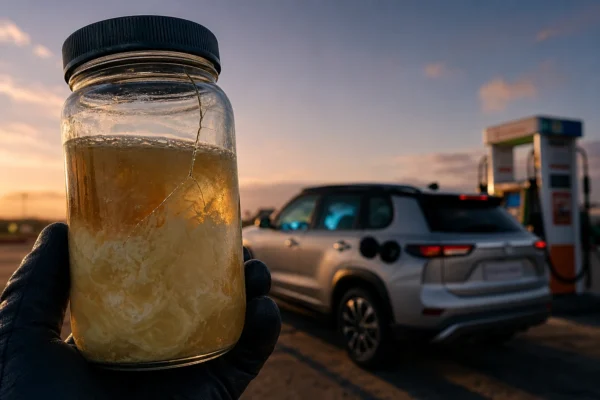
Georgia’s agriculture department is warning farmers that criminals armed with artificial intelligence are cloning real tractor dealerships online, then vanishing the moment a wire transfer clears. The Georgia Department of Agriculture (GDA) says its Law Enforcement Division has logged multiple reports of the scheme since issuing its alert on July 9. Commissioner Tyler J. Harper called it a threat to the state’s single biggest industry.
The fraud follows a script already used against farmers from Missouri to Connecticut, and it rarely spares the dealership whose name and photos get stolen along with the buyer’s money.
Scammers Clone Real Dealerships Using AI
Investigators with the GDA’s Law Enforcement Division say the scheme usually starts with a good deal. A farmer spots a tractor, combine or other piece of equipment listed online at a price that looks too good to pass up.
After they show interest, someone posing as a “dealership representative” takes over by phone call or text message. The buyer is instructed to wire money or send an electronic payment to close the sale.
Then the equipment never shows up. In many cases it never existed at all, and once the money is gone, it is rarely recovered.
What makes this wave harder to catch, officials say, is the technology behind it. The dealerships being copied are frequently real, operating businesses. Criminals use artificial intelligence and other advanced tools to build convincing websites, advertisements, emails and text threads around them, borrowing real names and real inventory photos to sell equipment the actual dealer never listed.
“Unfortunately, our state’s #1 industry is not immune to crime, and Georgia farmers are being targeted by online scammers,” Harper said.
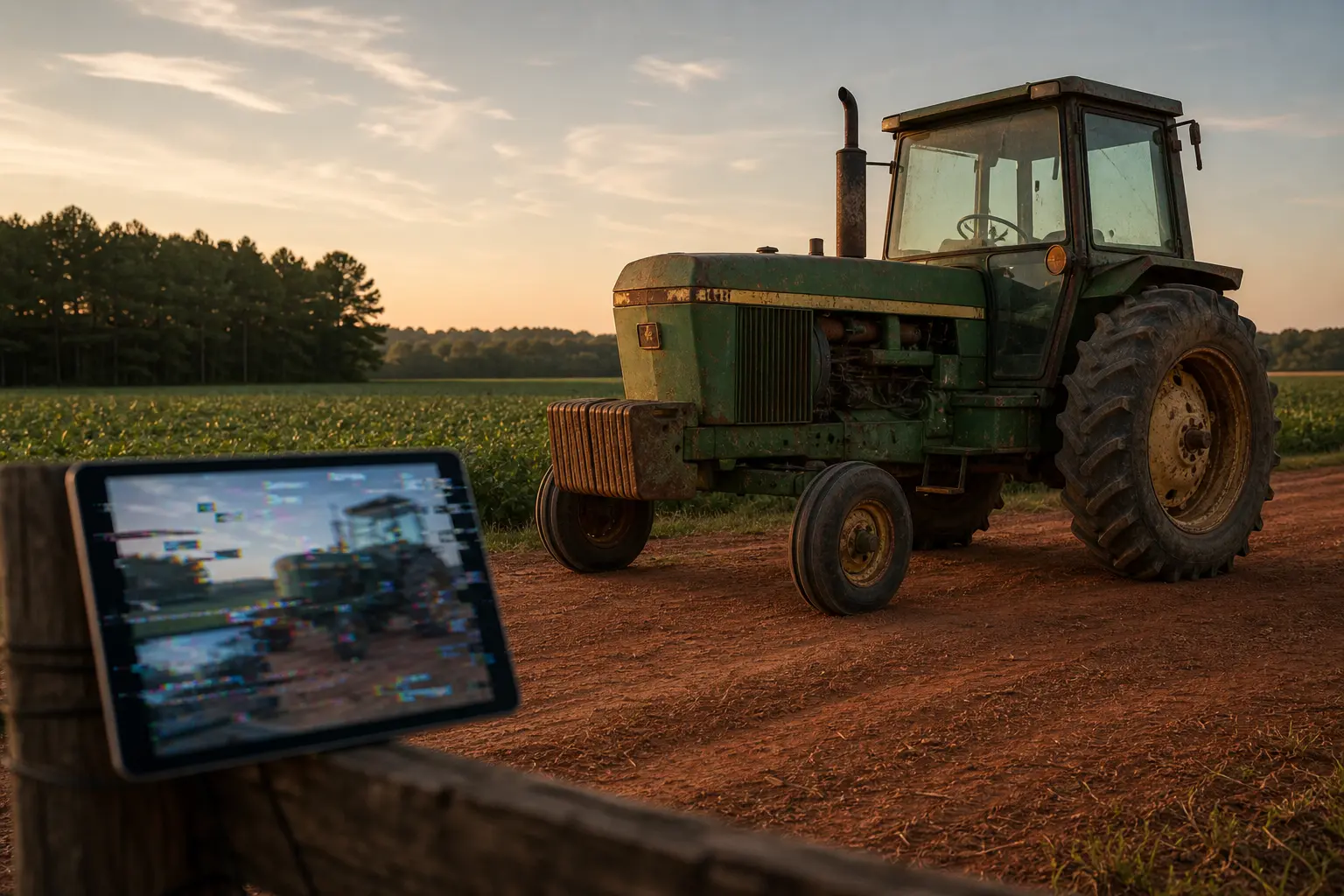
The Real Dealerships Left Holding the Bag
Legitimate equipment dealers absorb damage too in these schemes, even though the criminals never send them a dime.
A case the Better Business Bureau (BBB) tracked last year shows how that plays out. Fraudsters built fake storefronts using the name of Cook Equipment & Trucking, a small dealership in Marble Hill, Missouri, that has operated since 2010 but has no official website and sells nothing online. Buyers from California to North Carolina wired a combined $223,000 to the fake sellers before anyone realized the real business had never heard of them.
A similar scheme in Connecticut borrowed the name Case IH Agriculture Woodbury. Mike Liberty, of upstate New York, said he lost $8,500 trying to buy a tractor the fake page advertised on Facebook. A second victim, identified only as Marion, told the BBB, “I still got burned over $8,000.” With victims surfacing from a dozen states, the case reached federal investigators, and the Secret Service’s Cyber Fraud Task Force is now involved.
The real business named in that fraud fields the fallout directly. Its owner, identified in BBB reporting only as Wolff, described what it is like answering calls from strangers looking for tractors that were never his to sell.
It’s an awful feeling. I feel like I’m apologizing to people for something I haven’t done, but it’s out of empathy.
The account is part of a scheme that fleeced tractor buyers out of thousands of dollars apiece, according to the BBB. Wolff said the calls and drive-up visits have not stopped.
A Nationwide Money Trail
Georgia’s case is one entry in a fast-growing ledger. Government agencies and consumer watchdogs on multiple continents have started putting numbers on what AI-assisted impersonation is costing buyers and sellers. Australia’s consumer regulator, the Competition and Consumer Commission, has logged its own surge in tractor and machinery scams.
| Case | Reported Losses | Key Detail |
|---|---|---|
| Georgia statewide alert | Not yet totaled | Multiple reports filed with the GDA’s Law Enforcement Division since July 9 |
| Marble Hill, Missouri | $223,000 | Impersonated dealer had no website and sold nothing online |
| Woodbury, Connecticut | $8,000 to $8,500 per victim | Victims in a dozen states; Secret Service Cyber Fraud Task Force investigating |
| Australia, ACCC data | AU$1.2 million (US$753,000) | Tractor and machinery scams alone topped AU$1 million, a 20% annual rise |
The pattern shows up at national scale too.
- $503 million in non-delivery scam losses, meaning paid-for goods that never arrived, reported to the FBI’s Internet Crime Complaint Center (IC3) in 2025.
- $20.9 billion in total U.S. internet crime losses for 2025, according to the FBI.
- $2.77 billion lost to AI-powered business email compromise schemes in 2024, across more than 21,000 incidents.
Those last two figures come from separate counts of the same problem. Internet crime losses climbed to $20.9 billion last year, the FBI reported, a jump researchers tie to AI-generated impersonation spreading into ordinary commerce. Separately, AI-driven business email compromise topped $2.77 billion in losses across those incidents in 2024, according to security firm Vectra AI. Michelle Corey, president and CEO of the BBB’s St. Louis office, said the warning sign is usually obvious in hindsight: “If an item is priced well below market value, that’s a red flag.”
Why Does AI Make These Scams So Convincing?
AI strips away the old warning signs, bad grammar, mismatched photos, a phone number that never picks up, that once tipped off careful buyers. Cybersecurity researchers say generative tools now build fully functional fake storefronts in minutes, complete with stolen logos, copied inventory photos and messaging that reads like a real sales team.
Cybersecurity firm Netcraft said it identified 100,000 AI-generated websites impersonating brands last year, nearly 200 of them well-known companies. Threat intelligence analyst Ginny Spicer said she empathizes with people who stumble onto the fakes and assume they are legitimate, since the clones can look nearly identical to the real thing on a phone screen.
The FBI has reached a similar conclusion at national scale. Americans lost nearly $900 million to AI-powered scams, driven mainly by voice cloning, deepfake video and AI-written scripts, the bureau found. Michael Machtinger, deputy assistant director of the FBI’s Cyber Division, told the Wall Street Journal that AI-created fraudulent communications “can look very official and very legitimate to even the most trained individuals.”
The same toolkit has reached extremes far beyond a tractor listing. At a Texas fraud conference last year, CoBank compliance manager Bora Manzanares cited a Hong Kong case in which an employee was tricked into a $25 million transfer after scammers spoofed the company’s executives on a video call. She said her own team sees the same tactics reach into agriculture, hitting machinery and equipment sales, grain payments and vendor accounts.
What Should Farmers Do Before Wiring Money?
Georgia’s agriculture department wants buyers to slow down before any tractor purchase closes. Verify the dealer’s phone number independently, loop in a bank or attorney on big transfers, skip wire and crypto payments to strangers, and inspect the equipment in person before handing over a cashier’s check.
- Independently locate the dealership’s official phone number and call before sending any money.
- Discuss large online purchases with a bank, and have an attorney review contracts if one is available.
- Skip wire transfers, cryptocurrency and apps like CashApp, Venmo or PayPal when paying a stranger online.
- Inspect the equipment in person when possible, and pay with a cashier’s check or another secure method.
- Report suspected fraud to a bank, local police and the GDA’s Law Enforcement Division.
“The safest approach is to personally visit the dealership, put your own eyes on the equipment and complete the purchase in person,” Harper said. He added that taking that extra step can prevent significant financial losses while the department works to hold perpetrators accountable.
Once the Money Moves, It Rarely Comes Back
Recovery is rare once a wire transfer clears. Investigators across multiple states describe the same dead end: a phone number that stops working, a website that vanishes, a bank account already emptied.
The confusion can linger long after the money is gone. In a case where scammers spoofed an actual ranch’s website and sold a horse online, stealing $9,000 from a buyer, the ranch owners say people still show up looking for a miniature Highland cow that a scammer sold using the ranch’s stolen identity, an animal the ranch never had.
Georgia’s agriculture department is asking anyone who suspects they have been targeted to move just as fast in the other direction: contact a bank immediately, report the incident to local law enforcement, then notify the department’s Law Enforcement Division before the trail goes cold.
As of this week, the GDA had not said how many Georgia farmers have lost money to the scheme, only that the reports keep coming in.