Georgia’s Roads Department has dismissed reports that tolls could be introduced on the country’s major highways, including the East-West Highway, calling a recent media report on the issue factually inaccurate. In a statement carried by Georgian outlets on June 10, the agency said “no decision has been made, nor is any discussion currently underway” on turning the Rikoti Highway or any other road in Georgia into a toll road. The agency emphasised that “the use of international and domestic roads is currently free of charge for the population of Georgia, and no changes in this regard are on the agenda.”
The denial landed the same day Georgia signed a USD 372 million World Bank loan to upgrade transport corridors, with the Roads Department itself slated to help implement parts of the wider project. The agency urged media to “verify the official position of the relevant agency” before publishing claims on matters of significant public interest.
What the Roads Department Said
The Roads Department of Georgia issued the statement on June 10 in response to a media report that the Rikoti Highway, a stretch of the East-West corridor, could be turned into a toll road. The agency’s full statement, as reported by Georgian outlets, frames the original media article as “factually inaccurate” and pushes back on the framing of the Gomi-Sachkhere-Chiatura-Zestafoni road as a potential toll route. The Gomi-Sachkhere-Chiatura-Zestafoni road is currently undergoing a major rehabilitation project, and the agency says that work has nothing to do with tolls. The Rikoti Highway and the East-West Highway are both explicitly named in the statement.
The statement argues that the recent media report misread the purpose of the Gomi-Sachkhere-Chiatura-Zestafoni rehabilitation. Officials said the work is aimed at completing the project “in a timely and high-quality manner” and that the route matters “for local communities and for strengthening the resilience and safety of the country’s road network.” The agency’s line is that discussions about the route being an alternative are not a precursor to a tolling decision.
The statement also addresses funding models more broadly. It acknowledges that “in international practice, various models for road funding and management exist,” but stresses that any such decision “require complex analysis, broad professional discussion, and prior public consultation.” The agency said “no changes” to the current free-use policy are on the agenda. The agency is framing the tolls speculation as a misreading of the rehabilitation work. The statement makes clear that any future move on tolls would require extensive analysis and public consultation, neither of which the agency says is currently underway.
The Roads Department is an agency within the Ministry of Infrastructure of Georgia. The full statement, available at the Roads Department’s statement on the tolls denial, is the agency’s official position on the tolls question. The agency wrapped the statement with a pledge that doubles as a rebuttal to the media report in question.
The Roads Department will continue to develop road infrastructure and improve the existing network without placing any additional financial burden on our citizens.
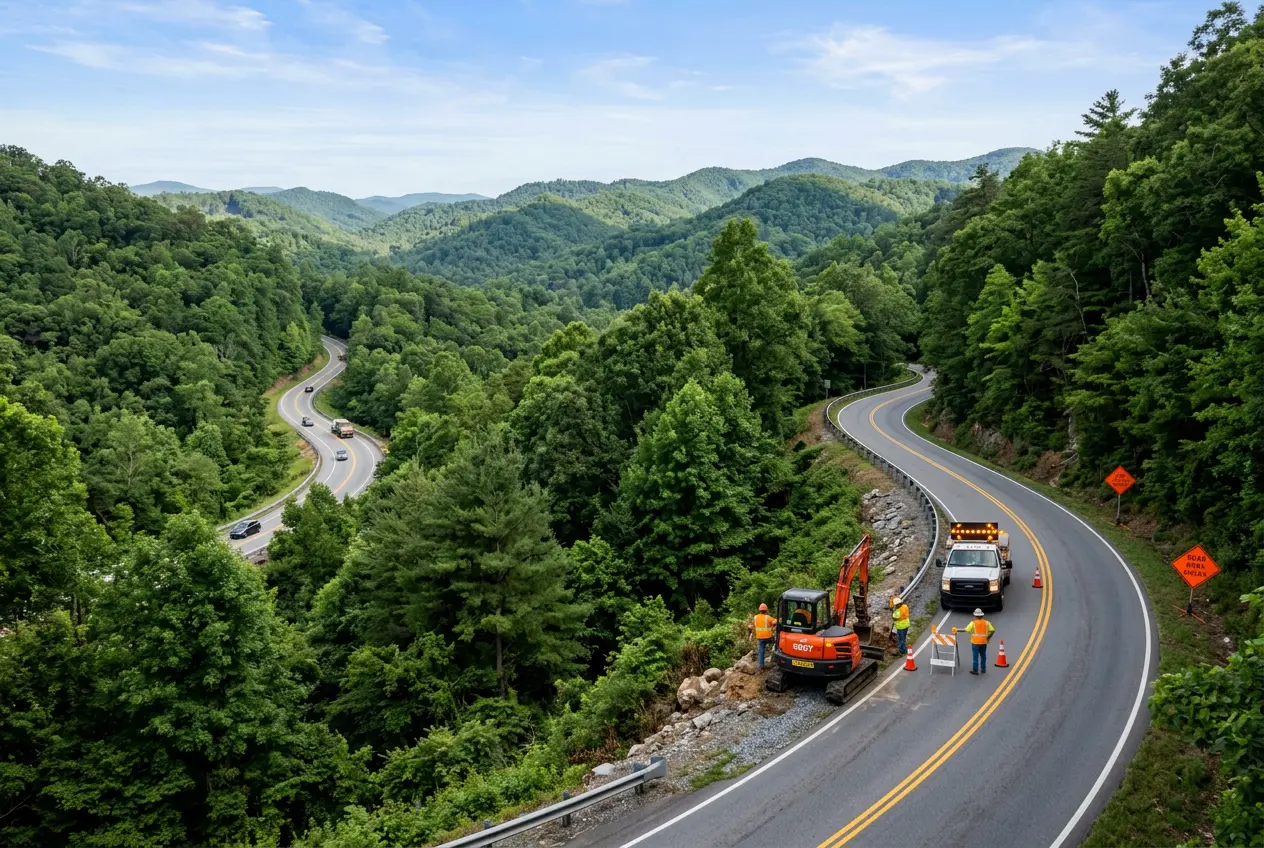
The Gomi-Sachkhere-Chiatura-Zestafoni Project in Four Points
The Gomi-Sachkhere-Chiatura-Zestafoni road is named in the Roads Department’s statement as a project under active rehabilitation. The agency said the work is being accelerated to ensure the project is completed on time and to a high standard.
The agency added that the route matters for local communities and for “the resilience and safety of the country’s road network.” Officials also said the project is not connected to any plan to convert the road into a toll route. The road’s status as an “alternative route” should not be read as a precursor to tolling, the statement said. The work is being run as a standard road rehabilitation, with completion on time and to a high standard as the explicit goal. What the agency has said about the Gomi-Sachkhere-Chiatura-Zestafoni project, in four points from the June 10 statement:
- What the work is: a rehabilitation of the Gomi-Sachkhere-Chiatura-Zestafoni road, aimed at completion on time and to a high standard.
- Why the work matters: serves local communities and strengthens the resilience and safety of the country’s road network.
- What the work is not: a step toward converting the road, or any other Georgian highway, into a toll road.
- What the agency wants media to do: verify official statements before publishing claims on matters of significant public interest.
Why the Agency Says the Report Was “Factually Inaccurate”
The Roads Department did not name the media report it was responding to, but its wording leaves no doubt about its view. The agency said the underlying article’s claims “address a significant public issue” but “are factually inaccurate.” The agency instead points to the official position on the Gomi-Sachkhere-Chiatura-Zestafoni project as the proper read of what is happening.
The same statement, published 10 June 2026 at 14:05, also calls on outlets to confirm official positions before publishing. The agency’s full quote: “We urge media outlets, when covering matters of significant public interest, to verify the official position of the relevant agency to ensure the delivery of complete, balanced, and objective information to the public.” The Roads Department has not announced any policy review, public consultation, or international comparison study. The denial does note, however, that “in international practice, various models for road funding and management exist.” The agency frames any future move on tolls as a process that “require complex analysis, broad professional discussion, and prior public consultation.” The Roads Department has not released any other document on the tolls question as of June 10.
The full statement is the only public-facing record of the position released on June 10. The June 10 statement is the agency’s only published response to the tolls story.
The International Loans Funding Georgia’s Roads
The same day the Roads Department denied the tolls report, Georgia signed a the $372 million World Bank loan signed for transport upgrades to upgrade transport corridors. The loan is part of a wider project worth approximately USD 751 million, with the Roads Department itself slated to help implement parts of the work. The project covers the Trans-Caspian Transport Corridor, also known as the Middle Corridor.
The funding is layered, with the World Bank’s International Bank for Reconstruction and Development (IBRD) putting in USD 372 million. Georgia is separately seeking USD 175 million from the Asian Development Bank (ADB) and USD 182 million from the Asian Infrastructure Investment Bank (AIIB). The project will fund new road sections connecting Badiauri and Chalaubani, Chalaubani and Bakurtsikhe, and Gurjaani and Telavi, along with transport interchanges, overpasses, bridges, road safety measures, and improvements in the road sector. Officials have framed the transport upgrades as a way to “increase the efficiency of the Middle Corridor by improving the speed and safety of cargo transportation, strengthening supply chains, and supporting Georgia’s long-term economic growth.” The Roads Department that issued the June 10 tolls denial is the same agency that will help implement portions of the new work, alongside Georgian Railways. The agreement was signed by Finance Minister Lasha Khutsishvili and World Bank Regional Director for the South Caucasus Roland Price, with a separate project agreement signed by Georgian Railways Director General Lasha Abashidze and Price.
Frequently Asked Questions
Is Georgia introducing tolls on its highways?
No. According to the Roads Department of Georgia’s June 10 statement, no decision has been made on introducing tolls, and no discussion is currently underway. The use of international and domestic roads remains free of charge, the agency said, and no changes to that policy are on the agenda.
Which highways were named in the tolls report?
The media report that triggered the Roads Department’s response specifically pointed to the Rikoti Highway, a section of the East-West Highway, as a potential toll road. The agency said no such conversion is being considered and that the report’s claims were “factually inaccurate.”
What is the Gomi-Sachkhere-Chiatura-Zestafoni project?
It is a road rehabilitation project named in the Roads Department’s June 10 statement. The agency said the work is being accelerated to complete the project “in a timely and high-quality manner” and that the route matters for local communities and for the resilience and safety of the country’s road network. The agency said the work is not a step toward tolling.
How is Georgia funding its road network?
Through a mix of state spending and international loans. On June 10, 2026, Georgia signed a USD 372 million loan with the World Bank for transport upgrades as part of a wider USD 751 million project. Georgia is also separately seeking USD 175 million from the Asian Development Bank and USD 182 million from the Asian Infrastructure Investment Bank. The Roads Department is one of two implementing agencies on the work, alongside Georgian Railways.
Why did the Roads Department call the media report “factually inaccurate”?
The agency said the report misread the purpose of the Gomi-Sachkhere-Chiatura-Zestafoni rehabilitation, treating routine road work as a precursor to tolls. The agency has called on media outlets to confirm the official position of the relevant agency before publishing on matters of significant public interest.