The Realme 16T is Realme’s new India-first 5G phone built around an 8,000 mAh battery, not a camera or flagship chip. Launched on May 22, 2026, it pairs a Dimensity 6300 processor with a 6.8-inch 144Hz HD+ LCD, 45W charging and prices from ₹29,999 before launch offers.
That puts the handset in an awkward but interesting slot. It costs more than many budget endurance phones, yet its pitch is not raw speed. Realme is betting that a big battery, tough body and selfie-friendly camera tricks can do more work than another processor bump.
An Endurance Phone Wearing a Midrange Badge
The official Realme 16T specification sheet makes the priority clear before the reader reaches the camera section. The battery is listed at 7,780 mAh rated capacity and 8,000 mAh typical capacity, with 45W SUPERVOOC charging and support for several charging protocols.
Realme’s marketing page says the phone is built for three days of light use, with WhatsApp, Instagram, gaming and YouTube endurance figures supplied from Realme Lab testing. The fine print matters: the seven-year battery health claim is a theoretical calculation based on one charge per day under normal temperature conditions, with the battery expected to remain above 80% capacity.
- 8,000 mAh typical battery capacity, the headline spec and the reason the phone exists.
- 45W wired charging, plus bypass charging for gaming while plugged in.
- 224 g weight, which is heavy but not absurd for this battery class.
- 8.88 mm thickness, slim enough to keep the battery story from becoming a brick story.
The sale begins in India on May 27 through Realme’s Indian website, Flipkart and mainline retail stores. The base model has 6GB of random access memory (RAM, short-term working memory for apps) and 128GB of storage; the higher variants move to 8GB RAM with either 128GB or 256GB storage.
Battery Claims Carry the Sales Pitch
The battery system is more than a single number. Reverse wired charging lets the phone act as a small power bank, while bypass charging feeds power around the battery during plugged-in play to limit heat and wear. That is useful for buyers who game, stream or use the phone as a commute machine rather than a once-a-day messaging device.
Charging speed is the restraint. At 45W, the phone will not win a spec-sheet fight against Realme’s own 60W and 80W models. Realme appears to be trading charge speed for capacity and longevity claims, a choice that makes sense only if buyers are willing to carry more weight and wait longer at the wall.
The Dimensity 6300 is a system-on-chip (SoC, the processor package that combines CPU, GPU and modem functions). MediaTek’s Dimensity 6300 smartphone chip page lists two Arm Cortex-A76 performance cores up to 2.4GHz, six Cortex-A55 efficiency cores up to 2.0GHz, an Arm Mali-G57 MC2 GPU and a TSMC 6nm-class production process.
That chip is fine for mainstream 5G, social apps and lighter gaming. It is not the reason to buy this handset at ₹29,999. The processor keeps the phone credible; the battery has to close the sale.
The Spec Sheet Has a Clear Trade
The strongest way to read the new model is against the rest of the numbered family. Realme has not made the T model the all-rounder. It has made it the stamina member, then cut elsewhere to preserve price and positioning.
| Model | Battery and Charging | Display | Processor | Main Camera Pitch |
|---|---|---|---|---|
| Realme 16T | 8,000 mAh, 45W | 6.8-inch HD+ LCD, 144Hz | Dimensity 6300 | 50MP Sony IMX852 plus 2MP monochrome |
| Realme 16 official specs | 7,000 mAh, 60W | 6.57-inch FHD+ AMOLED, 120Hz | Dimensity 6400 Turbo | 50MP rear and 50MP front portrait setup |
| Realme 16 Pro | 7,000 mAh, 80W | FHD+ AMOLED, 144Hz | Dimensity 7300 Max | 200MP portrait camera with optical stabilization |
| Realme 16 Pro+ official specs | 7,000 mAh, 80W | FHD+ AMOLED, 144Hz | Snapdragon 7 Gen 4 | 200MP wide camera plus 50MP telephoto |
The most visible downgrade is the screen. A 6.8-inch liquid crystal display (LCD, a non-OLED panel) with HD+ resolution and 254 pixels per inch will look less crisp than the FHD+ AMOLED panels above it in the range. The 144Hz refresh rate helps motion, but resolution and panel type still matter for video, reading and photos.
Durability Gets More Space Than Speed
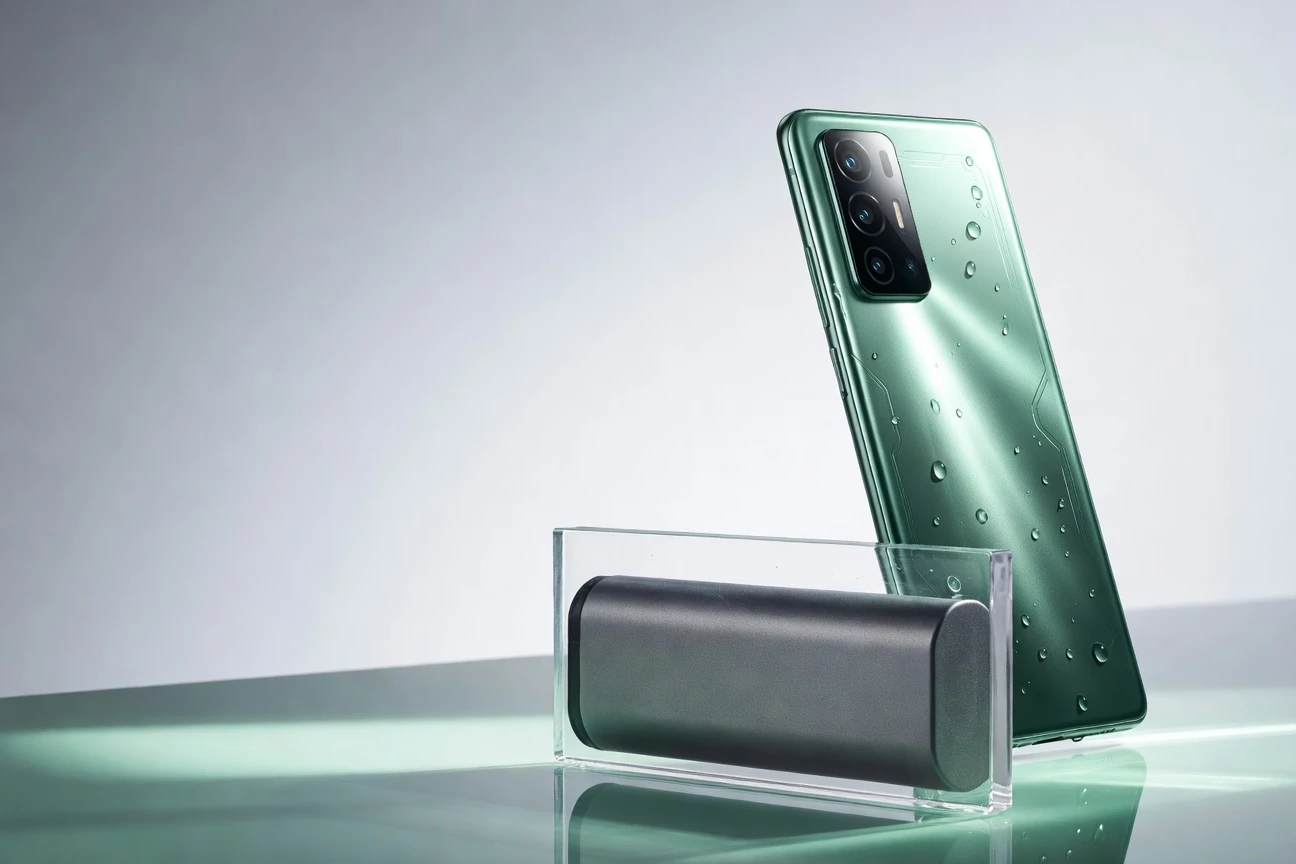
Realme gives the handset a stack of Ingress Protection ratings (IP, the dust and water resistance code): IP66, IP68, IP69 and IP69K, plus an IP69 Pro label on the marketing page. The company says the IP69K, IP69, IP68 and IP66 ratings are certified to IEC 60529 requirements, with the page also citing resistance to 80°C water and 8 to 10 MPa maximum water pressure.
There is a caveat, and it is not small. Realme says water resistance may lose effectiveness with extended use beyond normal conditions and that liquid immersion damage is not covered by warranty. That is standard smartphone small print, but it should cool off any idea that this is an underwater camera with a SIM tray.
- Buy it for: long days away from a charger, power sharing, tough-rating confidence and simple 5G use.
- Pause if: display sharpness, lighter weight, faster charging or a stronger gaming chip matter more.
- Ignore the hype if: the seven-year battery line sounds like a warranty promise. Realme describes it as a lab-based theoretical calculation.
The MIL-STD-810H shock-resistance claim sits in the same bucket. It helps the phone’s story and may reassure clumsy users, but a case and ordinary care still matter. This is a rugged-leaning consumer phone, not field equipment.
Price Puts the Battery Against Better Screens
The official India prices are ₹29,999 for 6GB plus 128GB, ₹31,999 for 8GB plus 128GB and ₹34,999 for 8GB plus 256GB. Launch offers lower the effective entry point to ₹26,999, but buyers should judge the phone on the price they can actually get at checkout, not the best-case banner price.
At ₹29,999, the handset sits close enough to better display and camera options that the screen becomes the main question. A buyer who watches a lot of video may prefer the regular Realme 16’s FHD+ AMOLED panel despite its smaller battery. Someone who spends whole days on hotspot, messaging, maps and calls may take the extra cell capacity without hesitation.
The camera package also shows Realme’s priorities. The rear setup is a 50MP Sony IMX852 main sensor joined by a 2MP monochrome unit, while the front camera is 16MP. Features such as AI Portrait Glow, LumaColor IMAGE tuning, Aura Flash and the rear selfie mirror are aimed at quick social portraits, not serious zoom or ultra-wide shooting.
Storage expansion helps. The phone supports a microSD card up to 2TB, a feature missing from many thinner and higher-end models. Near-field communication (NFC, the short-range tap-to-pay radio) is listed as unsupported on the official sheet, so mobile payment habits should be checked before buying.
India’s Phone Market Makes This Bet Safer
Realme is making this battery-first move in a tougher Indian smartphone market. IDC said India’s smartphone shipments fell 4.1% year over year to 31.0 million units in the first quarter of 2026, while the average selling price rose 10.4% to a record US$302, according to its India smartphone market Q1 2026 report.
Counterpoint Research painted a similar demand picture, saying shipments declined 3% year over year in the first quarter, the weakest quarter in six years, in its India smartphone shipment tracker note. In that setting, brands need visible reasons for buyers to upgrade. More megapixels are familiar. Bigger batteries are easier to feel by dinner time.
That is why the T model’s compromise makes sense, even if it will not fit every buyer. The phone gives up display sharpness and high-end processing to own one promise: it should last longer between charges than the prettier phones around it. If early buyers find the HD+ panel acceptable, Realme’s bet looks practical. If the screen feels too soft at this price, the battery story may not be enough.