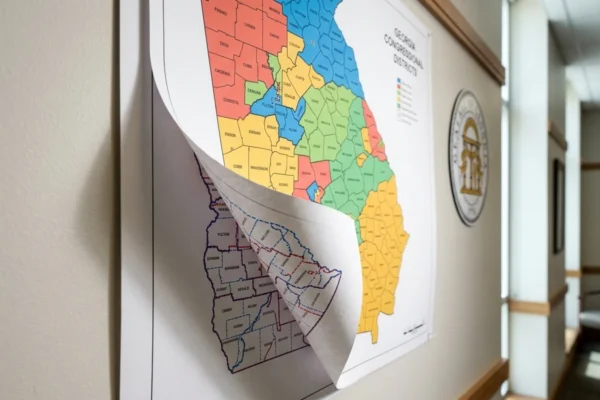
A federal judge in Washington has blocked the 62-day recreational red snapper season Georgia anglers were expecting to open on July 1. The injunction, issued May 21, also froze expanded seasons for Florida, South Carolina, and North Carolina.
The order came in a lawsuit brought by the Southeastern Fisheries Association, a commercial fishing group that argued the federal permits were issued without the analysis the law requires. The case is Southeastern Fisheries Association v. Lutnick, before U.S. District Judge Rudolph Contreras in the District of Columbia. The Georgia Department of Natural Resources said June 18 it had withdrawn its request and plans to refile a revised application, with a fall opening as the goal.
The Season That Was Supposed to Open July 1
Georgia’s pilot season was the centerpiece of a multi-state push to take over red snapper management from Washington. It was to run from July 1 through August 31, the longest recreational window for the species in Georgia in more than a decade.
Under the plan, anglers could keep one red snapper per person per day in federal waters off the Georgia coast, with no minimum size limit. Anglers would have been required to register their trips and report catch data through a state-run app, a system designed to replace the federal survey that state managers consider too imprecise. Yamaha Rightwaters, a sustainability initiative, was funding the app. The pilot was set to run in 2026, with renewals possible for two more years if the data improved.
South Carolina and North Carolina had lined up matching 62-day seasons set to open the same day, each with its own rules on bag and size limits. Florida had already won a 39-day season starting May 22. All four states’ planned red snapper seasons were set out in Exempted Fishing Permits NOAA Fisheries issued on May 1, the first wholesale expansion of recreational snapper access in the South Atlantic in years.
| State | Season dates | Bag limit | Minimum size |
|---|---|---|---|
| Florida | May 22 to June 20, plus Oct 2-4, Oct 9-11, Oct 16-18 | 1 per person per day | None |
| Georgia | July 1 to August 31 | 1 per person per day | None |
| South Carolina | July 1 to August 31 | 1 per person per day | 20 inches |
| North Carolina | July 1 to August 31 | 1 per person per day, or 4 per vessel per day | None |
Until this year, the longest recreational red snapper season any of the four states had seen in recent memory was a few days. Federal management had compressed the fishery into short “derby-style” openings that NOAA itself shut down entirely in 2016, the most recent full closure of the recreational season in the South Atlantic.
A Federal Judge Sides With the Commercial Fleet
The challenge arrived in court, not at the docks. The Southeastern Fisheries Association, which represents commercial fishing interests in the South Atlantic, sued Commerce Secretary Howard Lutnick and NOAA Fisheries, arguing the May 1 permits were issued without the scientific justification the law demands. Earthjustice and the Ocean Conservancy filed an amicus brief on May 18 supporting the suit, with conservation groups warning that the expanded seasons would push the stock back into overfishing. The court agreed.
Contreras granted a preliminary injunction on May 21, finding that the government “failed to consider an important aspect of the problem” and “offered an explanation for its decision that runs counter to the evidence before the agency,” according to the court order and Georgia DNR’s June 18 statement. The South Atlantic Exempted Fishing Permits for Florida, Georgia, South Carolina, and North Carolina were “no longer in effect until further order from the Court,” NOAA Fisheries said in a statement that day. The recreational red snapper harvest in federal South Atlantic waters is closed.
The fight was framed as a small, fast-growing fishery under pressure from a much larger one. The Ocean Conservancy’s scientific analysis, at the center of the multi-state fight over the red snapper EFPs, estimated that the “exempted” permits would cause overfishing to the tune of 20 times the sustainable catch limit. The Southeastern Fisheries Association argued that a recreational blowout of this size would undo years of cautious rebuilding. The American Sportfishing Association and the Coastal Conservation Association read the same data the other way, calling the stock “not in jeopardy” and saying the injunction had caused “immediate confusion, frustration, and economic disruption” for anglers and coastal businesses.
While this outcome is certainly disappointing, we remain committed to expanding access to red snapper fishing opportunities for Georgia anglers.
Walter Rabon, commissioner of the Georgia Department of Natural Resources, in a June 18, 2026 statement.
Why the Court Blocked the Permits
The ruling was a procedural one. Conservation and commercial plaintiffs both argued that NOAA Fisheries had not produced the numbers it would normally have to publish to justify such a large expansion, and the court agreed, finding that the agency’s explanation for issuing the permits “runs counter to the evidence before the agency.” The Magnuson-Stevens Fishery Conservation and Management Act, the federal fisheries law at the center of the case, requires the National Marine Fisheries Service to set annual catch limits and accountability measures for overfished stocks. Exempted Fishing Permits can waive those rules for pilot programs, but only when the agency shows the waiver will not push the stock past its limit. NOAA’s May 1 approval rested on the premise that the recreational catch would not increase overall, because retained fish would otherwise have been thrown back dead, a logic the court rejected as arbitrary and capricious.
Earthjustice attorney Andrea Treece wrote that the injunction recognizes the cost of letting one summer’s recreational blowout run unchecked, citing the multi-year impact on commercial fishing, future anglers, and the general public. The Earthjustice explainer laid out why conservation groups backed the lawsuit against the permits. A federal magistrate has continued to weigh motions in the case as recently as June 18, a sign the litigation is still moving. The underlying case is Southeastern Fisheries Association v. Lutnick, case number 1:26-cv-01533, before Judge Contreras.
The court’s injunction ruling recognizes that allowing a one summer recreational fishing blowout comes at a huge, multi-year cost to commercial fishing interests, future anglers, and the general public.
Andrea Treece, Earthjustice attorney, in a May 2026 explainer on the case.
Georgia Refiles, This Time for a Fall Window
Georgia’s Department of Natural Resources, the lead applicant among the four states, moved quickly to respond. Commissioner Walter Rabon said in a June 18 statement that the agency has withdrawn its original EFP and will re-submit a new application that addresses the court’s concerns, according to Georgia’s red snapper project and recent updates. The U.S. Department of Commerce has said it will review any new application as quickly as possible.
The summer pilot is off. There is not enough time for the legal process to conclude before the proposed July 1 start, so the state and its partners are now aiming for a fall opening.
The revised application has to do two things at once: convince the court that any new permit complies with the law, and convince NOAA Fisheries that the data the state plans to collect is worth the catch that will be taken. Georgia’s pilot would have required every angler and for-hire operator to register trips and report catches in real time. The state argues the data would be cleaner than what NOAA’s Marine Recreational Information Program produces, which state managers call too imprecise to set fair season lengths. If the revised application wins approval, the state has signaled it will seek renewals for 2027 and 2028.
The other three states are working on their own versions. Florida has rescinded its executive order implementing the expanded season but kept state-waters red snapper access open under its default rule. The South Atlantic states’ attorneys are coordinating on a refiling strategy while the underlying litigation continues to move.
What the injunction did, and what it did not do:
- Closed the federal-waters red snapper harvest in the South Atlantic until further order from the court.
- Blocked the 62-day Georgia season that was to open July 1, along with the planned 62-day seasons in South Carolina and North Carolina.
- Kept state-waters red snapper harvest open under each state’s default rules (in Georgia, 2 red snapper per person per day at a 20-inch minimum, year-round).
- Left the door open for a revised EFP, with Georgia aiming for a fall opening and the other three states preparing their own applications.
- Did not resolve the underlying lawsuit, Southeastern Fisheries Association v. Lutnick, which is still in motion.
The Conservation vs. State-Management Split
The South Atlantic red snapper stock is no longer the animal it was when NOAA first closed the recreational season in 2016. According to the 2024 SouthEast Data, Assessment, and Review update, known as SEDAR 73, the stock is not overfished, overfishing may no longer be occurring, and the rebuilding plan is ahead of schedule. The American Sportfishing Association and the Coastal Conservation Association called the stock “not in jeopardy” in a joint statement after the May 21 ruling. The 2021 overfishing determination that justified the shortest seasons is, by this reading, increasingly out of date.
The state-led push to manage the fishery directly traces back to that gap between paper and water. President Donald Trump’s April 2025 Executive Order 14276, “Restoring American Seafood Competitiveness,” directed NOAA and the states to expand the use of Exempted Fishing Permits to modernize data collection. Georgia submitted its EFP request to Commerce Secretary Howard Lutnick on November 10, 2025, months before the May 1 approval. The four states have been meeting since 2024 to coordinate the application.
Conservation groups read the data the other way. Earthjustice, the Ocean Conservancy, and the Environmental Defense Fund argued that the EFPs would lift annual catch limits at the wrong moment, when the spawning population is still recovering. The 1990s collapse, which pushed red snapper spawning to 11% of historical levels, is the cautionary tale they keep returning to, with the Ocean Conservancy warning that a two-month recreational season would fast-track a stock crash. Both sides agree the recovery is real, and disagree on how much new fishing pressure the stock can absorb.
State-Waters Seasons Stay Open
The injunction halts the federal pilot, leaving state-waters seasons open under each state’s default rules. In Georgia state waters, from shore out to 3 nautical miles, anglers can still keep 2 red snapper per person per day at a 20-inch minimum size, year-round, under the state’s recreational finfish rules. Florida’s state-waters red snapper access also remains open under that state’s default 2-per-person, 20-inch minimum rule.
The pilot program’s promise, a longer, more flexible season and cleaner catch data, remains on the table, just delayed. Georgia DNR, the South Atlantic Fishery Management Council, and the four state agencies continue to argue that federal Marine Recreational Information Program surveys produce margins of error too wide to set fair season lengths. The legal dispute is over how the season’s data should be collected. A revised Georgia application aimed at a fall opening will be the next test of the state-led model, while other Georgia saltwater news continues to break, including a 68-pound mahi-mahi that matched a 2022 state record when a Glennville fisherman caught it off the South Ledge in May.
Frequently Asked Questions
When will Georgia’s red snapper season open?
As of the June 18, 2026 update, the state has withdrawn its original Exempted Fishing Permit application and is preparing a revised one. A fall season is the stated goal, but the Department of Commerce has not set a date, and the underlying lawsuit is still in motion.
Can Georgia anglers still catch red snapper?
In state waters, from shore out to 3 nautical miles, yes, year-round, with a 2-per-person daily limit and a 20-inch minimum size. In federal waters, 3 to 200 nautical miles offshore, the recreational harvest is closed until further order of the court.
Why did the judge block the season?
U.S. District Judge Rudolph Contreras found that NOAA Fisheries issued the four Exempted Fishing Permits without adequately considering the impact on the stock, calling the agency’s explanation arbitrary and capricious. The plaintiffs argued the permits would push harvest past the sustainable limit.
Which states were affected?
Florida, Georgia, South Carolina, and North Carolina. All four had received EFPs from NOAA Fisheries on May 1, 2026, expanding recreational red snapper seasons. The May 21 injunction halts all four.
What is an Exempted Fishing Permit?
An EFP is a NOAA Fisheries tool that lets states run pilot programs outside the standard catch limits, in exchange for collecting better data. The four South Atlantic states planned to use their EFPs to test state-run data systems and prove that the recreational fishery could support longer seasons.