The Georgia Supreme Court cleared one of the biggest legal obstacles to resuming executions on Tuesday, yet the state is still months away from setting an execution date for any of the nine death row inmates a 2021 pandemic deal had shielded. The unanimous ruling settled a fight over a single vaccine clause. It left two other questions open and sent the dispute back to a trial judge in Fulton County.
Most coverage Tuesday read as if the death chamber were about to reopen. The agreement’s own wording says otherwise: the attorney general cannot seek a single execution warrant until six months after every condition is met, and one of those conditions is still being argued in court.
What the Justices Settled on Tuesday
The June 2 opinion, written for the court by Justice Carla Wong McMillian, overturned a 2025 ruling by Fulton County Superior Court Judge Shukura Ingram that had kept the pause in place. The whole case turned on one line in the 2021 agreement: the state promised not to pursue execution warrants until a COVID-19 vaccine was “readily available to all members of the public.”
Judge Ingram had sided with defense lawyers, who argued that the clause could not be satisfied because the Food and Drug Administration (FDA, the federal agency that approves medicines) had not cleared a COVID-19 vaccine for children younger than six months. The Supreme Court read the words differently. The justices found that the plain language required the vaccine to be available, not approved for every age group, and that supply now exceeds public demand. The court said the state had produced undisputed evidence that vaccine supply was “adequate for all members of the public to obtain the vaccine,” and that no legal barrier stops a doctor from administering one when it is medically appropriate.
Justice Benjamin Land added a point worth remembering for anyone tracking how Georgia executions could move forward: the agreement restricts only the attorney general from seeking warrants. It does not bind local district attorneys. The makeup of the court that handed down this reading was itself tested weeks earlier, when voters decided a contested seat on the same bench in a closely watched Georgia Supreme Court race.
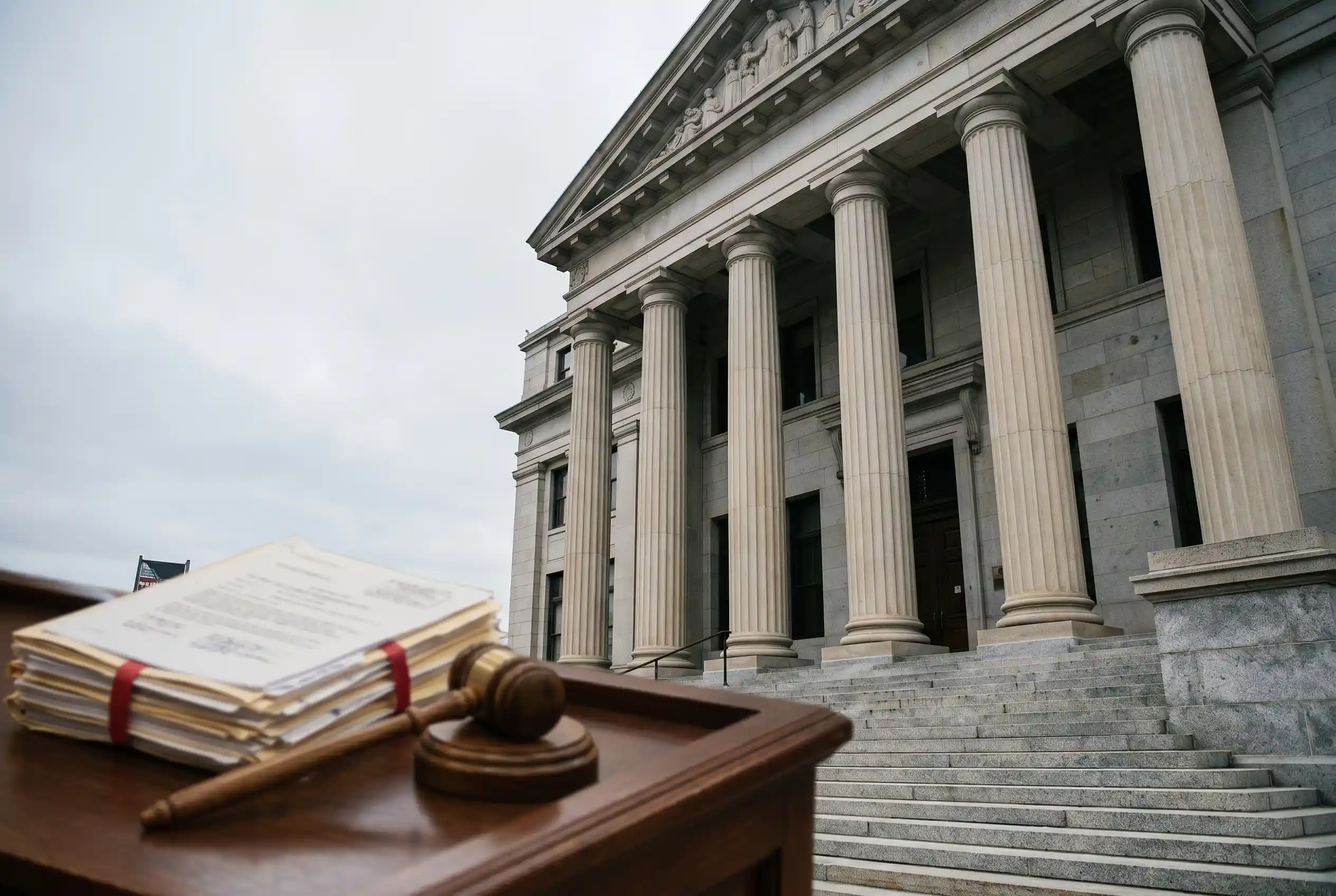
Why an Execution Date Is Still Months Away
The vaccine clause was always the loudest part of the dispute, but it was never the only condition standing between the state and an execution warrant. Strip the headline back to the deal’s text and the path forward looks much longer than “cleared.”
The Visitation Question Goes Back to Trial Court
The Supreme Court did not end the litigation. It returned the case to Judge Ingram, and the next round of arguments will center on whether prison visitation has returned to normal after the pandemic. That is one of the three original triggers in the agreement, and it has not been resolved. Until the trial court rules on it, the protection covering the nine men stays intact.
A Six-Month Clock That Hasn’t Started
Even if the visitation question is answered in the state’s favor, the agreement builds in a delay. The attorney general agreed not to seek any warrant until six months after all three conditions are met. That clock cannot start until the trial court signs off on visitation. The realistic sequence looks like this:
- Judge Ingram rules on whether prison visitation has returned to normal.
- All three conditions are formally found to be satisfied.
- The six-month waiting period runs in full.
- The attorney general files for an execution date.
You can track how that timeline compares with cases in other states through the national list of upcoming U.S. executions kept by the Death Penalty Information Center (DPIC, a nonprofit that compiles capital-punishment data).
How the Pandemic Deal Came Together
Executions in Georgia stopped in 2020 as the coronavirus spread through prisons and courts. Death row inmates kept exhausting their appeals during that freeze, which meant some were becoming eligible for execution with no clear process to carry one out. In early 2021 a committee tied to a judicial task force on COVID told lawyers for death row prisoners and the attorney general’s office to negotiate terms for resuming. They signed the agreement in April 2021.
The deal set three triggers, all of which had to clear before the state could move, plus the six-month notice on top. Here is where each one stands after Tuesday.
| Condition in the 2021 agreement | Status after the June 2 ruling |
|---|---|
| Expiration of Georgia’s COVID-19 judicial emergency | Met |
| Return of normal prison visitation | Disputed; back before the trial court |
| COVID-19 vaccine readily available to all members of the public | Met, per the Supreme Court ruling |
So one trigger is contested, two are satisfied, and the longest single delay (the six-month notice) is still waiting to begin. That is the gap between what the ruling did and what the coverage suggested it did.
The Nine Men the Agreement Covered
The deal shielded nine inmates, and the best known is Virgil Delano Presnell Jr., the state’s longest-serving death row prisoner. Presnell was convicted in Cobb County in 1976 of killing an eight-year-old girl and raping her ten-year-old friend. His execution was halted in 2022 just hours before he was set to receive a lethal injection. His lawyers later said they were given only two days’ notice for a clemency hearing despite the state’s promise of six months, which is part of why the notice period now matters so much to the defense.
The pause has held across the wider death row population, too. The numbers frame how rare an execution has become in the state:
- 36 people sat on Georgia’s death row in early 2026.
- 77 executions have been carried out in the state since 1976.
- Nine of those inmates fall under the 2021 agreement.
- The last execution was Willie James Pye, put to death in 2024.
For the full picture, the Georgia Department of Corrections publishes profiles of current death row inmates, and DPIC tracks Georgia’s death penalty record since 1976, including its exonerations and clemencies.
The Clemency Fight Running on a Separate Track
The pandemic agreement is not the only thing slowing Georgia down. A separate case has frozen another execution on entirely different grounds. In December 2025 a Fulton County judge halted the lethal injection of Stacey Humphreys, convicted of murdering two real estate agents in 2003, days before it was scheduled. The judge cited concerns about the state’s clemency process and possible conflicts of interest on the parole board, the body that decides whether to spare a condemned prisoner.
That dispute does not turn on COVID-19 at all, and it shows how many separate legal threads now run through Georgia’s death penalty system. A reader following only Tuesday’s ruling would miss it. The clemency challenge detailed in the order halting the Humphreys execution raises questions about the fairness of the parole board that could reach well beyond a single inmate. Resolving the pandemic deal does nothing to settle it.
Until Judge Ingram decides the visitation question, no warrant can issue, and the six-month wait begins only after that. Georgia’s first execution since 2024 is still a date no one in Atlanta can put on a calendar.