Operation Sindoor ran less than 90 hours in May 2025 and used fewer than 50 air-delivered weapons after the 22 April Pahalgam attack that killed 26 civilians. The Indian Air Force moved from nine terrorist infrastructure sites to military targets across Pakistan, forcing a ceasefire request by the morning of 10 May.
That pace and thrift stand in sharp contrast to the 1999 Kargil campaign known as Operation Safed Sagar, where scarce precision stocks, high-altitude physics and a political ban on crossing the Line of Control forced improvisation at every turn.
High Camps and Handful of Guided Bombs
In the summer of 1999 aircrew hunted targets above 15,000 feet amid snow camouflage and incomplete intelligence. Only a handful of laser-guided bombs existed in the inventory. Ballistic tables for those altitudes had never been written. Attack profiles for close air support at those heights had never been practised in peacetime.
Political direction forbade crossing the LoC, ruling out the most efficient attack geometries. Early friction between the Army and the IAF slowed joint targeting. When technology fell short, skill and ingenuity filled the gap.
- Mirage 2000s of No. 7 Squadron delivered the decisive blows once Litening pods and limited Paveway stocks arrived.
- The Muntho Dhalo logistics base in the Batalik sector was wrecked mainly by accurately placed unguided 1,000-pound bombs in high-angle dives.
- Estimates put enemy casualties from that single strike in the low hundreds and left the Pakistani supply effort paralysed.
Success arrived after days of refinement, not on the opening night. The cost in blood and treasure for the wider Operation Vijay remained high, as then-Army Chief Gen V.P. Malik later recorded.
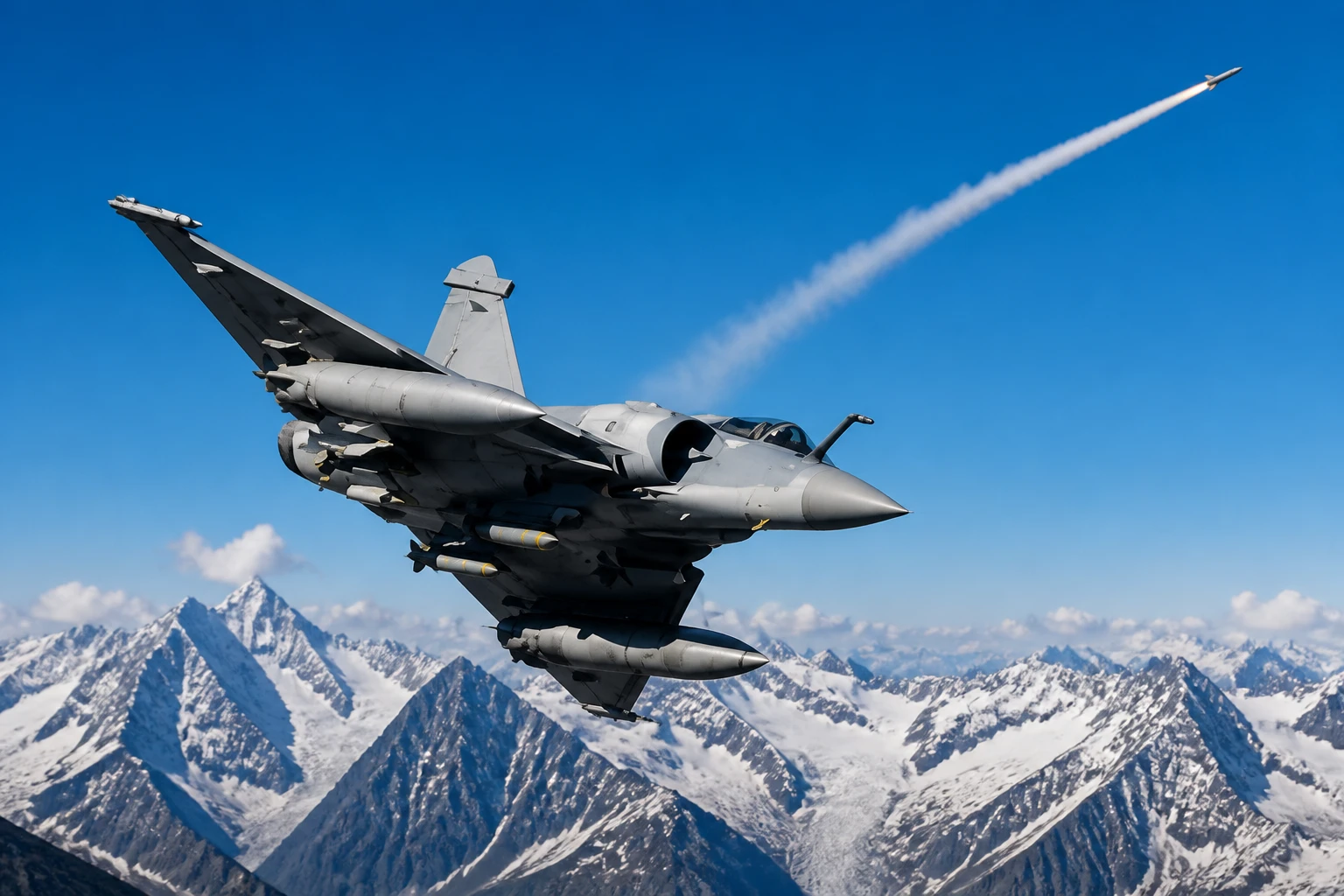
Nine Camps on Night One, Then the Depth Strikes
The trigger in 2025 was different and the response pre-planned. After the Pahalgam massacre, multi-agency intelligence fixed nine major camps linked to Lashkar-e-Taiba and Jaish-e-Mohammed in Pakistan and Pakistan-occupied Kashmir.
- Night of 6/7 May 2025: Initial precision strikes hit the nine terrorist sites with care taken to limit collateral damage and avoid unrelated military targets.
- 7-9 May: Pakistan answered with drones, missiles and air activity. Indian layered air defences, including the indigenous Akash and the Integrated Air Command and Control System, largely defeated the waves.
- Early 10 May: Coordinated standoff strikes using BrahMos, SCALP-EG and other long-range munitions hit air bases, radars, hangars and command nodes across Pakistan’s depth. By morning Islamabad sought a ceasefire.
The entire air campaign stayed inside Indian airspace for manned aircraft. No safe haven remained. Official Indian accounts stress the operation lasted roughly 88 hours and expended fewer than 50 air-delivered weapons.
What the Inventory and the Cockpits Now Carry
Force projection rests on platforms and munitions that match the mission. In 1999 precision stocks were thin and advanced targeting systems were only entering service. By 2025 the picture had flipped.
| Category | Kargil 1999 | Sindoor 2025 |
|---|---|---|
| Precision munitions | Handful of laser-guided bombs | SCALP cruise missiles, Hammer glide bombs, BrahMos, Rampage, Crystal Maze in quantity |
| Strike platforms | Mirage 2000, MiG-27, MiG-23, limited pods | Rafale, Su-30MKI with air-launched BrahMos, networked multi-role fleet |
| Air defence | Limited layered systems | S-400, Akash, MRSAM, Spyder plus Army Akashteer backing IACCS |
| Political envelope | No cross-LoC, tight ROE | Minimal restrictions, depth strikes authorised from the start |
| Joint planning | Refined under fire | Single joint plan, synergy from first mission |
The air-launched BrahMos integration on the Su-30MKI took years of domestic work after a costly Russian offer was rejected; the project finished for a fraction of the original quote and proved itself under combat conditions. High-fidelity simulators and regular multi-domain exercises made night and contested operations routine rather than heroic exceptions.
Joint Fires Without the Old Friction
Kargil exposed the difficulty of coordinating war plans and joint fires across services. Procedures for close air support had to be rewritten while bombs were already falling. In Sindoor the services operated from one plan. Air power shaped the campaign instead of merely supporting ground troops.
The tri-services response that embodied precision also pulled in the Navy’s carrier battle group for western seaboard pressure and the Army’s air-defence units for the drone waves. Creation of the Chief of Defence Staff post, the Department of Military Affairs and legal changes for inter-service organisations had already lowered the coordination tax. Theatre commands remain unfinished business, yet unified intent was visible from the first night.
Political resolve had shifted earlier. The 2019 Balakot strike showed calibrated air power below the nuclear threshold was feasible. That precedent, refined by 2025, let Sindoor be authorised swiftly and executed without ambiguity.
How Fifty Weapons Reset the Escalation Ladder
Chief of Defence Staff Gen Anil Chauhan later noted that precision strikes create little collateral damage and therefore lower the political cost of short, sharp conflicts. Fewer than fifty weapons produced visible effects on terror infrastructure and then on Pakistan’s air bases and sensors.
- First cruise-missile use: BrahMos and SCALP-EG employed against Pakistan.
- Standoff dominance: Manned aircraft stayed inside Indian airspace while munitions reached deep.
- Air-defence performance: Layered Indian systems largely defeated Pakistani drones and limited ballistic-missile attempts after the opening exchanges.
- Visible battle damage: High-resolution imagery and official briefings documented hits on hangars, radars and command nodes.
India suffered initial losses that were acknowledged later; exact aircraft numbers remain unreleased by New Delhi and disputed in open sources. All pilots returned. The material exchange still favoured the side that could strike at will by the final hours.
Independent assessments, including work by the Stimson Center, record that this was the first time India used cruise missiles on Pakistan and the first large-scale drone warfare exchange between the two states. The Carnegie analysis concluded that military asymmetry established over five days was now clear from post-strike imagery.
The Deterrence Bill Pakistan Now Pays
For decades Pakistan’s strategy rested on proxy attacks that bled India while denying New Delhi a conventional reply that risked nuclear escalation. Depth precision strikes have raised both the material and the psychological cost of that approach.
Retired Group Captain Ajay Ahlawat summarised the arc on X shortly after the Netflix series on Safed Sagar drew fresh attention: the move from high-altitude struggles in 1999 to a deliberate, calibrated, precise campaign in 2025 constitutes a genuine renaissance of Indian air power. Continuity of command culture reinforces the point. Air Marshal Vinod Patney led Western Air Command in Kargil; more than a quarter-century later Air Marshal Jeetendra Mishra led the same command in Sindoor. Both received the Sarvottam Yudh Seva Medal. As a squadron leader in 1999, Mishra had helped operationalise the laser-guided bombs later used at Tiger Hill and Muntho Dhalo.
There is increased propensity amongst nations and governments to use force because political objectives today can be achieved by short duration conflicts. Precision strikes create very little collateral damage, hence the cost of war for nations is less.
Gen Anil Chauhan made that observation months after Sindoor. The ability to hold high-value targets at risk across Pakistan’s geography while retaining escalation dominance has redefined the regional bargain. Proxy warfare no longer enjoys a free ride under the nuclear shadow.
The same capability set now informs planning on other fronts. Mobilisation speed and connectivity themselves deter. The political recognition that followed the campaign, including political recognition that followed the campaign and subsequent parliamentary briefings on the operation, locked the episode into domestic memory as well as military doctrine.
From the spontaneous high-altitude fixes of Safed Sagar to the deliberate large-scale precision of Sindoor, Indian air power moved from supporting instrument to decisive one. The next crisis will test whether that maturation holds under different geography and different sensors. The 1999-to-2025 record already shows what sustained investment buys.
Frequently Asked Questions
What triggered Operation Sindoor in May 2025?
The 22 April 2025 terrorist attack at Pahalgam in Jammu and Kashmir killed 26 civilians, many of them tourists. India attributed the attack to Pakistan-based groups and launched calibrated strikes on nine linked terror infrastructure sites on the night of 6/7 May.
How long did Operation Sindoor last and how many weapons were used?
Official Indian accounts and subsequent analyses place the air campaign at roughly 88 hours, ending with a ceasefire on 10 May. Fewer than 50 air-delivered weapons achieved the stated effects on both terrorist and selected military targets.
Which aircraft and missiles stood out in the 2025 strikes?
Rafale fighters employed SCALP-EG cruise missiles and Hammer bombs; Su-30MKIs launched air-launched BrahMos; other standoff weapons included Rampage and Crystal Maze. Indigenous Akash surface-to-air missiles formed part of the layered defence that defeated Pakistani drone waves.
How did IAF constraints in the 1999 Kargil war differ from 2025?
In 1999 precision-guided munitions were scarce, high-altitude ballistics were uncharted, intelligence was incomplete, and political orders barred crossing the LoC. Joint procedures had to be refined under fire. By 2025 stocks, training, networking and political latitude allowed deliberate depth strikes from the opening night.
What military firsts occurred during the four-day conflict?
It marked the first Indian use of cruise missiles against Pakistan, the first large-scale drone warfare exchange between the two countries, and the combat debut of several Chinese-origin systems on the Pakistani side. Post-strike imagery established a clearer picture of conventional asymmetry than previous crises.