Branded gas stations in Georgia raised prices by up to 7 tetri on average after global fuel costs climbed 11-13% in a single week. Super grades now sit above 4.20 GEL at several chains while Portal undercuts the pack on every major product.
BusinessPressNews and Netgazeti compiled the latest board prices on 12 August. The move tracks tight product markets abroad more than any local tax change.
What the Boards Show Right Now
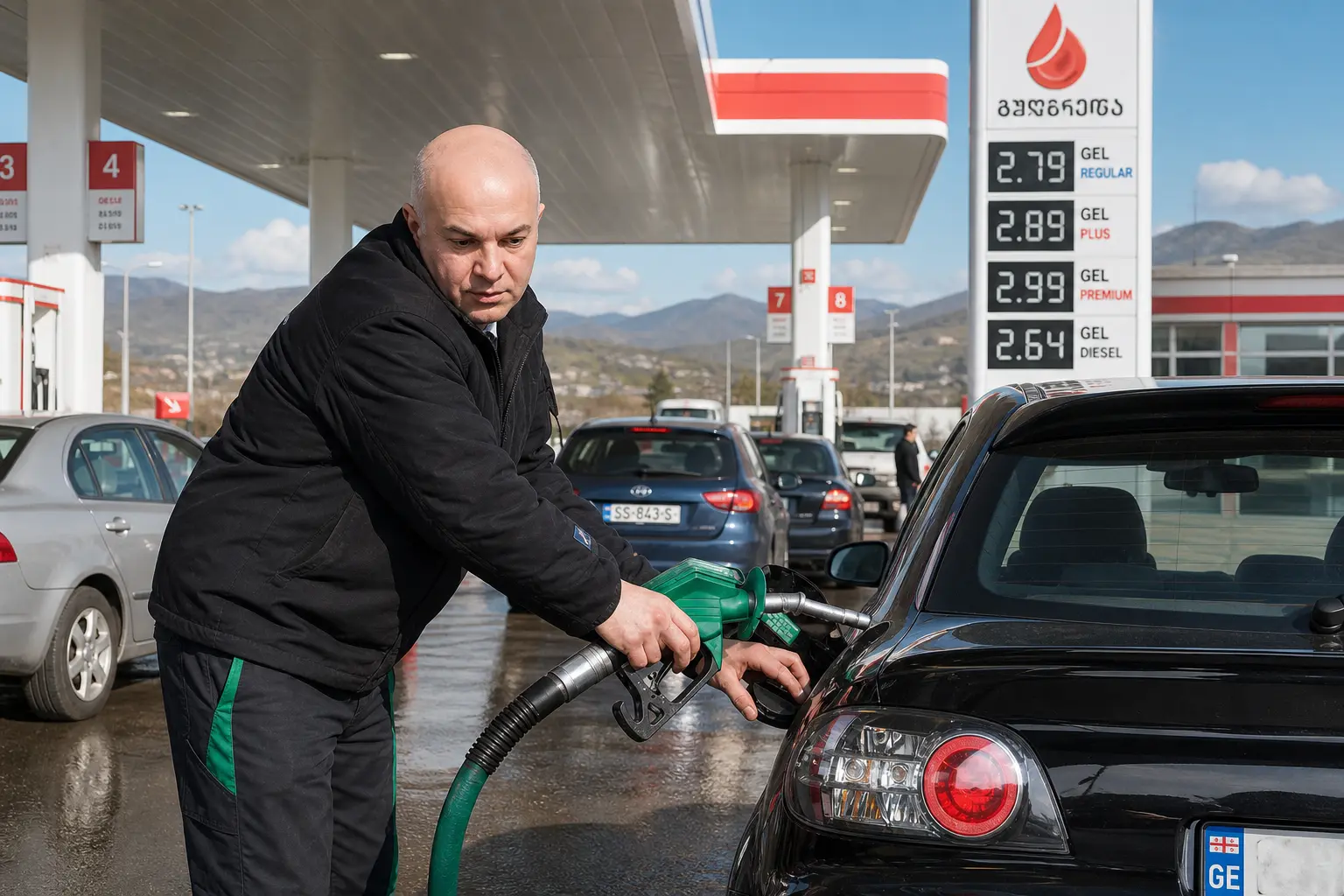
Regular 92-octane still clusters near 3.60 GEL. Premium 95 sits between 3.73 and 3.83. Super and diesel grades clear 4.00 GEL at most full-service networks.
| Chain | Super / Nano Super | Premium | Euro Regular | Euro Diesel | Premium Diesel |
|---|---|---|---|---|---|
| Gulf | 4.27 | 3.83 | 3.65 | 4.23 | 4.33 (G-Force) |
| Wissol | 4.23 (Eco) | 3.82 (Eco) | 3.68 | 4.29 | 4.34 (Eco) |
| Socar | 4.24 (Nano) | 3.80 (Nano) | 3.63 (Nano) | 4.17 (Euro 5) | 4.26 (Nano) |
| Rompetrol | 4.27 (Efix) | 3.78 (Efix) | 3.563 | 4.14 | 4.24 (Efix) |
| Portal | 3.89 | 3.73 | 3.58 | 4.09 | 3.99 (Effective) |
Portal’s Super is more than 30 tetri under Gulf or Rompetrol. Its Effective Diesel undercuts the branded diesels by 15-35 tetri. Loyalty cards at Wissol and Socar can close part of that gap for regular customers.
Global Product Markets Set the Pace
Georgia imports every litre. Pump prices therefore follow international product cracks and the lari-dollar rate more closely than domestic refining, which does not exist at scale.
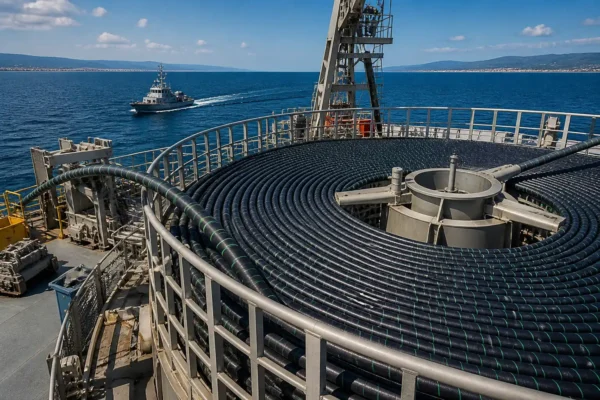
The latest weekly global fuel average jumped 11-13%. That move sits inside a broader squeeze on refined products. Conflicts involving Iran and Ukraine have idled large slices of refining capacity. Strait of Hormuz transit constraints continue to limit Middle East crude flows.
The U.S. Energy Information Administration now holds a Brent forecast near 85 dollars for third quarter 2026, with Hormuz constraints assumed to persist through August and residual disruptions of about 0.6 million barrels per day into 2027. Spot Brent recently printed near 87 dollars.
Product markets have stayed tighter than crude. Diesel and gasoline cracks remain elevated even on days when crude eases. That pattern explains why Georgian pumps moved in August even without a fresh local tax hike.
Five Chains Control Most Pumps
Five networks dominate retail: Wissol (largest footprint, roughly 170 stations), Gulf (about 149), Socar (115-plus), Rompetrol (about 81) and Lukoil (smaller transit focus). Portal and other independents fill gaps and often post the lowest stickers.
- Wissol leans on Greek EKO supply, extensive shops and the My Circle loyalty program that can shave up to 25 tetri.
- Socar markets Nano additive packages and Energy Card rewards.
- Gulf pushes G-Force performance grades and keeps strong highway coverage.
- Rompetrol sells Efix-branded products and frequently prices a few tetri under the top two.
- Portal and regional brands trade on price and fill rural or secondary urban sites.
Gaps between the majors rarely exceed 10-13 tetri on the same grade. Quality is broadly Euro 5 compliant across the big names. Drivers choose convenience, card discounts or the occasional independent bargain more than brand chemistry.
Drivers and Small Fleets Feel It First
A 7-tetri average lift on a 50-litre fill costs an extra 3.50 GEL. For a taxi or delivery van doing several tanks a week the monthly hit compounds fast. Families on fixed budgets cut weekend drives or delay longer trips.
Transport costs feed straight into retail prices. March reporting already linked earlier fuel jumps to a 1.5% monthly rise in the transport component of inflation. Goods that move by truck (almost everything) carry a higher fuel embedded cost within weeks.
Tourism season amplifies the pressure. Rental fleets and guesthouse operators in Batumi, Kazbegi and Svaneti watch diesel especially closely. Remote mountain routes have sparse stations; drivers who fail to top up early pay a premium or risk running dry.
Earlier Swings Set the Pattern
Prices have moved in steps all year. March saw multi-stage rises totaling 27-84 tetri depending on grade after global product spikes. April brought further 5-15 tetri adjustments at some brands. July’s national average for 95-octane sat near July national average near 3.77 GEL for 95, with diesel around 4.05. The current board is clearly higher.
- March 2026: successive lifts of 2-20 tetri as Middle East and Black Sea disruptions hit product markets.
- Early April: further 5-15 tetri moves; some stations approached 4 GEL on higher grades.
- July baseline: premium near 3.77 GEL, Super near 4.17, diesel near 4.05-4.20 across majors.
- 12 August: fresh 7-tetri average rise reported by BPN, Super grades at 4.23-4.27 at four of the five majors.
Taxes (excise plus 8% VAT) and the lari exchange rate remain constant background factors. When Brent or product cracks jump, the lari-priced pump follows within days because inventories are short and all supply is seaborne or overland imported.
Neighbor Prices and Saving Routes
Georgia still undercuts the EU average by a wide margin (EU gasoline near 1.92 euro per litre in recent summer data). It sits roughly level with or slightly under Turkey and about 10% under Armenia. Azerbaijan, an oil producer, remains far cheaper at roughly half the Georgian pump price.
Practical offsets exist:
- Portal or Rompetrol for the lowest sticker prices when location allows.
- Wissol My Circle or Socar Energy Card for 10-25 tetri discounts on volume.
- Steady highway speeds, proper tyre pressure and lighter loads cut consumption more than brand choice.
- Fill before remote mountain legs; highland mark-ups and scarce supply raise the true cost.
Cash and cards both work at majors. Full-service attendants remain the norm.
What the Cascade Looks Like From Here
What We Know
- Branded stations posted average lifts near 7 tetri in mid-August after a documented global fuel jump of 11-13%.
- Georgia has zero meaningful domestic crude or large-scale refining; every litre is imported.
- EIA and market data show continued Hormuz transit friction and elevated product cracks into late summer.
- Portal and loyalty programs currently offer the clearest local price relief.
What’s Unconfirmed
- Exact size and timing of the next retail move if Brent holds near current levels or product cracks ease.
- Whether any temporary tax relief or targeted subsidy appears; none has been announced with this hike.
- How quickly higher diesel feeds into measured CPI transport and food components in August-September data.
Brent trading near 87 dollars a barrel leaves little immediate room for a sharp pump reversal. If Hormuz flows improve and refining restarts accelerate, cracks can compress and Georgian prices can stabilize or ease a few tetri. Until then the second-order path runs through trucking rates, taxi fares and the cost of moving food and consumer goods.
Households already trimming discretionary driving will keep doing so. Fleet operators will pass costs or absorb thinner margins. The 7-tetri sticker change is small in isolation. Multiplied across every litre that moves the economy, it becomes the next quiet pressure on budgets.