Three Georgian citizens were arrested in Valencia this week on charges of residential burglary, money laundering and membership in an organized criminal group, Georgia’s Ministry of Internal Affairs said. A fourth suspect remains at large as Spanish and Georgian officers continue the hunt.
The Georgian police attaché joined Spanish colleagues in the operation. Searches of the detainees’ vehicles, temporary lodgings and belongings turned up stolen goods, large sums of cash and the specialized tools used to force entry. The Ministry framed the arrests as part of ongoing work with EU forces, Interpol and Europol through its European attachés.
What Officers Seized in the Valencia Sweep
Investigators said the three systematically targeted empty homes across Spain. They chose residences whose owners were away, entered with specialized tools, and took valuables and cash according to a pre-set plan. All legal procedures against the detainees are under way.
The haul mirrors earlier Spanish seizures from similar cells: jewelry, luxury watches, cash and burglary kits. Georgia’s Interior Ministry stressed that active cooperation with Spanish counterparts and European bodies remains central to hitting these networks.
- Charges: residential burglary, money laundering, organized criminal group membership
- Status: three in custody, fourth still sought
- Evidence: stolen items, large cash amounts, entry tools from personal searches and residences
- Role: Georgian attaché present with Spanish officers
Spanish police have not yet issued a detailed public release matching the Georgian statement, but the pattern of joint action is familiar.
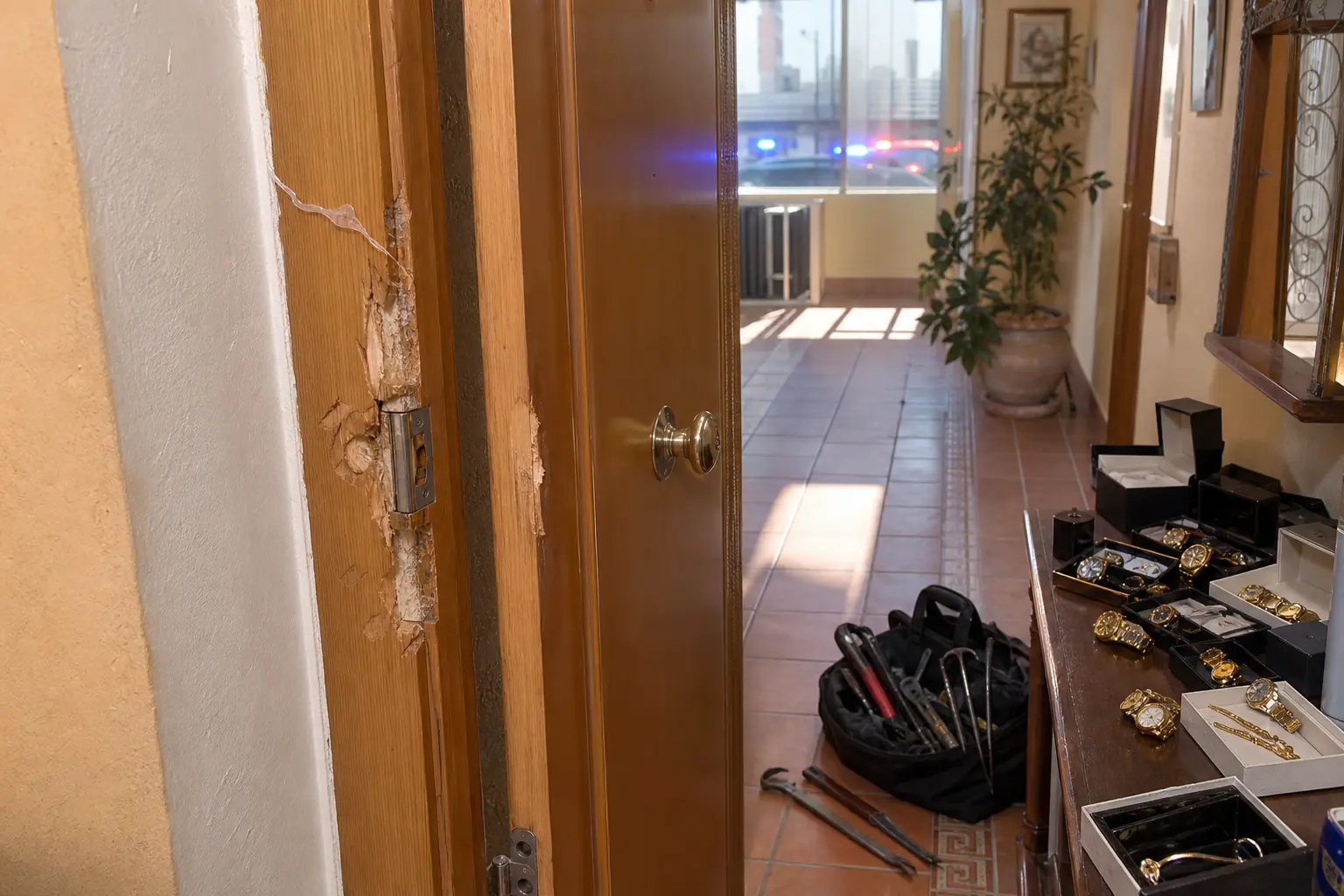
The May Raid That Took Down Thirteen
Only three months earlier, Spanish National Police working with the Georgian Interior attaché dismantled a larger itinerant group in Operation CACHABA. That May action produced 13 arrests linked to 27 apartment burglaries across Spain. Nine simultaneous raids hit addresses in Madrid, Valencia, Guadalajara and Alicante.
The group split into a Georgian-origin branch that selected and hit the homes and a Spanish branch that moved the loot through two legitimate jewelry businesses in Liria (Valencia) and Madrid. Eight of the 13 entered prison. Seizures included jewelry, three high-end watches, three gold ingots, 6,000 euros cash, melting equipment and marking tools.
| Operation | Date | Arrests | Key Details |
|---|---|---|---|
| CACHABA | May 2026 | 13 | 27 burglaries; Georgian executors + Spanish fences; Torrevieja base |
| Valencia cell | August 2026 | 3 (+1 sought) | Residential burglaries, laundering, tools and cash seized |
Both cases show the same division of labor and the same Spanish-Georgian coordination. The earlier probe began in December 2025 after officers spotted a Georgian cell operating out of Torrevieja.
How These Cells Pick and Enter Homes
Spanish Interior reporting on CACHABA laid out the method in detail. Members marked doors with adhesive threads to test whether owners had returned. They also rang doorbells or watched entrances. Once a home looked empty they used specialized tools for forced entry, focusing on jewelry, watches and cash.
Logistics stayed mobile. The group rented vehicles from a Torrevieja safe house and used rural hostels or short-term rentals in Guadalajara as temporary bases. They hit central districts in Madrid, Valencia, Valladolid and Ciudad Real. After each campaign the loot moved to the two jewel shops for melting or resale.
- Pre-select empty homes during holidays or absences
- Mark doors with glue threads or conduct direct checks
- Force entry with professional tools, grab high-value portable goods
- Move items quickly to Spanish receptadores for laundering
- Rotate temporary bases and rental cars to avoid patterns
The Valencia trio followed the identical empty-home selection and tool-based entry described by Georgian authorities. The continuity is hard to miss.
A Trail That Runs Back Decades
Georgian organized crime groups specializing in property crime took root in Spain after domestic crackdowns. The 2003 Rose Revolution and later laws criminalizing “thieves-in-law” membership pushed many operators abroad. Spain, with its tourist homes and jewelry market, became a preferred hunting ground.
- 2005: Operation Wasp, then Europe’s largest organized-crime raid, prompted Tariel Oniani and associates to flee Spain.
- 2013: Europol backed Spanish, French and Georgian forces in a major hit on the Kutaisi clan, netting multiple thieves-in-law.
- 2017: Another Europol-supported action arrested members of Georgian cells operating from Madrid.
- May 2026: CACHABA dismantled a 13-person dual-branch network after 27 burglaries.
- August 2026: Valencia operation nets three with a fourth still sought.
U.S. Treasury designated the broader Thieves-in-Law as a transnational criminal organization in 2017, citing money laundering, extortion and robbery across Europe and beyond. Spanish police and Catalan Mossos have repeatedly hit hierarchical cells in Barcelona and Madrid that target gold watches and jewelry, then fence them through cooperating shops. The groups maintain structure even after leaders are removed, using mobility and local partners.
Spanish Homeowners Carry the Direct Cost
Victims lose cash, family jewelry and the sense that an empty house is safe. Holiday periods and city-center apartments become prime windows. The CACHABA investigation alone clarified 27 such invasions between December 2025 and March 2026; officers continue trying to return seized items to owners.
Local jewelers who knowingly or unknowingly handle the metal face scrutiny and business disruption. Spanish branches that provide the laundering layer turn what looks like opportunistic theft into organized profit. For ordinary residents the pattern means repeated police advice on alarms, cameras and neighbor watches during absences.
Georgian communities in Spain also feel secondary pressure. Legitimate residents confront stigma after each high-profile bust, even as attachés work to separate criminal cells from the wider diaspora.
Attachés and Joint Teams Keep the Pressure On
Georgia’s Ministry of Internal Affairs repeatedly points to its police attachés stationed in European capitals as the practical link. The same model appeared in CACHABA and the Valencia action. Spanish National Police supply the street-level raids and local intelligence; Georgian officers supply language, identity checks and knowledge of the networks’ home-country ties.
Europol has long treated these groups as a priority. A 2017 Europol-supported Spanish French Georgian arrests operation showed the multi-country template still in use. Interpol’s Project Millennium tracks Eurasian organized crime, including Caucasian groups active in burglary and aggravated theft.
The results arrive in waves rather than a single knockout. Cells reconstitute, new members rotate in, and the empty-home jewelry model remains profitable. Each joint success still removes tools, cash and operators from the street for a time.
Another Cell Falls, the Method Endures
The three men held in Valencia and the man still being sought join a long list of Georgian-linked defendants processed through Spanish courts for the same suite of charges. Prosecutors will now move through the evidence of systematic targeting, the seized proceeds and the tools. Spanish judges have handed multi-year terms in earlier cases.
For Spanish police the work continues on the fourth suspect and any linked fences. For Georgian authorities the attaché channel stays open. The homes of Valencia and other Spanish cities remain the contested ground where this particular pattern of organized theft keeps resurfacing.