India marked eight years of the National Viral Hepatitis Control Programme on World Hepatitis Day 2026 with fresh tallies: more than 21 crore people screened and over six lakh patients given free treatment. Union Minister of State for Health Anupriya Patel used the occasion to reaffirm the push for a Hepatitis-Mukt Bharat by 2030.
The free-care network and primary-care reach are genuine achievements. They still sit beside a chronic infection reservoir measured in crores and a death toll that keeps India among the world’s heaviest contributors.
The Tallies the Ministry Released
Health Secretary Punya Salila Srivastava told the gathering that the programme has surpassed its district-level treatment-centre target. The country now runs 1,153 treatment centres, including more than 70 specialised sites for advanced care. Screening and treatment have also moved into more than 1.85 lakh Ayushman Arogya Mandirs.
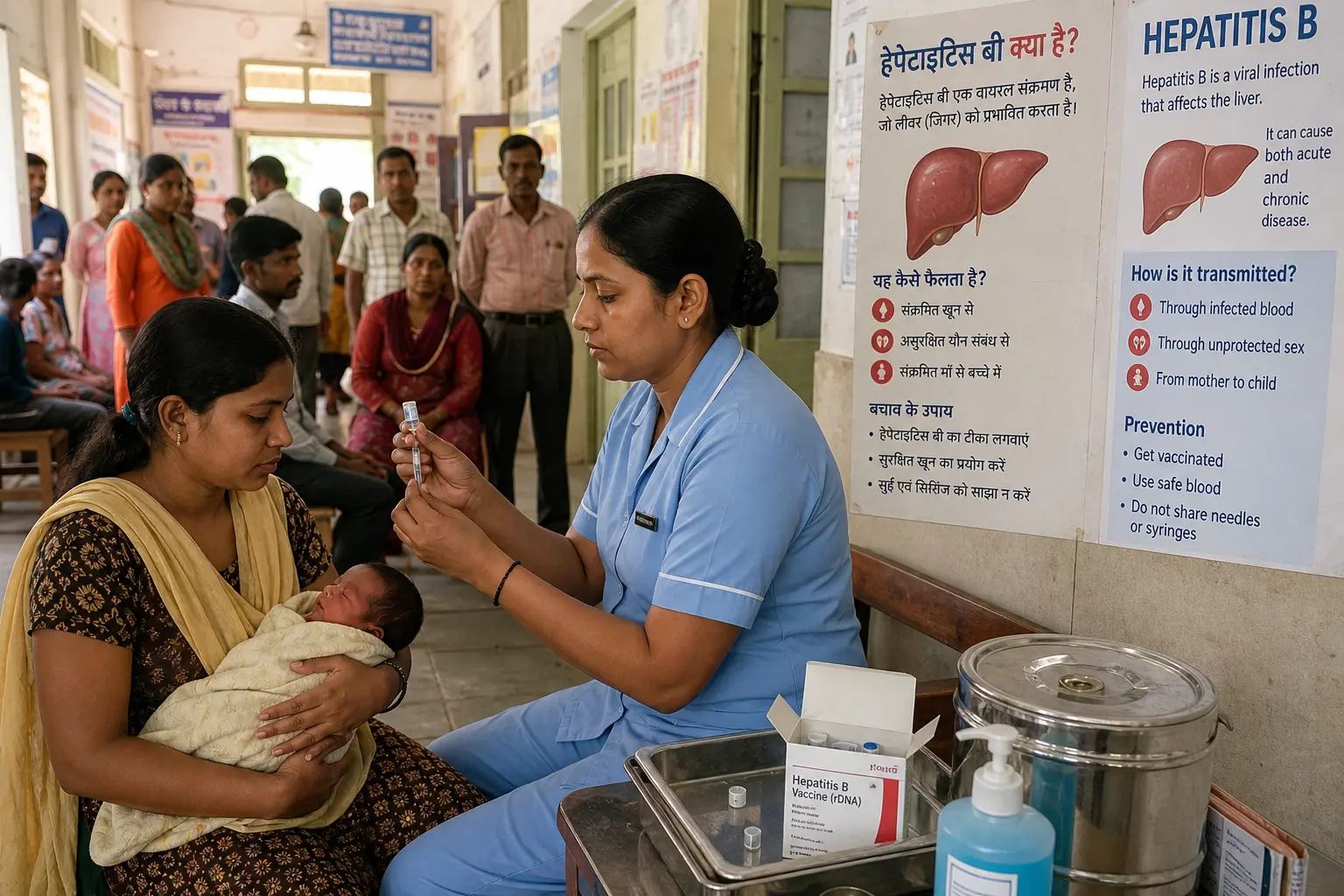
Maternal numbers stood out. More than 7.64 crore pregnant women have been screened for Hepatitis B. Some 2.24 lakh newborns of positive mothers received Hepatitis B Immunoglobulin. The minister said medicine costs have fallen to less than one dollar and that India is among the few countries offering free Hepatitis C treatment plus Hepatitis B management.
- 21 crore+ beneficiaries screened since 2018 launch
- 6 lakh+ patients given free treatment
- 1,153 treatment centres operating
- 7.64 crore pregnant women screened for HBV
Patel released new IEC posters on transmission routes and available services for states to circulate. She called Hepatitis B and C “silent killers” and pressed for sharper awareness so more people come forward for testing at government facilities.
India’s Share of the Global Death Toll
The same week the ministry celebrated scale, the broader picture remained sobering. The WHO Global Hepatitis Report 2026 findings place the world off track for 2030 elimination. In 2024 roughly 1.3 million people died from hepatitis B- and C-related cirrhosis and liver cancer. Chronic HBV alone caused about 1.1 million of those deaths, a rise since 2015.
Ten countries accounted for 69 percent of HBV-related deaths. India sits on that list. The same ten, including India, also drove a large share of HCV deaths. An Indian Journal of Gastroenterology editorial drawing on the Global Hepatitis Report 2024 estimated approximately 29.8 million people in India living with HBV in 2022 and roughly 98,305 HBV deaths that year.
Older planning documents painted an even larger historic carrier pool. The National Action Plan burden estimates put HBV carriers near 40 million and anti-HCV positive persons between roughly 5 and 13 million, with active HCV infection in the 3-9 million range depending on viremia assumptions. High-risk groups carry far heavier loads: people who inject drugs, patients on dialysis, multi-transfusion recipients and certain tribal populations.
Free Drugs Meet Primary-Care Reach
The programme’s design is straightforward. Uncomplicated cases start at district hospitals. Complicated cases move to referral centres. Over time services pushed outward into Ayushman Arogya Mandirs so screening and basic care sit closer to villages and urban wards. Convergence with the National AIDS Control Programme helps reach injecting-drug-user networks. The Universal Immunization Programme supplies the Hepatitis B birth dose and healthcare-worker vaccination. Maternal health programmes handle antenatal screening and HBIG for exposed newborns.
Patel noted that quality diagnostics are becoming more available and that the cost drop on medicines removes a major barrier once a patient is found. The Case-Based Management Information System, linked to the Ayushman Bharat Digital Mission, is meant to track patients from diagnosis through follow-up and cut further transmission.
On paper the platform exists. The National Viral Hepatitis Control Programme site lists treatment centres, guidelines, birth-dose protocols and a patient reporting route. The question is how many of the infected ever enter that cascade.
The Diagnosis Gap That Still Defines the Epidemic
Here the contrarian reading hardens. One detailed 2025 editorial, citing Global Hepatitis Report figures, put India’s HBV diagnosis rate at 2.4 percent and treatment coverage near zero for the broader infected population at that snapshot. Globally the 2026 WHO report found fewer than 5 percent of the 240 million people with chronic HBV on treatment in 2024, even though roughly half are eligible under newer guidelines. Only about 20 percent of those eligible for HCV treatment have received it since 2015.
Six lakh treated against a multi-crore chronic pool is not a rounding error. It is the gap. Screening 21 crore people is a large absolute number in a country of 1.4 billion; converting positive screens into confirmed diagnosis, staging and lifelong or curative treatment is the harder step. Many infections stay silent for decades until cirrhosis or liver cancer appears.
Hepatitis B and Hepatitis C as silent killers
Patel used that phrase while urging states to intensify awareness so people understand transmission routes and use the free services. The awareness deficit and the stigma that still surrounds blood-borne infections keep people away from testing even when the drugs cost less than a dollar.
| Metric | Reported figure | Context |
|---|---|---|
| People screened (NVHCP) | >21 crore | Cumulative since 2018 |
| Patients treated free | >6 lakh | HBV management + HCV cure |
| Estimated chronic HBV | ~29.8 million (2022) | Global Hepatitis Report cited |
| HBV diagnosis rate (snapshot) | 2.4 percent | Editorial citing 2024 report |
| Treatment centres | 1,153 | Above one-per-district target |
Independent voices on X and in medical journals keep returning to the same point: the infrastructure is no longer the binding constraint. Finding the undiagnosed majority is.
Birth Dose, Pregnancy Screening and the Vertical Route
Prevention of mother-to-child transmission is one of the highest-yield levers. Patel said Hepatitis B birth-dose coverage under the Universal Immunization Programme has crossed 92 percent. She also flagged that only about 65 percent of pregnant women are currently screened for Hepatitis B and called for 100 percent so every exposed newborn can receive vaccine plus HBIG within 24 hours.
Independent coverage estimates have often run lower than administrative claims for the timely birth dose, especially outside institutional deliveries. The gap between reported coverage and the 95-plus percent needed for elimination targets still matters. Rural and tribal areas, where prevalence runs higher in NFHS-linked analyses, remain harder to reach with both screening and the first hour of life vaccine.
Healthcare-worker vaccination against HBV received a fresh push as well. Occupational exposure remains a preventable source of new infections inside the system that is supposed to treat them.
How AIDS and Immunization Programs Feed the Effort
NVHCP does not run in isolation. Officials repeatedly credit three convergences:
- National AIDS Control Programme outreach and harm-reduction links for high-risk groups, especially people who inject drugs
- Universal Immunization Programme delivery of birth dose and healthcare-worker shots
- Reproductive and Child Health platforms for antenatal HBsAg screening and HBIG logistics
Additional Secretary Aradhana Patnaik underlined early detection and treatment of Hepatitis C among injecting-drug-user populations as a core focus. WHO Representative to India Dr Yvan J.-F. Hutin joined senior ministry officials at the event, signalling continued technical partnership.
That whole-of-government framing is the bet. It multiplies reach without building a completely separate vertical. It also creates dependence on the strength of the partner programmes. Where NACP harm reduction or institutional delivery rates are weak, hepatitis prevention weakens with them.
Closing the Remaining Distance to 2030
Four years remain until the SDG 3.3-linked target year. The ministry’s own language on Tuesday shifted from celebration to urgency: intensify efforts, reach every infected person, use the digital case system properly, push states to 100 percent antenatal screening, expand awareness, protect healthcare workers, and keep high-risk groups in view.
The free drugs, the 1,153 centres and the Ayushman Arogya Mandir footprint give India tools many countries still lack. The diagnosis rate of 2.4 percent cited in recent analysis, the tens of millions still living with untreated chronic infection, and India’s place on the global death shortlist show why those tools have not yet produced elimination-level results.
Patel closed by calling health a shared responsibility across Centre, states and society. The next phase will be measured less by new centres opened and more by how many of the silent majority are found, linked and kept on treatment before cirrhosis and cancer claim them.