OpenAI began letting ChatGPT read US users’ Apple Health data and medical records on July 23, widening a feature called Health beyond the small group that had been testing it. Connect an account, and the chatbot can factor a food allergy into restaurant picks or an old injury into workout advice, remembering that context across future chats.
The timing is awkward. Less than six months earlier, Apple had quietly shelved its own attempt at the same idea, an AI health coach it once called one of the company’s biggest health care contributions. And the week ChatGPT Health went wide, a Florida man’s lawsuit accusing the chatbot of nearly killing him with bad medical advice was making headlines of its own.
What Health in ChatGPT Does
Health lives in the ChatGPT sidebar, where users connect accounts, review records and trends, manage what is shared, and jump back into earlier health conversations. Typing @Health into a message tells the chatbot to pull in that context explicitly rather than waiting to be asked.
Supported connections include Apple Health, medical records from participating US hospital systems, and health-data services One Medical and Function Health, according to OpenAI’s own announcement. The feature lands on top of a user base OpenAI says now sends 2.5 billion prompts to ChatGPT every day, a scale that turns any new personal-data feature into a fairly large experiment.
OpenAI says it built Health after early users complained about medical history scattered across different providers and apps, with no single place to make sense of it.
The most useful part has been turning scattered medical history into something I can actually understand and explain.
Blake, identified only by a first name and described as a technical program manager, gave that assessment in OpenAI’s announcement of the feature. The company says personalized answers are only as good as the records behind them, and warns that connected data can be incomplete or stale, including medication lists nobody updated after a prescription ended.
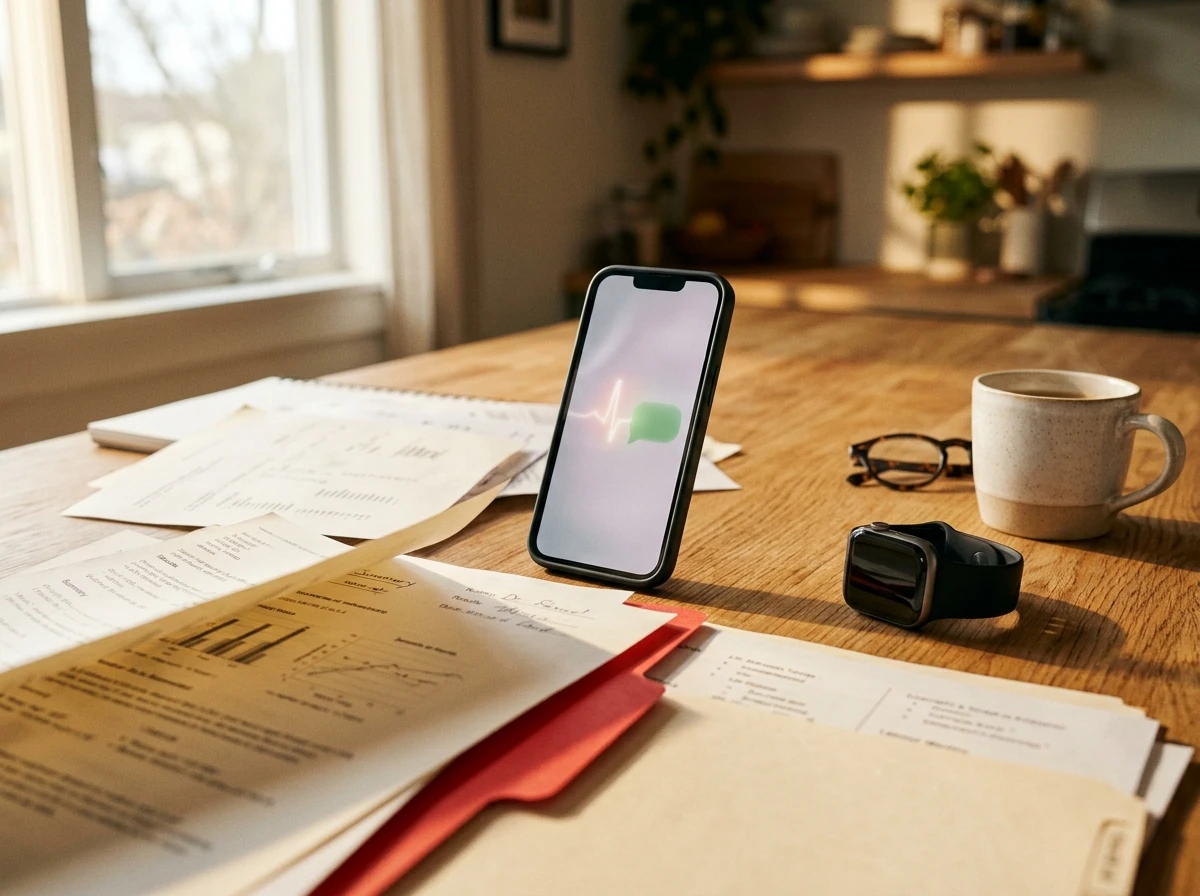
The Apple Ambition That Never Shipped
Apple Health has spent a decade becoming the default place iPhone and Apple Watch owners store heart rate, sleep and activity data. Apple’s own plan for that data was Project Mulberry, an AI health coach meant to turn Watch readings, surveys and lab results into personalized recommendations on fitness, nutrition, sleep and mental health.
That plan fell apart in February. Jeff Williams, Apple’s longtime chief operating officer overseeing health, retired, and Eddy Cue, the company’s senior vice president of services, took over the health and fitness teams. Reviewing internal builds of Mulberry, Cue reportedly concluded the product was not polished enough next to focused wearable rivals Oura and Whoop, which already ship daily recovery scores and lifestyle insights inside their own apps. Regulatory concerns tied to the US Food and Drug Administration and doubts about the AI’s reliability reportedly factored in too.
Apple has not killed the underlying work. Individual pieces of Mulberry are expected to surface inside the existing Health app over time, rather than as the standalone coaching service once planned.
Two Health Bets, Side by Side
Set next to each other, the two companies’ approaches to the same pile of health data look almost like mirror images.
| Aspect | Apple’s Project Mulberry | OpenAI’s Health in ChatGPT |
|---|---|---|
| Status as of July 2026 | Shelved as a standalone service in February 2026 | Widened to all eligible US users on July 23, 2026 |
| Data pulled from | Apple Watch sensors, iPhone, user surveys, lab results | Apple Health, hospital systems, One Medical, Function Health |
| Core promise | Personalized daily fitness and wellness coaching reports | Conversational answers that draw on personal health history |
| What changed | Leadership shift under Eddy Cue cited reliability and competitiveness gaps | Expanded from a smaller test group after gathering early user feedback |
Apple built the plumbing. OpenAI is now the one using it to answer questions Apple’s own coach was supposed to answer first.
A Lawsuit Lands the Same Week
Scott Winters, a 55-year-old pastor and real estate professional in Florida, filed suit against OpenAI in San Francisco County Superior Court in July, according to multiple outlets including CBS News and Futurism. The complaint accuses ChatGPT of the unauthorized practice of medicine and argues a general-use chatbot should be held liable for medical advice gone wrong.
Winters says he repeatedly asked ChatGPT-4o about dizziness and unstable blood pressure through 2025, and the bot dismissed the symptoms as minor, allegedly telling him to stay recliner bound. Weeks later he suffered a massive pulmonary embolism that one of his own doctors linked to prolonged immobility. Hours before the medical emergency, Winters says he asked whether groin tenderness warranted a hospital visit; the chatbot allegedly responded that God did not design his body to endlessly fail.
It is at least the second lawsuit against OpenAI in three months alleging dangerous medical advice from ChatGPT, with one case reportedly tied to a death, Gizmodo has reported. None of it stopped the Health rollout from reaching every eligible account this week.
How OpenAI Says It Is Handling Your Data
OpenAI built a separate set of rules for health data that differ from its normal ChatGPT defaults, spelled out in its announcement and product settings.
- No model training: connected medical records, Apple Health data, and conversations that use them are excluded from foundation model training and ad targeting, regardless of a user’s standard settings.
- Extra encryption: Health data gets additional encryption layered on top of the encryption already applied to every ChatGPT conversation at rest and in transit.
- Permission by default: ChatGPT asks before using medical records or Apple Health information unless a user grants standing access under the Plugins settings.
- A 30-day deletion window: disconnecting a source starts deleting its synced data within 30 days, though anything already referenced in past conversations sticks around until those chats are deleted.
Memories can still form from Health conversations, OpenAI says, just not directly from the connected records or Apple Health data itself. Turning on Temporary Chat, or disabling memory altogether, stops a conversation from generating one.
Physicians Graded the Model Before Launch
OpenAI says it worked with physicians to build HealthBench Professional, its evaluation for complex health tasks, before letting Health anywhere near real medical records.
- Hundreds of physicians helped write HealthBench Professional’s scenarios and grading criteria, per OpenAI.
- Six categories graded: accuracy, safety, communication, completeness, context awareness and escalation to professional care.
- Every GPT-5.6 variant scored higher than GPT-5.5 on HealthBench Professional, OpenAI says.
- Free versus paid: Free accounts get GPT-5.5 Instant for Health chats; paid Plus and Pro plans get GPT-5.6 Sol.
Physicians also tested Health with real connected data before OpenAI shipped it, the company says. OpenAI still frames the result as assistance, not replacement, for professional care.
Does This Replace Talking to Your Doctor?
No. OpenAI says plainly that ChatGPT can still make mistakes and does not replace the judgment or care of a qualified medical professional, and it advises users to check anything important against their original medical record.
That caution sits next to a pending lawsuit arguing a chatbot already failed that exact test once. Getting started is simple by comparison: users 18 and older can open Health from the ChatGPT sidebar or More menu, tap Get Started, and connect a supported account, with syncing that OpenAI says can take several minutes.
Apple’s coaching ambitions, for now, are being folded piecemeal into an app update rather than shipped as the standalone product once promised. OpenAI’s version is already live on every eligible ChatGPT account in the country.
Disclaimer: This article is for informational purposes only and does not constitute medical advice; anyone with a health concern should consult a qualified medical professional, and figures cited here are accurate as of publication.