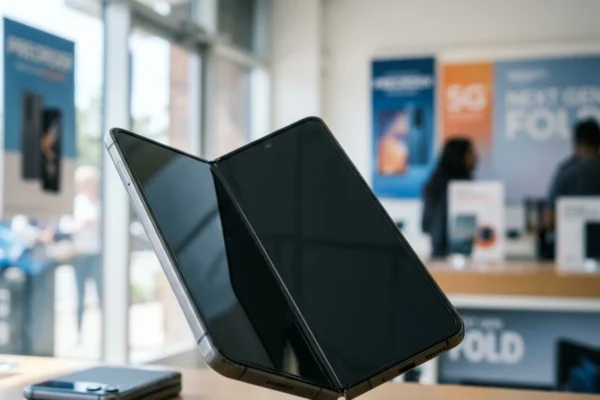
Samsung Electronics and SK Hynix have committed $950 billion in long-term chip supply to American technology companies, the largest bet either firm has placed on the artificial intelligence boom. The deals, unveiled last Friday at an AI summit in San Francisco, lock in memory orders from Nvidia, Broadcom and Microsoft into the next decade.
The contracts make Samsung and SK Hynix two of the most important suppliers left standing in a memory market already running short of chips. They also hand years of factory output to a small circle of buyers, at a moment when Washington and Seoul are still smoothing over a rougher patch in the same relationship.
Two Chipmakers, Four Buyers, One $950 Billion Number
The total splits cleanly between South Korea’s two memory giants. SK Hynix accounts for $750 billion of the commitments, and Samsung Electronics accounts for the remaining $200 billion, a combined sum Seoul Economic Daily converted to roughly 1,390 trillion won.
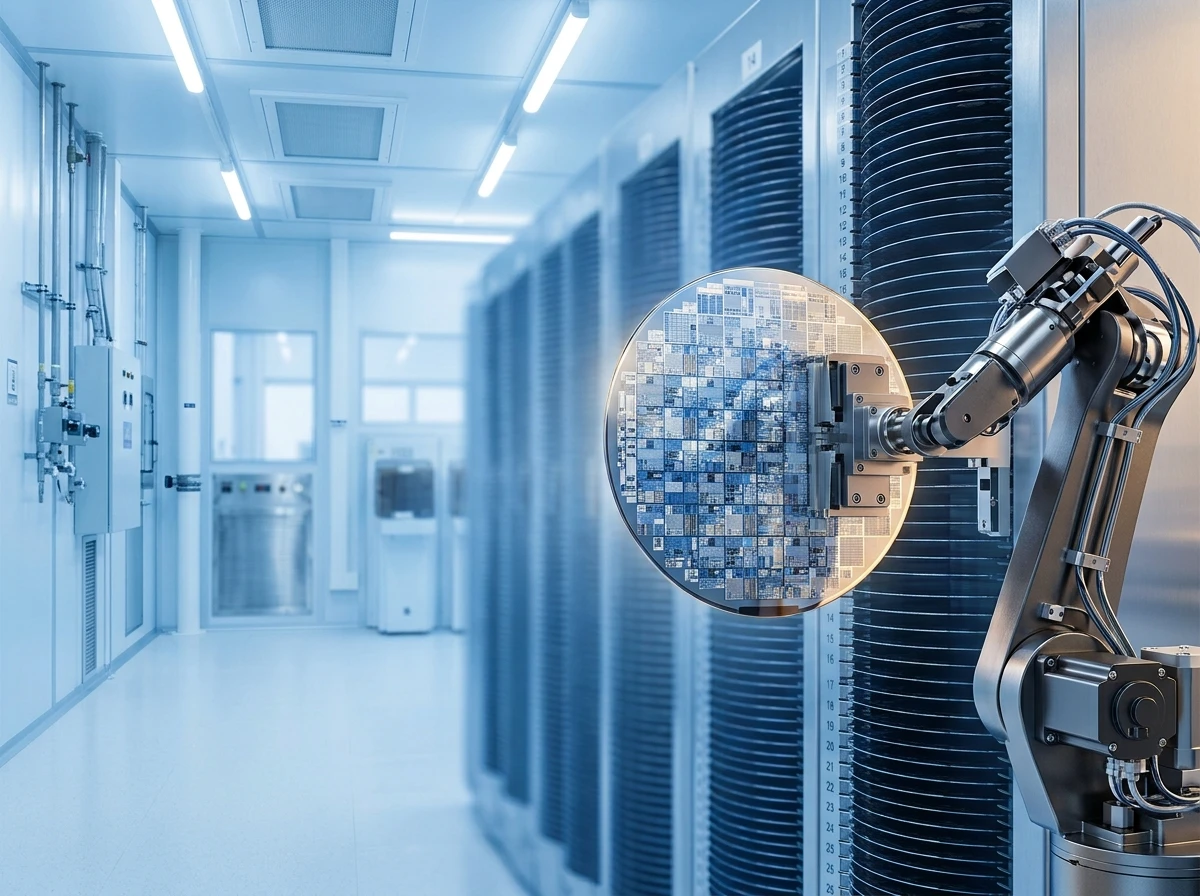
The biggest single piece belongs to SK Hynix and Nvidia. CNBC reported the two companies signed a five year contract worth more than $500 billion covering next generation high bandwidth memory, known as HBM, the stacked chip design that lets AI processors move data fast enough to train and run large models. SK Hynix and Nvidia also agreed to jointly develop future HBM generations rather than simply buying and selling off a catalog. The rest of SK Hynix’s total comes from an HBM4 supply extension to Microsoft and other American buyers.
| Chipmaker | US Partner | Deal Value | What It Covers |
|---|---|---|---|
| SK Hynix | Nvidia | More than $500 billion | Five year contract for HBM4 memory and joint development of next generation AI training chips |
| SK Hynix | Microsoft and other US buyers | Remainder of $750 billion total | HBM4 supply extension and additional long term agreements |
| Samsung Electronics | Broadcom | $200 billion | Memorandum of understanding through 2030 covering HBM supply, sub-2 nanometer foundry work and advanced packaging |
One distinction matters here. Samsung’s arrangement with Broadcom is a memorandum of understanding, not a signed purchase contract. SK Hynix’s Nvidia deal is described as a binding five year agreement. Both count toward the $950 billion headline, but only one locks in the way a supply contract usually does.
Seoul’s President Sells AI Optimism in San Francisco
The announcements landed during a two day trip by South Korean President Lee Jae Myung, who met the chief executives of four American tech giants, including Nvidia’s Jensen Huang and OpenAI’s Sam Altman, to press for deeper investment in Korea’s own AI buildout. Nvidia used the visit to detail its expanded partnerships across Korea’s chip and AI industry, framing the memory deals as part of a broader infrastructure push rather than a one-off transaction.
Over dinner with the visiting executives, Lee pitched Korea’s growth outlook as proof the AI bet was paying off.
Last year, it was 1 percent, but this year we’re expecting probably upwards of 3 percent.
Lee Jae Myung, South Korea’s president, made the comparison to underline how much the AI and chip buildout has already moved his country’s growth numbers.
The timing tracks with what Korea’s own trade data shows. Semiconductor exports hit $44.8 billion in June, and shipments to the United States alone rose 78.6% to $20.02 billion that month, driven by AI server investment and demand for HBM and DDR5 memory. Outbound chip shipments kept climbing into July, up 180% year over year in the month’s first twenty days. Memory has gone from a commodity that traded on short cycles to the scarcest input in the AI supply chain, and prices are rising accordingly.
The Squeeze Coming for Everyone Else
Five year supply contracts are new territory for an industry that used to negotiate memory prices annually or even quarterly. Locking that much capacity to Nvidia, Broadcom and Microsoft means less of it is available to anyone buying on shorter terms, in a market where the US government already treats Korean chip capacity as a strategic asset worth tracking as part of America’s own AI hardware supply chain.
That reshuffling has losers as well as winners. Buyers without a five year contract now compete for whatever memory capacity Samsung and SK Hynix have not already promised away, including:
- Smartphone and laptop makers that need the same DRAM and NAND lines now booked years out
- Automakers building driver assistance and infotainment systems that depend on steady chip supply
- Smaller AI companies without the balance sheet to sign multi-year contracts, left buying on the spot market
- Chinese chipmakers already restricted from advanced US-linked equipment, watching allocation tilt further toward American buyers
None of those buyers show up in the $950 billion figure, but all of them will feel its effects the next time they place an order.
A $350 Billion Down Payment Made This Possible
This week’s deals did not happen in a vacuum. They follow a separate, government-to-government agreement reached last year, when South Korea pledged $350 billion in US investment to avoid the Trump administration’s steepest tariffs. Seoul and Washington agreed in principle in July 2025 and finalized the terms that October, a package the Congressional Research Service outlined for lawmakers as $200 billion in direct cash investment, capped at $20 billion a year, plus $150 billion aimed at reviving US shipbuilding.
In return, Washington cut its tariff on Korean exports, including autos, from 25% to 15%. The Korea Economic Institute of America’s analysis of the pact noted it also guaranteed Korea would not be treated worse than Taiwan once Washington’s Section 232 investigation into chip imports concluded. That investigation produced a 25% global tariff on certain semiconductor imports this past January, and Korea’s carve-out held.
The chip industry had already signaled where this was heading. In October 2025, Samsung and SK Hynix joined OpenAI in a letter of intent to supply 900,000 DRAM wafers a month for its Stargate data center project. This week’s $950 billion figure is that same logic playing out at a much larger scale, with binding numbers attached.
The Detained Workers Washington Hasn’t Forgotten
The celebratory tone in San Francisco sat against a harder backdrop than either government has fully resolved. On September 4, immigration agents detained more than 475 workers, over 300 of them South Korean nationals, at a Hyundai and LG battery plant construction site in Georgia, the largest single-site immigration enforcement action in US history. Footage of workers led out in chains sparked outrage across South Korea, a country that has treated its alliance with Washington as close to sacred for seven decades.
South Korea’s government scrambled to respond. Its industry minister flew to Washington to manage the diplomatic fallout, and officials negotiated the workers’ release within days. The episode never fully left the relationship’s background, even as this week’s chip deals were framed as proof of how tightly bound the two economies have become.
Korean commentators noted the contrast without needing much explanation. The same alliance that shackled factory workers in September is the one Samsung and SK Hynix are now betting $950 billion on for the next five years.
Where the Boom Could Crack
Memory chips have always moved in cycles, boom years followed by gluts that crush prices just as fast as they rose. East Asia Forum, the policy publication run out of the Australian National University’s Crawford School, warned this month that Korea’s chip boom carries real risk of flatlining under combined pressure from Washington’s export controls and Beijing’s push for chip self-sufficiency. Five year contracts remove some of that volatility for Samsung and SK Hynix, but they also remove the flexibility to pull back if AI spending slows before 2030.
The MOU with Broadcom underscores the point. Memoranda of understanding get renegotiated or quietly dropped when conditions change; five year supply contracts are harder to walk away from. Not every dollar in the $950 billion figure carries the same weight.
The contracts run to 2030. For the first time, Samsung and SK Hynix have bet five years of factory capacity on the AI boom lasting that long.
Frequently Asked Questions
What Is HBM and Why Are Nvidia and Broadcom Buying So Much of It?
High bandwidth memory, or HBM, stacks multiple layers of DRAM chips vertically and connects them with ultra-fast wiring, letting AI processors pull data far faster than standard memory allows. Nvidia and Broadcom build the processors that train and run AI models, and both companies need HBM supply secured years in advance because so few factories in the world can make it at the volumes AI data centers now require.
Is the Samsung-Broadcom Deal a Signed Contract?
Not yet in the strictest sense. Samsung and Broadcom signed a memorandum of understanding, a statement of intent that outlines terms through 2030 but stops short of the binding purchase commitments in SK Hynix’s five year Nvidia contract. Companies typically convert MOUs like this into definitive agreements over the following months.
What Was South Korea’s Earlier $350 Billion Deal With the US About?
Seoul agreed in 2025 to invest $350 billion in US industries, split between a $200 billion cash fund capped at $20 billion annually and $150 billion earmarked for US shipbuilding, in exchange for lower tariffs on Korean exports and a guarantee that Korean semiconductors would not face harsher treatment than Taiwan’s under any future chip tariffs.
Will This Deal Push Up Phone and Laptop Prices?
It could, if memory makers keep prioritizing AI customers over consumer electronics buyers. Samsung and SK Hynix have already been redirecting DRAM and NAND production toward AI customers, which is part of why memory prices have been climbing broadly this year, and device makers without long-term contracts are the ones most exposed to that squeeze.
What Happened to the Workers Detained in the Hyundai Raid?
South Korea negotiated their release within days of the September raid and pushed for their quick return home on a chartered flight. Roughly two months later, some of those workers went back to the United States to resume their jobs at the same Georgia site, though the episode left lasting caution among Korean firms about sending staff to US construction sites.