DeKalb County fired and arrested Sgt. Kabiru Salawu on July 17 for misusing Flock Safety’s license plate camera network. He is the 17th Georgia law enforcement officer caught abusing the same tool in months. Salawu, a 17-year veteran of the sheriff’s office, was booked into the county jail without bond. The agency has not said what data he pulled or why.
The arrest lands as Flock’s own audit tool keeps finding exactly this kind of misuse. But a different fight is spreading well past Georgia. Cities from Los Angeles to small towns in Illinois are canceling Flock contracts entirely, over a reach no single officer could manage alone.
DeKalb Fires and Charges a 17-Year Veteran in One Day
Sgt. Kabiru Salawu joined the DeKalb County Sheriff’s Office in August 2009. Seventeen years later, an internal probe caught him accessing the agency’s Flock Safety system without authorization, according to a news release the sheriff’s office issued Friday.
He was fired immediately. Deputies booked him at the DeKalb County Jail on a felony charge of violating his oath of office and a misdemeanor count of misusing license plate data. He remains held without bond.
“The public expects and deserves integrity from every member of the agency,” Sheriff Melody Maddox said in a statement. “The misuse of law enforcement technology or confidential information for any unauthorized purpose is a serious breach of the public’s trust and will not be tolerated. When misconduct is identified, we act swiftly, hold those responsible accountable, and remain committed to the highest ethical standards.”
What we know:
- Salawu was fired and arrested Friday, July 17.
- He faces a felony violation of oath of office and a misdemeanor count of misusing license plate data.
- He is being held without bond at the DeKalb County Jail.
What remains unconfirmed:
- Which license plates, vehicles or people he searched.
- His motive for the searches.
- Whether his case connects to any of the other 16 Georgia officers charged this year.
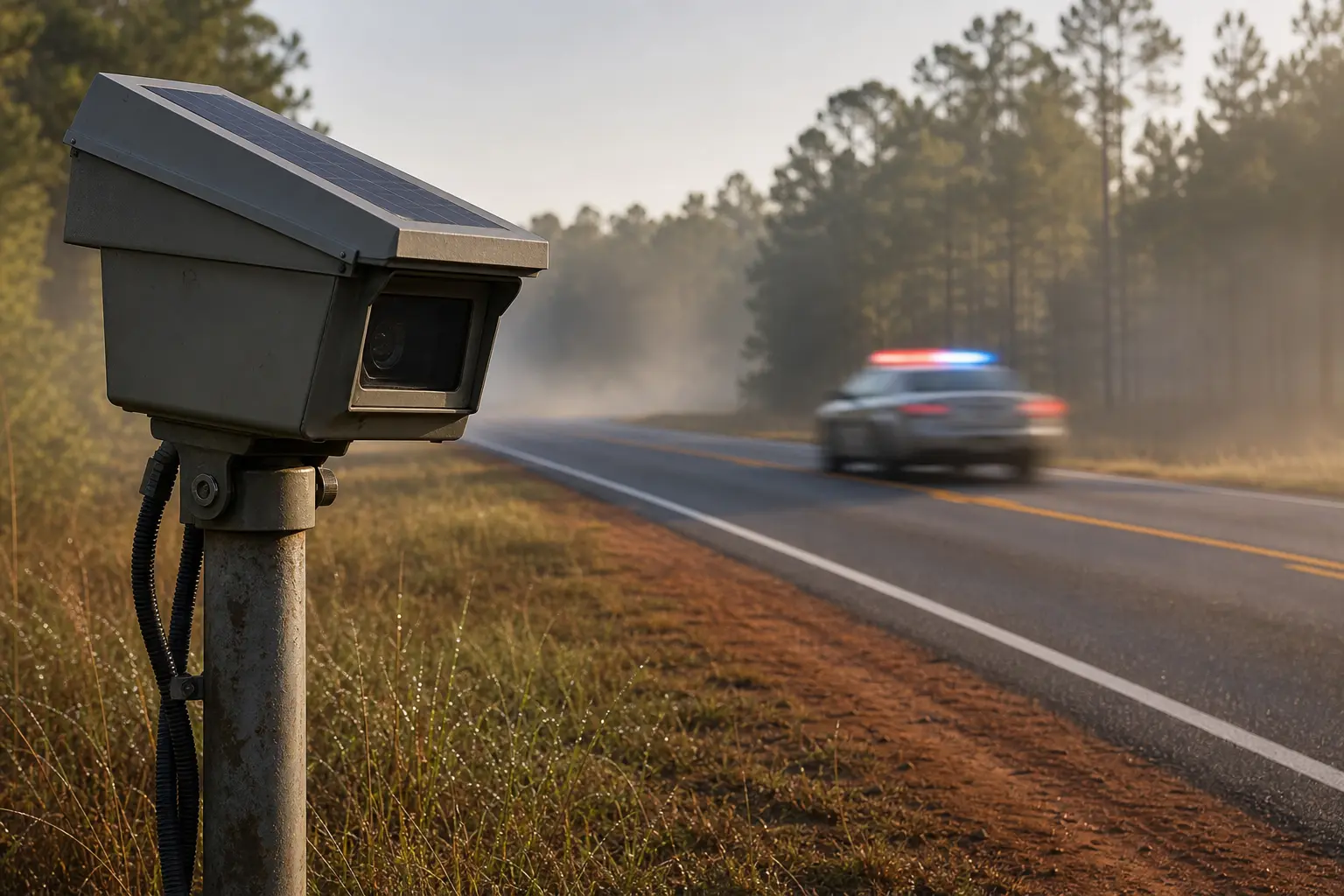
The Misuse List Now Spans Six Georgia Agencies
Salawu’s case is not isolated. Earlier in July, five officers with the Albany Police Department were accused of running personal searches through Flock camera data, according to a Georgia Bureau of Investigation (GBI, the state’s lead criminal investigative agency) report. Albany requested the GBI’s help after an internal audit exposed the pattern.
Albany’s Five Officers, Named and Charged
All five were fired before the charges were filed. Their cases vary widely in scope.
- Nicholas Richardson, 30, faces 12 counts of misusing license plate data.
- Tytianna Davis, 27, faces six counts.
- Jade Jackson, 32, faces three counts.
- Issac Whitus, 24, faces three counts.
- Brittney Smith, 23, faces two counts.
The Tally Across DeKalb, Richmond, Fayetteville, Cherokee and Greene
Add DeKalb, and the case now touches six separate Georgia agencies.
| Agency | Officers Charged | Case Status |
|---|---|---|
| Albany Police Department | 5 | Terminated; charged after GBI probe |
| Richmond County | 4 | Charged with misuse and oath violations |
| Cherokee County Sheriff’s Office | 3 deputies | Charged; reasons undisclosed |
| Fayetteville Police Department | 3 | Fired for looking up personal tag numbers |
| DeKalb County Sheriff’s Office | 1 (Salawu) | Fired; held without bond on felony charge |
| Greene County Sheriff’s Office | 1 deputy | Charged with misuse and oath violation |
That is 17 officers and deputies across six agencies, all accused of the same two offenses: misusing license plate data and violating their oath of office.
Flock Says Its Own Audit Tool Is Catching the Cheaters
Flock Safety’s own history runs through DeKalb County. Company lore traces its founding to a DeKalb County detective who told chief executive Garrett Langley that a homemade camera prototype had helped crack a break-in case. Langley called his two co-founders and told them to quit their jobs.
Flock, which says its audit records played a key role in identifying the unauthorized Albany searches, has leaned on that history to defend the technology. The company said the episode “demonstrates the importance of designing systems with accountability built in.”
Paige Todd, a Flock co-founder, put it more bluntly. “Technology doesn’t create misconduct. People do,” she said in the same statement. “The question isn’t whether someone will attempt to misuse technology. The question is whether the technology is designed to expose that misuse and help agencies hold bad actors accountable.”
“The way the audit assistance tool works is very similar to how your bank account, when you log in from a new city when you’re traveling, says, ‘Hey, I want to double check who you are.’ It’s not saying that you’ve done something wrong, it’s just saying that this is abnormal.”
Garrett Langley, Flock’s co-founder and chief executive, described the tool that way in comments sent to USA Today. He called the wave of Georgia arrests “disappointing” but said they prove anyone using license plate readers should be held accountable.
What Else Were Flock’s Cameras Doing in DeKalb This Spring?
Two months before Salawu’s arrest, Flock’s cameras were doing exactly what the company says they are built for, a few miles from where he worked. Police found a shooting victim in DeKalb County in May, and the same camera network that a deputy is now accused of abusing helped SWAT catch her killer within hours.
DeKalb County Police responded to a shots fired call near Martins Crossing and Hemingway Road on the afternoon of May 18 and found a woman who had been shot multiple times inside her car. She had tried to drive away and crashed a short distance later. She was pronounced dead at the scene.
Flock cameras in the county identified the suspect’s vehicle and tracked it to a nearby street, the company said in a news release issued July 20. A SWAT team took the driver into custody without further incident.
“Cases like this reflect how Flock’s technology is designed to work: giving investigators real leads quickly while upholding rigorous standards for privacy and responsible use,” the company said.
Los Angeles and Dozens of Cities Are Already Walking Away
Georgia’s misuse cases are the local face of a fight playing out nationwide. Flock’s own numbers, paired with independent reporting, show how large that fight has grown.
- 12,000+ customers now hold Flock contracts, the company says.
- 80,000+ cameras make up its nationwide network, Business Insider has reported.
- 50+ cities and towns, including Los Angeles, have canceled or refused Flock contracts.
- 47 agencies were cut off from access after an internal audit found unauthorized data routing to federal agencies, Tech Times reported.
The Los Angeles Police Department recently chose not to renew its agreement with the company. Kaukauna, Wisconsin, and Framingham, Massachusetts, have made similar moves.
In Illinois, Evanston and Oak Park both canceled their contracts after learning Flock had routed local search data to federal agencies without the cities’ authorization, the same kind of federal sharing risk that worries Georgia privacy advocates. Flock has said its own leadership did not know the routing was happening. Evanston later discovered the company had quietly reinstalled cameras it had been ordered to remove, and had to send a cease and desist letter before they came down for good.
The American Civil Liberties Union has pushed back at the federal level too, backing a proposal that would have barred cities and states from using license plate readers under a federal highway funding bill, except for toll collection.
Privacy Advocates Blame the Network Itself
DeFlock Atlanta, a local group focused on Fourth Amendment concerns around automated license plate readers (ALPRs, camera systems that photograph and log every passing vehicle), posts signs beneath the cameras warning drivers their “movements have just been logged into a private, searchable database.”
The national DeFlock organization describes the cameras as “AI-powered cameras that capture and analyze images of all passing vehicles, storing details like your car’s location, date, and time,” collected no matter whether the driver has ever been suspected of a crime. The group also worries the data could reach US Immigration and Customs Enforcement (ICE, the federal agency that enforces immigration law) and be used to track people in their own neighborhoods.
The ACLU of Georgia has flagged a quieter shift in Flock’s paperwork. The group found the company dropped language promising it would not sell customer data from its contract terms earlier this year.
Distrust has turned physical in Barrow County, an hour northeast of Atlanta. Someone used what appeared to be a saw to cut down three roadside Flock cameras along Double Bridges Road and sever their solar power lines. A fourth camera near Apalachee High School was damaged the same weekend. The sheriff’s office is investigating the damage as a felony, the same charge Georgia law applies to anyone caught destroying the devices.
A Bill Moving Through Georgia Would Tighten the Rules
Georgia is not starting from zero. State law already limits how long agencies can hold plate reader data and bars its public disclosure. Seventeen arrests in a few months show how much daylight remained between that law and daily practice.
A newer bill moving through the state legislature would go further. It would cap which crimes can trigger an ALPR search, tighten retention limits and require every agency to file annual audit reports with lawmakers and the public, according to reporting by the Courier-Herald.
Former state Rep. John Pezold, a west Georgia Republican who helped write an earlier version of that framework, has been fielding questions about how to strengthen it as new cases pile up, the Cobb County Courier reported.
Nationally, the Institute for Justice, a libertarian public interest law firm, has tracked at least 21 cases of officers misusing license plate readers, several of them in Georgia. Most surfaced only after a victim complained, often about stalking, not because an internal audit caught them first.
“We support over 7,000 law enforcement agencies, over a million crimes a year,” Langley said. “Our responsibility to safeguard that technology has gone up.”
Frequently Asked Questions
Can Georgia Drivers See Where Flock Cameras Are, or Opt Out?
Some counties post more information than others. Barrow County built a transparency portal listing more than 300 camera locations after this month’s vandalism incidents, and Sheriff Jud Smith said supervisors get an automatic flag when a tag is searched repeatedly. There is no statewide opt out. A camera on a public road logs every plate that passes it, regardless of suspicion.
How Long Does Flock Keep License Plate Data Before Deleting It?
Thirty days is the industry default nationally, though it varies by agency contract. Some departments keep records for as little as seven days, others for up to 90. Georgia’s own code limits retention as well, though the exact window still depends on the agreement each department signs.
Who Founded Flock Safety, and How Big Is the Company?
Garrett Langley, Matt Feury and Paige Todd started the company in 2017, building early camera prototypes by hand. Flock is now a private company headquartered in Atlanta and valued at roughly $7.5 billion, according to Berkeleyside, with close to $700 million in venture capital behind it.
What Happens to Someone Convicted of Damaging a Flock Camera in Georgia?
Georgia treats it as a felony, not simple vandalism. The Barrow County Sheriff’s Office, which is investigating four damaged cameras this month, has said suspects will face criminal charges, fines and restitution once identified, and be prosecuted to the fullest extent of the law.
Has Any Georgia City Dropped Flock Like Los Angeles Did?
Georgia’s pushback so far has taken the shape of camera vandalism in Barrow County and advocacy pressure from groups like DeFlock Atlanta, not the contract cancellations seen in Los Angeles, Kaukauna, Wisconsin, and Framingham, Massachusetts.