The iPhone 18 Pro release date looks locked for Wednesday, September 9, if a fifteen year pattern in Apple’s own calendar holds. Every fall keynote since 2012 has landed in the same eight day window, and this year’s Labor Day timing points to one date above all others.
On that same stage, Apple is also expected to unveil its first folding iPhone, a book style device that multiple supply chains say is running on the tightest production runway of any iPhone in company history, carrying a price that could pass $2,400.
A Fifteen-Year Pattern Points to September 9
Apple’s release rhythm did not start in the fall. The first four iPhones arrived between January and June, before the iPhone 4S moved the launch to October in 2011, the last keynote Steve Jobs saw and the first hosted by Tim Cook. Every flagship iPhone since has followed a September pattern.
Since 2012, that keynote has landed between September 7 and September 14 every single year but one. The exception was 2020, when Covid pushed Apple’s event one day later, to Tuesday, September 15. Apple has also never held the keynote on September 11, and it has never scheduled the event before Labor Day.
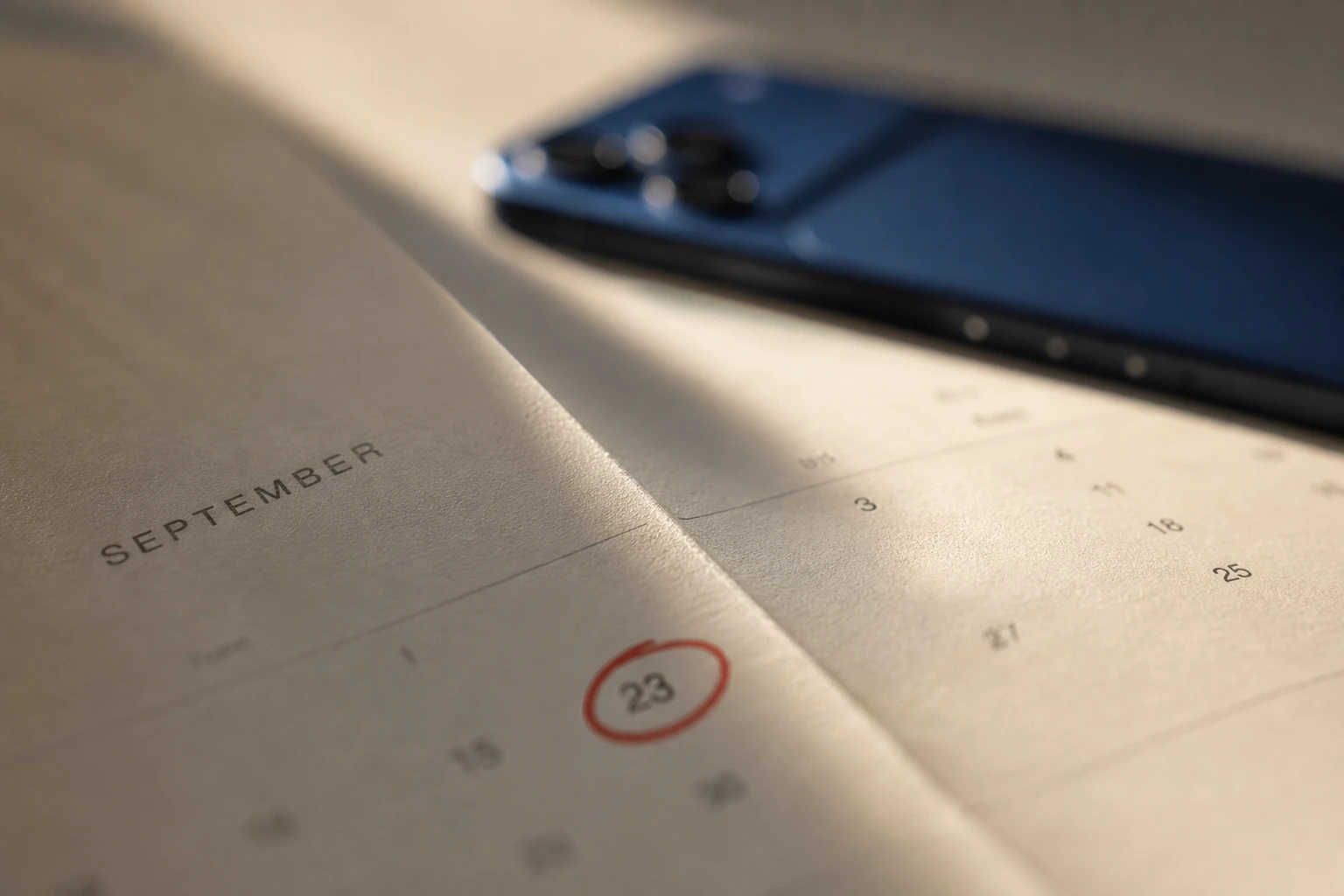
Labor Day always falls on the first Monday of September. Most years, Apple times its keynote eight days after that holiday. But when Labor Day itself lands on September 7, as it does in 2026, Apple’s own history points elsewhere. In 2015, the only other year sharing that exact calendar, Apple held its keynote just two days later, on Wednesday, September 9. Forbes contributor David Phelan, who has tracked every Apple keynote date back to the original iPhone, says that match makes this year’s date about as close to certain as an Apple prediction gets.
If the pattern holds, the rest of September should fall into place on a familiar schedule:
- Wednesday, September 9: Apple’s keynote, where the iPhone 18 Pro, iPhone 18 Pro Max and the company’s first foldable iPhone are all expected to appear.
- Friday, September 11: Preorders open, based on Apple’s usual two day gap after the keynote.
- Monday, September 14: iOS 27 moves from public beta to general release.
- Tuesday, September 15 or Wednesday, September 16: Reviews from selected press outlets typically appear.
- Friday, September 18: The iPhone 18 Pro and Pro Max reach stores.
Apple has not confirmed any of these dates. It rarely does before an official invitation goes out in early August.
Riskiest iPhone Yet Shares the Same Stage
Apple’s scheduling habits are reliable enough to set a watch by. The device joining the iPhone 18 Pro on stage this year carries far more uncertainty.
Multiple supply chain reports place Apple’s first foldable iPhone, referred to in leaks as the iPhone Fold or iPhone Ultra, on the same September bill. The device is expected to use a book style hinge, similar in shape to Samsung’s Galaxy Z Fold, with a 7.8 inch inner display and a 5.5 inch cover screen. Reports describe Touch ID rather than Face ID, an A20 chip shared with the iPhone 18 Pro line, and Apple’s next generation C2 modem.
Samsung Display is reportedly building the folding OLED panel under an exclusive, multi year deal, using a new hinge and layer stack designed to remove the crease that has marked every book style foldable sold so far.
Pricing is where the device stands apart from anything Apple has sold before. Estimates from supply chain sources put the starting price above $2,000, with some analysts suggesting a ceiling near $2,500. The International Data Corporation (IDC), a technology research firm, forecasts the global foldable market to grow 30% year over year, up from a prior forecast of just 6%, largely on the strength of Apple’s entry. IDC expects Apple to capture 22% of foldable unit share and 34% of category value in its first year, built on an average selling price near $2,400, which would make it the most expensive iPhone Apple has ever released.
Mass Production Slipped Two Months, the Date Didn’t
Supply chain reporting out of Asia, cited widely across the tech press, says Apple pushed the foldable’s mass production start from June to August, a delay of one to two months. That reporting does not suggest the September launch window itself has moved.
The timing matters more for a first generation product than it would for a routine iPhone refresh. Apple has historically started volume manufacturing at least three months before a device reaches shelves, giving factories room to build inventory and fix early defects. An August start leaves roughly six to seven weeks before a mid to late September on sale date, a narrower buffer than Apple typically allows itself.
Analysts do not agree on what that squeeze means for buyers:
- Ming-Chi Kuo, the analyst known for early Apple supply chain calls, has suggested Apple could announce the foldable in September but push the actual sale date into later in the year.
- Mark Gurman of Bloomberg maintains the device remains on track to launch around the same time as, or soon after, the iPhone 18 Pro in September.
- DigiTimes reporting tries to split the difference, saying design validation testing ran behind schedule but Apple may claw back time once mass production ramps up.
Apple has separated an announcement from a shipping date before. The iPhone X was unveiled in September 2017 but did not reach stores until November that year. The iPhone 12 Pro Max and iPhone 14 Plus both appeared at their September events, then arrived on shelves weeks after the rest of their lineups.
Samsung Trims Its Targets as Apple Aims Higher
Apple has told suppliers to prepare for roughly 10 million foldable iPhones this year, nearly double its earliest forecast of 7 to 8 million units, according to supply chain reporting out of Asia. That single order rivals what Samsung, the longtime foldable leader, now plans to ship across its entire folding lineup combined.
Samsung has trimmed its own 2026 plans in response, according to a TrendForce report tracking Samsung’s supply chain, citing rising memory chip costs that are pushing device pricing higher across the industry.
| Maker | 2026 Shipment Target | Starting Price | TrendForce 2026 Share Estimate |
|---|---|---|---|
| Apple (iPhone Fold / Ultra) | About 10 million units | $2,000 to $2,500 (avg. near $2,400, per IDC) | Nearly 20% |
| Samsung (Z Fold8, Z Flip8, Wide Fold) | 5 to 6 million units combined | Z Fold8 from roughly $2,199 | About 30% |
| Huawei foldable lineup | Not disclosed for 2026 | Varies by model | About 30% |
Rounding out that math, TrendForce puts every other foldable maker combined at roughly the remaining share, a category that barely existed as an Apple story a year ago.
The launch of Apple’s first foldable iPhone will mark a turning point for the foldable segment.
Francisco Jeronimo, vice president of client devices at IDC, said in the firm’s forecast. Apple, he added, tends to act as a catalyst for mainstream adoption of new device categories.
The Price Tag Cuts Both Ways
A high price does not guarantee a device holds its value. A resale study cited in coverage of Apple’s production ramp found that a $2,000 foldable phone could lose as much as $1,292 of its worth within twelve months, based on current foldable depreciation trends. That is a steeper first year drop than most flagship phones see.
Foldables overall are still a niche corner of the smartphone market, even as they grow fast. Global shipments rose 14% year over year in the third quarter of 2025 to a record quarterly volume, with Samsung’s Galaxy Z Fold7 providing the strongest lift, according to Counterpoint Research’s global foldable smartphone tracker. Even at that record pace, foldables remain a small fraction of everything Apple, Samsung and their rivals sell in a year.
The Ordinary iPhone 18 Pro Still Carries the Lineup
While the foldable draws the headlines, the iPhone 18 Pro and Pro Max are the models Apple will actually sell in volume. Leaks point to a new Dark Cherry finish alongside existing colors and a main camera gaining variable aperture control for the first time.
The bigger change sits inside the case. Apple’s A20 chip moves to a 2 nanometer process built by Taiwan Semiconductor Manufacturing Company (TSMC), a jump expected to bring roughly 15% faster performance and 30% better efficiency than the current A19 chip. The Pro Max battery could grow to around 5,567 mAh, the largest ever fitted in an iPhone, paired with a redesigned cooling system built to handle the new chip’s heat.
These upgrades do not come cheap. Multiple reports point to a price increase of $200 to $300 across the Pro lineup, which would push the base iPhone 18 Pro toward $1,199 to $1,399 and the Pro Max toward $1,299 to $1,499, up from today’s $1,099 and $1,199. Rising 2 nanometer production costs and a broader memory chip shortage are the reasons most often cited for the jump.
What Could Still Move the Date
Google plans to unveil its Pixel 11 lineup, including a Pixel 11 Pro Fold, in mid August, roughly a month ahead of Apple’s expected event. That gives Android’s own foldable push extra shelf time before Apple’s version even reaches a keynote stage.
Foldable shipments were flat in 2025 but are forecast to rebound 50% this year, according to Omdia’s foldable smartphone market analysis, a rebound that assumes Apple’s first foldable actually ships on schedule. A production slip of even a few weeks would carry more weight this year than it would for a routine iPhone refresh, given how much of that rebound is priced around Apple’s arrival.
Barring another delay, Apple’s keynote lands on Wednesday, September 9, preorders open two days later, and the iPhone 18 Pro and Pro Max reach stores on Friday, September 18. Whether the foldable ships in that same window, or slides into the months after the way the iPhone X once did, is the one date nobody in Cupertino has settled yet.
Frequently Asked Questions
Has Apple confirmed the September 9 event date?
No. Apple has not announced an event date, and the September 9 projection rests entirely on the company’s past scheduling habits rather than any leak or confirmation. If the pattern breaks, 2026 would only be the second time since 2012 that Apple’s keynote fell outside its usual window, after the Covid delayed 2020 event.
Could the foldable iPhone ship later than the iPhone 18 Pro?
It’s possible, and supply chain sources say any delay would likely be measured in weeks rather than months, since Apple’s design for the device was reportedly locked some time ago. A staggered launch, announced in September but shipped in October or November, would follow the same pattern Apple used for the iPhone X, the iPhone 12 Pro Max and the iPhone 14 Plus.
How much will Apple’s foldable iPhone cost?
Estimates vary by analyst. Ming-Chi Kuo projects a starting price above $2,000 with a ceiling that could exceed $2,500, while a separate supply chain estimate puts the range closer to $2,300 to $2,500 depending on storage capacity.
What is new about the iPhone 18 Pro’s camera and chip this year?
Beyond the A20 chip’s move to a 2 nanometer process, leaks describe a new three layer stack sensor from Samsung Electronics for the main 48 megapixel camera, aimed at sharper low light detail and wider dynamic range, on top of the previously reported variable aperture lens.
Why is Apple’s foldable iPhone priced so far above the iPhone 18 Pro?
The whole foldable category carries a premium over standard phones. Fold format phones sold for roughly 289% more on average than typical slab phones in 2024, according to industry analysts, and Apple’s pricing follows that same premium logic rather than the tiers it uses for a normal iPhone launch.