Apple’s iPhone 18 Pro is on track to launch the week of September 8, with a bigger battery, a 2 nanometer chip and a shrunken notch, according to a fresh wave of supply chain leaks. Leakers have spent weeks fighting over the exact date and price.
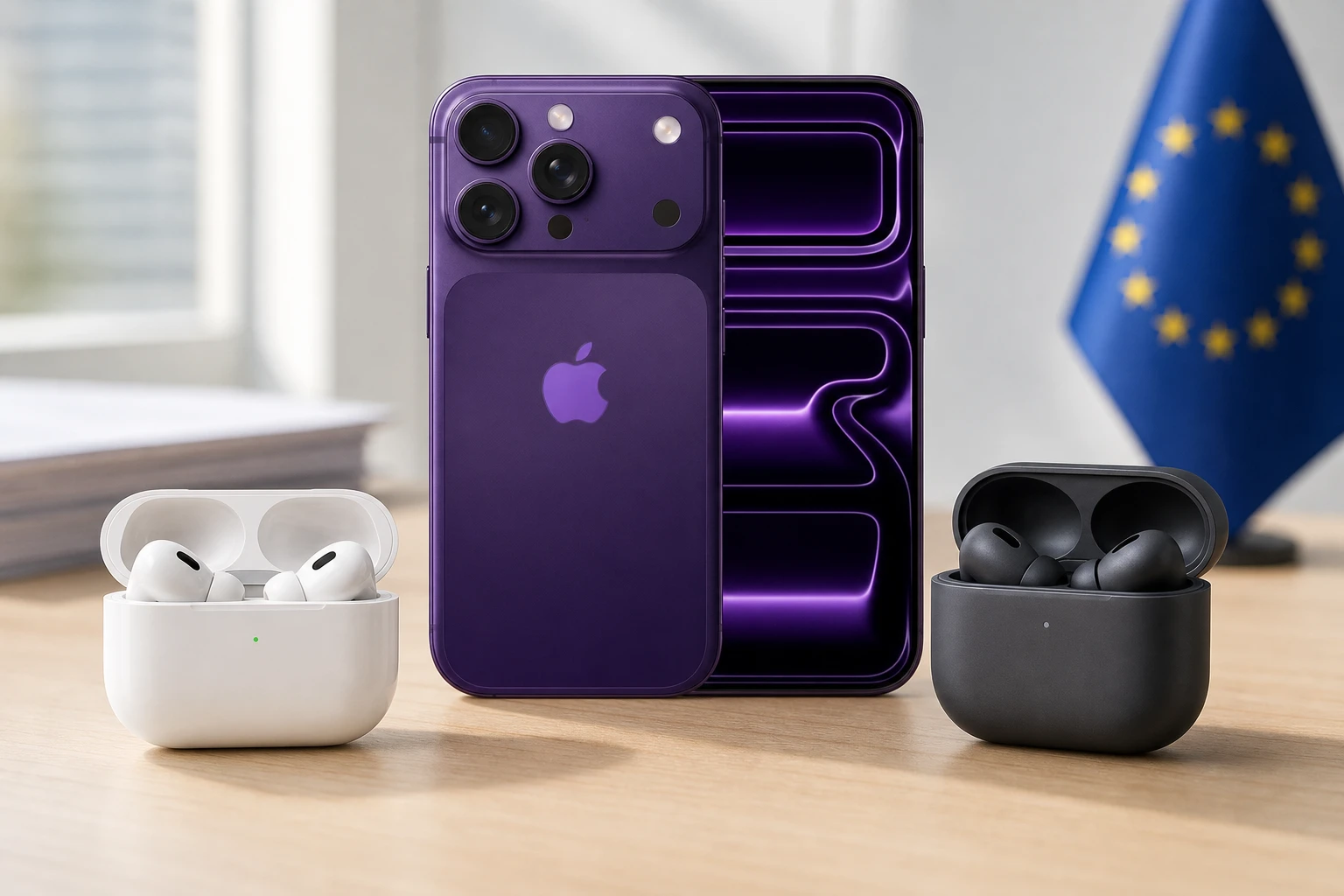
A separate fight over what the phone can actually do with gadgets Apple did not build ended ten days ago, in a Luxembourg courtroom. On July 8, the European Union’s General Court dismissed Apple’s challenge to being labeled a digital gatekeeper. The ruling keeps in place rules that force the iPhone to let AirPods style pairing work with headphones and watches Apple does not sell.
Camera, Chip and Battery Leaks Pile Up
The broad strokes of the iPhone 18 Pro have held steady across months of leaks. The phone is expected to run Apple’s new A20 Pro chip, built on a 2 nanometer process, paired with a next generation C2 modem. A variable aperture main camera, a smaller Dynamic Island shrunk by roughly 35% smaller than today’s cutout, and a battery big enough to be the largest ever fitted to a Pro Max model round out the headline changes.
Bloomberg’s Mark Gurman, the reporter whose Apple predictions carry the most weight in the industry, has pointed to Apple’s habit of holding its keynote on the first Tuesday or Wednesday after Labor Day. That points to September 8. Forbes contributor David Phelan has argued for September 9 instead, on the theory that Apple avoids keynotes the day right after a holiday. Either way, pre orders are expected the following Friday, September 11, with iOS 27 arriving September 14 and phones on shelves September 18.
| Spec | iPhone 18 Pro | iPhone 18 Pro Max |
|---|---|---|
| Chip | A20 Pro, 2nm | A20 Pro, 2nm |
| Display | 6.3 inch OLED | 6.9 inch OLED |
| Leaked battery | About 4,300 to 4,456 mAh | Roughly 5,000 to 5,567 mAh |
| RAM | 9GB to 12GB, LPDDR6 | 9GB to 12GB, LPDDR6 |
| Rumored starting price | $1,299 | $1,399 |
The bigger surprise sits in the calendar, not the spec sheet. Apple is reportedly delaying the standard iPhone 18 to spring 2027, holding only the Pro pair and a new foldable model back for the usual September slot. That would be the biggest change to Apple’s release cadence since the lineup grew past a single annual phone. Layer on rumored price increases of $100 to $200 over last year’s models, arriving not long after its own recent back to school price hikes, and Apple’s fall lineup is shaping up to cost more and arrive on a schedule nobody has seen from the company before.
A Gatekeeper Ruling Apple Could Not Undo
Apple has been fighting the Digital Markets Act (DMA, the EU’s antitrust law aimed at large tech platforms) since it took effect in 2023. The law lets regulators fine gatekeeper companies up to 10% of their global annual turnover, and it requires Apple to open parts of iOS to competing apps, accessories and app stores.
The General Court’s July 8 ruling upheld Apple’s designation as a gatekeeper and rejected its related claim over iMessage. It did not resolve everything. Apple has a separate, still pending appeal specifically targeting the interoperability rules, filed in May 2025, and that case remains before the same Luxembourg court.
Apple did not take the loss quietly.
We firmly believe the DMA’s mandate goes beyond what is lawful and proportionate, threatening to erode decades of privacy and security protections we’ve built.
Apple said in a statement following the ruling. The European Consumer Organisation, known as BEUC, called the outcome good news for shoppers and said Apple’s energy would be better spent complying with the law rather than continuing to contest it. The Electronic Frontier Foundation framed the ruling as a win for interoperability, the digital rights group that intervened in the case alongside the Free Software Foundation Europe.
How an AirPods Trick Became a Legal Deadline
The specific feature at the center of this fight is something Apple built for itself years ago: bring AirPods near an iPhone and they pair in one tap, then sync automatically across every other Apple device signed into the same account. Rivals never got that.
The European Commission’s March 2025 decision changed that, ordering Apple to give competing earbuds and smartwatches the same access. Apple has been rolling the change out in stages ever since, hitting a 1 June 2026 deadline for most connected device measures this summer, with the trickiest piece, letting third party audio devices show up as available routes the way AirPods do, pushed out to June 2027.
- March 19, 2025: The European Commission adopts specification decisions ordering Apple to open iOS pairing, notifications and file transfer to competing hardware.
- May 30, 2025: Apple challenges the interoperability rules at the EU General Court, calling them “deeply flawed.”
- January 2026: iOS 26.3 lets EU device makers begin testing AirPods style proximity pairing and notification forwarding.
- May 11, 2026: iOS 26.5 switches those features on for all eligible iPhone users across the EU.
- June 1, 2026: Apple’s deadline for nearly all connected device measures ordered in 2025.
- July 8, 2026: The General Court dismisses Apple’s broader gatekeeper challenge, leaving the rules intact.
The Commission’s own factsheet on the rollout credits the changes with letting third party smartwatches receive and react to iPhone notifications and letting earbuds like Sony’s or Bose’s pair the way AirPods always have. One commenter on the change put it bluntly on MacRumors’ forums, celebrating that a pricey pair of Bose headphones could finally get treated like a first class citizen on iOS.
Why Meta Wants Its Glasses to Pair Like AirPods
Meta has asked Apple to let Ray-Ban Meta glasses and Quest headsets automatically pair across a user’s other iPhones and iPads, the same trick AirPods already perform, arguing European rules entitle it to a convenience Apple currently reserves for its own hardware.
The request surfaced this week through correspondence Apple keeps public on its EU interoperability portal. Meta’s language was direct.
“We want to be able to offer a similar pairing/syncing experience to our users,” the company wrote, according to correspondence reviewed by 9to5Mac, pointing specifically to how AirPods pair once and then work across every Apple device tied to an account.
Apple has not granted the request. It is one of dozens working through a review process the company built specifically to field these demands, and Meta’s ask is not the only one testing how far Apple has to bend. Third party wearable makers broadly stand to gain ground here, including Samsung’s own Galaxy Watch 8, leaked alongside the Z Fold 7, which could eventually pair with an iPhone with the same ease AirPods already do in Europe.
Apple’s Compliance Record Is Mostly Rejections
A report from the Free Software Foundation Europe (FSFE), a nonprofit that intervened in the DMA case, gives the clearest picture yet of how Apple has handled these requests in practice.
- 56 requests for interoperability reached Apple under the law’s Article 6(7) between May 2025 and March 2026, the FSFE found.
- 43 closed so far, but 27 of those closures remain fully confidential.
- Zero of the 16 publicly disclosed closures produced a new interoperability solution; 10 were denied on technical grounds.
- 24 months is how long Apple can take to build a fix even after accepting a request.
Developers seeking access to Just in Time compilation, NFC protocols and Bluetooth Low Energy Audio have all been turned down, often on the grounds that the features fall outside the law’s scope. Apple’s own developer documentation describes how it evaluates each interoperability request it receives, including an initial eligibility check the company says it completes within 20 working days.
The Fall Launch Ships With New EU Rules Attached
iOS 27 is the software the iPhone 18 Pro will ship with in September, and it is also the release the Commission tagged for the next batch of mandatory interoperability fixes, with everything else due by the end of 2026 regardless. Apple’s next flagship arrives, in other words, right inside the regulatory deadline it has spent a year and a half resisting.
The tradeoff is not one directional. EU buyers of the iPhone 18 Pro will get pairing freedom nobody else in the world gets yet. They will not get everything else. The overhauled Siri AI features Apple unveiled are not launching in the EU alongside iOS 27, and Siri AI missing from EU iPhones extends a pattern that already kept iPhone Mirroring out of the region. Apple has said it has no timeline for closing that gap.
The interoperability specific appeal Apple filed in May 2025 is still awaiting a ruling from the same Luxembourg court, a decision due sometime after the iPhone 18 Pro is already sitting on store shelves.
Frequently Asked Questions
When exactly will the iPhone 18 Pro go on sale?
Reports point to pre orders opening Friday, September 11, at 5 a.m. Pacific time, with iOS 27 arriving September 14 and the new phones reaching stores September 18, following Apple’s usual post keynote pattern.
What did the EU court actually decide on July 8?
The General Court upheld Apple’s designation as a gatekeeper and dismissed its separate claim over iMessage. It left a different, still pending Apple appeal specifically over the interoperability rules unresolved before the same court.
Will iPhone 18 Pro buyers in the EU get the same features as everyone else?
No. The overhauled Siri AI is not launching in the EU with iOS 27, and iPhone Mirroring remains unavailable there too, even as EU buyers gain accessory pairing options other regions do not have.
Can the iPhone 18 Pro pair with non-Apple earbuds and watches?
Yes, but only inside the EU so far. iOS 26.5 already switched on AirPods style proximity pairing and notification forwarding for compatible third party earbuds and smartwatches there, a feature Apple has not extended worldwide.
Could Apple still appeal further?
Possibly. General Court rulings can be escalated to the Court of Justice of the European Union, the bloc’s highest court. Google tried that route in its own Android antitrust fight and lost anyway, with the Court of Justice upholding a 4.1 billion euro fine just a week before Apple’s own defeat.