Georgia exported 14,700 tons of apples worth $11 million between January and June 2026, and more than 95% of that fruit crossed into a single market: Russia. Value climbed 67%, or $4.5 million, while volume rose 37%, or roughly 4,000 tons, compared with the same six months last year, the country’s Ministry of Environmental Protection and Agriculture said.
Russia’s own agriculture ministry says the country is already 83% self-sufficient in apples and wants to reach 100% by 2030. That is the same country buying almost everything Georgian orchards can grow.
Ministry Figures Show a Record Pace
The ministry said apple exports totaled more than 24,000 tons between August 2025 and June 2026, the highest figure in recent years. Revenue from those shipments reached $18 million.
Prices moved up alongside volume. The average export price hit $0.74 per kilogram in the first quarter of 2026, up 17% year on year, meaning buyers paid more per apple, not just bought more apples.
| Reporting Period | Volume | Value | Change vs. Prior Year |
|---|---|---|---|
| January to March 2026 | 9,000 tons | $6.7 million | +7% volume, +25% value |
| January to April 2026 | 11,300 tons | $8.5 million | +11% volume, +32% value |
| January to June 2026 | 14,700 tons | $11 million | +37% volume, +67% value |
| August 2025 to June 2026 | 24,000+ tons | $18 million | Highest in recent years |
The ministry pointed to a similar climb the previous season. Its own March 2025 release detailed a sixfold jump in tonnage over seven months, worth $8.2 million, with Russia again absorbing nearly all of it. This year’s percentage gains look smaller only because the base is now so much bigger.
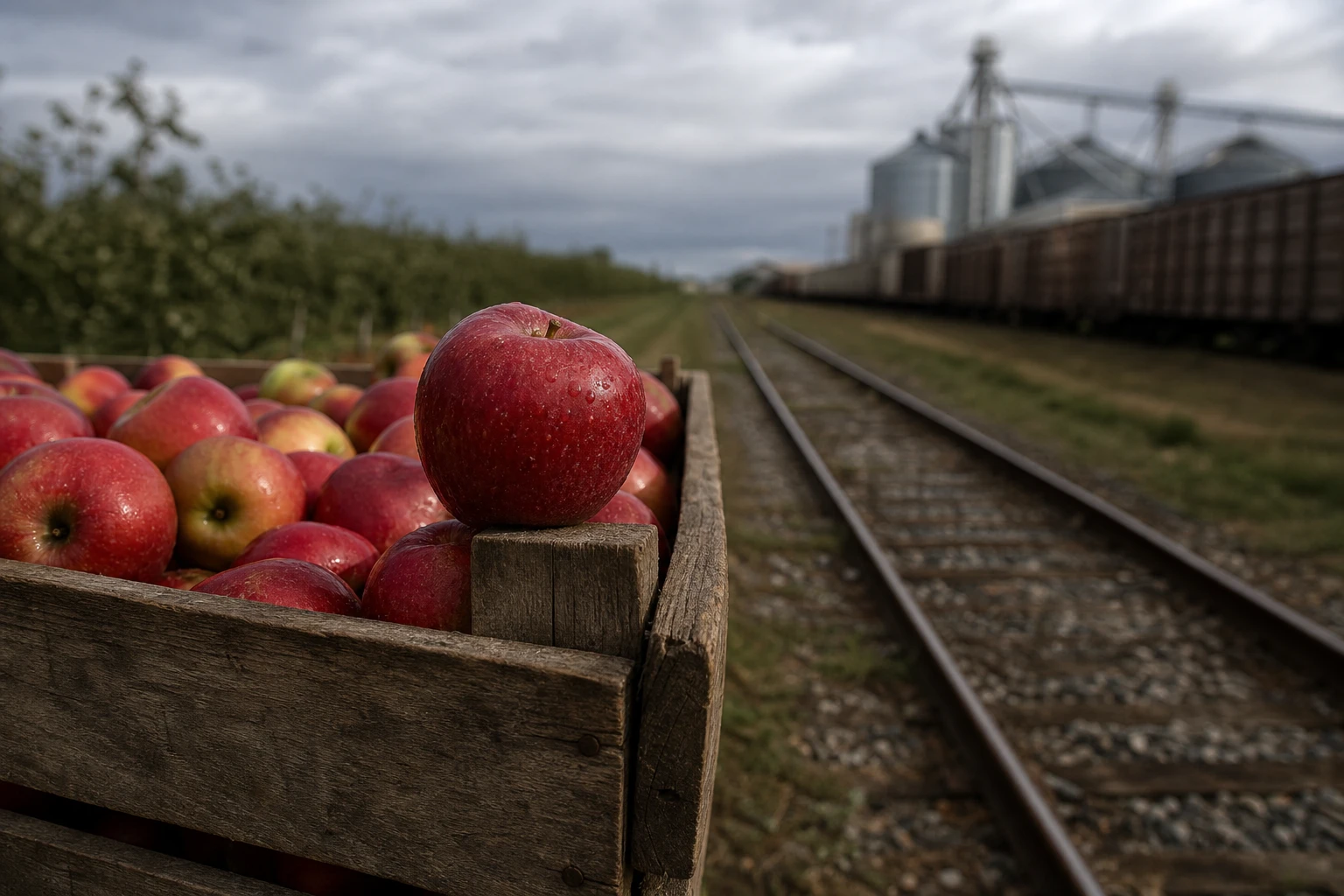
How Much of Georgia’s Apple Crop Goes to Russia?
Russia bought more than 95% of Georgia’s apple exports in the first half of 2026, ministry data show. Turkey, Armenia and Iraq split what was left, each importing only a few hundred tons at most. No other market came close.
In the first quarter alone, Russia took 8,569 of the 9,000 tons Georgia shipped abroad. Turkey bought 353 tons, Armenia 63 tons, and a combined 43 tons went elsewhere. Across the season that ran from August 2025 to May 2026, Russia’s share stood at 22,197 of 23,600 tons, about 94% of everything exported.
Some months skewed even further toward Russia. In May 2026, Georgia sold apples to just four buyers.
Russia topped that list, followed by Turkey at $75,600, Armenia at $27,900 and Iraq at $26,900, Russia’s RIA Novosti news agency reported, citing Georgia’s state statistics service. Russian imports of Georgian apples that month reached $1.9 million, more than five times the $346,100 recorded a year earlier.
The Boom Didn’t Start This Year
Georgia’s apple trade with Russia has been climbing for years. Georgia exported a record 19,547.3 tons of apples in 2025, worth $12.9 million, with more than 19,500 tons of that going to Russia, 2.3 times more than in 2024, according to Georgia’s National Statistics Service data compiled by Russian state news agency TASS.
The previous full-year record was 2021, when Georgia shipped 15,100 tons to Russia. Total apple deliveries to all international markets in 2025 reached 20,616.9 tons worth $14 million, meaning Russia accounted for roughly 95% of everything Georgia sent abroad that year too.
Georgia’s overall trade with Russia actually runs the other way. Imports, mostly oil and gas, outweigh exports to Russia by nearly three to one, the fact-checking group FactCheck.ge found. Fruit is the exception, the one channel where Georgia sells far more than it buys.
Apples Are Following Peaches, Plums and Wine Into Russia
Apples are not the only Georgian crop leaning almost entirely on one buyer. FactCheck.ge’s review of 2024 trade data found Russia’s share of several export categories topped 90%.
- Peaches – 94% of exports, worth $26.3 million of $27.9 million total.
- Plums – 98% of exports, worth $5.5 million of $5.6 million total.
- Cranberries, blueberries and other berries – 86% of exports, worth $5.6 million of $5.9 million total.
- Mandarins – 79% of exports.
- Apples – 95% of exports in 2024, worth $5.6 million of $5.9 million total.
Wine follows the same curve. Russia’s share of Georgian wine exports reached 66% in 2024, the highest level since Moscow lifted its wine embargo, according to the same FactCheck.ge analysis. Georgian blueberry growers have hit a similar wall: despite European Union promises of market access, most of that fruit still ends up in Russia, where prices run higher than in Europe.
Russia Is Racing Toward Growing Its Own Apples
Russia’s First Deputy Agriculture Minister, Elena Fastova, told the St. Petersburg International Economic Forum in June that the country’s self-sufficiency rate for apples stood at 83%. The government wants that figure at 100% by 2030.
The import-substitution push is already visible in production data. Industry research firm Mordor Intelligence tracked Russian domestic output climbing to 1.9 million metric tons, though it noted quality gaps still leave room for Polish and Turkish fruit in premium supermarket tiers.
Georgian apples were not named among those premium imports.
- 83% – Russia’s current self-sufficiency rate for apples, per Deputy Agriculture Minister Elena Fastova.
- 100% by 2030 – the Russian government’s target self-sufficiency rate for apples.
- 1.9 million tons – Russia’s domestic apple output, per Mordor Intelligence.
None of that has slowed Russian buying yet. The self-sufficiency drive is a target four years out, not a policy in effect today.
The Diversification Georgia Hasn’t Managed
Turkey remains Georgia’s next-largest apple buyer, and it is not close. Armenia, Belarus, Kazakhstan and Iraq pick up whatever is left after Russia and Turkey, usually a few dozen to a few hundred tons a year.
Part of the reason sits in the farms themselves. Georgian agriculture remains dominated by small, fragmented family farms with limited insurance coverage and old storage infrastructure, making it hard to meet the volume and consistency that buyers outside the region expect.
Global demand has not been the constraint. The U.S. Department of Agriculture’s Foreign Agricultural Service forecast Russia’s apple imports climbing 9% this season, driven largely by shipments from China, even as global fresh apple exports overall were projected to slip to 6.1 million tons. Russia is still buying more fruit from somewhere. Georgia has simply not diversified who else it sells to.
Georgia’s marketing year runs through July, and the ministry has not said whether this growth rate holds once the new harvest comes in. Moscow’s 2030 target is still four years away. For now, Georgian orchards are shipping almost everything they grow to the one buyer working to need them less.