Hyundai Motor Group and SK On have started making battery cells at their $5 billion joint venture plant in Bartow County, Georgia, more than a year after they first expected to. Hyundai-SK Battery Manufacturing America began commercial output this summer and is already shipping cells to Hyundai’s electric vehicle campus near Savannah.
The timing cuts both ways. The factory switches on months after Washington eliminated the $7,500 consumer tax credit that was supposed to reward exactly this kind of North American battery investment, and less than a year after immigration agents raided a different Hyundai battery site an hour away.
Batteries Start Rolling Off the Line in Bartow County
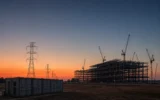
Hyundai-SK Battery Manufacturing America recently started production at its factory in Bartow County, northwest of Atlanta, according to battery industry sources and The Atlanta Journal-Constitution. The joint venture between Hyundai Motor Group and SK On was finalized in April 2023, with each company holding a 50% stake, after the two firms selected the site through a Bartow County economic development project the year before.
The numbers behind the launch are large by any measure.
- $5 billion – combined investment from Hyundai Motor Group and SK On, split evenly between the two partners.
- 752 acres – the footprint of the Bartow County site, holding a 3.3 million square foot production building.
- 3,500-plus jobs – the workforce target as the plant ramps toward full output.
- 35 gigawatt-hours – annual capacity once fully operational, enough cells for roughly 300,000 electric vehicles a year.
Production is not yet close to that ceiling.
The plant is currently in the early stages of production and plans to gradually expand output.
A company representative gave that description to reporters this week, the only public comment so far on how quickly the ramp will move. It is a familiar note for a project that has already run behind its own schedule once.
The Subsidy That Justified This Plant Just Disappeared
When Hyundai and SK On signed their original memorandum of understanding in November 2022, the whole point was chasing a federal incentive. The Inflation Reduction Act tied a $7,500 consumer EV tax credit to North American assembly and battery sourcing rules, and Hyundai spent years scrambling to qualify. Georgia Governor Brian Kemp said at the time that the law was hurting Korean automakers, and no Korean-built EVs initially qualified for the credit under the strict early guidance.
That fight is largely moot now. The federal consumer tax credit under Section 30D lapsed in September last year, and U.S. EV sales slowed sharply in the months that followed before staging a partial recovery. Hyundai’s own EV sales tell that story: the brand sold 26,936 all-electric vehicles in the U.S. during the first half of 2026, about 5.4% fewer than the same period a year earlier.
One subsidy did survive the shift. Advanced manufacturing production credits, paid to battery makers based on cells actually produced rather than to shoppers at the point of sale, still flow to SK On as output rises. The plant’s economics now lean more on how many cells it ships than on whether a buyer gets a rebate at the dealership.
Where Do Bartow County’s Battery Cells Actually Go?
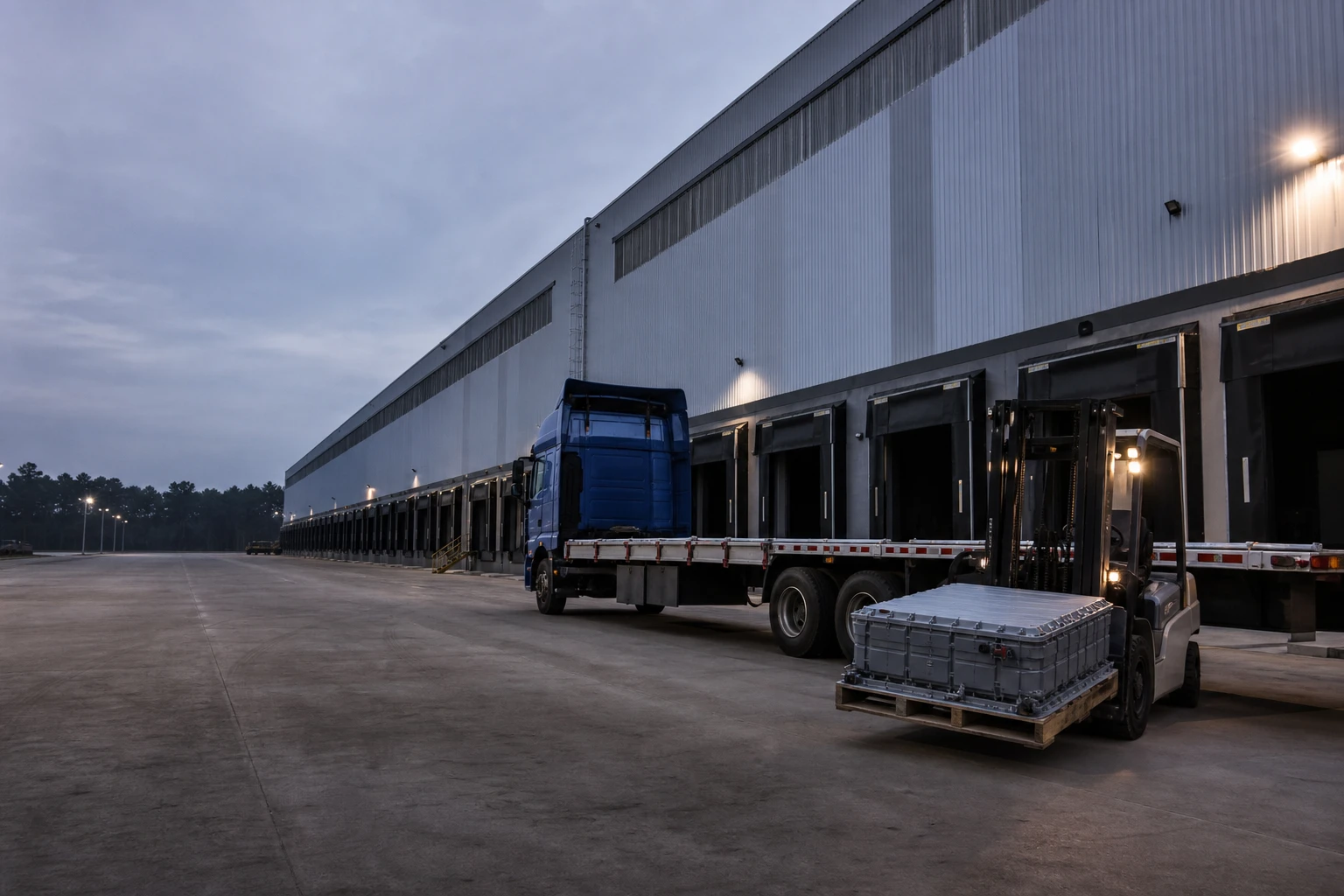
Every cell made in Bartow County ships to Hyundai Motor Group Metaplant America near Savannah, where Hyundai Mobis, the group’s parts and module affiliate, turns them into finished battery packs. Those packs go into Hyundai, Kia and Genesis electric vehicles built in the United States, tying a rural Georgia factory floor directly to three separate car brands.
Hyundai calls the Savannah-area complex Metaplant America. It is the group’s first dedicated electric vehicle mass-production facility in the United States, and it already builds the Ioniq 5 and the three-row Ioniq 9. The campus was designed with room to grow: it currently runs toward an initial 300,000 vehicles with the ability to scale to 500,000 once volume justifies it, with hydrogen fuel-cell trucks moving parts around the site.
Kia builds its own EV6 and EV9 models at a separate plant in West Point, Georgia, which draws batteries from SK On’s older Commerce facility rather than the new Bartow County line. The distinction matters for buyers, since sourcing rules still determine which specific models keep any residual credit eligibility through leasing programs.
Georgia’s Crowded Korean Battery Corridor
Bartow County is not Georgia’s only Korean-backed battery plant, and the new facility joins a corridor that has been building for years.
| Plant | Owner(s) | Location | Annual Capacity | Status |
|---|---|---|---|---|
| SK Battery America | SK On (100%) | Commerce, Ga. | About 22 GWh | Running since 2022; 2,000-plus jobs |
| Hyundai-SK Battery Manufacturing America | Hyundai Motor Group and SK On (50/50) | Bartow County, Ga. | 35 GWh at full scale | Entered production mid-2026; 3,500-plus jobs |
| HL-GA Battery Company | Hyundai Motor Group and LG Energy Solution (50/50) | Bryan County, Ga. (Ellabell) | About 30 GWh | Delayed by 2025 raid; opened April 2026 |
SK On’s original Georgia investment, a wholly owned plant in Commerce, already runs at 22 gigawatt-hours of annual capacity, enough for more than 200,000 EVs a year, and supplies Ford and Volkswagen alongside Hyundai and Kia models. Industry analysts have noted that the Hyundai-SK On partnership has held together while other Korean battery makers scaled back joint ventures with American automakers such as Ford, GM and Stellantis as EV demand cooled.
A Raid Next Door Still Shadows the Ramp-Up
The Bartow County plant is not the site that made international headlines last year. That was the separate LG Energy Solution battery joint venture near the Savannah-area Metaplant, where federal immigration agents detained more than 300 South Korean nationals on September 4, 2025, in one of the largest worksite operations in recent memory.
Hyundai executives and Georgia officials spent weeks trying to contain the diplomatic fallout. Days later, Hyundai said it would push ahead anyway, confirming a $2.7 billion expansion and 8,500 jobs by 2031 at the Savannah-area campus rather than pulling back.
Here is how the two Bartow-area timelines actually line up.
- November 2022: Hyundai Motor Group and SK On sign a memorandum of understanding to supply U.S.-built EVs with locally made batteries.
- April 25, 2023: The companies finalize a 50/50, $5 billion joint venture and confirm Bartow County as the site.
- September 4, 2025: Immigration agents detain more than 300 South Korean nationals at Hyundai’s separate LG Energy Solution battery site near Savannah, not the Bartow County plant.
- June 2026: Hyundai-SK Battery Manufacturing America enters production in Bartow County, about a year behind its original target.
The two plants share a state, a customer and a nationality of investor, which is part of why the raid still colors how the newer launch reads even though it happened elsewhere.
The Long Climb to 35 Gigawatt-Hours
Getting from early-stage output to full capacity will take time SK On has not publicly committed to a date for. The company’s language, a gradual expansion of output, leaves plenty of room between today’s trickle and the eventual 300,000-EV ceiling.
Demand is the real variable. Hyundai’s Ioniq 5 was still America’s third-best-selling EV in the first half of 2026, trailing only Tesla’s Model 3 and Model Y, and the brand is closing in on Chevrolet for the number two spot among EV makers behind Tesla. But that momentum is coming without the federal credit that once shaped it.
SK On says output will keep climbing through the rest of the year, tied directly to how many Hyundai, Kia and Genesis EVs American drivers keep buying without a federal incentive to nudge them.
Frequently Asked Questions
How many jobs do Hyundai and SK On’s Georgia battery plants support combined?
Add up the two confirmed figures and Hyundai and SK On’s dedicated battery plants alone support more than 5,500 jobs in Georgia: 3,500-plus in Bartow County and 2,000-plus at SK Battery America in Commerce, before counting assembly jobs at the Savannah-area Metaplant.
What was on the Bartow County site before Hyundai and SK On built there?
The plant sits on what Bartow County officials called the former Bartow Centre Industrial property, a zoned manufacturing site along Highway 411 that the joint venture selected in December 2022.
How far behind schedule is the Bartow County battery plant?
Hyundai and SK On originally targeted the second half of 2025 for the start of production. Korea Herald reported in March 2026 that the factory was more than 90% complete, and commercial output did not begin until June, roughly a year later than planned.
Will the plant change prices for Hyundai and Kia electric vehicles?
Not directly, since federal tax credits rather than battery supply have driven recent price moves. The 2026 Ioniq 5 starts near $35,000, and Hyundai has run 0% financing with up to $10,000 in discounts this summer to keep EV sales moving without the old federal credit.
Is the Bartow County plant the same one hit by the 2025 immigration raid?
No. The raid took place at the separate LG Energy Solution battery joint venture near the Metaplant outside Savannah, not at the SK On facility in Bartow County. That LG venture opened months later, in April 2026, after the raid pushed its own timeline back.