Israel’s Channel 12 reported on Thursday that Georgia is in advanced talks to contribute troops to Gaza’s US-backed International Stabilisation Force, in a story that OC Media, the English-language Caucasus outlet, first carried to the region. Tbilisi has not commented on the claim, and the Georgian Defence Ministry did not respond to OC Media’s separate request for comment before publication. The silence sits at the centre of a wider reshuffle of the force’s command architecture, with three diplomats telling the same Israeli report that the US-led Civil-Military Coordination Centre is being overhauled and renamed the International Gaza Aid Center, and that the stabilisation force is being asked to take a larger role inside it.
Georgia’s reported status, four days after the Israeli broadcast, is the same as it was on day one: silent, publicly unconfirmed, and un-denied. That is a posture the Board of Peace, the Trump-chaired body that runs the stabilisation effort, has been careful to preserve on the other side of the table as well. Earlier reporting on the same Channel 12 troop story carried the same picture from the same silence. Tbilisi’s eventual answer, or continued silence, will say more about the force’s near-term shape than any of the new names added to the coalition this week. For planners in Washington, that answer carries a number: the ceiling Jeffers set in February, and the empty seats under it.
Channel 12 Names Georgia, but Tbilisi Stays Silent
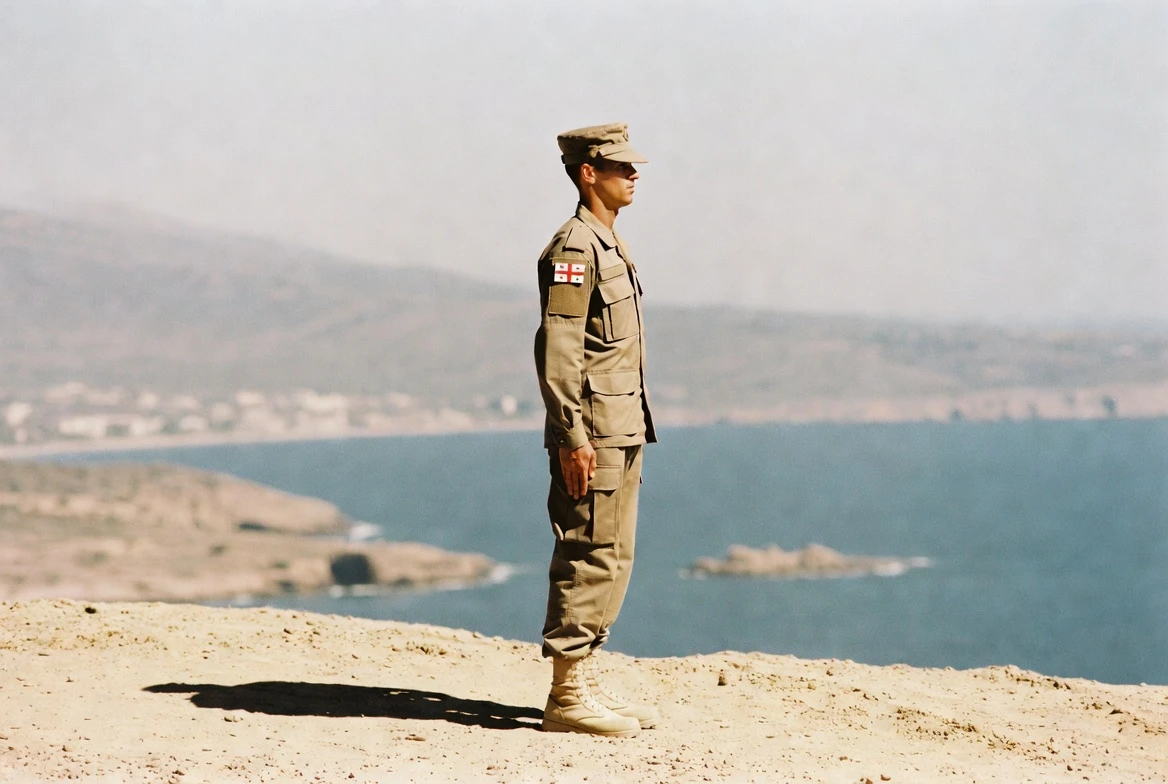
Channel 12 reported on 25 June 2026 that Georgia and Vietnam are in advanced talks to send troops to the International Stabilisation Force. If finalised, the pair would join Greece, Morocco, Indonesia, Kosovo, Kazakhstan and Albania, which the same report says have already agreed to send forces. The Israeli military report naming Georgia and Vietnam attributed the troop information to three diplomats familiar with the plans.
Channel 12 added that Georgia and Vietnam had declined to comment on the report. Tbilisi was no different when the Georgian outlet Civil Georgia’s write-up of the Defence Ministry silence asked the Defence Ministry for a response; the outlet noted on 25 June that ‘Tbilisi has yet to comment on the reports’.
OC Media, the publication that first circulated the report in the Caucasus, said it had also contacted the Georgian Defence Ministry and received no answer before publication. The Messenger, a Tbilisi-based English-language weekly, restated the same fact on Monday: ‘Tbilisi has not commented on the reports’. By the time the working week opened in Georgia, the silence was four days old and unbroken.
The Force Georgia Would Be Joining
The International Stabilisation Force is the security pillar of the 20-point Gaza peace plan unveiled by US President Donald Trump in September 2025. It is mandated by UN Security Council Resolution 2803, adopted on 17 November 2025, and is being built under the direction of a Trump-chaired Board of Peace. The force’s stated role is to step in once the Israel Defense Forces withdraw, secure border areas with Israel and Egypt, and train a vetted Palestinian police force.
Major General Jasper Jeffers of US Central Command was named commander of the force on 17 January 2026, with Indonesia’s deputy commander still listed as ‘TBA’ on the force’s public roster. Egyptian planners have been setting up a parallel command centre at El Arish, in the Sinai, since December 2025.
Jeffers has said the force will deploy first to Rafah, in southern Gaza, and then ‘expand sector by sector’, with a target ceiling of 20,000 soldiers and 12,000 locally recruited police. The first five committing countries announced in February (Indonesia, Morocco, Kazakhstan, Kosovo and Albania) have publicly laid out distinct contributions, while Egypt and Jordan have said they will train police but not deploy combat troops. Greece was added to that roster in the Israeli report on 25 June.
The force’s own published mandate lists six named functions. They capture the narrow ground the ISF is meant to hold.
- Supporting demilitarisation and destruction of terror infrastructure
- Securing border areas with Israel and Egypt
- Protecting civilians and humanitarian operations
- Training vetted Palestinian police forces
- Facilitating humanitarian corridors
- Assisting the Board of Peace in monitoring the ceasefire
The Roster So Far, and How It Compares to the Target
The Channel 12 report sketches a growing, still-incomplete coalition. Six countries have agreed to send forces. Two more are in advanced talks. At least one regional heavyweight, Azerbaijan, has already said no, and Saudi Arabia and the United Arab Emirates have opted to fund and supply only.
Indonesia’s commitment is the largest single pledge on the table. President Prabowo Subianto said in February that Jakarta would contribute up to 8,000 personnel, and Indonesia’s foreign ministry has stressed that the contingent’s mandate is ‘humanitarian in nature’, with troops explicitly barred from combat operations. Kazakhstan will send an unspecified number of troops, including medical units; Morocco will deploy police officers; and Kosovo and Albania have committed to troop contributions.
Greece was added to the list in the 25 June Israeli report. The pledgers on paper cover part of the way to the target force size Jeffers has set. The five-country troop pledges announced in February set the floor; the ceiling is still a long way up.
| Country | Status | Stated contribution |
|---|---|---|
| Indonesia | Confirmed | Up to 8,000 personnel |
| Morocco | Confirmed | Police officers |
| Kazakhstan | Confirmed | Troops, including medical units |
| Kosovo | Confirmed | Troops |
| Albania | Confirmed | Troops |
| Greece | Confirmed | Troops |
| Georgia | Advanced talks | Unspecified |
| Vietnam | Advanced talks | Unspecified |
| Azerbaijan | Declined | No participation |
| Saudi Arabia | Opted out of force | Financial and humanitarian support |
| UAE | Opted out of force | Financial and humanitarian support |
17 November 2025: UN Security Council Resolution 2803 authorises the force. Target ceiling for ISF soldiers: 20,000. Locally recruited police the force plans to train: 12,000. Indonesia’s pledged personnel: 8,000, the largest single commitment on record. 25 June 2026: date of the Channel 12 report naming Georgia and Vietnam.
A Kiryat Gat Hub Renamed, and a Mission Reshaped
The troop news travelled with a second set of changes inside the US-led architecture that runs the ceasefire on the ground. The Civil-Military Coordination Centre, set up in Kiryat Gat, southern Israel, in October 2025 under Brad Cooper of US Central Command, is being overhauled.
The same three diplomats told Channel 12 the centre will be renamed the International Gaza Aid Center, and that the ISF is expected to play a much larger role inside it. The changes were advanced at a meeting earlier this month after more than two months of planning and are expected to be implemented in the near future. The CMCC’s original brief was to monitor the Israel-Hamas ceasefire, facilitate aid entry, and develop postwar policy; the revamp will make it a more operational node.
Channel 12 said the number of countries and representatives involved in high-level discussions on Gaza’s future will also be reduced. The aim, in the language of one of the diplomats, is to ‘streamline decision-making’ as the force moves from planning to deployment.
The Board of Peace did not deny the restructuring. In a statement to Channel 12, it said it is ‘continuing to advance plans for governance, security and reconstruction in Gaza to streamline efforts and increase transparency’. The same statement added that the ISF and the CMCC are preparing ‘different models for closer coordination and integration’ as the mission expands, that no reduction in personnel is currently planned, and that talks with other countries about contributing troops are ongoing.
Baku’s Refusal, and the Question It Leaves for Tbilisi
The first Caucasus government to be approached about the force was Azerbaijan. Baku’s answer arrived in two stages, and the second was a flat refusal. On 7 November 2025, an Azerbaijani Foreign Ministry official told Reuters that Baku would not send troops unless every ceasefire held without exception: ‘We do not want to put our troops in danger. This can only happen if military action is completely stopped.’
By January 2026, President Ilham Aliyev had closed the door in his own words. In an interview with Azerbaijani television, he said Baku had sent Washington ‘a questionnaire of more than 20 questions’ about the force, and that ‘no participation in peacekeeping forces is envisaged’, citing Nagorno-Karabakh as the reason.
When we were in trouble, we were left to our fate. No one protected us. With all due respect and sympathy for Palestine, it did not protect us in particular. I have always said that Arab state issues should be resolved by the Arab states themselves.
Ilham Aliyev, the president of Azerbaijan, said the same in an interview with Azerbaijani television in January 2026. That framing matters for Tbilisi in two ways. First, Georgia and Azerbaijan are the only two South Caucasus states of any military weight, and Baku’s public walkaway left a regional hole the ISF’s planners have been trying to fill since November. Second, the political logic Aliyev used, with its blend of solidarity with Palestine and frustration at being left exposed, is a frame Tbilisi would have to manage at home, where a vocal pro-Palestinian constituency has been visible in cities such as Marneuli since October 2023. The Aliyev interview and the Baku explanation for the refusal is also a useful map of the pressure Tbilisi is navigating in private.
Tbilisi’s Verdict, and the Mission That Waits
Georgia is not walking in cold. The country sent a delegation to the US Central Command’s planning conference for the force in Doha on 16 December 2025, according to the force’s public record, and has been inside the diplomatic conversation since the first phase of the peace plan took effect on 10 October 2025. A Georgian contingent of unspecified size has been on the table, in some form, for at least six months.
What the Israeli report adds is the first explicit claim that those contacts have moved into an advanced phase. Tbilisi’s silence on the claim is unusual; a positive commitment would normally draw a public line from the Prime Minister’s office, and a denial would too. The Board of Peace’s own framing (that discussions with additional countries are ongoing, with no reduction in personnel planned) leaves Georgia’s status officially open. For a force that is still trying to reach the ceiling Jeffers set in February, more than eight months after the ceasefire took effect, the question of whether Tbilisi says yes is no longer academic. Jeffers said in February that the deployment would ‘expand sector by sector’ once Rafah is in place; that plan still has more pledges on paper than boots in the field.
Frequently Asked Questions
What is the International Stabilisation Force in Gaza?
The International Stabilisation Force is a UN-mandated multinational peacekeeping body created under US President Donald Trump’s 20-point Gaza peace plan and authorised by UN Security Council Resolution 2803 on 17 November 2025. US Army Major General Jasper Jeffers was named its commander in January 2026. Its stated job is to deploy after the Israel Defense Forces withdraw, train a vetted Palestinian police force, secure border areas with Israel and Egypt, and assist the Trump-chaired Board of Peace in monitoring the ceasefire.
Which countries have committed troops to the Gaza stabilisation force?
Six countries have publicly agreed to send forces: Indonesia (up to 8,000 personnel), Morocco (police officers), Kazakhstan (troops including medical units), Kosovo, Albania, and Greece. Egypt and Jordan have said they will train police but not deploy combat troops. Georgia and Vietnam are in advanced talks, and the US has approached about 70 countries overall. Azerbaijan, Saudi Arabia and the United Arab Emirates have publicly declined to deploy.
What is happening to the Civil-Military Coordination Centre?
The US-led Civil-Military Coordination Centre, set up in Kiryat Gat in southern Israel in October 2025 to monitor the Israel-Hamas ceasefire, is being overhauled and renamed the International Gaza Aid Center, according to three diplomats cited by Israel’s Channel 12 on 25 June 2026. The stabilisation force is expected to take a larger role in the centre’s day-to-day operations, and the number of countries and representatives involved in high-level Gaza discussions will be reduced to streamline decision-making.
Why did Azerbaijan refuse to join the ISF?
President Ilham Aliyev said in January 2026 that Azerbaijan had submitted ‘a questionnaire of more than 20 questions’ to the US side about the force, and that ‘no participation in peacekeeping forces is envisaged’. He said Azerbaijan was unwilling to send troops because ‘when we were in trouble, we were left to our fate. No one protected us’, and that ‘Arab state issues should be resolved by the Arab states themselves’. An Azerbaijani Foreign Ministry source had earlier told Reuters in November 2025 that Baku would not deploy unless a complete ceasefire was in place.
What has Georgia officially said about the troop talks?
Nothing, publicly. Channel 12 reported on 25 June 2026 that Georgia and Vietnam had declined to comment on the Israeli report. OC Media and Civil Georgia each asked the Georgian Defence Ministry for a response and received none before publication. The Board of Peace told Channel 12 that discussions with additional countries about contributing troops are ongoing, without confirming or denying the Georgia-specific report.