The Georgia Environmental Protection Division has placed 15 miles of beach on three Georgia islands on the state’s draft 2026 list of impaired waters, a designation triggered by repeated failures of recreational bacteria standards. Parts of Tybee, St. Simons, and Jekyll islands all tested above the state threshold for enterococci, a fecal indicator bacteria, in samples collected for the assessment. The designation, announced earlier this year, sets in motion a state process to write pollution limits for the waters and opens a public comment window that closes July 16.
The federal Clean Water Act requires states to identify polluted surface waters every two years, and Georgia’s draft 2026 list is the latest update. Three popular beach destinations are now in line for what regulators call a TMDL, a total maximum daily load, a cap on how much bacteria the water can hold. The EPD hasn’t yet identified where the contamination is coming from on the three islands. The public comment period on the proposed pollution limits runs through July 16, 2026, and is open to anyone who wants to weigh in on the state’s plan.
What ‘Not Supporting’ Means for These Beaches
The “Not Supporting” label is a formal status under the federal Clean Water Act. It means the waterbody is failing to meet the standards set for its designated use, in this case recreation. For Tybee, St. Simons, and Jekyll, that designated use is swimming and wading.
There were enough violations that the these beaches be designated as ‘Not Supporting’ their designated use for recreation.
The label came from EPD spokesperson Sara Lips, by email. It doesn’t close any beaches, and the EPD’s beach monitoring program has long advised against swimming in waters above the threshold.
The state is now writing a TMDL, the federally required pollution budget for the impaired water. It has also opened a public comment period that closes July 16, the deadline for any resident or organization to weigh in on the proposed pollution limits. Federal rules, not state discretion, set the clock.
Water samples flagged for enterococci came from a stretch that totals 15 miles across the three islands. The state hasn’t yet released a breakdown of how many miles each island contributed.
The Three Islands on the Draft List
The three islands are the heart of Georgia’s beach tourism. Tybee Island sits in Chatham County on the northern end of the state’s coast, while St. Simons Island and Jekyll Island both lie in Glynn County in the Golden Isles. The state’s Healthy Beaches program has tested all three for years, and all three now appear on the state’s draft 2026 coastal beaches list.
| Island | County | 2026 draft status | Setting |
|---|---|---|---|
| Tybee | Chatham | Not Supporting | Public Atlantic beach near Savannah |
| St. Simons | Glynn | Not Supporting | Public Atlantic beach in the Golden Isles |
| Jekyll | Glynn | Not Supporting | State park on the Atlantic coast |
The EPD’s draft covers them as “Not Supporting” their recreational use, but the breakdown of how the 15 miles splits between them isn’t yet public. The 15 miles is about an eighth of the state’s roughly 105 miles of sandy shoreline, and the next two-year assessment will measure whether the pollution limits are working.
How Georgia’s Beach Monitoring Works Day to Day
Georgia’s Healthy Beaches program is a joint effort of the Department of Natural Resources’ Coastal Resources Division and the Department of Health’s Coastal Health District. The program gets funding from a federal EPA grant. The three islands’ beaches get tested once a week during swimmer season and every two weeks in winter.
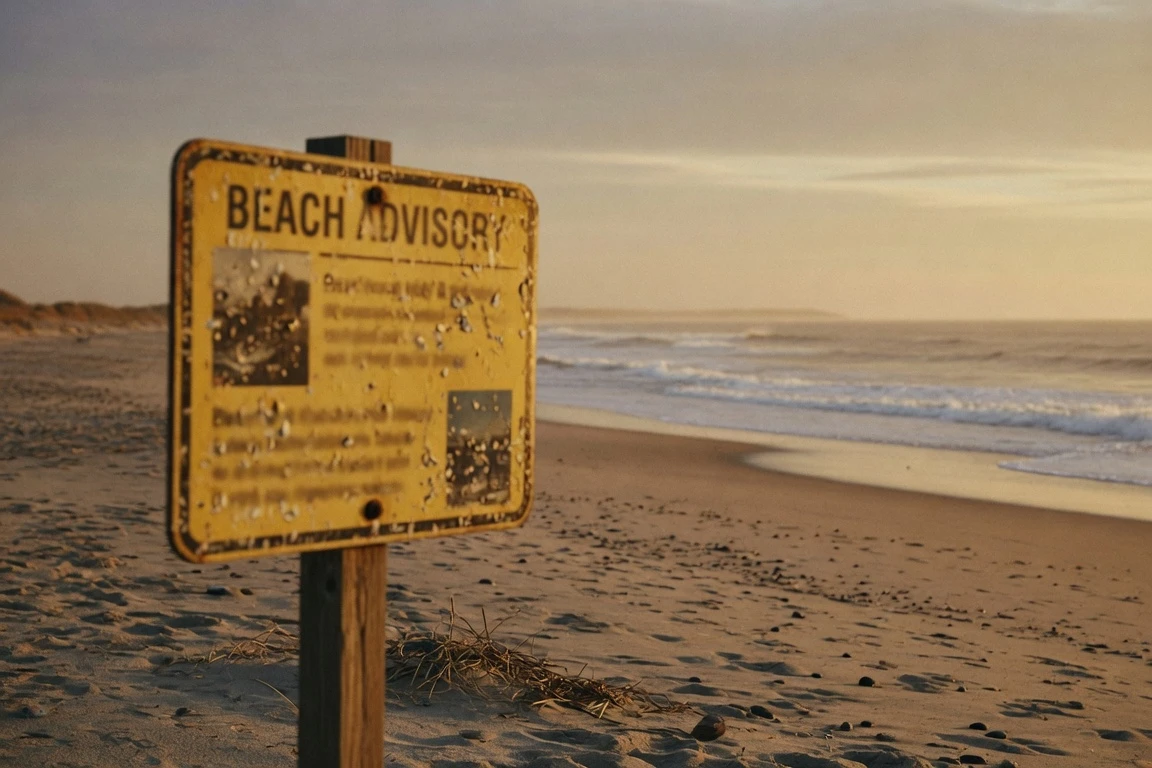
Bacteria counts above 70 colony forming units per 100 mL of water trigger an advisory, a threshold the U.S. Environmental Protection Agency sets. The program never closes a beach, it only advises that swimming may be more risky.
- 70 cfu/100mL: the advisory threshold
- 56 advisory signs along the Georgia coast
- ~105 miles of sandy beaches statewide
- Weekly testing in season, every two weeks in winter
The program tests beaches under a permanent advisory four times a year, and seasonal beaches weekly. The 56 advisory signs along the coast give beachgoers a real-time signal of current conditions. Swimmers who ignore the signs swim at their own risk. The data feeds into the biennial assessment that produced the draft 2026 list.
Sources of Enterococci in Georgia’s Coastal Waters
Enterococci are bacteria that live in the guts of warm-blooded animals, including humans, according to the state Healthy Beaches program. The bacteria reach coastal water through several pathways, and the EPD hasn’t yet been able to pinpoint which sources are responsible on the three islands. The pollution sources the EPD lists as possibilities are general categories that apply to coastal waters statewide.
- Wastewater discharges and sewer line leaks
- Septic system failures in surrounding areas
- Animal waste from pets and wildlife
- Stormwater runoff after heavy rain
- Boat waste and other accidental discharges
The testing program has well documented the connection between rainfall and elevated bacteria, and warns that heavy rain and strong surf can lift sediment and resuspend bacteria in the water column. High winds can have the same effect. The Healthy Beaches program notes that warm-blooded wildlife, including birds, raccoons, deer, and dolphins, can also contribute. The list of possible sources is the same for any elevated reading on a Georgia beach.
Public Comment on the TMDLs Closes July 16
A TMDL, a total maximum daily load, is the maximum amount of a pollutant a waterbody can receive and still meet water quality standards. The federal Clean Water Act requires states to write TMDLs for waters on the impaired list, and Georgia is now in the early stages of that process for the three beaches.
The public comment window on the proposed TMDLs runs until July 16, 2026. Written comments go to the EPD through the state’s water quality assessment page. The state’s public notice for the three beaches gives beachgoers and coastal residents a chance to weigh in before the pollution limits are finalized. The federal Clean Water Act lays out a specific timeline the state must follow after the comment period closes.
- EPD proposes a draft pollution budget for each impaired beach.
- The public submits written comments on the draft.
- The state responds to comments and finalizes the TMDL.
- Implementation plans follow to bring bacteria counts under the cap.
The proposed TMDL will set a numeric cap on bacterial counts in the affected waters, and an implementation plan will follow to bring actual counts under the cap. Swimmers can check whether the limits are working through the weekly bacteria readings posted by the Healthy Beaches program.
The Health Risk Behind an Elevated Reading
Enterococci don’t always make healthy adults sick. The bacteria can cause infections that most affect the elderly or immunocompromised, the EPD says. For a healthy swimmer, the risk from a single swim is low, but it rises with repeated exposure. The state’s Healthy Beaches program lists stomach upset, ear infection, sore throat, and wound infection as the most common illnesses from contact with contaminated water.
Risk of illness comes from contacting beach water in several ways including ingesting water while swimming, getting water in the nose, eyes, and ears or getting water in an open wound.
For most beachgoers, the practical effect of the new “Not Supporting” designation is to put the state on a clock to do something about a problem that was already visible in the weekly bacteria readings posted on the coast. The next round of testing will produce the data that determines whether the proposed TMDLs are tight enough to bring the beaches back into compliance. Until then, the weekly advisories remain the best real-time signal of whether the water is safe for swimming.
Frequently Asked Questions
What Georgia beaches are on the 2026 impaired waters list?
Tybee, St. Simons, and Jekyll islands each have segments on the draft 2026 list, totaling 15 miles of impaired beach. The three islands represent the bulk of Georgia’s accessible Atlantic shoreline.
What is enterococci and why is the state testing for it?
Enterococci are fecal indicator bacteria that live in the guts of warm-blooded animals, including humans, birds, and wildlife. The state tests for them because high counts signal recent contamination that can also carry other pathogens.
What is a TMDL?
A total maximum daily load, or TMDL, is the maximum amount of a pollutant a waterbody can receive and still meet water quality standards. The federal Clean Water Act requires states to write TMDLs for waters on the impaired list.
How can the public comment on the TMDLs?
Written comments go to the Georgia EPD through the state’s water quality assessment page. The window for the three beaches’ TMDLs closes on July 16, 2026.
Is it still safe to swim at these beaches?
The state doesn’t close beaches over advisories. Swimmers can check the latest readings on the Healthy Beaches program map before going in the water, especially after heavy rain.