Aluminium frames attributed to the iPhone 18 Pro Max appeared on the Korean-language Naver platform this week under tipster account Yeux1122, showing three colour finishes: Dark Cherry, a deep wine-toned red with purple undertones; Cloud Blue; and Black. Apple has not confirmed any of this, and MacRumors, which initially published the images, later updated its coverage noting the frames may be AI-generated rather than genuine production chassis parts.
That authenticity question applies to the Yeux1122 images specifically. The broader colour picture has been assembling itself through separate sourcing lines for months, including physical dummy units handled by leaker Sonny Dickson on May 29 and internal Pantone codes independently reported by Macworld from a supply-chain contact, both pointing to the same palette.
A Leak With an Asterisk
The Yeux1122 post on Naver circulated on June 4 and 5, showing what appeared to be three production-ready aluminium frames: one in a saturated dark red, one in a vivid light blue, and one in black. The parts had the visual character of machined production hardware, with SIM tray cutouts and antenna band sections clearly visible. Naver hosts a network of Korean-language blogs that have historically been a source for Samsung and LG supply-chain information and more recently for Apple’s Asia-Pacific manufacturing chain. Image-generation tools have advanced to the point where distinguishing AI-fabricated renders from photographs of real hardware is no longer always possible from visual inspection alone, which is part of why the MacRumors update carries weight in the leak ecosystem.
MacRumors flagged the authenticity issue after the images had spread widely. The editors noted that new information indicated the frames may have been AI-manipulated, meaning digitally fabricated rather than photographed from actual chassis parts. The account Yeux1122, which has shared Apple component images ahead of prior launches on Naver, has not addressed the question.
The more reliable physical evidence comes from Sonny Dickson’s May 29 dummy unit photos. Dummy units are plastic-and-metal mockups built from Apple’s CAD schematics and distributed to accessory manufacturers months before a launch so case makers can design and produce moulds at scale ahead of the reveal. Unlike photographs of chassis parts, dummy units are physical objects that can be held, measured, and compared directly to predecessors. Dickson’s units showed four colours rather than three, with Silver as an additional option not present in the Yeux1122 frames. Colours don’t render with full fidelity on dummy materials, but the palette alignment across two independent sourcing lines is the type of convergence supply-chain reporting uses as a confidence signal.
No manufacturing source has confirmed a final four-colour lineup on the record.
Dark Cherry’s Long Road to the Frame
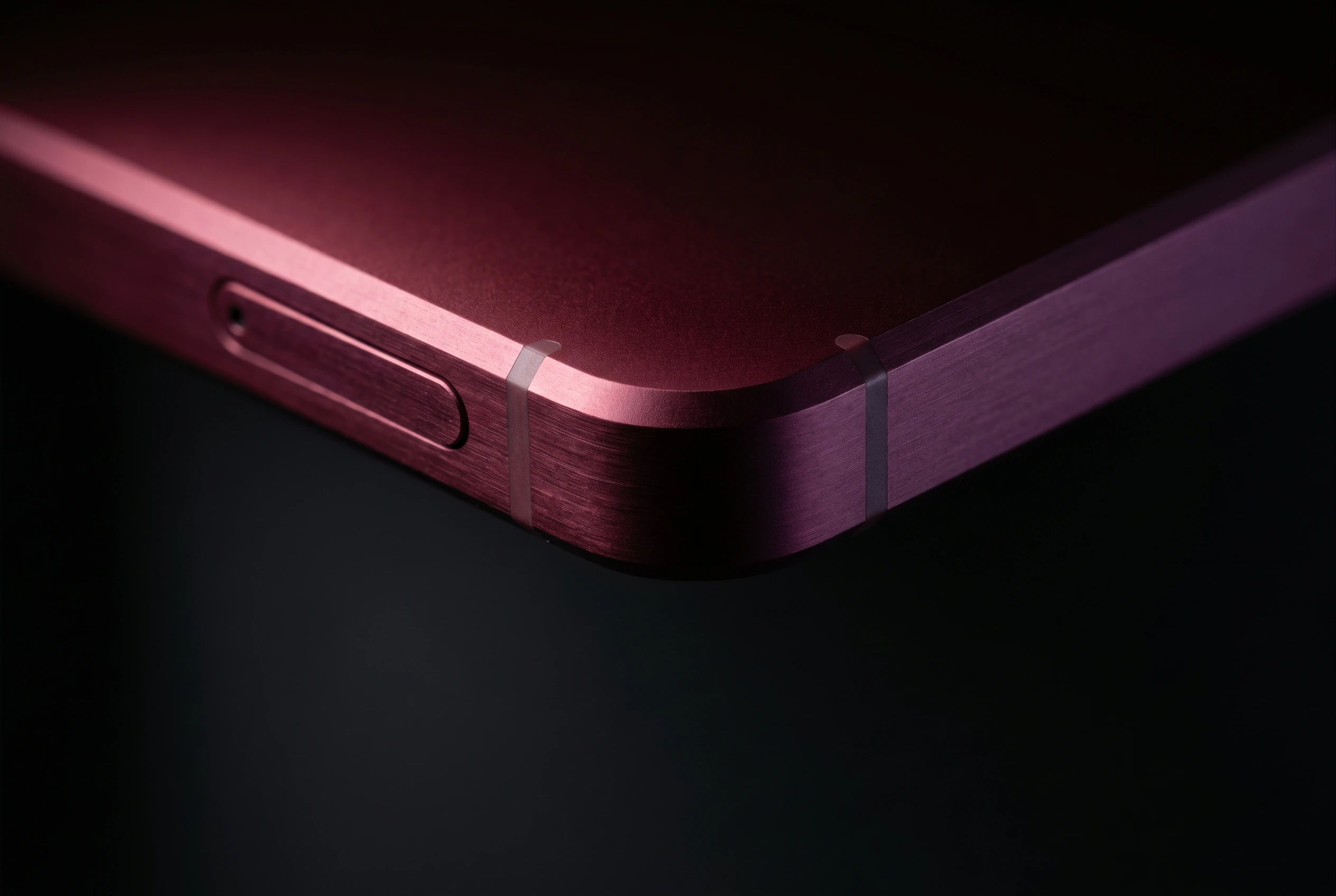
Bloomberg’s Mark Gurman was among the first to report that Apple was testing a red shade for the 2026 Pro series, though early references stayed vague on the specific hue. The picture sharpened in May when Macworld published exclusive reporting from a source described as familiar with Apple’s supply chain. That account identified the hero shade as one much closer to wine than to bright red, with a purple tinge that separates it from any colour the company has offered on the standard iPhone, including Product(RED) editions on the non-Pro line. Macworld named it Dark Cherry.
Macworld also reported the Pantone codes Apple was using internally during colour testing: the hero shade corresponds to Pantone 6076, Light Blue to Pantone 2121, Dark Gray to Pantone 426C, and Silver to Pantone 427C. Pantone 6076 is a deep, desaturated wine-red with visible purple movement. Macworld noted the shade