More than two months after residents were promised a replacement trash compactor, garbage is still piling up at Reserve at Lake Ridge in Riverdale, Georgia, and the community’s homeowners association has not held a formal meeting in over twelve years. The health hazard grows worse each month, residents say, intensified by summer heat and a leadership structure that has left them with no way to demand answers.
Fox 5 Atlanta reporter Kevyn Stewart visited the Clayton County townhome subdivision last Thursday and documented the overflow firsthand. A neighborhood trash supervisor was on-site bagging loose garbage. The residents’ concern was something else entirely.
Two Months After the Promise
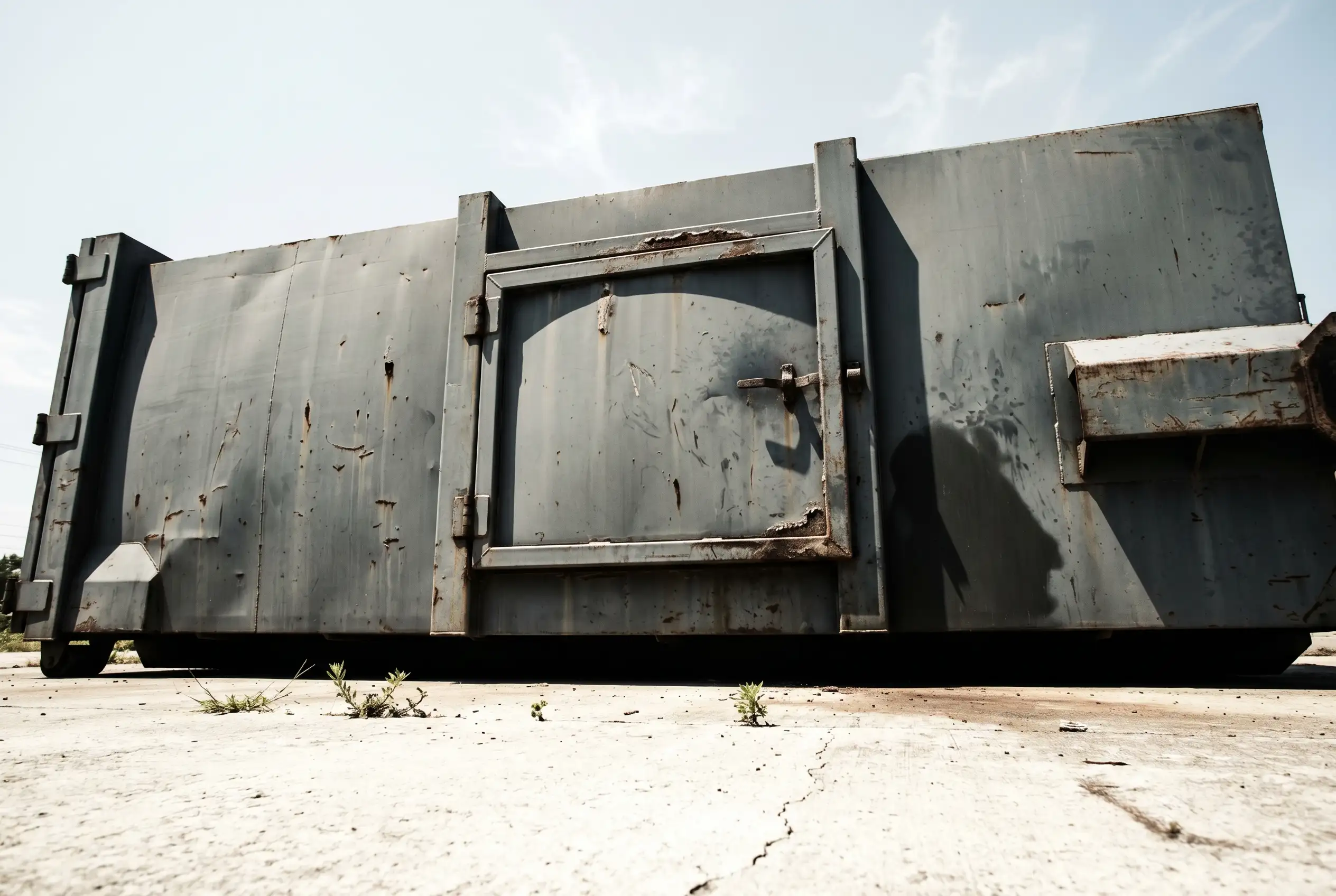
Shared compactor systems are common in townhome communities where the density of residents produces more household waste than standard curbside pickup can handle. The community’s machine is designed to compress garbage from across the entire subdivision into a volume that waste collection vehicles can remove. When it fails, garbage accumulates at the single shared site with nowhere else to go, and every unit in the subdivision is affected simultaneously.
Residents said a replacement was promised more than two months before the crew arrived Thursday. No replacement had appeared. A trash supervisor on-site that morning offered a different account: he said a new unit was already in place and the overflow was the result of illegal dumping, with non-residents bringing furniture and other bulky items that jam the compactor and compound the buildup. His stated goal for the day was to load loose trash bags into the machine and clear the area.
The supervisor, who residents say has a family connection to the HOA president, did not directly address the gap between the promised replacement and the current machine’s condition. Without any public HOA forum, residents argue, there is no way to independently verify his account or hold anyone to a commitment.
| Issue | Resident account | Supervisor account |
|---|---|---|
| Compactor status | Broken, still not replaced | New unit already in place |
| Primary cause of overflow | Equipment failure and neglect | Illegal dumping of furniture and bulky items |
| Replacement timeline | Promised over two months ago, not delivered | Not addressed |
| Thursday’s priority | Accountability from HOA leadership | Load loose bags and clear the area |
Twelve Years Without a Meeting
“We haven’t had an HOA meeting in over 12 years,” one resident told reporters. The HOA president was unavailable to speak when the crew arrived at the property.
Twelve years without a formal meeting means no public budget reviews and no votes on maintenance contracts. The HOA has collected dues from residents throughout that period, but residents paying those dues have no documented record of how the money has been spent. Before this week’s coverage, their options for escalating a complaint were limited to civil litigation or calling the press.
Until Senate Bill 406 (SB 406), the Georgia Property Owners’ Bill of Rights Act, passed this spring, Georgia had no state-level requirement that homeowners associations register anywhere or make their finances available to members. Associations operated entirely under their own governing documents. A homeowner whose board ignored them could take the matter to civil court and retain an attorney, a process that realistically costs thousands of dollars, or they could accept the situation. Most accepted it.
Reserve at Lake Ridge residents, like those in any HOA-governed community, pay monthly dues in exchange for maintenance of shared infrastructure and common areas. The compactor is one service those dues are supposed to fund. When the machine fails and no board is convening to authorize a repair contract, residents pay for service they’re not receiving, with no forum to demand a fix.
The Reserve at Lake Ridge Homeowners Association’s Better Business Bureau profile shows the organization is not BBB accredited. The profile documents a pattern of complaints where the association either failed to respond or failed to make a good-faith effort to resolve disputes to complainants’ satisfaction.
Longtime homeowner Jacquetta Booker, whose grandson purchased her home eight years ago, told reporters the current trash crisis was a direct symptom of the lack of board transparency. Shared infrastructure gets maintained when there is a functioning board to authorize service contracts. When no board is meeting, repairs at shared sites depend on whoever is willing to act when conditions become bad enough that outside pressure arrives.
Health Hazard in the Summer Heat
Resident Patricia McCoy described what it is like to live next to the overflow. “It’s horrible, it’s gagging me, it’s making me sick to my stomach.” Fellow resident Cheryl Caldwell addressed the cyclical nature of it:
It’s all the trash and filth that’s over there every month, and sometimes it’s worse.
Cheryl Caldwell, to Fox 5 Atlanta.
Organic waste in open air produces gases including hydrogen sulfide and methane as it decomposes, and heat accelerates both the rate of decomposition and the intensity of odor. June in Clayton County puts outdoor temperatures routinely in the upper 80s. For a community with a broken shared compactor, that combination makes the smell at the overflow site far more than a nuisance. Open accumulation also draws rodents and exposes residents to bacteria, with the specific risk depending on what the pile contains and how long it has been sitting.
Residents describe the overflow as a monthly cycle, not a single event that got out of hand. Clayton County code enforcement visited the property Thursday, which means a formal complaint had been filed or flagged at the government level. When reporters arrived, the officers had already left the site.
After Code Enforcement, a Quick Cleanup
Following the code enforcement visit, HOA workers began clearing the site. The supervisor’s plan moved forward: loose bags went into the compactor and the surrounding area was cleaned up. A later Fox 5 Atlanta broadcast showed the area had been cleared by the end of the day.
One afternoon of labor cleared the visible garbage. The compactor system itself, if it genuinely needs replacing, takes weeks of procurement and installation. Without someone in authority to initiate the order, that process never starts, and residents say no one has been making those calls.
The Clayton County Code Enforcement Board conducts violation hearings and can impose fines and penalties against violators of county ordinances. Whether that process was triggered by Thursday’s visit is not confirmed, and no formal citations had been announced by the time the day’s cleanup concluded.
The HOA president remained unavailable throughout the day. The Independent, which also covered the story, said it attempted to contact the HOA for comment by email and received no response.
Georgia’s New HOA Accountability Law
Complaints about opaque HOA boards and residents locked out of financial records have been accumulating in Georgia for years, feeding the legislative effort that produced Senate Bill 406, formally the Georgia Property Owners’ Bill of Rights Act. The Georgia General Assembly passed it 51-0 in the Senate and 155-10 in the House on March 31. Governor Brian Kemp signed it into law on May 12.
What the Law Requires
State Sen. Matt Brass, a Newnan Republican who drove the Georgia Property Owners’ Bill of Rights Act through four years of legislative sessions, said the bill grew from years of constituents feeling “powerless against aggressive or opaque HOA boards.” Sen. Donzella James, an Atlanta Democrat who co-sponsored the measure, said in a statement from the Georgia Senate press office that the legislation would help ensure “no Georgian is subjected to unjust fees, fines, or the threat of foreclosure without proper oversight and due process.”
The Community Associations Institute, which represents HOA boards and property management companies nationwide, lobbied for a gubernatorial veto and argued the law imposed unnecessary burdens on volunteer-run boards. The bill passed with overwhelming bipartisan support anyway.
Under the new framework, as analyzed by Freeman Mathis & Gary, an Atlanta law firm specializing in community association work, Georgia homeowners associations will be required to:
- Register annually with the Georgia Secretary of State and submit governing documents and financial records from the prior year, funded by a $100 annual filing fee
- Allow homeowners to file complaints through the Secretary of State’s office, where appointed hearing officers review disputes before any matter reaches Superior Court
- Apply homeowner payments to regular dues before fines or fees
- Meet a higher financial threshold before initiating foreclosure proceedings, raising the minimum from $2,000 to $4,000 in unpaid assessments, with fines excluded from the total
- Retain financial and enforcement records for at least 10 years
An HOA that fails to register loses all enforcement authority: it cannot collect fines, issue liens, or initiate foreclosure. Registration is non-optional for any board that wants to retain legal power over its members.
When It Takes Effect
Attorney fee provisions under the law take effect July 1 for actions filed after that date. The registration and reporting requirements, which would force HOAs to submit financial records to the state and face a formal complaint process through the Secretary of State’s office, don’t begin until January 1, 2027, seven months after Governor Kemp’s signature. Under current law, a community like Reserve at Lake Ridge has no state-level mechanism to compel the HOA to open its financial records or appear before any oversight body.
By Thursday evening, the site had been cleared. Code enforcement issued no confirmed citations from its visit, and the state-level registration requirements that would give residents a formal complaint process don’t take effect until next January.