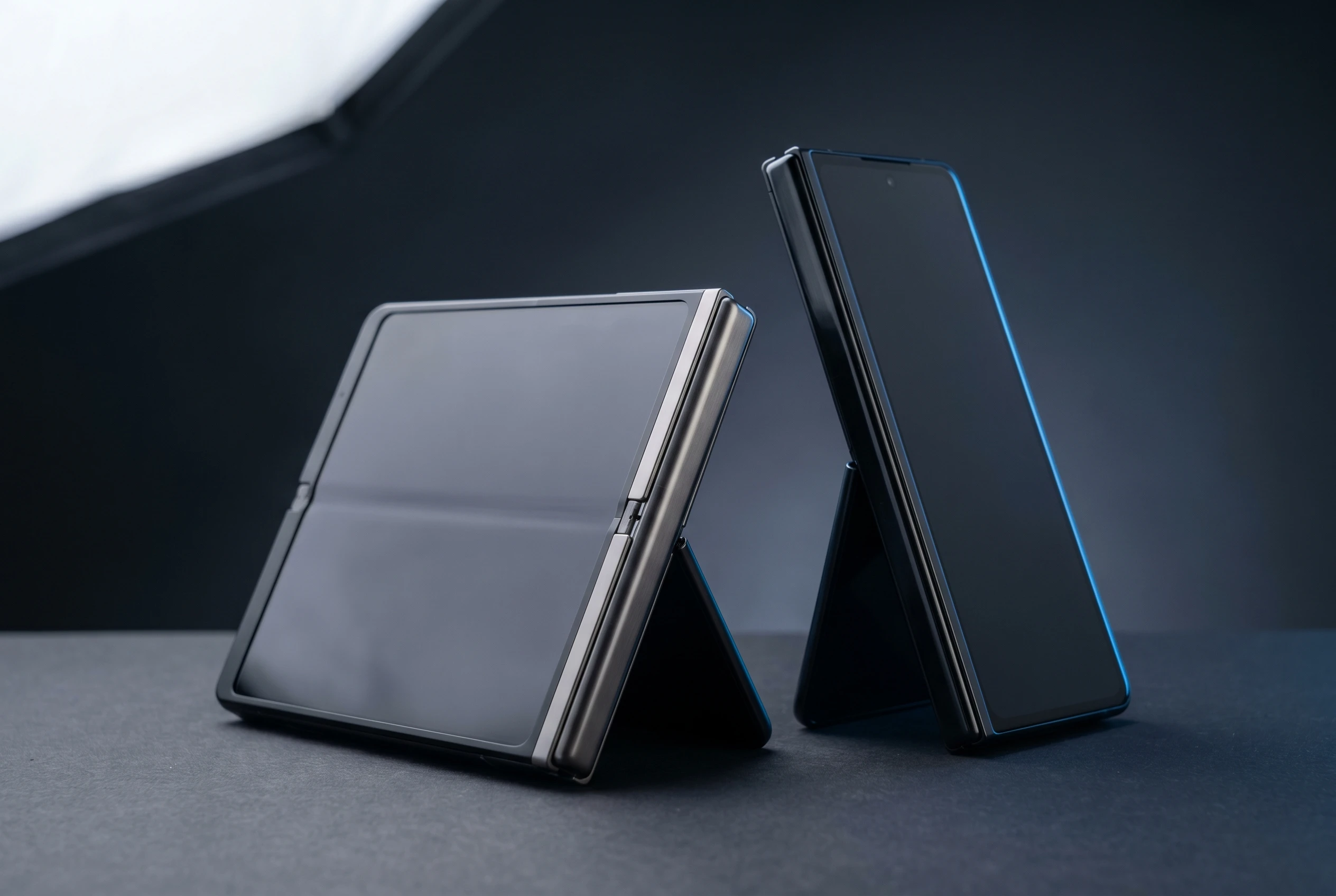
Samsung is about to sell two foldables that barely look like cousins. Freshly leaked design replicas of the Galaxy Z Fold 8 and Galaxy Z Fold 8 Ultra, photographed side by side, show a wider, squarer Fold 8 sitting next to a narrower, taller Fold 8 Ultra, and both are expected to break cover at a Galaxy Unpacked event rumored for July 22, 2026. The replicas come from display-industry leaker Ice Universe.
That divergence is not only a Samsung story. Rival phone makers from Shenzhen to Cupertino are converging on the same wider book-style screen, and the Fold 8 is shaping up to be the first device from a global brand that lets buyers feel the new shape in the hand.
Two Folds, One Brand, Two Shapes
The leaked dummies are low-quality stand-ins, the kind of mockups case makers and accessory firms use to prep for launch. But put together, they tell the story Samsung has been hinting at for months. One unit is visibly wider and shorter. The other keeps the tall, slim silhouette buyers already know.
According to the leak, the narrower Galaxy Z Fold 8 Ultra is more or less a continuation of last year’s Galaxy Z Fold 7, the slim 215-gram foldable that reviewers praised for finally shedding bulk. The wider Galaxy Z Fold 8, meanwhile, adopts an entirely new form factor with a squarer footprint, the design direction nearly every major brand is chasing into 2027.
The naming is the confusing part. Samsung is expected to attach the plain Fold 8 label to the new wide model and reserve the Ultra badge for the familiar narrow one, an inversion of what most shoppers would assume from the word Ultra. The practical takeaway is simpler: choosing between the two will come down to what feels right in your pocket and your palm.
What the Wider Fold 8 Packs
The leaked spec sheet for the wide model points to a 7.6-inch inner screen with a 4:3 aspect ratio, paired with a 5.4-inch cover display that is broader and stubbier than the tall outer panel on the Fold 7 lineage. Powering it is Qualcomm’s Snapdragon 8 Elite mobile platform, the same flagship-class silicon Samsung is using across its 2026 top tier.
The camera setup is where the wide Fold makes its biggest compromise. It is rumored to ship with a 50-megapixel (MP, the sensor resolution) main shooter and a 50MP ultra-wide, with no telephoto lens at all. That is a notable step down from the Fold 7, which carried a 200MP main camera and a dedicated 3x zoom.
| Feature | Galaxy Z Fold 8 (wide) | Galaxy Z Fold 8 Ultra (narrow) |
|---|---|---|
| Inner display | 7.6-inch, 4:3 aspect ratio | Narrower, taller (Fold 7 style) |
| Cover display | 5.4-inch, wide | Tall and slim, Fold 7 style |
| Processor | Snapdragon 8 Elite Gen 5 | Expected to mirror Fold 7 lineage |
| Battery | ~4,800 mAh, 45W wired | Not detailed in the leak |
| Rear cameras | 50MP main + 50MP ultra-wide, no telephoto | Reported near-identical to Fold 7 |
| Weight | ~200 grams | Around the Fold 7’s 215 grams |
On battery, the wide Fold is expected to carry a roughly 4,800 mAh (milliamp-hour) cell with 45-watt wired charging, and rumors put its total weight near 200 grams. For a device that opens into a near-tablet, that is light.
Why Samsung Widened the Cheaper Fold
The popular theory is that Samsung went wide because Apple did. The first foldable iPhone, widely expected this fall, is reported to use a wider, book-style form factor with a 4:3 inner panel, roughly 7.8 inches open and about 5.5 inches closed. When the biggest player in premium phones picks a shape, suppliers and rivals tend to follow.
But Samsung was not first to the wide idea, and neither was Apple. Huawei beat both with the Pura X Max, which launched on April 20, 2026 and is billed as the world’s first wide foldable. It opens to a 7.69-inch screen with a 16:10 ratio and folds down to a 5.5-inch cover, close in footprint to a small tablet.
For Samsung, the wide Fold also solves a marketing problem. The Fold 7 was excellent but iterative, and a genuinely new shape gives the brand something to demo on stage that nobody can call a rerun. It also hedges Samsung’s bets: keep the proven narrow design for loyalists as the Ultra, and chase the new crowd with the wide model.
There is a cost to moving fast, though. The wide Fold’s dual-camera array and missing zoom suggest Samsung trimmed the imaging hardware to hit a weight and price target on a brand-new chassis. Early adopters of any new form factor usually pay in small ways like this.
The Aspect-Ratio Split Spreading Across the Industry
Step back from Samsung and the pattern is hard to miss. The book-style wide foldable is becoming the default blueprint for the next two years, and the names lining up behind it read like the whole top tier of the market.
- Huawei shipped the Pura X Max in April, the first wide foldable from a major brand.
- Apple is expected to launch its wider foldable iPhone in the fall, alongside the iPhone 18 Pro series.
- Samsung joins in July with the wide Galaxy Z Fold 8.
- Oppo and Honor are reported to be preparing wide models of their own, building on years of book-style experiments like the Oppo Find N5 foldable design .
The shift is showing up in the shipment data. Book-type foldables are projected to reach about 65% of foldable shipments by 2026, up from roughly 35% in 2020, and the overall category is forecast to keep climbing. Research firm Omdia expects foldable shipments to grow sharply in 2026, while IDC’s 2026 foldable shipment forecast pins much of the momentum on the arrival of Apple’s first model. The shape Samsung is testing this summer is the shape the category is betting its growth on.
What the Two Shapes Mean for Buyers
For shoppers, the split changes the question. Instead of picking a storage tier, Fold buyers now choose a body geometry, and the two shapes serve different habits.
A wider screen is friendlier for video, gaming and side-by-side apps, because the open panel is closer to a small tablet than a stretched paperback. A narrower body is easier to grip one-handed and slips into a pocket more like a normal phone. Neither is strictly better, which is exactly why Samsung is offering both.
- 7.6 inches is the wide Fold 8’s rumored inner display, in a squarer 4:3 ratio built for landscape content.
- ~200 grams is the wide model’s expected weight, light for a device that opens into a near-tablet.
- July 22, 2026 is the rumored Unpacked date, with the foldable iPhone following in the fall.
If the wide Fold lands well with reviewers and early buyers, expect Samsung to push the form factor harder next year and let the narrow Ultra fade. If the missing zoom and unfamiliar shape turn people off, the safe narrow design suddenly looks like the smarter long-term buy. The July reveal, and the Apple launch weeks later, will start settling which shape wins.
Frequently Asked Questions
When Will the Galaxy Z Fold 8 and Fold 8 Ultra Launch?
Both models are rumored to debut at a Galaxy Unpacked event on July 22, 2026, reportedly held in London. Dates remain unconfirmed by Samsung until an official invite goes out.
What Is the Difference Between the Fold 8 and Fold 8 Ultra?
The Galaxy Z Fold 8 is the new wider, squarer model with a 4:3 inner screen, while the Galaxy Z Fold 8 Ultra keeps the narrower, taller design that closely follows the Galaxy Z Fold 7.
Does the Galaxy Z Fold 8 Have a Telephoto Camera?
No. The wide Fold 8 is rumored to ship with only a 50MP main camera and a 50MP ultra-wide, dropping the dedicated telephoto zoom that the Fold 7 carried.
Why Are Foldable Phones Getting Wider in 2026?
The trend follows the book-style wide form factor that Huawei shipped first with the Pura X Max and that Apple is expected to adopt for its first foldable iPhone, pushing rivals like Samsung and Oppo toward squarer screens.
How Much Will the Galaxy Z Fold 8 Weigh?
Leaks put the wide Galaxy Z Fold 8 at roughly 200 grams, slightly lighter than the 215-gram Galaxy Z Fold 7, despite opening into a near-tablet footprint.
When Does the Foldable iPhone Launch?
Apple’s first foldable iPhone is expected in the fall of 2026, with reports pointing to a September window alongside the iPhone 18 Pro lineup, though some rumors suggest a slightly later release.