Atlanta will host eight 2026 World Cup matches at Mercedes-Benz Stadium, including a semifinal on July 15, with games beginning June 15. The venue’s retractable roof and full air conditioning make it one of the tournament’s preferred heat-refuge stadiums, and the city expects more than 300,000 visitors over a month of soccer.
Behind the marquee semifinal sits the reason Atlanta keeps drawing big events. A stadium that can shut out the summer heat in minutes, paired with a downtown train that costs a fraction of what fans will pay in New York or Boston, has turned the city into the value pick of this World Cup.
Eight Matches and a Semifinal at the Benz
The schedule runs nearly the full length of the tournament. Atlanta opens its slate on June 15 and does not stop until one of the two World Cup finalists is decided under its roof a month later. In between sit six group-stage games, a Round of 16 knockout, and the semifinal that sends a team to the final at MetLife Stadium in New Jersey on July 19.
- June 15 (group stage, Atlanta’s opener)
- June 18 (group stage)
- June 21 (group stage)
- June 24 (group stage)
- June 27 (group stage)
- July 1 (group stage)
- July 7 (Round of 16)
- July 15 (semifinal)
Spain features in the city’s opening match, per the official Atlanta match schedule, giving local crowds an early look at one of the pre-tournament favorites. The semifinal is the prize: it is one of only two such games worldwide, and the winner walks straight into the championship match four days later.
Mercedes-Benz Stadium, which FIFA (soccer’s world governing body) requires be called Atlanta Stadium during the tournament because the carmaker is not a World Cup sponsor, holds up to 75,000 for special events and will seat roughly 73,000 per match. Opened in 2017, it is home to Atlanta United of Major League Soccer (MLS) and the Atlanta Falcons of the National Football League (NFL), and it has already hosted Super Bowl LIII in 2019 and the 2025 College Football Playoff national championship.
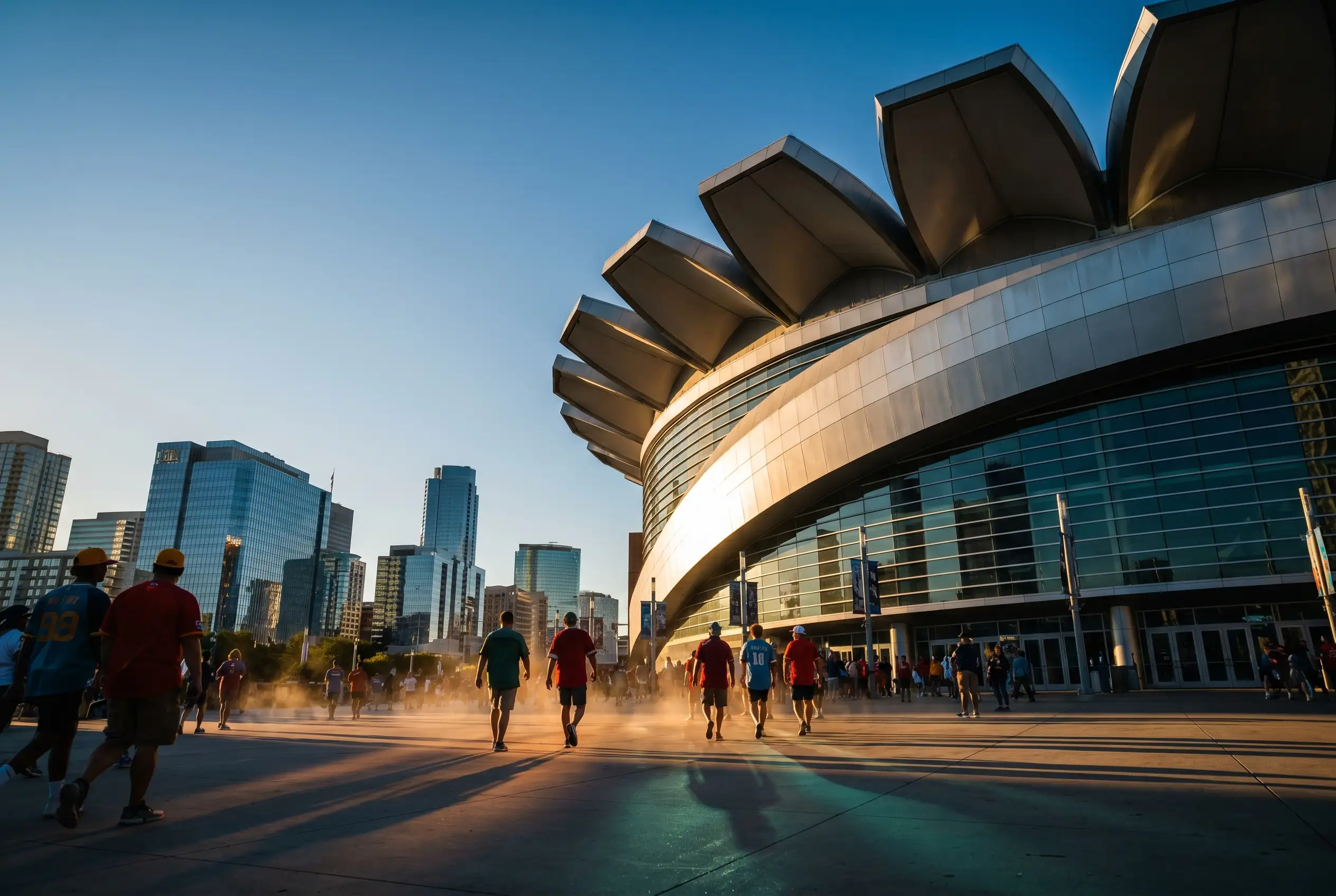
The Roof Is Why Atlanta Got the Big Games
Heat is the defining problem of a North American summer World Cup, and it shaped which cities landed the most valuable games. Atlanta’s bowl is built for it, and that is no small reason a semifinal is being played downtown rather than in an open-air stadium farther north.
How the Aperture Roof Works
The stadium’s roof opens and closes like the diaphragm of a camera lens, eight petals sliding shut over the field. It can fully close in about eight minutes, and the building runs full air conditioning, so officials can seal the bowl and control conditions whenever the weather turns. The venue’s World Cup venue and roof details spell out how quickly the environment can flip from open-air to climate-controlled.
Why FIFA Leaned on Covered Stadiums
The heat worry is not theoretical. During the 2025 Club World Cup in the United States, players and fans baked through midday games, and the final at MetLife Stadium was played in roughly 28 degrees Celsius (about 82 Fahrenheit) that felt hotter with humidity. FIFA’s president has since said the 2026 tournament will lean on covered, air-conditioned stadiums for daytime matches, naming the venues in Dallas, Houston, Atlanta and Vancouver. That preference is part of why Atlanta keeps appearing on the knockout-round map.
What 90-Degree Heat Means for Fans and Players
June and July temperatures in Atlanta average close to 90 degrees Fahrenheit, and the city’s humidity makes the air feel heavier than the number suggests. Inside the closed bowl, that barely registers. Out on the sidewalks, in the fan zones and on the walk from the train, it absolutely does.
Open-air host stadiums elsewhere plan to manage the heat with scheduling, shade, airflow, hydration stations and on-site cooling zones rather than a fully air-conditioned bowl. Extreme heat can sap player performance and pose real health risks for spectators, which is exactly the variable Atlanta largely removes once the roof closes. Fans should still pack for the climate they will face between matches, not the one inside.
MARTA’s $2.50 Fare Is the Other Advantage
The Metropolitan Atlanta Rapid Transit Authority (MARTA), the city’s rail and bus network, is holding single fares at $2.50 for the duration of the tournament. In some other host markets, reports have surfaced of match-day transport options running $95 to $100. The stadium also sits downtown, a short walk from multiple rail stations, so fans can skip driving entirely.
| Getting to the match | Single transit fare | Match-day service |
|---|---|---|
| Atlanta (MARTA rail) | $2.50, held through the tournament | Trains every 5 minutes until 10:30 p.m.; free parking at 23 stations |
| Other host cities (reported) | Up to $95 to $100 for some options | Varies by market |
On match days, MARTA plans to run trains at five-minute frequency from the start of service until 10:30 p.m., with riders directed to the SEC District, Vine City and Five Points stations. Transit Ambassadors in white, MARTA-branded soccer jerseys will work alongside roughly 100 multilingual FIFA volunteers to point visitors toward the stadium and fan areas. A new tap-to-pay Breeze system lets fans use a phone, watch or contactless card, and free parking sits at 23 rail stations. The full World Cup transit and station guide lays out the routes.
For visiting fans, the math is simple. A cheap, frequent train into a downtown stadium is a comfort and budget edge most host cities cannot match, and it is a quieter selling point than any semifinal.
A $1 Billion Bet on a Month of Soccer
Atlanta projects more than a billion dollars in economic activity from its eight matches, fueled by hundreds of thousands of out-of-town fans. One analysis pegs out-of-state visitor spending alone at $503.2 million across the run.
- $503.2 million in projected spending from out-of-state visitors across the eight matches.
- 520,000 total spectators expected, averaging about 65,000 per match.
- 300,000+ unique visitors projected to move through the city.
- 216,000 tourists estimated to need lodging in and around Atlanta.
An economic analysis by Deloitte produced the lodging figure, and Airbnb guest spending alone could add around $70 million once indirect effects are counted. The windfall comes with a to-do list, and local leaders have spent months preparing for the surge, including a coordinated push by Georgia businesses training staff to spot trafficking ahead of the crowds.
Where to Eat, Cool Off and Watch
Fans without tickets are not shut out. Centennial Olympic Park, built for the 1996 Summer Olympics, will host the free FIFA Fan Festival from June 11 to July 19, with live match broadcasts, concerts, local food vendors, interactive games and cultural programming. It is the cheapest seat in town and the easiest place to feel the tournament.
When the afternoon heat builds, the city’s indoor attractions double as cooling stations:
- Georgia Aquarium and the World of Coca-Cola, both downtown
- High Museum of Art in Midtown
- The College Football Hall of Fame near the stadium
- The King Center and the Center for Civil and Human Rights
Then there is the food. Atlanta’s lemon pepper wings are a rite of passage, and dine-in spots like The Local sell out fast, so the smart move is arriving near the 5 p.m. opening; for the full story on the city’s lemon pepper wings obsession, the dish carries real cultural weight here. Barbecue lovers can reach Fox Bros and Sweet Auburn within about 20 minutes of the stadium, traffic permitting. When the fountains at Centennial Olympic Park switch on for the Fan Festival in June, they will become the city’s most popular way to beat the heat between matches.
Frequently Asked Questions
How many World Cup matches will Atlanta host in 2026?
Atlanta will host eight matches at Mercedes-Benz Stadium, officially called Atlanta Stadium during the tournament: six group-stage games, one Round of 16 knockout, and a semifinal.
When is the Atlanta World Cup semifinal?
The semifinal is scheduled for July 15, 2026. It is one of two semifinals worldwide and sends the winner to the final at MetLife Stadium in New Jersey on July 19.
Why is Mercedes-Benz Stadium called Atlanta Stadium during the World Cup?
FIFA bars non-sponsor commercial names on its venues, so the building drops the Mercedes-Benz branding and goes by Atlanta Stadium for the duration of the tournament.
How much does MARTA cost during the 2026 World Cup?
MARTA single fares stay at $2.50 throughout the tournament, with trains every five minutes until 10:30 p.m. on match days and free parking available at 23 rail stations.
Is the Atlanta World Cup stadium air-conditioned?
Yes. The stadium has full air conditioning and a retractable aperture roof that closes in about eight minutes, letting officials control conditions during extreme heat.
How hot does Atlanta get during the World Cup?
June and July temperatures in Atlanta average close to 90 degrees Fahrenheit, with high humidity, which is why the city’s covered, air-conditioned stadium is a real advantage.