The already fraught relationship between the United States and Ukraine has taken a dramatic turn, with Washington halting all military aid following a heated exchange between President Donald Trump and Ukrainian President Volodymyr Zelensky at the White House. As Ukraine continues its struggle against Russian aggression, the rift has sent shockwaves across diplomatic circles, prompting European allies to step up their support for Kyiv.
The Oval Office Confrontation
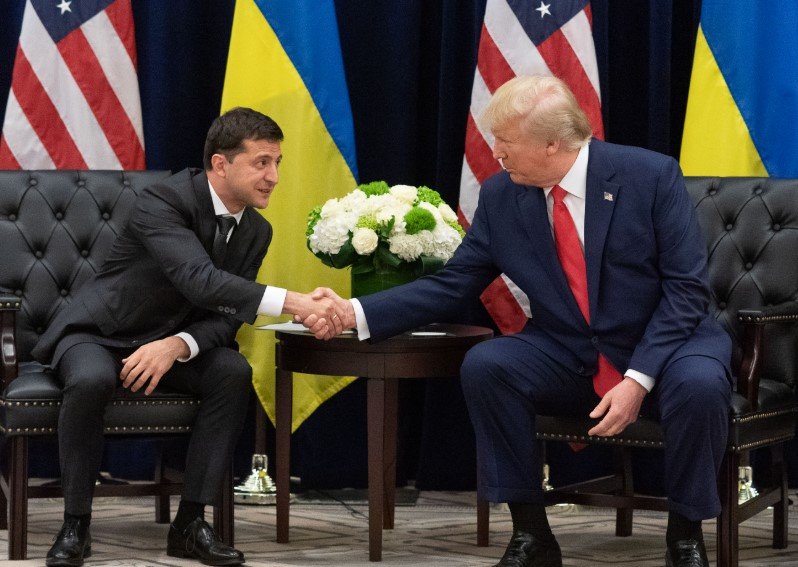
It all began on February 28, when Zelensky arrived in Washington for high-stakes talks with Trump, joined by U.S. Vice President JD Vance. What was meant to be a routine diplomatic meeting quickly escalated into a verbal clash, captured by cameras in the Oval Office. According to sources present in the room, the dispute centered around Trump’s growing skepticism over continued U.S. assistance to Ukraine, with Zelensky making an impassioned case for sustained military backing.
At one point, Trump reportedly questioned the effectiveness of past aid, stating that the U.S. “has given enough,” while Zelensky, visibly frustrated, argued that pulling support would be a “gift to Putin.” The heated exchange was followed by a sharp cooling in U.S.-Ukraine relations, culminating in the abrupt suspension of military aid.
The Military Aid Freeze: What It Means for Ukraine
In the aftermath of the confrontation, the U.S. officially confirmed a suspension of its military aid package to Ukraine. The move immediately raised concerns over Ukraine’s battlefield capabilities and its ability to fend off Russian advances.
- The U.S. had been providing billions in security assistance since the Russian invasion in 2022, supplying advanced weaponry, ammunition, and intelligence support.
- With the aid cut off, Ukraine faces potential setbacks in resupplying its troops and maintaining defensive operations along critical frontlines.
- The decision also risks emboldening Moscow, which may view the freeze as a sign of weakening Western resolve.
U.S. officials have suggested that the halt is temporary, pending a broader reassessment of American involvement. However, with Trump’s stance on Ukraine hardening, Kyiv is bracing for a prolonged period of reduced U.S. support.
Europe Scrambles to Fill the Void
As Washington pulls back, European leaders are stepping up efforts to keep Ukraine’s war effort afloat. Several NATO allies have pledged to increase military aid, while the European Union is accelerating a previously proposed security assistance package.
French President Emmanuel Macron and German Chancellor Olaf Scholz have both vowed to “do whatever it takes” to ensure Ukraine does not run out of ammunition and arms. The UK, too, is reportedly considering sending additional air-defense systems and long-range missiles to make up for the shortfall.
But while Europe’s pledges are significant, they may not be enough to fully replace the sheer scale of American assistance. A top Ukrainian official warned that without U.S. support, the country could face “extremely difficult months ahead” in its fight against Russian forces.
Political Fallout in Washington
The White House’s decision has triggered intense debate in Washington, with lawmakers from both parties weighing in on the geopolitical and strategic implications.
- Republican hawks have expressed concerns that withdrawing support will cede ground to Russia and weaken U.S. influence in Eastern Europe.
- Some Democrats argue that Trump’s approach reflects a broader trend of isolationism that could erode America’s credibility among its allies.
- Meanwhile, Trump’s supporters maintain that it is time for Europe to shoulder more of the burden and that American taxpayers should not be indefinitely funding foreign wars.
The ongoing divisions in Congress could make it even harder to reinstate military aid, especially with election-year politics looming large.
What’s Next?
With no immediate resolution in sight, U.S.-Ukraine relations remain on shaky ground. Zelensky is now looking to Europe and private sector arms manufacturers to plug the gap left by Washington. But as the war drags on and battlefield conditions shift, the long-term consequences of this diplomatic fallout could reshape the global power dynamic in ways that are yet to fully unfold.
The coming weeks will be crucial. If Trump sticks to his position, Ukraine may have to fundamentally rethink its war strategy—while Russia watches closely, calculating its next move.