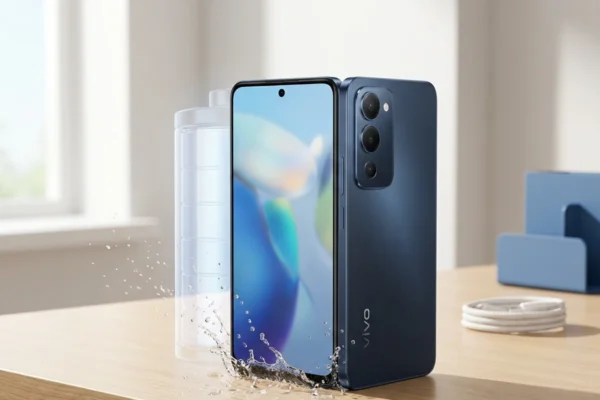
The Xiaomi 17 Max has debuted in China as Xiaomi’s battery-first flagship, pairing an 8,000 milliamp-hour (mAh) silicon-carbon battery with Leica-branded cameras, a 6.9-inch display and Qualcomm’s top Snapdragon chip. It starts at CNY 4,799 on Xiaomi’s China store and is scheduled for local sales from May 25, making endurance the loudest part of a phone that still wants to sit in the premium tier.
The more interesting move is where Xiaomi put the tradeoff. Rather than reserving the biggest cell for a rugged niche handset, it has pushed the Xiaomi 17 Max into the flagship conversation, where Apple, Samsung, Honor, Vivo and Oppo are all fighting over cameras, chips and artificial intelligence features.
The Battery Number Changes the Flagship Argument
Xiaomi is not hiding the main attraction. Xiaomi’s China store listing for the 17 family shows the Xiaomi 17 Max from CNY 4,799, sitting below the higher priced Ultra models and above the base Xiaomi 17. That matters because it turns the phone into more than a spec stunt.
The 8,000mAh cell is built around silicon-carbon battery technology, which uses a silicon-rich anode blended with carbon to carry more energy in a similar physical space than older graphite-heavy designs. In simple terms, Xiaomi is trying to give power users a giant battery without making the device feel like a brick.
- 8,000mAh battery capacity is the signature feature.
- 100W wired charging keeps the huge cell from becoming a long wait.
- 50W wireless charging keeps the phone in premium territory.
- CNY 4,799 is the listed China starting price.
That is the bet. A bigger battery used to signal compromise. On this phone, Xiaomi wants it to signal priority.
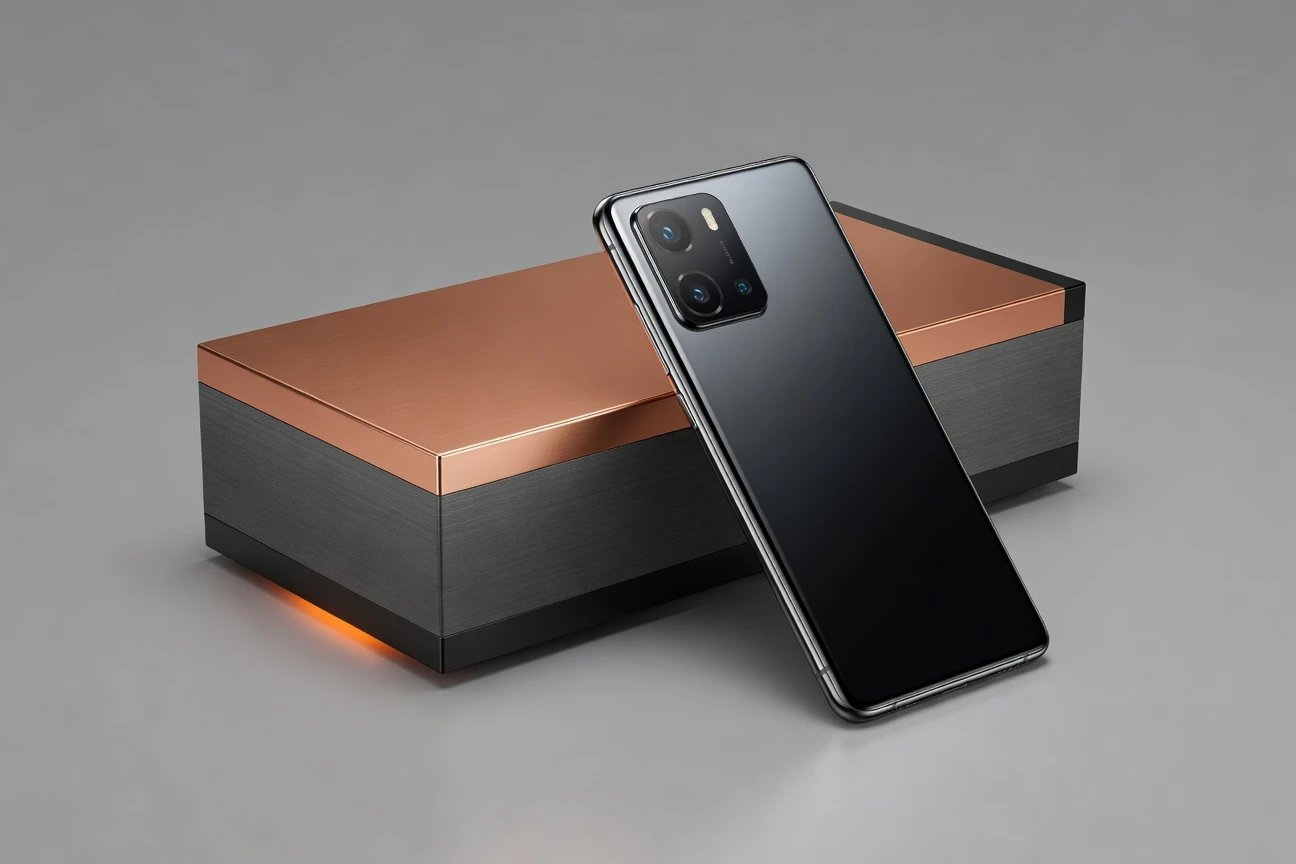
Leica Cameras Keep the Max From Becoming a Battery Phone
A battery-only flagship would be easy to dismiss. Xiaomi has avoided that trap by keeping the Leica name on the camera system and giving the Xiaomi 17 Max a 200-megapixel Leica primary camera, a 50-megapixel ultra-wide sensor and a 50-megapixel periscope telephoto camera.
The Leica relationship is not just branding pasted onto a camera bump. Xiaomi and Leica describe their partnership as a joint imaging effort, and Leica’s Xiaomi 17 series announcement says the collaboration focuses on lens design, color tuning and focal-length choices for mobile photography.
That gives the 17 Max a clear place in the range. The Ultra remains the purist camera play, especially with its larger sensor story. The Max takes a different route: enough Leica hardware to be credible, paired with a battery that tries to outlast a full day of shooting, gaming, navigation and streaming.
For buyers, the camera question is less about megapixels than consistency. A 200-megapixel sensor can produce sharp daylight shots, but low-light processing, autofocus behavior, portrait cutouts and zoom color matching will decide whether the Max feels like a true flagship after the launch buzz fades.
The Chip and Display Keep It in the Premium Lane
Under the hood, the Xiaomi 17 Max uses Qualcomm’s Snapdragon 8 Elite Gen 5 mobile platform. Qualcomm calls it its premium Snapdragon 8 Elite chip and says the platform includes a third-generation Oryon central processing unit, an Adreno graphics processor and a Hexagon neural processing unit for on-device artificial intelligence workloads in Qualcomm’s Snapdragon 8 Elite Gen 5 announcement.
Xiaomi pairs that chip with up to 16GB of low-power double data rate 5X (LPDDR5X) memory and up to 512GB of universal flash storage (UFS 4.1, a fast phone storage standard). The company also lists an IceLoop cooling system, a feature that will matter most during games, long video recording and heavy camera use.
The screen is just as important to the positioning. The phone uses a 6.9-inch low-temperature polycrystalline oxide (LTPO, a display backplane that helps vary refresh rate efficiently) active-matrix organic light-emitting diode (AMOLED) panel with 1.5K resolution, a 120Hz adaptive refresh rate and up to 3,500 nits peak brightness.
Ingress Protection 68 (IP68, a dust and water resistance rating) rounds out the spec sheet. That mix tells buyers Xiaomi is not selling a midrange endurance device with one outsized cell. It is selling a large premium phone that happens to make battery size the lead feature.
Where the Max Sits Beside Xiaomi’s Other Flagships
The awkward part for Xiaomi is that the 17 Max lands inside an already crowded family. The base 17, the Pro models, the Pro Max and the Ultra all ask for attention. The Max has to justify its name without stealing the Ultra’s camera crown.
| Model | Positioning | Battery Focus | Camera Focus | Listed Starting Point |
|---|---|---|---|---|
| Xiaomi 17 Max | Large-screen endurance flagship | 8,000mAh silicon-carbon cell | 200MP Leica main camera plus 50MP companions | CNY 4,799 in China |
| Xiaomi 17 | Compact flagship | 6,330mAh global battery listing | Leica camera system in a smaller body | CNY 4,299 in China family listing |
| Xiaomi 17 Ultra | Camera-first flagship | 6,000mAh global battery listing | 1-inch main camera and Leica 200MP telephoto hardware | CNY 6,999 in China family listing |
The comparison shows why the Max exists. Xiaomi already has a compact option and a photography-first Ultra. The Max gives the range a simpler pitch: big screen, big battery, serious camera, lower starting price than the Ultra.
Xiaomi’s global Xiaomi 17 specifications list the smaller model with a 6.3-inch display and 6,330mAh battery, while Xiaomi’s global Xiaomi 17 Ultra specifications put the Ultra emphasis on the 1-inch camera hardware and 200-megapixel telephoto system. The Max fills the space between those ideas.
China’s Battery Race Is Now Moving Upmarket
The Xiaomi 17 Max also fits a bigger China-first battery shift. Counterpoint Research reported that six of the top 10 best-selling smartphones with 6,000mAh or larger batteries used silicon-carbon cells in January, with Chinese brands dominating that segment. Its research also put average global smartphone battery capacity at 5,291mAh for that month, up by about 400mAh from a year earlier, according to Counterpoint’s silicon-carbon battery analysis.
That gives Xiaomi useful timing. Battery life has become one of the few phone upgrades a user feels every day, not just in benchmarks or camera samples. A brighter display, faster chip and smarter software matter, but a phone that gets through a heavy travel day without panic has a more obvious selling point.
RDS NEWS has also covered the broader push toward giant batteries in performance phones, including Poco’s X8 Pro Max launch with a 9,000mAh battery. The pattern is hard to miss: Chinese brands are using battery size as a visible answer to the slower, thinner, more conservative upgrade cycle at the top of the global market.
The open question is export. Xiaomi has not confirmed India, Europe or wider global availability for the 17 Max as of publication. That matters because the largest silicon-carbon capacities often appear in China first, while global versions sometimes arrive with different batteries, chargers or model names.
The Caveats Sit in Heat, Weight and Availability
The launch sheet looks strong, but the Max still has to prove itself outside controlled demos. A large battery helps endurance, yet heat management decides how long the Snapdragon chip can stay fast under load. A huge camera sensor count helps marketing, yet image tuning decides whether shots look natural.
Buyers should pay attention to four practical tests once retail units reach users:
- Thermal stability during 30 minutes or more of gaming, 4K video and camera use.
- Charging behavior after repeated fast-charge cycles, especially with an 8,000mAh cell.
- Camera consistency between the main, ultra-wide and telephoto lenses in mixed light.
- Global model details, since battery size, software and charger bundles can change by market.
Software support also deserves attention. The phone ships with HyperOS 3 based on Android 16, plus Wi-Fi 7, Bluetooth 5.4, near-field communication (NFC, short-range wireless payments and pairing), dual stereo speakers and an in-display fingerprint sensor. Those features make the Max feel complete on paper, but update timing will decide how long it stays competitive.
For now, Xiaomi has created the most direct version of the flagship battery argument. If the 17 Max keeps its endurance advantage without camera or heat compromises, rivals will have to answer with more than thinner frames and brighter screens.